

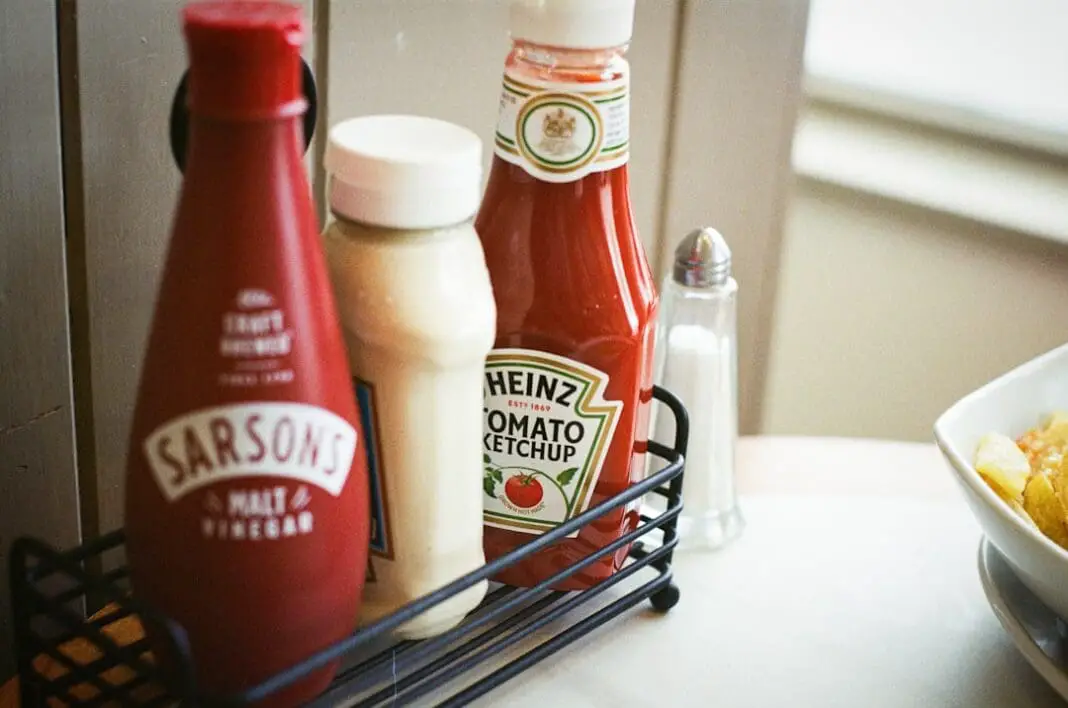
There’s a solid chance your ketchup is sitting in the exact wrong place right now, and you’ve never once thought about it. Most of us grab the bottle, wedge it into the fridge door next to the mustard, and slam it shut. Feels right. It’s what our parents did. But that cozy little door shelf is actually the worst seat in the house for your ketchup, and it quietly messes with the taste, texture, and color before you even notice.
Let me explain what’s going on inside your fridge, because once you know, you can’t unknow it.
The Fridge Door Is The Warmest Spot In There
Here’s the part nobody tells you. The refrigerator door is the warmest and least stable zone in the entire appliance. Every time you swing it open to grab a soda, cold air pours out and warm kitchen air rushes in. The main shelves recover fast because they’re tucked deep inside. The door does not.
Food scientists who study this stuff say the door can run several degrees warmer than the interior, and in a hot kitchen it can swing anywhere from 5 to 10 degrees higher. One expert put it bluntly: the door doesn’t stand a chance of holding a steady cold temperature. So while you think your ketchup is chilling, it’s actually riding a little temperature roller coaster all day long.
How Much Warmer Are We Talking?
Numbers make this real. One breakdown of home fridge data found that 32% of home refrigerators run above 41 degrees in the door compartment, which is exactly where people stash their ketchup. Meanwhile the middle shelf barely moves, wobbling only about a third of a degree, versus roughly two degrees of swing in the door bins.
That constant back and forth is what drags ketchup down. It’s not going to make the sauce dramatic, but it speeds up the boring stuff you don’t want: the color dulling, the tomato flavor flattening out, and that watery red liquid pooling on top when you finally squeeze it. The fix is almost insultingly simple. Move it to the middle shelf, where the cold stays put.
Wait, Should Ketchup Even Be In The Fridge?
This is the debate that splits families and starts arguments in kitchens across America. Some people keep ketchup in the cabinet like a savage, and honestly, they’re not totally wrong. Ketchup is loaded with vinegar, salt, sugar, and tomatoes, which is a rough neighborhood for spoilage. That’s why an unopened bottle can sit in your pantry for ages.
The real answer comes down to how fast you use it. One doctor summed it up perfectly: if it takes you months to finish a bottle, keep it in the fridge. If you plow through a bottle in a few days, you can leave it out. That’s the whole trick. It’s not about the ketchup, it’s about your household.
So Why Do Restaurants Leave It On The Table?
You’ve seen the red squeeze bottles sitting on diner tables all day, and you’ve probably used that as your defense for the cabinet. Fair. But there’s a catch. Diners and burger joints blow through a bottle every day or two, and they refill them constantly. High turnover means the sauce never sits around long enough to change.
Your house is different. That bottle in your cabinet might be open for weeks, or, let’s be real, months. The general rule floating around from the pros is that if your ketchup is going to be open for more than a week, it belongs in the fridge. You are not a restaurant. Store it like a normal person who eats a burger twice a month.
What The Ketchup Makers Actually Say
You’d think the companies would stay out of the fight, but they jumped right in. Heinz ran a poll of more than 13,000 people and found folks split almost down the middle, with 63% in the fridge camp and 37% in the cupboard camp. After all that, Heinz confirmed its official stance: because of the natural acidity the product is shelf-stable, but they recommend refrigerating after opening to keep the quality high.
Hunt’s, made by Conagra, said the same thing through one of its culinary specialists: once opened, store it in the fridge for the best results. She dropped one wild detail too. Some bottles that were improperly made or stored have been known to actually pop open on their own from yeast building up inside. She was clear it’s not dangerous, just a mess and a sign the sauce went sideways. Both brands land in the same place. Keep it cold if you want it tasting right.
What Happens To Ketchup Left Out Too Long
Say you leave an open bottle on the counter through a warm summer. It won’t turn into a science experiment overnight, but a few things start creeping in. The biggest one is separation, where a thin watery layer floats to the top and the good thick stuff sinks. Nobody wants a watery squirt on their fries.
A food scientist explained that most spoilage microbes grow way faster when things are warm, and cold seriously slows them down or stops them cold. Left out, ketchup can pick up spoilage that shifts the taste and dulls the punchy, salty, sweet, tangy tomato flavor you actually bought it for. Keeping it chilled just keeps it tasting like ketchup, which is the entire point.
The Truth About That Best-By Date
People treat the best-by date like a self-destruct timer, and it’s just not that serious. An unopened bottle can easily hold up for one to two years in the pantry, and often stays perfectly fine past the printed date. That date is about quality, not a hard stop. It’s telling you when the flavor and color are at their peak, not the moment it becomes garbage.
Once you crack the seal and pop it in the fridge, you’re looking at roughly six months to a year of good eating. Left at room temperature after opening, though, quality can slide much faster, sometimes within a single month. If you dig out last summer’s bottle from the back of the cabinet, just toss it and buy a fresh one. It costs a couple bucks.
How To Know Your Ketchup Is Done
You don’t need a lab to figure this out. Trust your eyes and your nose. Watch for a dull brown or grayish color instead of that bright red, or little black flecks, which usually mean mold and oxidation crept in. Another giveaway is tiny bubbly dots or a yeasty look, a sign fermentation started because of sloppy storage.
The simplest test of all still works. If it smells off, it’s off. As one guide put it, when it smells bad, it is bad. A weird sour or funky whiff, obvious separation that won’t stir back together, or any fuzz means it’s time to say goodbye. When in doubt, throw it out and move on with your life.
A Few Storage Tricks That Actually Help
Now that you’re off the door shelf, here are a couple of easy upgrades. First, keep the unopened backup bottles in a cool, dry cabinet away from the stove, direct sun, or any heat source. Heat is the enemy of shelf-stable stuff, so don’t park them above the oven.
Second, once a bottle is open, store it upside down. Sounds goofy, but standing it on the cap keeps the sauce ready to pour and cuts down on the air sneaking in and oxidizing the top layer. Air is what gives old ketchup that slightly metallic, off taste. Squeeze bottles let in a lot more oxygen than a sealed glass jar would, so if you buy in bulk or make it at home, an airtight container keeps it fresher longer. And homemade ketchup, which skips the commercial preservatives, always goes in the fridge, no debate.
The Bottom Of All This
So here’s your move. Get the ketchup out of the fridge door and set it on the middle shelf where the temperature actually holds steady. If you barely use it, definitely refrigerate. If you’re a ketchup-on-everything household that empties a bottle in days, the cabinet is fine, just keep it away from heat and use your nose.
It’s a two-second habit change that keeps your ketchup redder, thicker, and tasting like it’s supposed to. Not bad for something you’ve been doing wrong your whole life without knowing it.

