

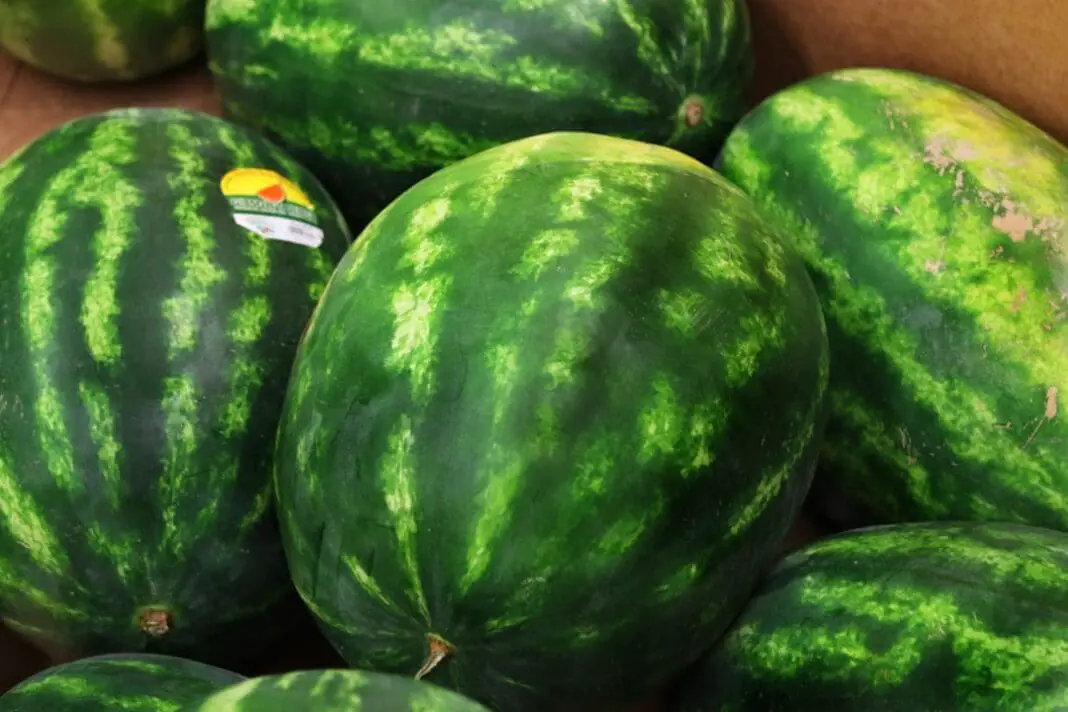
I used to be the person who stood in the grocery store produce section, staring at a pile of watermelons like they were all identical green boulders. I’d pick one up, pretend to know what I was doing, maybe give it a halfhearted knock, and toss it in the cart. Then I’d get home, cut it open, and find a pale, flavorless disappointment that tasted like wet cardboard. Sound familiar?
Here’s the thing most people don’t realize: watermelon does not ripen after it’s picked. Unlike bananas or avocados, once a watermelon leaves the vine, that’s it. What you grab at the store is what you’re stuck with. There’s no putting it on the counter for a few days and hoping for the best. So if you don’t know what to look for before you buy, you’re basically gambling with a 20-pound fruit that costs eight bucks. And the odds are not in your favor.
The good news is that there are real, proven ways to tell a great watermelon from a dud before you ever cut into it. Some of these come from university researchers, some from farmers who grow millions of pounds of the stuff, and some from people who’ve spent decades perfecting the art. Once you know these tricks, you’ll never bring home a bad watermelon again.
The Field Spot Is the Single Best Clue
If you only remember one thing from this entire article, let it be this: flip the watermelon over and look at the spot on the bottom. That’s the field spot (sometimes called the ground spot), and it’s where the melon sat on the ground while it was growing. Every expert, farmer, and produce manager agrees this is the number one indicator of ripeness.
What you want to see is a large, creamy, butter-yellow patch. The deeper and more golden the yellow, the longer that melon sat on the vine soaking up sweetness. Trevor Suslow, a professor emeritus at UC Davis, put it plainly: “If it has a yellow belly, one that is fairly yellow and definitely not still vanilla cream white, that’s when you know it’s right.” A white or pale field spot means the melon got pulled off the vine too early. It never had a chance to develop real flavor.
One thing to watch for: a very dark yellow or almost orange field spot can actually mean the melon is overripe. You’re looking for that sweet spot (literally) of a rich, buttery yellow. Not white, not orange. Think the color of good butter.
The Knock Test Actually Works, But You’re Probably Doing It Wrong
Everyone’s seen someone knock on a watermelon at the store. Most of us do it because we saw our parents do it, and we have absolutely no idea what we’re listening for. But the knock test is legit, if you understand what the sounds mean.
A ripe watermelon should produce a deep, hollow sound when you rap on it with your knuckles. Think of knocking on a door. That resonance means the flesh inside is firm and full of water. An unripe melon gives off a higher-pitched, almost tinny sound. An overripe melon? You’ll hear a flat thud, like tapping a dead log.
Here’s a tip that changed the game for me. Instead of just tapping and guessing, pick the melon up and hold it close to your ear while you knock. You’ll feel the vibration transfer through the rind and into your palm if the melon is ripe. If you knock and feel nothing, just hear a crack or thud, move on to the next one.
One blogger actually tested this scientifically, using a refractometer to measure sugar content against the thump test results. Her finding? Every deep-sounding watermelon in the experiment tasted great. The pitch test held up under real scrutiny.
A Shiny Watermelon Is a Bad Watermelon
This one surprises people. We’re trained to think shiny fruit looks good, looks fresh, looks appealing. With watermelon, it’s the opposite. A shiny rind is a dead giveaway that the melon was picked too soon and never fully matured.
As watermelons ripen, they develop a natural wax coating on the rind. This coating gives the outside a dull, matte finish. It’s the melon’s way of sealing itself off and preserving the water content inside. So a dull-looking watermelon isn’t old or past its prime. It’s actually at peak ripeness. The melon that catches your eye with its glossy green shell? Leave it right there in the bin.
One caveat: some stores wax their produce for display purposes, so the shine test can be tricky if the melon has been artificially coated. But in most cases, matte beats shiny every time.
Those Ugly Brown Patches Are Actually a Great Sign
You know those rough, brown, web-like marks on the outside of some watermelons? The ones that look like scarring or maybe even damage? Most shoppers skip right past these melons and reach for the smooth, pretty ones. That’s a mistake.
Those marks are called webbing, and they’re also known as sugar spots or sugar scars. They form when bees pollinate the watermelon flower. The pollination process scars the membranes that eventually become the fruit’s rind. More pollination means more webbing, and more pollination generally means a sweeter melon.
Sometimes you’ll even see hard, dark globs seeping out of the rind near these webbing patches. Don’t be grossed out. That’s sugar literally oozing out of the fruit. It’s not bugs, it’s not rot. It’s a melon that’s so sweet it can’t contain itself. A Kansas State University horticulture expert calls these “sugar bumps,” and they’re a strong indication that you’ve found a ripe one.
Pick It Up and Compare the Weight
A good watermelon should feel heavy for its size. Since watermelon is over 92% water, a heavier melon means more juice inside. The trick is comparison. Don’t just pick up one watermelon and decide it feels heavy enough. Pick up two or three melons that are roughly the same size and go with the heaviest one.
One food writer found a watermelon that weighed 18 pounds and was noticeably heavier than every other melon of comparable size around it. That’s the one you want. If a grocery store near you has a produce scale, use it. Otherwise, your arms will tell you.
One word of caution: a melon that feels too heavy relative to its size might actually be overripe. You’re looking for a sweet spot where the weight clearly stands out from the rest, but the rind is still firm when you press on it.
Check the Stem and the Stripes
If the watermelon still has a little tail of stem attached, take a close look at it. A dried, brown, shriveled stem means the melon ripened fully on the vine before it was harvested. A green stem? That melon got yanked off early. The smaller and more dried out the stem, the better.
The stripes matter too, though this is one of the trickier visual cues. Bold, high-contrast stripes with a strong difference between the dark green and light green sections are what you’re after. Think of a tiger stripe pattern. The dark stripes should be deep green and the lighter stripes should be a creamy, pale green. Faded or washed-out stripes can signal an underripe melon.
There’s also an interesting trick involving stripe width. The two-finger test suggests that if the dark green stripe is at least as wide as your index and middle finger held together, the melon is well-ripened. It’s not an exact science, but it’s another data point in your favor.
The Shape and Firmness Tell You More Than You Think
Round watermelons and oval watermelons are just different varieties. Neither shape is inherently better. But what you don’t want is a watermelon with irregular bumps, lumps, or uneven curves. Those inconsistencies usually mean the melon got uneven sun exposure or inconsistent watering while it was growing, and that translates to uneven flavor and texture.
As for firmness, give the melon a press with your thumb. The rind should feel solid with little to no give. If it flexes under pressure, the inside is probably mushy. And if you can, press on the blossom end (the end opposite the stem). Any softness there is a red flag for overripeness, and you should move on to the next melon.
Buy in Season or Don’t Bother
This is the simplest advice on this entire list, and people ignore it constantly. Peak watermelon season runs from June through August. Yes, you can find watermelons at the grocery store in October and February. But there’s a very strong chance those melons traveled a long distance, were picked early, and taste like nothing.
Texas A&M’s watermelon specialist, Juan Anciso, measures sweetness on the Brix scale. A score of 10 is standard. This season, Texas producers are consistently pulling melons that score 11 Brix, which means extra sweet. That kind of quality shows up when fruit is grown locally and sold during peak season. You’re not getting 11 Brix from a melon shipped across the hemisphere in January.
Put It All Together
No single test is foolproof on its own. The real secret is stacking multiple indicators. When you walk up to that watermelon bin this summer, here’s your quick checklist: flip the melon over and find a creamy, buttery yellow field spot. Look for brown webbing and sugar spots. Make sure the rind is dull, not shiny. Pick it up and compare the weight to a few others. Knock on it and listen for a deep, resonant sound. Check for a dried stem and bold stripes. Press it and confirm firmness.
Do all of that, and you’ll walk out of the store with a watermelon that’s actually worth cutting open. Skip it, and you might as well be throwing your money in the trash. A bad watermelon is one of the most disappointing things you can bring home from the grocery store. A great one? That’s summer in a single fruit.

