

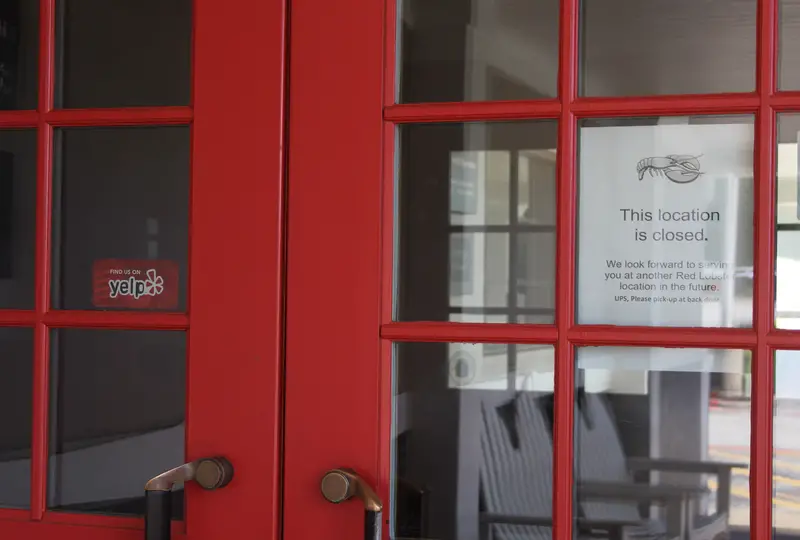
There was a time when Red Lobster meant something. You went there for your birthday. Your parents took you after a good report card. You fought your siblings over the last Cheddar Bay Biscuit and actually enjoyed the meal. That time is gone. What’s left is a chain bleeding money, bleeding locations, and serving food that customers are openly calling disgusting on every review site that exists. If you’re still going to Red Lobster in 2026, I genuinely want to know why.
Let me walk you through exactly what’s happening at America’s largest seafood chain, because the situation is somehow worse than you think.
The Bankruptcy Was Just The Beginning
Red Lobster filed for Chapter 11 bankruptcy in May 2024 after piling up nearly $300 million in debt. If you thought that was rock bottom, you were wrong. Since then, the chain has closed more than 130 locations and is reviewing even more for potential closure in 2026. That’s not a company on the mend. That’s a company trying to figure out which limbs to amputate next.
The chain emerged from bankruptcy in September 2024 with a new CEO, a new owner (Fortress Investment Group), and a lot of big talk about a comeback. But the numbers tell a different story. Systemwide sales fell 6.2% in 2025 to $1.56 billion. That’s the third straight year of declining sales. Red Lobster is now the smallest it’s been in at least 26 years, according to Technomic data going back to 1999.
In late 2025, the company laid off about 10% of its corporate staff and 200 restaurant employees. A group of roughly 100 Red Lobster locations are actually losing more money than the rest of the system brings in. They’re dragging the entire company down like an anchor.
How Private Equity Gutted The Chain
The story of how Red Lobster ended up here is infuriating if you ever loved the place. In 2014, private equity firm Golden Gate Capital bought Red Lobster from Darden Restaurants for $2.1 billion. To finance the deal, they immediately sold off Red Lobster’s real estate for $1.5 billion in a sale-leaseback transaction. Basically, they took a company that owned its own buildings and turned it into a company that had to pay rent on every single one of them.
By 2023, annual lease obligations had climbed to about $190.5 million, which was roughly 10% of all revenue. More than $64 million of that was tied to locations that were actively losing money. So Red Lobster was paying millions every year just for the privilege of operating restaurants where nobody wanted to eat. That’s the kind of financial hole you don’t climb out of with a new menu and some optimism.
They Brought Back The Promotion That Nearly Killed Them
Here’s where the story goes from sad to genuinely baffling. In 2023, Red Lobster ran a $20 Unlimited Endless Shrimp promotion that caused $11 million in losses in a single quarter. That promotion was cited in the actual bankruptcy filing as a contributing factor. The new CEO, Damola Adamolekun, publicly said he would never bring it back. His exact reasoning? “Because I know how to do math.”
Then in April 2026, they brought it back. The price is now $24.99 to $29.99 depending on the location, which is better than $20, but this is still the same promotion format that nearly destroyed the company two years ago. Whether the higher price point saves them or whether customers see right through the desperation remains to be seen. But it takes a special kind of confidence to reintroduce the exact thing that put you in bankruptcy court.
The Food Quality Has Fallen Off A Cliff
None of the financial stuff would matter as much if the food were still good. It is not. Across review sites, the picture is consistently grim.
The Admiral’s Feast, once considered a flagship dish, has taken what reviewers describe as a serious quality nosedive. The Lobster Bisque, which should be the one thing a restaurant called Red Lobster gets right, is described by multiple diners as thin, overly salty, and watery. Some say it tastes like generic canned cream soup with barely a few tiny shreds of lobster meat floating around. The Garlic Shrimp Scampi comes with overcooked, rubbery shrimp and a sauce that one reviewer called a “vapid, movie-theatre butter-flavored liquid.” The Cajun Chicken Linguini Alfredo features an Alfredo sauce described as having a “gluey texture and plastic taste,” with chicken that seems microwaved rather than grilled.
These aren’t isolated complaints from picky eaters. This is a pattern across cities and states, repeated over and over again on every platform where customers leave feedback.
The Reviews Are Absolutely Brutal
On PissedConsumer, Red Lobster sits at a 2.3-star rating from 645 reviews. Only 15% of users say they’d recommend the chain. Half say they’ll never go back. Customer recommendations include gems like “Do not go there,” “Don’t trust Red Lobster,” and “Double/triple check all the fine print in promotions.” On SmartCustomer, the rating drops to 1.6 stars.
On ConsumerAffairs, the stories from late 2025 and early 2026 are rough. One customer in January 2026 described food that was “overcooked and rubbery tasting,” including the Cheddar Bay Biscuits arriving overcooked and dry. After spending $55, their dog ended up eating most of it. Another reviewer at the Mt. Juliet, Tennessee location spent over $50 on a shrimp and lobster dish and received four shrimp, no lobster, and a pile of pasta.
A group in Concord, North Carolina sat for 30 minutes in January 2026 without anyone coming to their table, even though the restaurant wasn’t busy. They left without being served. A customer in September 2025 described a 45-minute wait to be seated at 5:30 PM, plastic silverware, a drink made wrong and charged double, and a visibly unhappy server. Another person at the Johnstown, Pennsylvania location ordered steak that came out raw, was sent back, returned burnt, and still had blood when cut. That was a $100 meal, mostly wasted.
The Chain Uses Pre-Frozen Lobster And Filler Ingredients
Red Lobster has been noted for using pre-frozen lobster rather than fresh, and has historically substituted langostino for lobster in certain dishes without making that especially clear. When you’re paying $25 to $40 for a lobster entree and the lobster wasn’t fresh and might not even technically be lobster, that’s a problem. Customers on BBB complaint boards have described curbside pickup orders arriving cold with biscuits that tasted freezer-burnt or stale.
As the company tightens its belt to survive, cheap premade ingredients and visible cost-cutting have become the norm rather than the exception. One complaint on BBB even described an unauthorized charge on a debit card from a Red Lobster location hundreds of miles away, with the chain refusing to issue a refund. Multiple BBB complaints show the company either failing to respond to disputes or failing to make any real effort to fix things.
The CEO’s Turnaround Plan Sounds Great On Paper
To his credit, CEO Damola Adamolekun is not pretending everything is fine. He’s talked openly about shrinking the footprint, slimming the menu, and eliminating waste. Fortress Investment Group pumped $60 million into revitalization efforts. The chain is projecting a positive net income of $2.1 million by fiscal 2026 and expects adjusted EBITDA to grow 43% from fiscal 2025 to 2027.
But Fortress also denied a Bloomberg report that it had “burned through” most of its post-bankruptcy funding, saying it has more than $30 million in liquidity. When your defense is “we still have $30 million left,” that doesn’t exactly scream financial confidence. They’re planning to remodel three restaurants as a test before doing anything broader. Three. Out of hundreds.
Adamolekun told Fortune: “I think this can be the greatest comeback in the history of the restaurant industry.” That’s a bold claim from a chain whose customers are posting photos of empty lobster shells and rubbery shrimp next to $55 receipts.
The Entire Seafood Chain Category Is In Trouble
Red Lobster isn’t the only seafood chain struggling. Joe’s Crab Shack has lost about 90% of its locations, going from 150 restaurants at its peak to roughly 15 in early 2026. Long John Silver’s is getting flagged by analysts as a chain whose identity hasn’t aged well, with customers reporting freezer-burned and overly oily food. The cost of shrimp, lobster, and crab keeps climbing, and Americans are eating out for seafood less than they used to. The National Restaurant Association reported that 42% of restaurant operators saw lower customer traffic in August 2025, the seventh straight month of decline.
But Red Lobster’s problems are bigger than industry trends. This is a chain that had its real estate stripped away by private equity, ran a promotion that cost it $11 million in one quarter, went bankrupt, laid off hundreds of people, closed over a hundred stores, and is now serving food that customers describe as worse than what you’d microwave at home. Industry analysts have been blunt: “When restaurants cut labor to manage costs, service suffers. When they reduce food quality to preserve margins, customer satisfaction declines.” Red Lobster is doing both.
Just Go Somewhere Else
Look, maybe your local Red Lobster is the exception. Maybe there’s one location near you with a great kitchen crew that takes pride in the food. But when half the customers on a major review site say they’ll never return, when the company can’t stop closing restaurants, and when the signature dishes are being described as rubbery, watery, and sad, the odds aren’t in your favor. You’re gambling $40 to $60 per person on a dining experience that has a coin-flip chance of being terrible.
Find a local seafood spot. Check their Google reviews. Spend your money somewhere that doesn’t need a private equity bailout and a bankruptcy restructuring just to keep the lights on. Red Lobster had a good run. But what it’s serving now, at these prices, with this level of service, is not worth your time or your money.

