
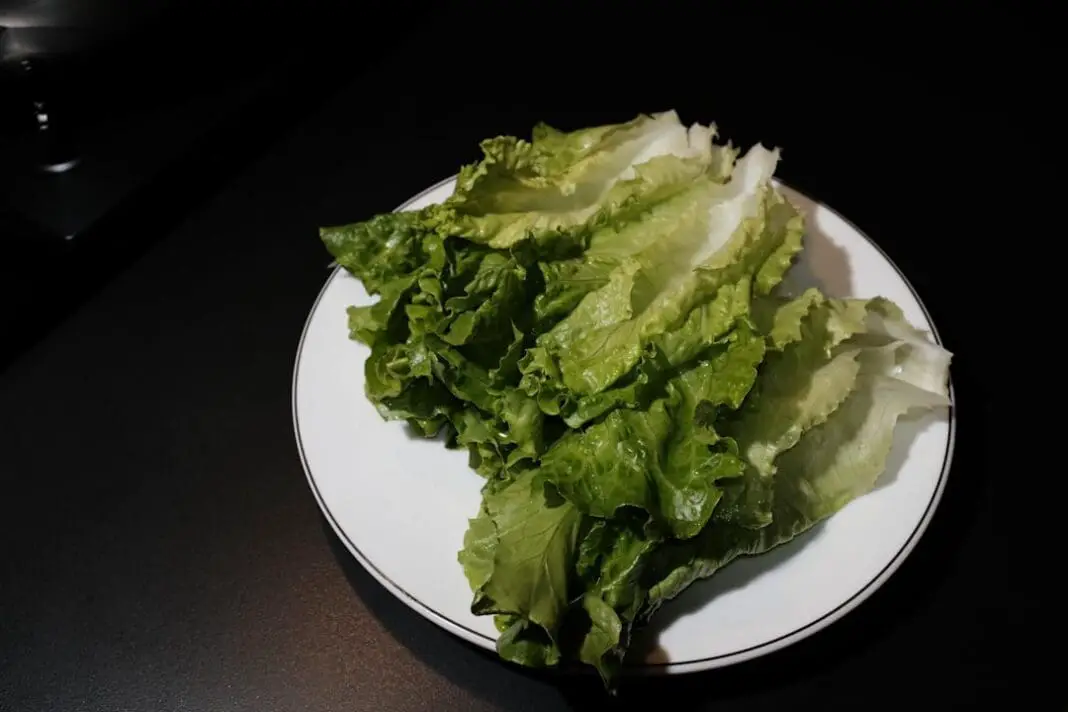
If you’ve been grabbing bags of romaine lettuce off the shelf without a second thought, you might want to rethink that habit. In late 2024, a massive E. coli outbreak linked to romaine lettuce sickened 89 people across 15 states, put more than a third of them in the hospital, and killed one person. The truly alarming part? The FDA never told the public about it. No press release. No consumer alert. Nothing. The investigation was quietly closed in February 2025, and it took investigative journalists to uncover the internal report.
That means you could have been eating the exact product responsible for a deadly outbreak and had absolutely no way of knowing. This isn’t a one-off situation either. Romaine lettuce has a long, well-documented history of contamination problems, and the systems that are supposed to protect you clearly have gaps. So before you toss another handful of romaine into your salad bowl, here’s what you actually need to check, ranked from the least useful to the most essential resource.
7. The Bag Label Itself (Worst)
Let’s start with the thing most people look at first: the packaging. Whether it’s a bag of hearts of romaine or a pre-mixed salad kit, the label on the bag is essentially useless when it comes to telling you whether the lettuce inside is safe to eat. Labels on romaine lettuce and other packaged greens rarely identify the growing region, let alone the specific farm or lot the lettuce came from. You might see a “best by” date and a brand name, but that’s about it.
During the 2024 outbreak, every bag of contaminated romaine looked completely normal. There was no discoloration, no smell, no visual indicator whatsoever. Contaminated produce looks identical to safe produce. So if your food safety strategy is “I’ll just look at it and see if it seems fine,” you’re basically flying blind. The bag label is the least reliable check you can make.
6. Washing Your Lettuce at Home
Here’s something that might genuinely surprise you: washing romaine lettuce at home does almost nothing to make it safer during an outbreak. A peer-reviewed study published in the National Library of Medicine tested multiple washing methods on romaine lettuce and found that the number of contaminating E. coli bacteria was not significantly reduced under typical household washing conditions.
The reason is structural. E. coli doesn’t just sit on the surface of the leaf waiting to be rinsed off. It can attach to leaf surfaces, penetrate into plant tissue through natural openings, and even get taken up through the roots into the internal structure of the plant. Once that happens, no amount of rinsing, soaking, or scrubbing is going to remove it. Consumer Reports and multiple food safety experts have confirmed this finding. So while washing your lettuce is a fine general practice, don’t treat it as a safety net. During an active outbreak, it won’t save you.
5. Your Grocery Store’s Own Standards
Some people assume that if a product is on the shelf at their local grocery store, it must be safe. Unfortunately, that’s not how it works. Grocery stores rely on the same supply chain as everyone else, and they’re generally not conducting independent testing on every batch of romaine that comes through their doors. They pull products when recalls are issued, but as the 2024 outbreak proved, sometimes no recall is ever issued.
According to food safety training experts, the decision not to name the specific producer in the 2024 outbreak made complete traceability challenging even for professional food managers working in commercial kitchens. If trained food service managers couldn’t get clear information, your local grocery store almost certainly didn’t have it either. The store is not an independent safety check. It’s just another link in the same chain.
4. The FDA Recalls Page
Now we’re getting into the resources that actually matter, though each one has its limitations. The FDA maintains a Recalls, Market Withdrawals, and Safety Alerts page at fda.gov that is updated in real time. When a formal recall is issued, this is where you’ll find the specific brands, date codes, lot numbers, and states affected.
The problem? A recall has to actually be issued for this page to help you. In the case of the 2024 romaine outbreak, the FDA conducted traceback investigations, identified the processor and the grower, traced the romaine back to a common ranch and lot, and then closed the investigation without issuing a recall or naming anyone. Their reasoning was that the implicated product had passed its shelf life and was no longer on the market. That may be technically true, but it meant 89 people got sick and the public was never warned. The FDA Recalls page is a solid resource, but it only works when the FDA actually uses it.
3. The USDA FSIS Recalls Page
The USDA’s Food Safety and Inspection Service (FSIS) maintains its own recall database, and it’s worth bookmarking alongside the FDA page. While the FDA handles produce like lettuce, the USDA FSIS covers meat, poultry, and processed egg products. You might wonder why this matters for a romaine article, but here’s the thing: many of the salads and prepared food products that contain romaine also contain chicken, bacon, or other proteins that fall under USDA jurisdiction.
If a prepared salad kit or restaurant meal is the source of an outbreak, the recall might show up on the USDA page rather than the FDA page, depending on the product classification. Checking both databases takes about two minutes and covers a much wider range of products. It’s not a perfect system, but it’s better than checking just one.
2. The CDC Foodborne Illness Outbreaks Page
This is probably the single most underused resource by everyday consumers, and it’s one of the most valuable. The CDC’s Foodborne Illness Outbreaks page at cdc.gov/foodsafety/outbreaks tracks active and recent outbreaks in real time and is often the first indication of a problem before a formal recall is even announced. If illnesses are being reported and a pattern is emerging, it will typically show up on the CDC page before the FDA takes any official action.
The CDC page also provides state-by-state breakdowns, which is incredibly useful. During the 2024 outbreak, cases were confirmed in Arkansas, Colorado, Illinois, Indiana, Kansas, Missouri, Montana, North Dakota, Nebraska, Ohio, Pennsylvania, South Dakota, Tennessee, and Wisconsin. If you lived in one of those states and had been checking the CDC page, you might have seen early signals. The catch with the 2024 outbreak is that even the CDC stayed silent, which brings us to the single most important resource.
1. Independent Food Safety News Sources (Best)
If the 2024 romaine outbreak taught us one uncomfortable lesson, it’s this: you cannot rely solely on government agencies to warn you. The FDA’s internal report on the outbreak was never voluntarily disclosed to the public. It was uncovered by NBC News. The grower was never named by the FDA, despite the agency having identified the specific ranch and lot responsible. The CDC remained silent throughout.
Independent food safety journalism and legal investigators were the ones who actually connected the dots. Food safety attorney Bill Marler, whose firm has represented food poisoning victims since the 1993 Jack-in-the-Box outbreak, had his on-staff epidemiologist analyze whole-genome sequencing data and determined that all of his clients had consumed romaine from Taylor Farms, a major processor based in California’s Salinas Valley. Marler filed lawsuits based on that data. The FDA declined to confirm or deny whether Taylor Farms produced the implicated lettuce, citing confidentiality restrictions.
Sources like Food Safety News, the Food Poison Journal, and investigative teams at major outlets like NBC News are doing the work that federal agencies are, in some cases, choosing not to do. Bookmarking these sites and checking them regularly, especially during peak romaine season in the fall and winter, is the single best thing you can do before eating romaine lettuce.
The Bigger Picture
Romaine lettuce keeps showing up in outbreaks for reasons that are structural and difficult to fix. It’s grown in open fields in regions like California’s Salinas Valley and Arizona’s Yuma Valley, where agricultural irrigation water can be contaminated by nearby livestock operations. It’s eaten raw, so there’s no cooking step to kill bacteria. And it goes through centralized processing facilities where produce from many farms gets washed, cut, mixed, and packaged together. One contaminated batch can spread across an enormous supply chain.
None of this means you need to swear off romaine forever. But it does mean you should treat it differently than, say, a head of broccoli you’re going to steam. Before you buy a bag of romaine or order a Caesar salad at a restaurant, take 60 seconds to check the CDC outbreaks page and a couple of independent food safety sites. That tiny habit is worth more than any amount of rinsing at the kitchen sink.
The 2024 outbreak proved that the agencies we trust to protect us will sometimes stay quiet, even when people are being hospitalized. Being your own first line of defense isn’t paranoia. It’s just common sense.

