

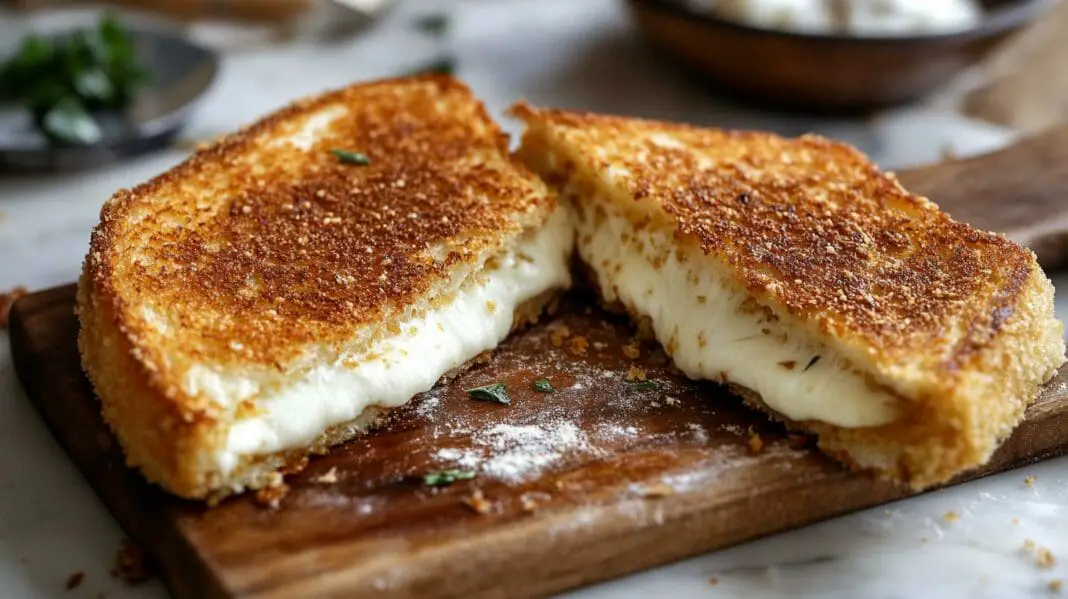
I used to think grilled cheese was one of those things you couldn’t really improve on. Butter, bread, American cheese, maybe some cheddar if you’re feeling fancy. It’s perfect in its simplicity, right? That’s what I believed until I learned about mozzarella in carrozza, which is basically Italy’s answer to the grilled cheese sandwich. And honestly, once you try it, going back to the regular version feels like settling.
The name translates to “mozzarella in a carriage,” because the bread acts as a carriage holding the cheese inside. When you pull the sandwich apart, the long, gooey strings of melted mozzarella are said to resemble the reins of a horse and carriage. It’s a beautiful image, and an even better sandwich. Think of it as a cross between a grilled cheese and mozzarella sticks, except better than both of those things put together.
Where This Sandwich Comes From (And Why It Exists)
Mozzarella in carrozza comes from Southern Italy, specifically the Campania region around Naples and Sorrento. Food historians trace it back centuries, though nobody can pin down an exact date. What we do know is that it’s a product of “cucina povera,” which literally means “poverty cuisine.” Italian home cooks created this sandwich to use up stale bread and leftover scraps of cheese. Frying masks the staleness of the bread and transforms those cheese ends into something gooey and crispy all at once. That’s the genius of Italian cooking. You take almost nothing and turn it into something people fight over at the table.
The sandwich exists in different forms depending on where you are in Italy. In Naples, the traditional version uses buffalo mozzarella and nothing else between the bread. Just cheese, pure and simple. In Rome and Venice, vendors stuff theirs with pancetta, ham, or even anchovies, and they coat the outside in breadcrumbs for extra crunch. The Sicilian version from Messina brushes the bread with béchamel sauce. Every region puts its own spin on it, but the core idea stays the same: bread, cheese, dipped and fried until golden.
Why This Beats Regular Grilled Cheese
A traditional American grilled cheese is cooked in butter in a skillet. That’s great, and I’m not here to trash it. But mozzarella in carrozza takes a completely different approach. Instead of just buttering the bread and tossing it in a pan, you dip the entire assembled sandwich in milk, then coat it in flour and beaten egg (and optionally breadcrumbs). Then you fry it. The result is a sandwich with a crunchy, golden shell on the outside and an impossibly melty, stretchy cheese center on the inside. It’s the contrast that makes it so addictive.
The dipping and coating process also serves a practical purpose. It seals the edges of the sandwich so the cheese doesn’t leak out during frying. The flour and egg act as a glue, keeping everything contained while the mozzarella melts into a pool of gooey perfection inside that crispy shell. If you’ve ever had a regular grilled cheese where the cheese oozed out the side and burned onto the pan, you’ll appreciate this technique immediately.
The Cheese Matters More Than You Think
This is where most people go wrong. You might assume fresh mozzarella is the move here because it sounds fancier. Don’t do it. Fresh mozzarella contains way too much moisture, and all that water will make your sandwich soggy before it even hits the pan. You want low-moisture mozzarella for this recipe. It melts beautifully, gets stretchy and gooey, and won’t turn your bread into a wet mess.
Also, skip the pre-shredded bags. Those contain anti-caking additives (usually cellulose or potato starch) that prevent the cheese from clumping in the bag, but they also prevent proper melting. You want to buy a block of low-moisture mozzarella and slice it yourself. Look for it in the deli section at your grocery store, or grab a block of Polly-O or Galbani from the cheese aisle. Slice it about a quarter inch thick so it melts evenly without being so thin that you barely taste it.
If you want to get creative, you can mix in other Italian cheeses. A few shavings of provolone add a slightly sharper, nuttier flavor. Fontina is buttery and smooth and melts like a dream. Some people even add a sprinkle of pecorino or parmesan for a salty kick. But the mozzarella should always be the star.
Picking the Right Bread
Traditional recipes call for plain white bread, and honestly, that works perfectly. The soft texture presses together easily and seals well, which is important when you’re dipping and coating the sandwich. You don’t want a bread with a super hard crust that won’t compress, because the edges need to stick together to keep the cheese from escaping.
That said, you can use sourdough, Italian bread, or even French bread sliced about three-quarters of an inch thick. Some cooks like a heartier bread for more structure, especially if you’re adding the breadcrumb coating on the outside. Just make sure you press the sandwiches firmly after assembling them. You want a tight seal.
The Frying Technique (Don’t Be Scared)
I know some people get nervous about frying at home. Don’t overthink this. You’re not deep frying a turkey. You just need about a half inch of olive oil in a skillet over medium heat. That’s it. You want the oil hot enough that the sandwich sizzles when it hits the pan, but not so hot that the outside burns before the cheese melts.
Medium heat is your friend here. Give each side about 2 minutes, maybe 3, until it’s a deep golden brown. If your bread is browning too fast, turn the heat down to medium-low. If the outside is perfect but the cheese hasn’t fully melted yet, you can always pop the finished sandwiches into a 170 degree oven for a few minutes to finish the job. Food fried in properly heated oil is never greasy, so trust the process.
Drain the finished sandwiches on paper towels or a wire rack for about 30 seconds, then serve immediately. This is not a sandwich that likes to wait around. The magic is in eating it hot, when the outside is still audibly crunchy and the cheese inside is at maximum stretch.
Ways To Customize It
The classic Neapolitan version is pure and simple, just bread and cheese. But once you’ve nailed the basic technique, there’s a whole world of variations to play with. The Roman style adds a thin slice of ham or prosciutto inside, which gives you a salty, savory contrast to the mild mozzarella. You can also tuck in a couple of anchovy fillets if you’re into that (and if you’re not, I respect that, but you’re missing out).
A thin spread of pesto on the inside of the bread before assembling adds an herby richness that pairs perfectly with the mozzarella. Some people use a thin layer of mayonnaise on the inside, which isn’t traditional at all, but it acts as extra glue to keep the cheese sealed in and makes the melt even gooier. Serve the finished sandwich with warm marinara sauce on the side for dipping. It’s basically mozzarella sticks in sandwich form at that point, and I mean that as the highest compliment.
For the breadcrumb coating, you can mix Italian seasoning and a little garlic powder into your breadcrumbs for extra flavor on the crust. Some cooks skip the breadcrumbs entirely and just do the milk, flour, and egg dip. Both versions are great. The breadcrumb version gives you a crunchier, more mozzarella-stick-like exterior, while the simpler version is a bit lighter and lets the bread flavor come through more.
Common Mistakes to Avoid
The biggest mistake is using fresh mozzarella. I said it above, and I’ll say it again, because this is the number one reason people’s first attempt falls apart. Too wet. Use low-moisture.
Second mistake: not pressing the sandwiches firmly enough before dipping. The bread needs to be sealed around the cheese. Give each sandwich a really firm press with your palm. If the edges aren’t sticking, you can trim the crusts off and press the soft bread edges together like you’re making a sealed pocket.
Third: cranking the heat too high. High heat equals burned bread and cold cheese in the center. Keep it at medium, be patient, and you’ll get that perfect golden crust with fully melted cheese every time.
Finally, don’t let them sit. Eat these within a minute or two of coming out of the pan. They’re not great reheated (though you can store leftovers in the freezer and reheat in a 350 degree oven for about 10 minutes if you must). But fresh out of the oil, with that crunch and that cheese pull? There’s really nothing like it. Make these once and your regular grilled cheese is going to feel very, very boring.
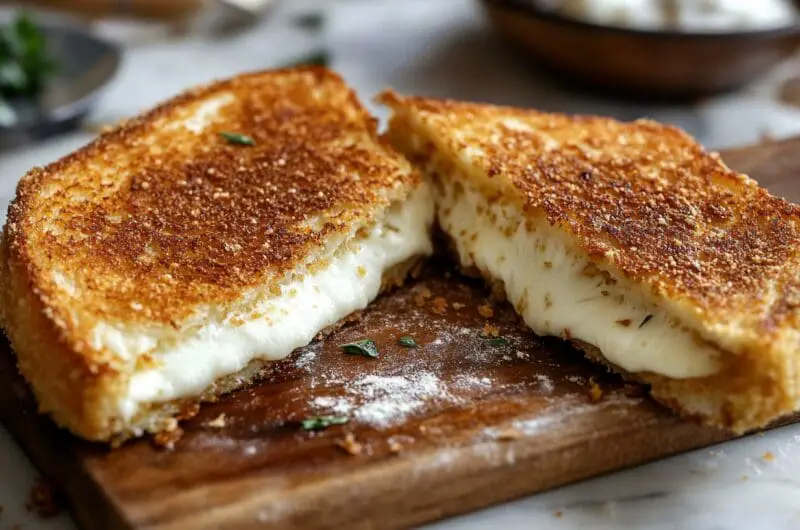
Mozzarella in Carrozza (Italian Grilled Cheese)
Course: LunchCuisine: Italian3
sandwiches10
minutes10
minutes550
kcalItaly’s answer to the American grilled cheese. Crispy, golden, and stuffed with stretchy melted mozzarella. Once you try it, there’s no going back.
Ingredients
6 slices white sandwich bread
8 oz low-moisture mozzarella, sliced 1/4 inch thick
1/2 cup whole milk
1/2 cup all-purpose flour
2 large eggs, beaten
1/2 cup Italian-style breadcrumbs (optional)
Olive oil for frying (about 1/2 inch in your skillet)
Pinch of salt
Warm marinara sauce for dipping
Directions
- Lay out 3 slices of bread and divide the mozzarella slices evenly among them, keeping the cheese about a quarter inch from the edges. Sprinkle a tiny pinch of salt over the cheese. Top each with a second slice of bread and press down firmly with your palm to seal the sandwiches. If edges aren’t sticking, trim the crusts and press the soft edges together tightly.
- Set up a dipping station with three shallow dishes: milk in the first, flour in the second, and beaten eggs in the third. If using breadcrumbs, set up a fourth dish with the Italian-style breadcrumbs.
- Take one sandwich and quickly dip it in milk on both sides. Don’t soak it, just a fast dip so the surface is lightly moistened. Then coat all sides in flour, including the edges. Shake off any excess flour gently.
- Dip the floured sandwich into the beaten egg, making sure all sides and edges are fully coated. If using breadcrumbs, press the egg-coated sandwich into the breadcrumbs on both sides until evenly covered. Repeat with the remaining sandwiches.
- Pour olive oil into a large skillet to a depth of about half an inch. Heat over medium heat until the oil shimmers and a small piece of bread sizzles immediately when dropped in. This should take about 3 minutes.
- Carefully place the sandwiches in the hot oil. Don’t crowd the pan; fry in batches if needed. Cook for about 2 minutes on the first side until deep golden brown, then carefully flip with a spatula.
- Fry the second side for another 2 minutes until equally golden and crispy. If the bread is browning too quickly before the cheese melts, reduce heat to medium-low. The total frying time should be about 4 minutes per sandwich.
- Transfer the finished sandwiches to a paper towel-lined plate or wire rack to drain for about 30 seconds. Slice in half with a serrated knife (cut from one side until you reach the cheese, then flip and cut from the other side for a clean cut). Serve immediately with warm marinara sauce for dipping.
Notes
- Do not use fresh mozzarella or pre-shredded mozzarella. Fresh is too wet and will make your sandwich soggy. Pre-shredded contains anti-caking agents that prevent proper melting. Buy a block of low-moisture mozzarella and slice it yourself.
- If your sandwiches are golden on the outside but the cheese hasn’t fully melted, place them on a baking sheet in a 170 degree F oven for a few minutes to finish melting without overcooking the crust.
- For a Roman-style variation, add a thin slice of prosciutto or ham inside each sandwich before sealing. You can also spread a thin layer of pesto on the bread before adding the cheese for extra flavor.
Frequently Asked Questions
Q: Can I use fresh mozzarella for mozzarella in carrozza?
A: It’s not recommended. Fresh mozzarella has a very high water content that will make the bread soggy and cause the sandwich to fall apart during frying. Low-moisture mozzarella (the kind sold in blocks at most American grocery stores) is the right choice. It melts perfectly, gets stretchy and gooey, and won’t release water into your bread.
Q: Can I make these in an air fryer instead of pan frying?
A: You can try, but the results won’t be the same. Part of what makes this sandwich so good is the way the egg and flour coating crisps up in the oil. An air fryer will give you a drier crust without that same golden, slightly rich quality. If you do try it, spray the sandwiches generously with cooking spray and cook at 375 degrees F for about 6 to 8 minutes, flipping halfway through.
Q: What kind of oil should I use?
A: Olive oil is the traditional choice and adds a subtle flavor that pairs well with the mozzarella. A regular or light olive oil works great for frying since it has a higher smoke point than extra virgin. You can also use vegetable oil or canola oil if that’s what you have on hand. The key is getting the oil to the right temperature, hot enough to sizzle but not smoking.
Q: How far in advance can I assemble these before frying?
A: You can assemble the sandwiches (bread and cheese only, before dipping) up to an hour ahead and keep them pressed under a plate in the fridge. But don’t dip them in the milk, flour, and egg until right before frying. The coating gets soggy if it sits too long. These are really best made and eaten right away.

