
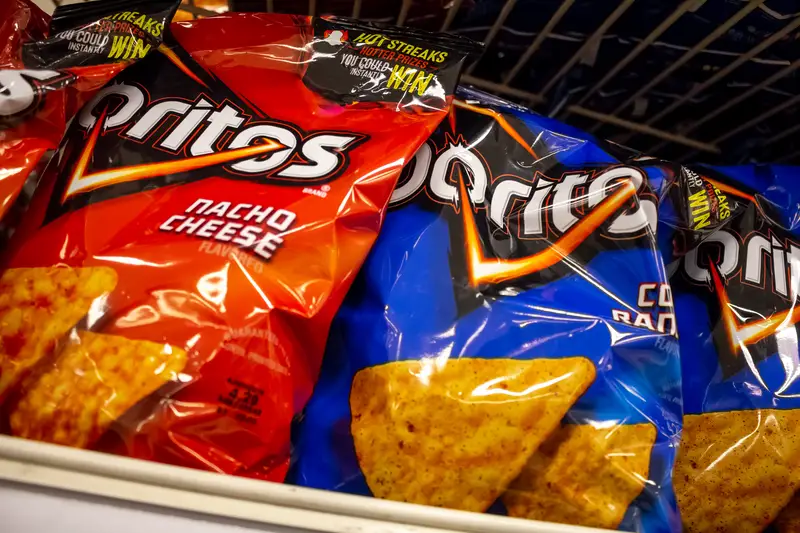
Remember when grabbing a bag of Doritos was basically an afterthought? You’d toss one in the cart without even glancing at the price tag. Those days are gone. Over the past four years, the cost of America’s favorite tortilla chip has jumped so dramatically that it nearly destroyed one of the biggest food companies on the planet. And the fallout is still playing out right now in 2026.
Let’s talk about what happened, how PepsiCo lost $50 billion because of it, and whether the new price cuts actually mean anything for your grocery bill.
The Numbers Are Kind of Insane
In 2021, a 14.5-ounce “party size” bag of Doritos at Walmart cost $3.98. By 2025, that same bag was listed at $5.94. That’s a nearly 50% increase in four years. And in some stores around the country, large bags were pushing past $7. Seven dollars. For chips.
To put that in perspective, a gallon of gas averaged about $3.40 across most of the country for much of that period. So yes, there were moments when a bag of Doritos cost more than two gallons of gasoline. Let that sink in for a second.
The price hikes didn’t happen overnight. Frito-Lay’s net revenue shot up 13% between 2020 and 2021, then another 9% between 2021 and 2022. The company had a longstanding internal motto called “Frito-Lay Five Forever,” meaning they aimed for 5% revenue growth per year. They blew right past that, and for a while, Wall Street loved it.
It Wasn’t Just the Price Tag That Changed
While prices were climbing, something sneaky was happening to the bags themselves. A standard bag of Doritos used to weigh 11 ounces. Then it dropped to 9.75 ounces. Then 9.5. Then, in 2022, it landed at 9.25 ounces. That’s a 16% reduction in the amount of chips you were getting, from roughly 137 chips per bag down to about 115.
Frito-Lay confirmed it openly. A spokesperson said inflation was “hitting everyone” and they “took just a little bit out of the bag” so they could keep prices the same. Except they didn’t keep prices the same. They raised prices AND shrank the bag. You got hit twice.
This move alone was estimated to save Frito-Lay more than $50 million. And Doritos wasn’t alone. Gatorade swapped its 32-ounce bottle for a 28-ounce one. Wheat Thins lost two full ounces. It was happening everywhere, but the Doritos shrinkflation stung because so many people buy them so often.
Shoppers Didn’t Just Complain. They Stopped Buying.
Here’s the part PepsiCo didn’t see coming, or maybe didn’t want to see. People started walking right past the Doritos and grabbing something else. Store brands. Walmart’s own chips. Takis. Whatever was cheaper. According to reporting from Detroit News, Walmart even started pulling Frito-Lay products off shelves and giving that space to its own in-house brand and competitors.
Walmart had reportedly been telling PepsiCo for more than a year that prices were too high. The retailer wanted action. PepsiCo dragged its feet. Frito-Lay missed its internal revenue targets by more than $1 billion two years in a row. Revenue that had grown for 53 straight quarters, over 13 years, finally started falling.
Three out of four Americans told pollsters that groceries had gotten so expensive they were cutting costs in other parts of their lives just to keep eating. And snack aisle spending was one of the first things people trimmed. Nobody needs Doritos. People want Doritos. But at $7 a bag, wanting them and actually buying them became two very different things.
$50 Billion in Market Value, Gone
PepsiCo’s stock peaked in May 2023 at $196 a share. By late 2025, it had fallen nearly 22%. The company’s total market value collapsed by $50 billion. Fifty billion dollars, wiped out largely because of overpriced chips.
Inside PepsiCo, executives had reportedly been debating the pricing problem since at least 2024. But nobody wanted to be the person who slashed prices and caused a short-term revenue dip. So instead, they tried promotions. They tried coupons. They tried shrinkflation. None of it worked. The customers were already gone.
In September 2025, an activist investor called Elliott Investment Management bought a $4 billion stake in PepsiCo and started pushing hard for changes. Elliott manages over $70 billion in assets. They weren’t interested in patience. They wanted lower prices, a smaller product lineup, and better margins. PepsiCo agreed to a deal with Elliott in December 2025, and the company committed to cutting snack prices by 15%.
The Price Cuts Finally Arrived in 2026
On February 3, 2026, just ahead of the Super Bowl, Frito-Lay officially dropped prices on Lay’s, Doritos, Cheetos, and Tostitos by up to 15%. The timing was calculated. Super Bowl weekend is the single biggest chip-buying period of the year, and PepsiCo wanted maximum visibility.
Rachel Ferdinando, CEO of PepsiCo Foods U.S., said people “shouldn’t have to choose between great taste and staying within their budget.” Which is a nice thing to say after four years of making people do exactly that.
As of April 2026, an 8.5-ounce bag of Doritos carries a suggested price of about $5.49, down from $6.29. An 8-ounce bag of Lay’s Classic went from $4.99 to $4.29. At a Safeway in Washington, D.C., family-size bags of Doritos and Tostitos were selling for as low as $2.49 each when bought in multiples of three. At a Walmart in the same area, bags of Cheetos Simply were on rollback at $3.97, down from $4.43.
Importantly, PepsiCo said the bag sizes are staying the same this time. No shrinkflation involved in this round of cuts. Stores even put up signs saying “same size, new lower price.” Which, again, is a weird thing to need to reassure people about.
Is It Actually Working?
Short answer: yes, so far. PepsiCo’s Q1 2026 earnings beat Wall Street expectations. For the first time in over two years, the company’s North American food business posted volume growth of 2%. That means people are actually buying more bags of chips again, not just paying more for fewer bags.
Many retailers responded to the lower prices by giving Frito-Lay products more shelf space again. CEO Ramon Laguarta called the early results “pretty good.” Operating profit for the division jumped 24% in Q1. Shares rose 2% after the earnings report.
But it’s not all good news. PepsiCo announced it’s closing Frito-Lay plants in Orlando, Florida; Rancho Cucamonga, California; and Liberty, New York. Hundreds of workers are affected. The company is also cutting its U.S. product lineup by 20%, meaning some of those niche Doritos flavors you see at the gas station might disappear. Morgan Stanley analysts said they’re “less optimistic” about Frito-Lay’s future, even with the improvements.
The Bigger Picture Is Pretty Grim
Doritos is just one product in a sea of grocery inflation that hasn’t really gone away. A recent analysis found that the average American family of four is now spending $741 more per year on the exact same groceries they bought in 2020. And $41 of that increase came purely from shrinkflation, where you never even saw the price change on the tag because the package just got smaller instead.
The national average price for a 16-ounce bag of potato chips is now $6.75, according to Bureau of Labor Statistics data. That’s up almost 400% since 1977. Most of the biggest brands stopped raising prices in 2026, but they stopped at levels that are 22% to 102% above where they were in 2020. So the pause feels less like relief and more like someone finally stopped hitting you.
PepsiCo isn’t alone in this. General Mills, which makes Cheerios and Betty Crocker products, announced plans to discount roughly two thirds of its offerings. Conagra and other packaged food companies had already started cutting prices before PepsiCo got around to it. The food industry is collectively realizing that there’s a ceiling to what people will pay, and a lot of companies crashed right into it.
What This Means for Your Cart
If you’ve been buying store-brand chips or skipping the snack aisle entirely, you’re not alone. And honestly, those habits might be worth keeping. The 15% price cuts are real, and they’re showing up at most major retailers. But a bag of Doritos that went from $3.98 to $5.94 and then dropped 15% is now around $5.05. That’s still 27% more expensive than it was in 2021. And you’re getting fewer chips per bag than you were back then.
Food industry analyst Nicholas Fereday put it plainly: “PepsiCo, like many, assumed consumers would suffer the rises and only now appreciates how important affordability is to the typical consumer.” That quote says everything you need to know about how these companies think about you. They bet you wouldn’t notice, or that you’d keep paying anyway. Enough people proved them wrong that a $50 billion lesson had to be learned the hard way.
So the next time you see a bag of Doritos on the shelf with a “new lower price” sticker, just remember where that price started. And maybe grab the store brand anyway.

