

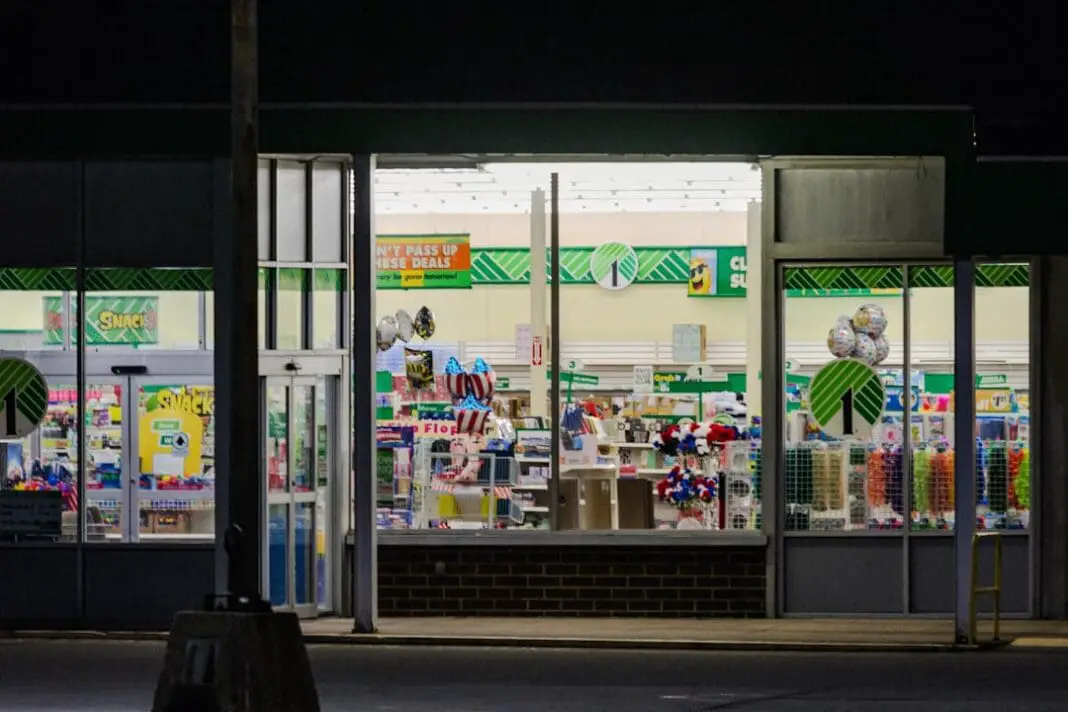
I love a good deal. Genuinely. I will drive an extra ten minutes to save four bucks on paper towels and feel like I won the lottery. So believe me when I say this isn’t some snobbish takedown of dollar stores. Dollar Tree, Dollar General, Family Dollar, whatever your local flavor is, they all have their place. Wrapping paper? Great. Greeting cards? Perfect. Party supplies for a kid’s birthday? Absolutely.
But there are certain aisles where that $1.25 price tag stops being a bargain and starts being a trap. Some of these products are genuinely worse than what you’d get elsewhere. Some are actually more expensive per unit than the grocery store version. And some are just flat out junk that’ll fall apart before you get home.
Here are seven items that aren’t worth grabbing at the dollar store, no matter how tempting.
Batteries
This one shows up on just about every expert’s “do not buy” list, and for good reason. Dollar store batteries are frequently liquidated stock from bigger retailers. That means they may have already spent years sitting on a Target or Walmart shelf before getting shipped over to the dollar store. Even unused batteries lose their charge over time, so by the time you’re putting them in your kid’s remote control car, they might already be half dead.
It gets worse. Many of those generic packs contain carbon-zinc cells instead of the lithium or alkaline you’d find in name brands like Duracell or Energizer. Carbon-zinc batteries hold less energy and are way more prone to leaking. If you’ve ever opened a battery compartment and found that crusty white residue eating through the contacts, that’s what we’re talking about. One leaky battery can destroy a $30 gadget to save you seventy-five cents. The math doesn’t work.
Wired actually ran experiments on dollar store batteries and confirmed they’re packed with significantly less energy than the name brands. For something you use infrequently, like a flashlight you keep in a drawer, they’re probably fine. For anything else, buy real batteries.
Phone Chargers and Electronics
We’ve all been there. Your charger breaks, you’re desperate, and there’s a Dollar Tree right there. So you grab a $1.25 cable and hope for the best. It works for about 48 hours. Then it starts charging at a glacial pace, or it only works if you hold it at a very specific angle, or it just stops altogether.
Dollar store electronics, including earbuds, chargers, and small gadgets, are built with the cheapest components available. They don’t meet the same quality standards as products from Apple, Samsung, or Anker. And the risk goes beyond just poor performance. Cheap, unregulated chargers can overheat or short-circuit. Dollar store extension cords and power strips have actually been recalled by the Consumer Product Safety Commission for fire hazards. More than a million Crafter’s Square hot glue guns sold at Dollar Tree were recalled because they could malfunction and catch fire.
A decent phone charger from Amazon or Best Buy costs maybe $10 to $15 and lasts years. That’s a much better deal than replacing a $1.25 cable every week.
Kitchen Knives
Here’s a fact that sounds backwards but is completely true: a dull knife is more dangerous than a sharp one. When a blade won’t cut properly, you push harder, you lose control, and that’s when accidents happen. Dollar store knives are made from low-grade metal that won’t hold an edge. Consumer expert Andrea Woroch put it bluntly: “These won’t be sharp, and dull knives can be very dangerous.”
You don’t need a $200 Japanese chef’s knife. A solid Victorinox or Mercer knife runs about $25 to $40 and will last for years if you take care of it. That’s the kind of purchase where spending more actually saves you money because you’re not replacing it constantly (or, you know, dealing with a sliced finger). Kitchen knives account for roughly a third of all knife-related emergency room visits in the U.S., according to one report. Don’t add to that statistic over a buck twenty-five.
Laundry Detergent
This one surprises people because it seems like such an easy win. Laundry soap is laundry soap, right? Not even close. The cheap liquid detergent at dollar stores is heavily watered down compared to brands like Tide, Gain, or even store brands from Walmart. You end up using way more of it per load, or worse, running the same load twice because your clothes come out still smelling funky.
There’s also the shelf life issue. Detergent loses effectiveness the longer it sits around, and there’s no telling how long that bottle has been sitting in a warehouse or on a dollar store shelf. By the time you pour it in the machine, it might be working at a fraction of its already limited strength.
A big jug of Tide or Persil from Costco or Walmart on sale will cost more upfront but last much longer and actually clean your clothes. If you want to be smart about it, watch for coupons or buy during sales at Target. The per-load cost ends up being similar, and your clothes will actually come out clean.
School Supplies
Back-to-school season turns dollar stores into a madhouse. Parents see bins of pens, notebooks, and crayons for a buck and start loading up. But this is one category where the math consistently doesn’t add up.
Price comparisons have shown some eye-opening numbers. A pack of 150 pages of filler paper costs $1.25 at Dollar Tree, but the exact same product is $0.97 at Walmart. Crayola crayons (24 count) are $1.50 at Family Dollar and Dollar General, but just $0.50 at Office Depot, Staples, and Target. That’s triple the price for the exact same box of crayons.
Even when the dollar store price is competitive, the quality tends to be noticeably worse. Pens that skip, binders that crack, rulers that snap. Kiplinger’s team actually visited Dollar Tree stores and noted that quality appeared low on several school supply products. Buying cheap stuff that breaks just means you’re buying it twice. Check the back-to-school sales at Target or Walmart instead. Those loss-leader deals on basic supplies are genuinely hard to beat.
Tools
A hammer for a dollar sounds like a steal until the head flies off while you’re swinging it at a nail. That’s not a joke. Dollar store tools are made from bargain-bin metals and plastics that can snap, bend, or break apart under normal use. Screwdriver heads that strip instantly. Wrenches that round off bolts instead of gripping them. Pliers with jaws that don’t actually meet.
Beyond just being frustrating, a tool failure in the middle of a project can make the whole job harder. A stripped screw or a rounded bolt is suddenly a much bigger problem than whatever you were originally trying to fix. And if a cheap clamp is holding something above your head when it gives out? That’s a trip to the ER, not a trip to the savings bank.
Hardware stores like Home Depot and Lowe’s sell individual hand tools for $5 to $15 that are genuinely decent quality. Many come with lifetime guarantees. Brands like Black + Decker and Stanley are affordable and built to last. This is the definition of “buy once, cry once.”
Canned and Boxed Food
Dollar stores have been expanding their grocery sections a lot in recent years, and at first glance, it looks like a win for budget shoppers. But the pricing isn’t always what it seems. Multiple price checks have found that grocery superstores like Walmart regularly beat dollar store prices on canned and boxed goods, especially when you factor in store brands.
Take canned tuna. Dollar stores tend to carry only name-brand Starkist, while Walmart and Kroger offer generic options that cost less. The same pattern holds for canned vegetables, soups, pasta, and pretty much everything else in the center aisles. Shopping experts also point out that off-brand food items at dollar stores can be risky because it’s hard to verify freshness or know exactly how long they’ve been sitting on the shelf. The turnover just isn’t as fast as a regular grocery store.
Then there’s the sneaky sizing trick. Manufacturers often create special, smaller versions of their products specifically for dollar stores. So you see a familiar brand and think you’re getting a deal, but the box or can is smaller than what you’d find at the grocery store. Per unit, you’re actually paying more. Always check the ounces.
So What Should You Actually Buy There?
Look, dollar stores aren’t evil. They serve a real purpose, and plenty of what they sell is perfectly fine. Greeting cards, wrapping paper, gift bags, party decorations, basic cleaning supplies (name brand ones like Windex or Lysol, when you find them), reading glasses, picture frames, seasonal decor. All solid picks. Even things like cotton balls and swabs are totally fine at the dollar store.
The trick is knowing which aisles to hit and which to walk right past. The seven categories above are where dollar stores consistently let shoppers down, either because the products are genuinely inferior, because you’re not actually saving money, or because you’ll just end up buying the same thing again in a week. A bargain isn’t a bargain if it doesn’t work. Spend a little more where it counts, save on the stuff that doesn’t matter, and you’ll come out way ahead.

