

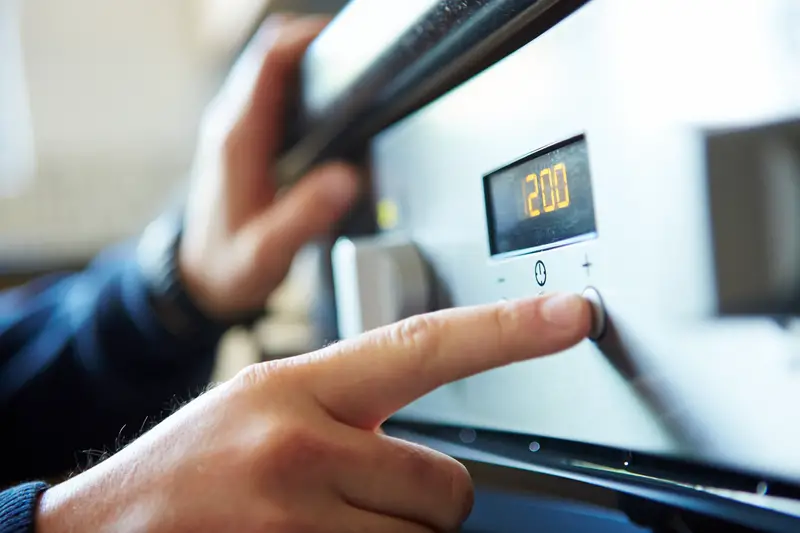
You know the line. Every recipe on earth starts with it. “Preheat the oven to 350.” Most of us read it, turn the dial, and then ignore the whole thing until that little beep goes off. The beep feels like a promise. It says, “I’m ready, put the food in now.” Here is the part nobody tells you. That beep is fibbing, and it has probably been quietly messing up your cookies, bread, and pizza for years.
I figured this out the slow and painful way, with a parade of sad, flat cookies and one loaf of bread so dense it could have held a door open. The fix is almost embarrassingly simple. Wait longer than you think you need to. Way longer. And once you understand why, you will never trust that beep again.
The Beep Is a Liar
Here is what is actually happening inside that box. The sensor that triggers the preheat signal usually sits near the oven wall, not in the center where your food goes. So when the display flashes 350, the air by that one spot has reached 350. The racks, the walls, and the air in the middle are still warming up and playing catch up. Temperature stability matters far more than one quick reading, and most ovens are nowhere near stable when they beep.
The gap is bigger than you would guess. One breakdown of the oven heating science found the wall temperature can lag the thermostat reading by up to 65 degrees during early preheating. Most ovens beep after about 8 to 10 minutes, but the full cavity often needs closer to 15 to 20 minutes to settle. Slide your food in at the beep and the oven is still warming up while your dinner sits there waiting.
The Pizza Test That Proves It
If you want cold, hard proof, look at what happens with pizza. America’s Test Kitchen ran a controlled pizza stone test baking thin-crust pies on a stone preheated for 60 minutes, 30 minutes, and not at all. The hour-long preheat made the best pizza by a mile, with a tender, airy, well-browned crust. The 30-minute stone was just okay. The cold stone produced a pale, dense crust even after spending twice as long in the oven. Twice the bake time still could not fix the lack of a hot stone.
That is the whole lesson in one experiment. Heavy bakeware like a stone, a baking steel, or a cast-iron pan stores heat, and it takes a long time to get there. For anything with real thermal mass, the oven beep is basically meaningless. You need far more time than the appliance tells you.
How Long Should You Really Wait
Let’s get specific, because “longer” is not a useful instruction. Most ovens hit 350 in about 10 to 15 minutes. For every 50 degrees above that, add at least 5 more minutes so the heat can spread through the whole cavity. That means 400 takes around 20 minutes and 450 takes around 25. Plenty of pros, including bakers at major food magazines, just say give it a flat 20 minutes as a safe rule.
And do not stop at the moment the number appears. Once the temperature is reached, give it another 3 to 5 minutes to even out. In one round of testing, 84 percent of ovens hit 375 at the 12-minute mark but had not actually stabilized until minute 17. Gas ovens heat faster, usually 7 to 10 minutes, but they cycle more aggressively. Electric ovens are slower but steadier. Either way, patience wins.
Buy a $10 Oven Thermometer Already
Here is the uncomfortable truth about home ovens. They lie about more than just the beep. Research shows around 80 percent of home ovens are off by 25 to 50 degrees, and some miss the mark by up to 75. So you could be doing everything right and still baking at the wrong temperature without knowing it.
A cheap clip-on thermometer on the center rack solves this. It tells you the real temperature where your food actually sits, not what the control panel hopes is true. If your reading is consistently more than 15 to 35 degrees off, your oven needs calibration. Most modern ovens let you adjust the offset by holding the Bake button for several seconds until a calibration mode pops up, then using plus and minus to nudge it. No technician required.
A Few Tricks the Pros Swear By
Legendary baker Dorie Greenspan shares a rule an oven repairman once gave her: wait at least 15 minutes after the preheat signal goes off. Her golden rule is to turn the oven on the second the urge to bake hits you, then set a timer for that extra 10 to 15 minutes before you load anything in.
Two more that earn their keep. First, preheat 25 to 50 degrees above your target, then drop it back down once the food is in. This covers the heat you lose when the door swings open. Roasting chicken at 425? Set it to 450, wait, load the bird, then lower to 425. Second, keep that door shut. Opening it can drop the inside temp by 25 to 50 degrees in an instant, which resets all your hard-won progress. Use the oven light to peek instead of cracking the door every five minutes.
Now Put It to Work With Real Pizza
The best way to feel the difference is to make something where preheating is the whole game. This homemade thin-crust pizza is it. The dough is easy, the toppings are up to you, and the magic is in that screaming-hot stone. Speaking of which, if you only do one thing differently from now on, preheat that oven cavity and stone the full hour. You will taste it in the crust. Remove any extra unused racks before you start too, since spare metal soaks up heat and slows the whole thing down.
Once you make pizza this way, the rest of your baking falls in line. Cookies stop spreading into greasy puddles. Bread finally rises the way it is supposed to. And you finally understand that the beep was never the finish line. It was the warm-up.

Crispy Homemade Thin-Crust Pizza on a Preheated Stone
Course: DinnerCuisine: Italian4
servings1
hour30
minutes12
minutes320
kcalThe crackly, browned, pizzeria-style crust you only get when you stop trusting the oven beep and preheat the right way.
Ingredients
2 cups (about 10 oz) bread flour, plus more for dusting
1 teaspoon instant yeast
1 teaspoon sugar
3/4 teaspoon salt
3/4 cup warm water (about 110 degrees)
1 tablespoon olive oil
1/2 cup pizza sauce or crushed San Marzano tomatoes
1 1/2 cups shredded low-moisture mozzarella
Cornmeal or semolina, for the peel
Directions
- In a large bowl, stir together the flour, yeast, sugar, and salt. Pour in the warm water and olive oil, then mix until a shaggy dough forms. There should be no dry pockets of flour left in the bowl.
- Turn the dough onto a lightly floured counter and knead for about 8 minutes until smooth and stretchy. It should spring back slowly when you poke it. Add a little flour only if it sticks badly to your hands.
- Place the dough in a lightly oiled bowl and cover with plastic wrap. Let it rise in a warm spot for 1 to 1 1/2 hours, until doubled in size. This is your window to start preheating.
- Set a baking stone or steel on the center rack and remove any extra racks. Heat the oven to 500 degrees and preheat the stone for a full 60 minutes. Do not rush this step, since the stone needs that hour to store enough heat for a crisp crust.
- Punch down the risen dough and divide it in half for two thin pizzas. Working with one piece at a time, stretch it gently with your hands into a roughly 10-inch round. Stretch, do not roll, so you keep the air bubbles that make the crust light.
- Dust a pizza peel or the back of a sheet pan with cornmeal and lay the stretched dough on top. Spread a thin layer of sauce, leaving a half-inch border, then scatter the mozzarella over the top. Keep the toppings light so the crust can crisp.
- Open the oven and slide the pizza off the peel onto the hot stone with a quick jerk of your wrist. Close the door fast to keep the heat in. Bake for 8 to 12 minutes until the crust is browned and the cheese is bubbling and spotty.
- Pull the pizza out and let it rest on a cutting board for 2 to 3 minutes before slicing. This short rest keeps the cheese from sliding off when you cut. Repeat with the second dough, letting the stone reheat for a few minutes between bakes.
Notes
- Preheat the stone the full hour at 500 degrees. A cold or half-heated stone gives you a pale, dense crust no matter how long you bake.
- Clip an oven thermometer to the center rack to confirm you are actually at 500. Many home ovens run 25 to 50 degrees off.
- Stretch the dough by hand instead of rolling it, and go light on sauce and cheese so the bottom crisps up instead of going soggy.
Frequently Asked Questions
Q: How long should I really preheat my oven?
A: For 350 degrees, count on 10 to 15 minutes, then add about 5 minutes for every 50 degrees higher. After the temperature is reached, give it another 3 to 5 minutes to stabilize. A flat 20 minutes is a safe rule for most baking.
Q: Why does my oven beep before it is actually ready?
A: The sensor sits near the oven wall, not the center where food cooks. When it beeps, the air by that spot is hot, but the racks, walls, and middle air are still warming up. The cavity can lag the reading by dozens of degrees.
Q: Do I really need an oven thermometer?
A: Yes, and it costs about $10. Around 80 percent of home ovens are off by 25 to 50 degrees. A clip-on thermometer on the center rack tells you the true temperature so you are not baking blind.
Q: Can I skip preheating to save time?
A: For baked goods, no. Bread, cookies, cakes, and pizza all need full heat the moment they go in so they rise and brown correctly. Starting in a cool oven leads to flat, dense, unevenly cooked results.

