

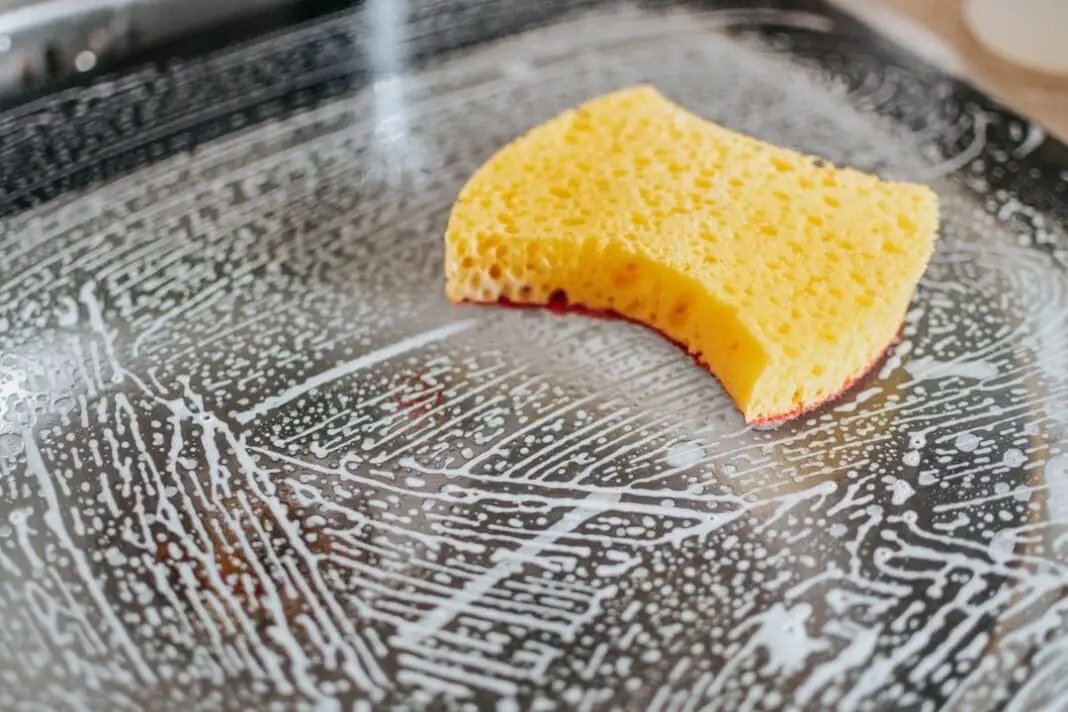
You probably don’t think much about the sponge sitting next to your kitchen sink right now. You grabbed it from a pack at the grocery store a while back, and it’s been doing its job. Or has it? Here’s the thing: that sponge is almost certainly way past its prime, and there’s one dead giveaway that it needs to go in the trash immediately. Not tomorrow. Not after you finish the dishes tonight. Right now.
That sign? A slimy feel. If you pick up your sponge and it feels slick, filmy, or in any way slimy to the touch, it’s done. That slippery texture isn’t soap residue or water. It’s a layer of bacterial buildup so embedded in the sponge that no amount of rinsing will fix it. And if you keep using it, you’re not cleaning your dishes. You’re smearing bacteria across everything you own.
But sliminess isn’t the only reason to toss a sponge. Let’s talk about every red flag you should be watching for, how long sponges actually last (spoiler: not long), and what to do differently going forward.
The Slime Factor Is Worse Than You Think
When a sponge turns slimy, what you’re feeling is a biofilm. That’s a colony of bacteria that has essentially set up permanent residence inside your sponge. According to Dr. Shanina C. Knighton, a research associate professor at Case Western Reserve University, once a sponge feels slimy or slick to the touch, there’s a layer of grime you simply cannot wash out. It’s past the point of saving.
Jacqueline Stein, owner of a professional cleaning and organizing company, puts it more bluntly: “If it starts to smell or feel slimy, toss it immediately.” There’s no bleach soak, no microwave trick, and no hot water rinse that will bring a slimy sponge back from the dead. Once you can feel that film on your fingers, the bacteria population has won. Throw it away.
54 Billion Bacteria Per Cubic Centimeter
If the slime didn’t convince you, maybe this number will. A 2017 study published in the journal Scientific Reports found that a single cubic centimeter of the average kitchen sponge contains 54 billion bacterial cells. To put that in perspective, researchers noted those numbers are comparable to what’s found in human feces. That’s the thing sitting next to your dish soap.
The same study identified 362 different bacterial species living on kitchen sponges. Five of the top 10 most abundant bacteria were closely related to Risk Group 2 microbes, which are associated with preventable illnesses including food poisoning. And here’s the real kicker: sponges from homes where owners said they “regularly cleaned” their sponges were actually worse. Two of the most common problematic bacteria were found in significantly greater proportions in those supposedly sanitized sponges. Cleaning your sponge might just be selecting for the toughest bacteria while killing off the weaker ones.
The Smell Test Is Your Best Friend
Before you even get to sliminess, your nose will usually tip you off. Charles Gerba, a microbiologist and professor at the University of Arizona, told Good Morning America’s team that odor is one of the first and clearest indicators. “Certain bacteria cause the odor in sponges, and that increases with age,” he said.
That sour, mildew-like smell you’ve noticed when you pick up a damp sponge? That’s not just “wet sponge smell.” It’s the byproduct of bacterial activity. Melissa Maker, founder of the Clean My Space house cleaning service and YouTube channel, recommends making sponge replacement a sensory experience. “Both the look and the smell of the sponge will tell you when it’s time for it to go,” she says. If it smells gross and you can’t get rid of the odor even after rinsing, that sponge is finished.
Stains That Won’t Wash Out Are a Red Flag
Jeri Fritz of Highland Park Housekeeping offers another simple visual test. “Stains that come from washing dishes or cleaning up messes should wash out relatively easily,” she says. “If a sponge is keeping stains even after being thoroughly rinsed, it’s ready to be changed out with a fresh one.”
Think about it. You use dish soap on that sponge every single day. If a stain can survive repeated soap and water exposure, it’s not just a surface mark. It means food particles or other residue have become embedded deep inside the sponge’s porous structure, and those particles are feeding the bacteria that are making your sponge disgusting. If it looks dingy or discolored after a good rinse, don’t try to power through. Replace it.
The Rough Side Has Gone Smooth
Most kitchen sponges have a scrubby side and a soft side. If that textured scrubbing surface has worn down to the point where it feels smooth, the sponge has lost its ability to do its primary job. Dr. Knighton specifically calls this out as a replacement trigger. When the rough side is worn smooth, or when the sponge texture has softened so much it no longer scrubs effectively, it’s time for a new one.
A sponge that can’t scrub is just pushing food particles around your plate. It’s not cleaning anything. It’s redistributing bacteria.
It’s Falling Apart
This one seems obvious, but you’d be surprised how many people keep using a sponge that’s literally crumbling. If pieces are breaking off, if the sponge is tearing when you squeeze it, or if the soft side is separating from the scrubby side, it’s way overdue for the trash. Many sponges are only designed for one to two weeks of use. Physical deterioration before that mark just means yours worked harder than average.
A disintegrating sponge is also leaving tiny fragments on your dishes and countertops. Those bits are loaded with bacteria. So you’re not just failing to clean. You’re actively depositing little bacterial colonies everywhere you wipe.
It Touched Raw Meat? Throw It Away. Period.
This is a rule that most people ignore, and it’s one of the most important. If your sponge has come into contact with raw meat juices, raw poultry, or raw eggs, it needs to go straight into the garbage. No sanitizing. No microwaving. No bleach soak. Just throw it out.
Christine Sestero, a microbiology professor at the University of Montevallo, says she throws out sponges used during events like Thanksgiving after just one day because of heavy cross-contamination from raw foods. If a professional microbiologist won’t try to save a sponge after it touches raw chicken, neither should you.
How Often Should You Actually Replace It?
The expert consensus lands somewhere between one and two weeks. Melissa Maker says she wouldn’t go longer than a week. Diana Ciechorska, general manager at Park Slope Cleaning in New York and Miami, agrees on the one to two week window. Markus Egert, the German microbiologist behind the famous 2017 study, recommends simply checking the calendar rather than relying on your senses.
The outlier opinion comes from Charles Gerba at the University of Arizona, who says sponges can last about three months. But he’s in the clear minority, and most other microbiologists and cleaning professionals think that timeline is way too generous. Play it safe. One week for heavy use. Two weeks max if you’re sanitizing between uses.
Stop Using One Sponge for Everything
Here’s a mistake almost everyone makes: using the same sponge to scrub pots, wipe counters, and clean the sink. That’s a cross-contamination nightmare. Professor Sestero warns that unless you’re wiping with a brand new or sterile sponge, you’re likely adding more microbes to a surface rather than reducing what’s already there.
Keep your sponge for dishes only. Use paper towels or disposable disinfectant wipes for countertops, cutting boards, and appliance surfaces. It’s a small habit change that makes a real difference.
Smarter Alternatives to the Standard Sponge
If you’re tired of the sponge replacement cycle, consider switching to dish brushes. According to cleaning industry experts, brushes only need to be replaced every three to four months, depending on bristle condition, and they dry faster than sponges because they don’t hold water the same way.
Silicone scrubbers are another option. They don’t have the porous structure that makes traditional sponges such great bacterial habitats, and they can go right in the dishwasher. Charles Gerba also notes that urethane sponges work well and grow fewer bacteria than the standard cellulose kind.
For the eco-conscious, plant-based sponge cloths that decompose in compost within about 10 months are available, and brands like Scotch Brite make sponges from natural plant fibers. Replacing weekly feels less wasteful when the replacement is compostable.
One Last Thing: Your Sponge Holder Is Gross Too
Even if you replace your sponge religiously, don’t forget where it lives. That little tray or holder next to your faucet collects standing water and needs to be cleaned and sanitized regularly. Experts recommend letting your sponge air dry completely between uses, ideally not in a holder or container that traps moisture. A well-ventilated spot where air can circulate around the sponge is ideal.
If you put a fresh sponge on a grimy, waterlogged holder, you’re starting behind. Clean the holder when you swap the sponge. It takes 30 seconds and makes the new sponge actually worth using.
So go check your sponge. Pick it up. Give it a squeeze. If it’s slimy, smelly, stained, smooth, or crumbling, you know what to do. And honestly, if you can’t remember when you bought it, that’s all the answer you need.

