


There’s a specific kind of summer heat that shuts your whole kitchen down. The AC is working overtime, the thought of turning on the oven feels like a personal insult, and even boiling a pot of pasta seems like too much. I know that feeling well, and after years of standing in front of an open fridge hoping dinner would assemble itself, I finally landed on the one meal I make on repeat when the temperature climbs past reasonable. It’s gazpacho.
I’m not talking about the watery, sad stuff you get in a jar. I mean a real bowl of cold Spanish tomato soup that’s thick, tangy, and so cold it feels like a reset button for your whole body. It takes zero heat, about 20 minutes of hands-on work, and it tastes better the longer it sits in the fridge. If you only learn one hot-weather dinner this year, make it this one.
Why Gazpacho Beats Every Other No-Cook Dinner
Cold sandwiches and salads are fine, but they don’t cool you down the way an ice-cold bowl of gazpacho does. This is the meal food writers keep calling the ultimate hot weather meal, and it earns that title. You throw a bunch of raw summer vegetables in a blender, chill it, and you’re done. No stove, no grill, no sweating over anything.
The other thing I love is that it uses up all that produce that goes soft and ugly on your counter in July. Overripe tomatoes that are too mushy to slice? Perfect. A cucumber that’s been rolling around your crisper drawer for a week? Toss it in. Gazpacho is one of those recipes people describe as exactly what you need when you have an abundance of tomatoes and no desire to cook. It’s cheap, it’s forgiving, and it feeds a crowd.
The Tomatoes Are Everything
Here’s where I get a little bossy: your gazpacho will only taste as good as your tomatoes. This is not the dish for pale, hard, out-of-season grocery store tomatoes in February. That’s the whole point. You make this in the dead of summer because that’s when tomatoes are cheap, ripe, and actually taste like something.
Go for about two pounds of the ripest tomatoes you can find. Roma tomatoes work, big beefsteaks work, and a mix of whatever’s on sale at the farmers market works beautifully. If they’re so ripe they’re a little wrinkly, even better. Those are the ones the store marks down, and they blend into the sweetest, most concentrated base. A good bowl of gazpacho should taste like the essence of a summer tomato, so don’t skimp here.
How To Blend It Right
The method could not be simpler. Roughly chop your tomatoes, one cucumber, one red bell pepper, a small piece of red onion, and a single small clove of garlic. Go easy on that garlic, by the way. Raw garlic gets stronger as the soup sits, so one small clove is plenty unless you really love the bite.
The traditional trick that takes this from vegetable juice to actual soup is bread. Tear up a slice or two of stale white or sourdough bread, soak it in a little water, and blend it right in with the vegetables. It gives the gazpacho body and that creamy, velvety texture without any dairy. Blend everything until smooth, then, with the machine running, drizzle in about a third of a cup of good olive oil. That slow stream is what makes it silky. Finish with a couple tablespoons of sherry vinegar and a generous pinch of salt. Blend, taste, adjust, and refrigerate.
Chilling is not optional. Gazpacho served at room temperature is just okay. Gazpacho that’s spent at least two hours getting ice cold in the fridge is a completely different experience. If you can make it in the morning and eat it at night, the flavor gets even deeper and rounder. Like a lot of great no-cook summer dishes, it rewards a little patience.
Turning A Bowl Of Soup Into A Real Meal
People push back on gazpacho as dinner because they think of soup as an appetizer. Fair. But pile on the right toppings and it becomes a genuinely filling meal. My go-to spread is a bowl of finely diced cucumber, bell pepper, and a handful of homemade croutons made from that same stale bread, plus a hard-boiled egg chopped on top. A drizzle of olive oil and some torn basil finish it off.
Want more protein without turning on the stove? Shredded rotisserie chicken from Costco or your grocery deli is fantastic on the side or right in the bowl. A few cooked shrimp from the seafood counter work too, and so does a scoop of good canned tuna. Serve it all with crusty bread and honestly, that’s a dinner I’d happily eat three nights a week in August.
Mistakes That Wreck A Good Gazpacho
The biggest mistake is underseasoning. Cold food needs way more salt and acid than hot food to taste like anything, so a gazpacho that seemed fine at room temperature will taste flat and boring once it’s cold. Always taste it again after chilling and add more salt and vinegar then. Don’t be shy.
The second mistake is too much garlic or onion. A little raw allium goes a long way and it only intensifies overnight. If you’ve ever had gazpacho that tasted harsh or gave you an aftertaste for hours, that’s the culprit. Start small.
Last, don’t skip straining if you hate a grainy texture. Pushing the blended soup through a mesh strainer takes two minutes and gives you that restaurant-smooth finish. Some people love it rustic and chunky, and that’s fine too. But if smoothness matters to you, that one extra step is worth it. This is one of those no-cook dinners where texture makes or breaks the whole thing.
Easy Ways To Change It Up
Once you’ve got the basic version down, it’s fun to riff. Blend in a ripe peach or a few strawberries with the tomatoes for a fruity, slightly sweet version that’s honestly incredible. Swap the red pepper for a hunk of watermelon and you’ve got a pink summer gazpacho that people at a cookout will not stop talking about.
For a green version, lean on cucumber, green pepper, and a little tomatillo instead of red tomatoes. If you like heat, a small piece of jalapeño in the blender gives it a nice slow burn. And if you don’t do bread, a small cooked-and-cooled potato blended in gives you the same body while keeping it gluten-free. This is a recipe that bends to whatever you’ve got, which is exactly why it belongs in your regular rotation of hot-weather meals.
Make a big batch on Sunday and it’ll keep in the fridge for three or four days, getting better each day. Pour it into a jar and it’s a lunch you can grab and drink cold when it’s too hot to even think about eating. That’s the beauty of it. The hotter it gets, the better this meal makes sense.
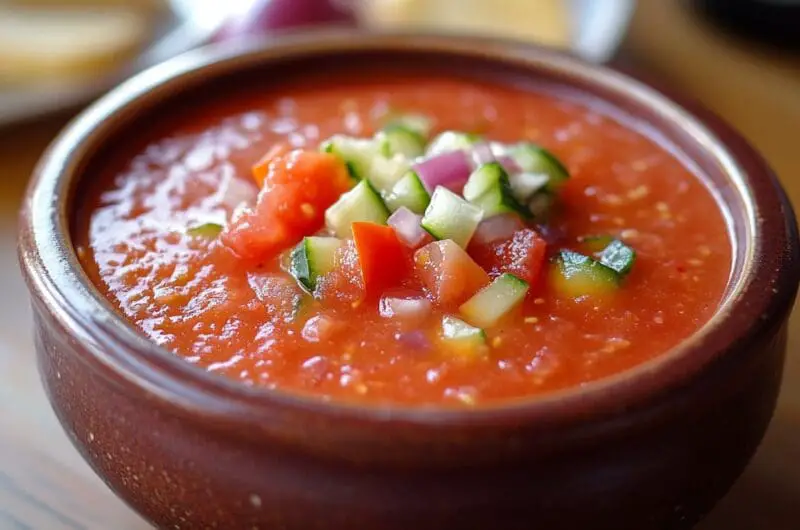
Cold Spanish Gazpacho
Course: DinnerCuisine: Spanish6
servings20
minutes180
kcalThe ice-cold, no-cook tomato soup that saves dinner on the hottest nights of summer.
Ingredients
2 pounds very ripe tomatoes, roughly chopped
1 medium cucumber, peeled and chopped
1 red bell pepper, seeded and chopped
1 small clove garlic
1/4 small red onion
2 slices stale white or sourdough bread, torn
1/3 cup extra-virgin olive oil, plus more for serving
2 to 3 tablespoons sherry vinegar
1 teaspoon salt, plus more to taste
Directions
- Tear the bread into pieces and soak it in a small bowl with a couple tablespoons of cold water for about five minutes. This softens it so it blends smoothly and gives the soup body.
- Add the chopped tomatoes, cucumber, bell pepper, garlic, and red onion to a blender. Toss in the soaked bread along with any water it did not absorb.
- Blend on high until the mixture is completely smooth, about one to two minutes. Stop and scrape down the sides if you need to so nothing stays chunky.
- With the blender running on low, slowly drizzle in the olive oil in a thin stream. This step is what gives gazpacho its creamy, silky texture, so take your time.
- Add the sherry vinegar and salt, then blend again for a few seconds. Taste and adjust, adding more vinegar or salt until the flavor is bright and bold.
- For a smooth restaurant-style finish, pour the soup through a mesh strainer into a large bowl or pitcher, pressing with a spoon to push it through. Skip this if you like it rustic.
- Cover and refrigerate for at least two hours, or ideally overnight. The soup needs to be very cold and the flavors need time to come together.
- Taste one more time before serving and adjust the salt, since cold food needs more seasoning. Ladle into bowls and top with diced cucumber, croutons, chopped hard-boiled egg, and a drizzle of olive oil.
Notes
- Use the ripest tomatoes you can find. Marked-down, slightly wrinkly summer tomatoes make the sweetest, most flavorful base.
- Go light on the garlic and onion. Raw allium gets stronger overnight, so one small clove is plenty.
- For a heartier dinner, serve with shredded rotisserie chicken, cooked shrimp, or crusty bread on the side.
Frequently Asked Questions
Q: How long does gazpacho keep in the fridge?
A: It stays good for three to four days in a covered container, and many people think it tastes even better on day two. Give it a quick stir before serving since it can separate a little as it sits. Store extra toppings separately so they stay crunchy.
Q: Can I make gazpacho without a blender?
A: Yes, though it takes more effort. A food processor works great, and even an immersion blender in a deep bowl gets the job done. If you want it chunky, you can finely dice everything by hand and stir it together, which gives you a texture closer to a cold vegetable salad in a bowl.
Q: What if I don’t have sherry vinegar?
A: Red wine vinegar is the closest swap and works beautifully. In a pinch, a good splash of fresh lemon juice adds the brightness you need. Just start with a little, taste, and add more, since the acid is what wakes up the whole bowl.
Q: Is gazpacho filling enough to be a real dinner?
A: On its own it’s light, but with the right toppings it absolutely holds up as a meal. Add chopped egg, croutons, shredded chicken, or cooked shrimp, and serve it with crusty bread. That combination keeps you satisfied without ever turning on the stove.

