

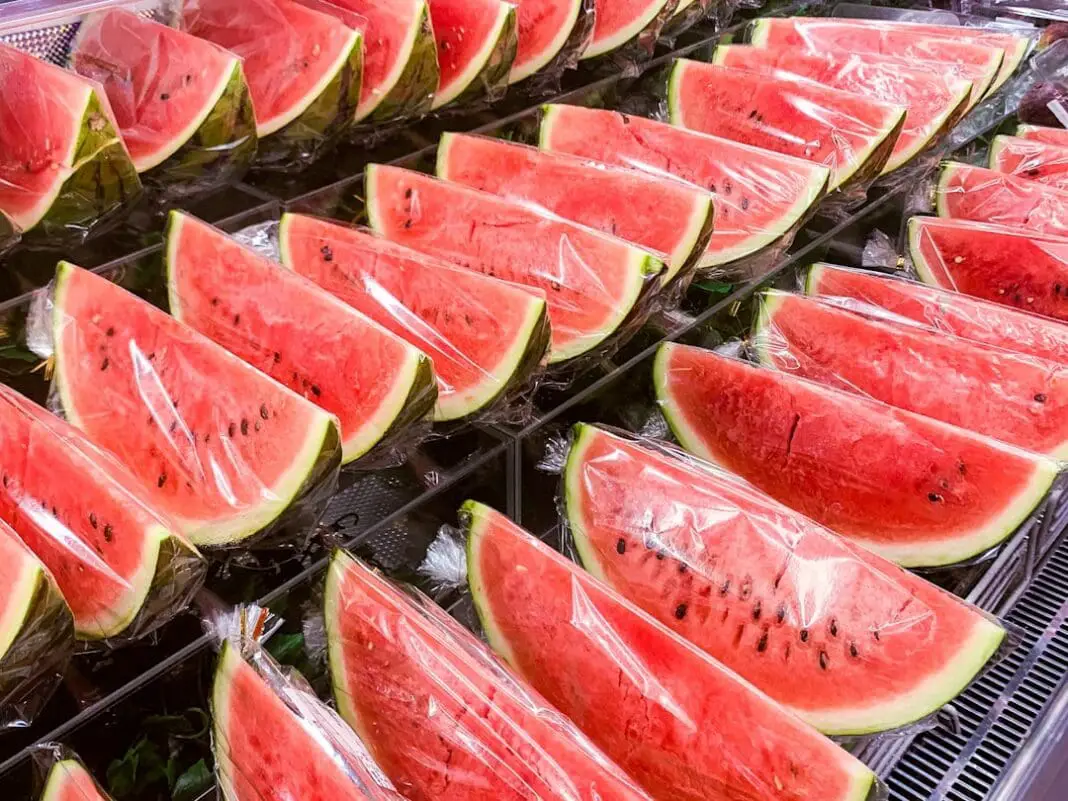
You bought a gorgeous watermelon. You brought it home, cracked it open, ate a few perfect slices, and then did what most of us do: shoved the rest in the fridge with whatever half-hearted wrapping was within arm’s reach. Maybe you tossed it on a plate with some plastic wrap stretched over the top. Maybe you just set the whole open half right on the shelf, cut side down, hoping for the best.
Two days later, that watermelon is a soggy, flavorless disappointment. You eat it anyway because you paid six bucks for it, but you’re not happy about it. Here’s the thing: the way most people store cut watermelon is actively sabotaging it. The good news is that fixing the problem takes about 30 seconds.
The Colander Hack That Actually Makes Things Worse
If you’ve been on the internet in the last few summers, you’ve probably seen the colander-inside-a-bowl trick. The idea sounds logical enough: place cut watermelon wedges in a colander, set the colander inside a larger bowl, and let excess moisture drain away from the fruit. It seems smart. It is not smart.
When a kitchen site tested six different storage methods head to head, the colander method came in dead last. By day three, about two teaspoons of liquid had pooled at the bottom of the bowl, and the wedges themselves had turned squishy all throughout. The exterior was wrinkled and leathery. Brown spots appeared on the rind. And the whole contraption took up a ridiculous amount of fridge space for something that didn’t even work.
The problem is that the colander doesn’t just drain “excess” moisture. It drains the moisture you actually want. Watermelon is roughly 92% water, and once you start pulling that water out of the flesh, you’re left with a sad, deflated shell of what was once a great piece of fruit. Skip this method entirely.
Plastic Wrap Is Way Worse Than You Think
Plastic wrap is the default for millions of Americans. Quick, cheap, easy. But if you’ve ever peeled back that plastic wrap after a day or two and found a layer of condensation sitting right on the flesh, you already know the issue.
Standard plastic wraps (both PVC and LDPE types) have oxygen permeability rates between 1,200 and 2,800 cc per square meter per day. In plain English, they let in way too much air. That air causes the cut edges to oxidize, which speeds up softening and flavor loss. Meanwhile, the condensation that forms within about 90 minutes creates a damp environment right against the fruit’s surface. That’s the exact environment where bad things start growing fast.
Plastic wrap also doesn’t fully seal. It clings, but it’s not airtight. Air exchange continues. And if your watermelon is sitting anywhere near strong-smelling foods in the fridge, that thin plastic barrier won’t do much to stop odor absorption. Watermelon picks up smells like a sponge, and once it smells like last night’s leftover garlic shrimp, there’s no going back.
Where You Put It in the Fridge Matters More Than You’d Guess
Most people just stick cut watermelon wherever it fits. The crisper drawer. The bottom shelf. The door. Wherever there’s room between the milk and the leftover pizza box. This is a mistake.
Crisper drawers sound like the right spot for fruit, but they actually average about 42.3°F during normal fridge use, with fluctuations of about 2 degrees in either direction every time you open the door. That’s above the 40°F mark that the USDA and FDA both consider the safe ceiling for cut melon storage. The door is even worse because it gets hit with warm air every single time the fridge opens.
The best spot is the middle shelf, where temperature fluctuation is lowest. We’re talking a swing of only about 0.4°F over 24 hours versus those wild 2+ degree swings in the crisper. That sounds like a small difference, but for a fruit with this much water content, it makes a real difference in how long your watermelon stays crisp.
Keep It Away From Bananas and Apples
This one catches people off guard. Bananas, apples, and tomatoes produce ethylene gas as they ripen. It’s a naturally occurring thing, but it wreaks havoc on cut watermelon. Ethylene increases the respiration rate of nearby produce by more than three times the normal rate. For watermelon, that means it burns through its sugars faster, gets softer quicker, and loses flavor in a fraction of the time.
If your cut watermelon is sitting next to a bunch of bananas or a bag of apples, you’re basically hitting the fast-forward button on spoilage. Store it near low-ethylene produce instead, like carrots or cucumbers. Or just give it some space on that middle shelf away from the fruit bowl refugees you tossed in the fridge.
The Pooling Juice Problem Nobody Talks About
Even if you’re doing everything else right, there’s one silent saboteur that can turn your watermelon into mush overnight: the juice that collects at the bottom of the container.
Cut watermelon releases liquid. That’s just what it does. But when those pieces sit in a pool of their own juice inside a sealed container, the bottom pieces absorb that liquid and turn soggy and mushy within 24 to 48 hours. You open the container expecting crisp, refreshing fruit and instead get something with the texture of a wet paper towel.
The fix is simple. Line the bottom of your container with a paper towel before adding the watermelon. The towel absorbs the excess juice and keeps the fruit elevated above any pooling liquid. If you’re storing watermelon for more than a day, swap out the paper towel when it gets saturated. It takes ten seconds and makes a dramatic difference.
Don’t Freeze Slices (Seriously, Don’t)
When you’ve got more watermelon than you can eat, the freezer seems like the obvious solution. Just toss the extra slices in there and deal with them later, right? Wrong. According to the National Watermelon Promotion Board, freezing watermelon slices causes the rind to break down and produces a mealy, mushy texture once you thaw them. The result is a watery mess that looks and tastes nothing like the fruit you put in there.
This makes sense when you think about it. Watermelon’s cells are packed with water. When water freezes, it expands and ruptures those cell walls. When you thaw it, all that structure collapses. What you’re left with is basically watermelon flavored slush.
If you’ve got extra watermelon you can’t eat in time, blend it into juice, smoothies, or agua fresca while it’s still fresh. That’s a much better move than gambling on the freezer.
Cut Into Portions Before Storing
A lot of people store a massive half-watermelon or a giant wedge and then pull it out of the fridge every time they want a piece. Every time you do that, you’re exposing the entire batch to warm air and whatever else is on your hands or the counter. That cycle of cold to warm and back to cold accelerates breakdown much faster than you’d expect.
Instead, cut the watermelon into meal-sized portions right when you first slice it. Cubes or sticks in individual containers work great. Grab one container at a time, eat what you want, and the rest stays sealed and cold. It’s a tiny amount of extra work upfront that pays off big over the next few days.
Also, keep the rind attached whenever possible. The rind acts as a natural barrier against moisture loss. Once you peel or slice the rind away, the flesh is fully exposed and dries out much faster. If you’re making cubes, fine. But if you’re storing wedges, leave that rind on.
The Method That Actually Works Best
After all the testing and comparing, the winner is straightforward: an airtight glass container, stored on the middle shelf of your fridge, with a paper towel lining the bottom.
In the head-to-head test mentioned earlier, the airtight glass container method kept watermelon wedges crisp and juicy for over eight full days. Eight days. The key detail is arranging the wedges at different angles so the cut surfaces aren’t pressed directly against each other, which reduces moisture transfer between pieces.
Glass containers beat plastic ones because they don’t absorb odors, they’re easier to clean thoroughly, and the rigid walls protect the fruit from getting squished by whatever else is in your fridge. If you’ve got Pyrex or similar glass food storage containers with snap-on lids, those are perfect. They stack, they seal properly, and you can see what’s inside without opening them.
One Last Thing: Wash the Rind Before You Cut
This isn’t a storage tip exactly, but it directly affects how long your stored watermelon stays good. Watermelons grow on the ground. That means the rind picks up all sorts of stuff from the soil and whatever was in the field. When you push a knife through an unwashed rind, you’re dragging whatever was on the outside directly into the flesh.
Give the whole watermelon a good scrub under cool running water with a clean produce brush before you make the first cut. It takes 30 seconds. Your knife is only as clean as the surface it passes through, and skipping this step can introduce contaminants that shorten shelf life and ruin your fruit from the inside out.
So to sum it up: ditch the plastic wrap, forget the colander hack, stop freezing slices, and invest in some decent glass containers with proper lids. Line the bottom with a paper towel, cut your watermelon into reasonable portions, store them on the middle shelf away from bananas and apples, and you’ll be eating crisp, sweet watermelon for the better part of a week instead of throwing away soggy mush after two days.

