

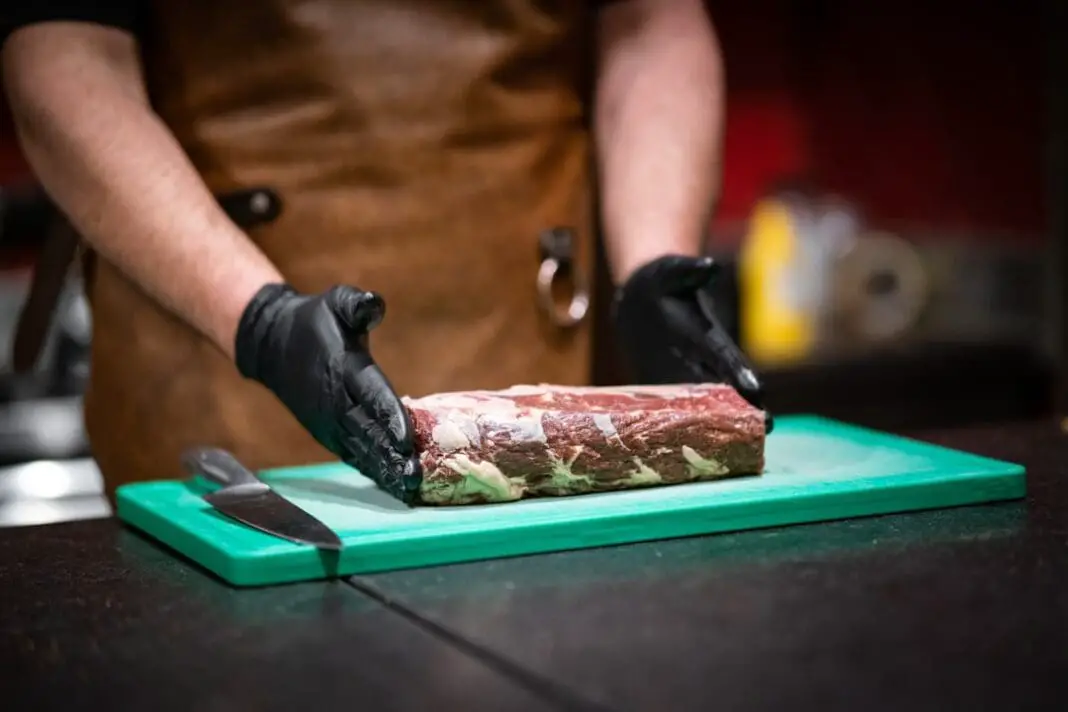
There’s a decent chance the plastic cutting board in your kitchen has a backstory. Someone told you plastic was the smart pick for raw chicken because you can scrub it hard and chuck it in the dishwasher. Wood seemed old-fashioned, like something your grandmother kept by the stove. So plastic won the cabinet space, and the wood board got shoved to the back or used for cheese plates.
Here’s the part nobody told you. That whole idea got flipped on its head decades ago, and most people never got the update. The plastic board you trust with your raw meat is very likely the worse tool for the job. Let me walk you through how we all got it backwards.
Where The Plastic Board Myth Started
The logic sounded airtight. Plastic is smooth and non-porous, so nothing soaks in. Wood is porous, so it must drink up raw meat juice like a sponge and hold onto whatever was in it. Health inspectors loved this thinking. For years, officials pushed home cooks and restaurants toward plastic because it felt modern, clean, and easy to wipe down.
Funny thing, though. When researchers went looking for the actual proof behind that advice, it wasn’t there. The USDA admitted it had no scientific evidence to back up its own recommendation that people use plastic instead of wood at home. The whole rule was built on a hunch that nobody had ever tested. So one researcher decided to test it.
The Guy Who Proved Everyone Wrong
His name was Dean Cliver, a food safety scientist at UC Davis, and people in the field later called him the godfather of cutting board research. Starting in the late 1980s, he and his colleague Nese Ak smeared the nasty stuff on both kinds of boards. Salmonella. E. coli. Listeria. The real troublemakers that show up on raw chicken and beef. Then they watched what happened.
The results were not even close. On the wood boards, more than 99.9% of the bacteria died within minutes, with no soap and no sanitizer at all. On the plastic boards, the bacteria not only stuck around, they multiplied if you left the board overnight. In one round, the team kept dosing plastic boards three days running without cleaning them, in warm, humid conditions like a busy restaurant. The plastic turned into what they bluntly called thriving germ farms, while the wood boards still wiped out nearly everything.
Even better, the wood didn’t care if it was new or beat up. Old boards with plenty of knife cuts behaved almost the same as fresh ones. Plastic did the opposite. Once it got scratched, cleaning it became a losing battle.
The Real-World Numbers Backed It Up
Lab tests are one thing, but Cliver also looked at real kitchens and real people getting sick. An epidemiological study found that folks using wooden boards at home were less than half as likely to come down with a salmonella infection compared to average. People using plastic or glass boards were about twice as likely. Read that again. The board most of us bought specifically to be the clean choice lined up with double the odds of getting sick.
And here’s a detail that stings. How often you scrubbed the board after cutting meat didn’t move the numbers much. The material itself was doing the heavy lifting, not your elbow grease.
Why Wood Pulls This Off
Wood has a couple of tricks plastic just can’t copy. First is capillary action. The tiny fibers in a hardwood like maple pull liquid, and the bacteria riding in it, down below the surface. Once those bacteria are trapped inside the wood’s cells, they’re stuck in a dry, oxygen-starved spot where they can’t multiply, and they die off as the board dries.
Second, certain hardwoods come with their own built-in defense. Maple and beech contain natural compounds like tannins that fight bacteria on contact. People sometimes call wood a self-sanitizing surface, and that’s not marketing fluff. Plastic has none of this. It just sits there as a flat parking lot for whatever you put on it.
The Scratch Problem Nobody Thinks About
Look at the plastic board you’ve owned for a few years. See all those crisscrossing knife scars? Each one is a narrow canyon where bacteria can hide, and your sponge can’t reach the bottom of it. Researchers found that knife-scarred plastic was especially hard to clean, even with hot, soapy water doing its best.
That’s the cross-contamination trap. You cut raw chicken, rinse the board, then chop lettuce for a salad on the same surface. The grooves still holding bacteria pass it right onto your veggies, which never get cooked. Salmonella doesn’t change how food looks or smells, so you’d never know. It’s the quiet way a lot of kitchen messes turn into a bad night.
Your Plastic Board Sheds Into Dinner
Bacteria isn’t the only thing coming off that board. When you drag a knife across plastic over and over, tiny flecks of it break loose and end up in your food. Researchers tested chicken and fish from regular markets and supermarkets and traced the little plastic bits right back to the polythene cutting boards the meat was prepped on. They found more of it in meat cut close to the bone, where you really lean into the knife.
Rinsing the meat helped a little but didn’t clear it out. A quick ten-second rinse barely touched the count. A poorly kept plastic board can shed an enormous number of these tiny particles over its life. Wood doesn’t crumble into your food the same way, which is one more point in its favor.
If You Insist On Plastic, Clean It Right
Plenty of people will keep a plastic board around anyway, and that’s fine if you handle it right. The dishwasher is its real advantage, since a hot cycle scrubs spots your hands miss. For sanitizing, plastic plays well with a bleach solution: about one tablespoon of unscented chlorine bleach per gallon of water. Flood the surface, let it sit a few minutes, then rinse and dry.
Wood is a different animal. Don’t soak it, and skip the dishwasher unless you want it to crack. Bleach actually works poorly on wood because the chlorine binds to the wood itself and loses its punch. A quaternary ammonium cleaner, like a splash of Mr. Clean mixed with water, does a better job on a wood surface. Either way, one rule covers both: sanitize the sponge or rag you used, or you’ll just smear the mess onto the next thing you wash. And let any board air-dry standing up where air moves around it. Bacteria need moisture, so a dry board is a dead end for them.
What To Actually Buy
If you’re upgrading, go hardwood. Maple is the gold standard and is the only wood the National Sanitation Foundation has approved for commercial kitchens, which tells you pros trust it. Walnut is the other strong pick, with its own good antibacterial compounds. Both are dense and fine-grained, so they resist deep knife gouges. A solid maple board runs anywhere from around 30 bucks for a basic one to well over a hundred for a thick end-grain block, and it’ll outlast a stack of cheap plastic.
Bamboo is a reasonable middle option too. It’s harder and less porous than most hardwoods, soaks up almost no moisture, and shrugs off knife scarring. If you stick with plastic, at least buy a board made from high-density polyethylene, often labeled HDPE, instead of some bargain-bin polymer that breaks down fast. And do what the experts have said for years: keep one board for raw meat and a separate one for produce and bread. That single habit cuts down cross-contamination more than almost anything else.
Know When To Toss It
Every board has a shelf life. Once it builds up deep grooves you can’t scrub clean, or it’s just plain worn out, it’s done. The USDA says to retire both wood and plastic boards when they hit that point. With wood, you can stretch its life by sanding out scratches and rubbing in food-safe mineral or butcher block oil now and then so it doesn’t dry out and crack. With plastic, deep scarring usually means it’s time for the trash.
The short version: the board you were told to use for raw meat is the one the science keeps poking holes in. Wood quietly kills off the bacteria, plastic gives it a place to hang out, and a beat-up plastic board does both poorly while shedding bits into your food. Switching to a good maple or walnut board for your raw chicken is one of the cheapest, easiest kitchen upgrades you’ll ever make. Your grandmother was onto something after all.

