

You grab a watermelon at the store, haul it home, and the second you walk in the door you’re slicing into it because it’s August and you’ve been craving it since the parking lot. I get it. I’ve done it a hundred times. But that grab-and-slice move skips a step that almost nobody thinks about, and once you understand why it matters, you’ll never go back to your old ways.
The step is simple: wash the outside of the melon before your knife ever touches it. Not the inside. The rind. The part you toss in the trash. Sounds backwards, right? Why scrub something you’re throwing away? Stick with me, because the reason is more interesting than you’d think.
The Knife Is The Real Problem
Here’s the part people miss. When you drag a blade through that thick rind, the knife picks up whatever is sitting on the outside and carries it straight into the red flesh you’re about to eat. That’s the whole issue. It’s not that the rind itself is the problem. It’s that the rind becomes a delivery system the moment your knife pushes through it.
Food safety pros have been saying this for years, and clients are consistently shocked when they hear it. People don’t connect washing the rind with eating the inside, because the two parts feel like separate things. They’re not. The blade links them. Once you picture that knife sliding from the dirty outside into the clean middle, the whole thing clicks.
Why Melons Are Worse Than Most Fruit
Apples hang on trees. Grapes hang on vines. Melons? They sit right on the dirt. They grow on the ground, resting in soil that gets hit with irrigation water, rain runoff, and whatever animals wander through the field. So the outside of a melon spends its entire life lying in the exact place you’d expect to pick up grime.
Melons also have a couple of other things working against them. They’re big and heavy, which means people are handling them individually, picking them up, thumping them, putting them back. Lots of hands. And melons are one of the few fruits almost nobody cooks. You don’t bake a watermelon. You eat it raw, straight off the cutting board, which means there’s no heat step to fall back on. Whatever is on the surface stays on the surface until you deal with it.
Cantaloupe Is The Sneakiest One
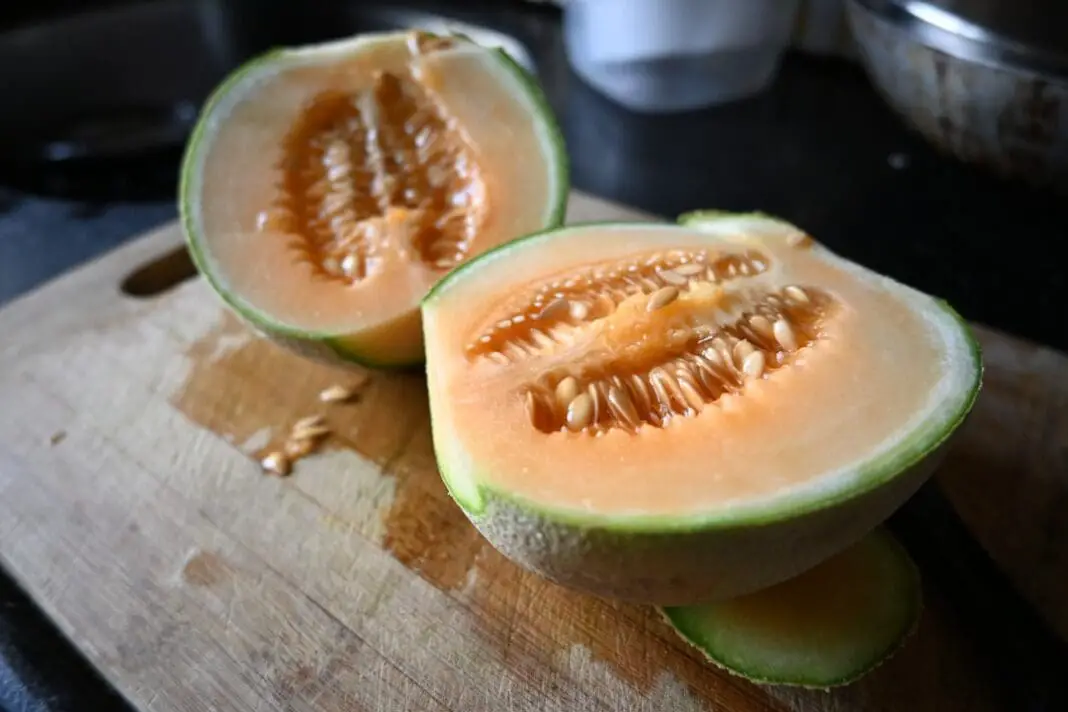
If watermelon is bad, cantaloupe is worse, and it’s because of that bumpy, netted rind. Those lacy little ridges look harmless, but they’re basically tiny pockets. Dirt and grime settle down into the texture and just sit there. A quick rinse under the faucet runs right over the top and never reaches the gunk hiding in the grooves.
That netted pattern has been traced to outbreaks more than once. It’s the kind of surface that practically begs you to use a brush instead of just water. And here’s a thing a lot of people get wrong: organic cantaloupe is no different. Organic means how it was grown, not that it came out of the ground spotless. It needs the same scrub as anything else.
A Rinse Is Not Enough, You Need A Brush
This is the upgrade most people skip. Running the melon under water feels like you’ve done your job, but a brush removes far more than water alone. The bristles dig into the texture where the rinse can’t reach. Grab a cheap produce brush, the kind that costs a few bucks at any grocery store, and keep it just for fruits and veggies.
The actual move looks like this. Wash your hands first, a full 20 seconds with soap. Hold the whole melon under cool running water and scrub the entire surface, end to end, paying extra attention to any spots that look bruised, scratched, or beat up. Those damaged areas are where stuff loves to settle. The official guidance is clear that scrubbing firm produce like melons is the real step, not just a splash of water.
Skip The Soap, Skip The Fancy Sprays
I know what you’re thinking. If I’m scrubbing, shouldn’t I use soap or one of those produce wash sprays? No. Don’t. Plain running water and a brush are all you need. Soap and detergent aren’t made to be eaten, and some produce is porous enough to soak a little of it in, leaving a film behind. Vinegar isn’t necessary either.
Those commercial produce washes you see at the store? Not approved or labeled for that job, and not recommended. You’re better off saving your money. One more don’t: don’t soak the melon in a bowl of standing water. Soaking can pull grime off at first, but then that dirty water just splashes it back onto the surface and your sink. Running water carries everything down the drain. Soaking doesn’t.
Dry It Off Before You Cut
Here’s a small step that feels pointless but isn’t. After you scrub and rinse, pat the melon dry with a clean cloth or paper towel. Drying knocks down a little more of whatever is left on the surface, and it also keeps things from staying damp. A wet rind is just a slippery hazard when you’re about to cut, so the dry-off makes the whole job safer and steadier.
Then put it on a clean cutting board. If you can, keep one board just for fruits and veggies and a separate one for raw meat and chicken. Plastic boards can go in the dishwasher between jobs. The whole point is to keep the stuff from your raw chicken away from the watermelon that’s going straight in your kid’s mouth.
The Smart Cutting Trick Most People Miss
There’s a clever way to cut that handles two things at once. Trim about an inch off the stem end first. That flat spot gives the melon a stable base so it doesn’t roll while you’re working, which is just good knife safety. Stand it on that flat end and slice straight down the middle.
And if you really want to do it right, wash your knife between cuts. Each fresh pass of the blade can introduce new surface stuff into newly exposed flesh, so a quick rinse of the knife in the middle of the job keeps things clean. Is that overkill for a backyard cookout? Maybe. But for cantaloupe with that tricky rind, it’s a solid habit.
Don’t Buy The Pre-Cut Tubs
Those plastic tubs of pre-cut melon at the grocery store look like a time-saver, and they are tempting on a hot day. But experts steer people away from them. With pre-cut fruit, you have no idea whether the whole melon got scrubbed first, how long the pieces sat out, or how they were handled before they hit the cold case. Freshness and handling are out of your hands.
When you buy a whole melon and prep it yourself, you control every part of it. That’s worth the extra five minutes. While you’re shopping, skip any melon with obvious mold or big damaged spots too. A few bumps are normal, but heavy bruising and soft mushy areas are reasons to leave it on the shelf.
Once It’s Cut, The Clock Starts
The job isn’t done when the melon’s in pieces. Cut melon is the kind of food where bacteria can grow once it’s sitting out. The range to worry about runs from about 41 to 135 degrees, and a bowl of watermelon on the picnic table lands right in that zone. The rule of thumb: don’t leave cut melon out for more than two hours. If it’s a scorcher, 90 degrees or hotter, cut that down to one hour.
Get the leftovers into the fridge fast, at 40 degrees or below, in a sealed container. Cut melon keeps a few days that way. One trick worth knowing: pre-chill the whole melon in the fridge before you cut it. Cold flesh spends less time in that danger zone after slicing, so it’s a head start on keeping things fresh.
It Takes Five Minutes And It’s Worth It
None of this is complicated. Wash your hands, scrub the melon under running water with a brush, dry it off, then cut it on a clean board. That’s the whole thing. It adds maybe five minutes to your day and it’s the difference between doing this right and rolling the dice.
So the next time you bring home a watermelon and your brain is screaming to slice it open immediately, give it a quick scrub first. Your future self, halfway through a giant slice on the back porch, will be glad you did. Now go enjoy your melon the right way.

