
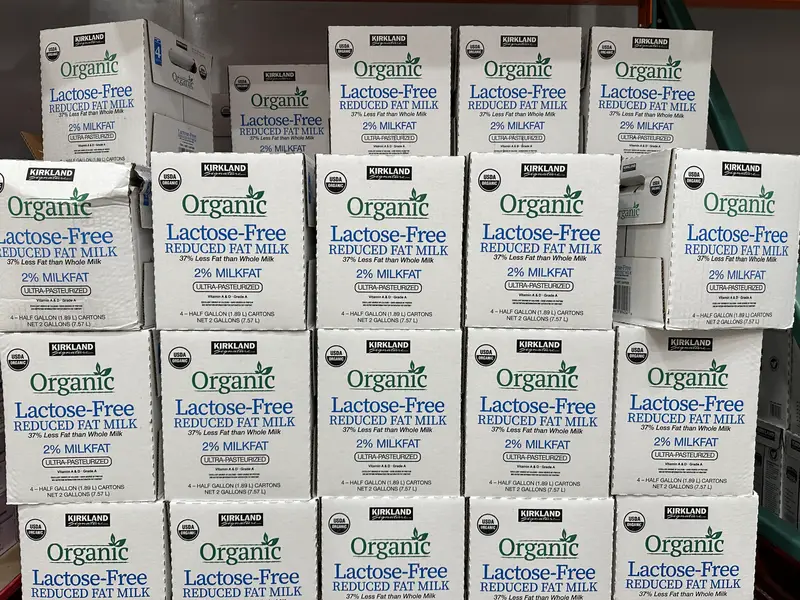
If you’ve spent any time on Reddit or Instagram in the past few weeks, you’ve probably seen it. Costco quietly dropped a new milk product in select stores, and the internet is acting like the warehouse just handed out free gold bars. The product? Kirkland Signature Ultra-Filtered Reduced Fat Milk. It’s lactose-free, it’s 2%, it comes in a three-pack of half-gallon cartons, and it costs $10.59. That’s it. That’s the product. And yet people are genuinely freaking out about it.
So what’s going on here? Why is a carton of milk generating the kind of excitement usually reserved for limited-edition sneakers? The short answer is that this new Kirkland milk is being called a near-perfect dupe of Fairlife, the ultra-filtered milk brand that’s become a cult favorite over the past few years. And Costco is selling it for roughly half the price. That combination has people losing their minds, and honestly, the math checks out.
Where It All Started: A Reddit Post in Texas
The first sighting came in early April 2026. A Reddit user in Georgetown, Texas posted that their local Costco had stocked a brand-new Kirkland milk they’d never seen before. The post racked up more than 1,400 upvotes and the comments section turned into a frenzy of people asking whether it had shown up at their warehouse yet. Within days, other shoppers in the Austin area confirmed they’d spotted it too. The product carries Costco item number 1975527, and it’s been confirmed in select Austin-area stores with more locations expected to receive it soon.
This is classic Costco behavior. The warehouse giant has a habit of testing new private-label products in a limited region before deciding whether to roll them out nationally. Right now, the milk appears to be in a West Coast testing phase. East Coast shoppers? You’re going to have to wait. And based on the social media chatter, that wait is killing people.
The Fairlife Comparison Everyone Is Making
To understand why this product matters, you have to understand Fairlife. Owned by Coca-Cola, Fairlife has basically dominated the ultra-filtered milk category. It’s a staple for gym-goers, protein smoothie fans, and people who are lactose intolerant but miss real dairy milk. It tastes great, lasts a long time in the fridge, and packs way more protein than regular milk. The problem? It’s expensive. Depending on where you live, a 52-ounce bottle of Fairlife runs anywhere from $5 to $8. On Amazon, it was going for $6.79 per carton at time of publishing.
Now look at the Kirkland version. You get three half-gallon cartons (that’s 1.5 gallons total) for $10.59. Do the math and the Kirkland milk works out to roughly half the per-ounce cost of Fairlife. That’s a massive difference when you’re buying something your household goes through every week.
The Nutrition Labels Are Basically Identical
Here’s the part that really has people excited. One Instagram influencer did a side-by-side comparison of the nutrition labels, and the numbers are identical. Per cup, both the Kirkland and Fairlife 2% ultra-filtered milks deliver 120 calories, 4.5 grams of fat, 6 grams of carbs, and 13 grams of protein. For reference, a cup of regular 2% milk typically has about 8 grams of protein and 12 grams of sugar. So you’re getting significantly more protein and way less sugar from both of these ultra-filtered options.
The fact that the macros are a dead match matters a lot to the fitness crowd and the smoothie people. When someone has a dialed-in routine and they swap one product for another, they want to know the numbers line up. In this case, they do. Perfectly.
Taste Tests Have Been Mostly Positive
Numbers are one thing, but taste is what really matters when you’re drinking something every day. Multiple Reddit users have run their own taste tests, and the consensus is surprisingly strong. One user wrote: “Love it. I did a side-by-side taste test and couldn’t really tell the difference from Fairlife.” Another said they used it in their usual protein smoothie and found it tasted very similar to their previous Fairlife routine.
The texture gets a lot of praise too. Ultra-filtered milk in general tends to be thicker and creamier than regular milk because of the higher protein concentration. Several shoppers mentioned that the Kirkland version has that same rich, smooth mouthfeel that makes Fairlife feel like a premium product. There’s also a slight natural sweetness that comes from the filtration process itself, which breaks down lactose into simpler sugars that taste sweeter on the tongue.
Not everyone was thrilled, though. A handful of shoppers noticed a slightly different aftertaste compared to Fairlife. One unhappy Reddit commenter called it “awful” and said it doesn’t compare to Fairlife or Mootopia. So it’s not unanimous. But the overwhelming majority of early reviews are positive.
The Shelf Life Is a Huge Selling Point
Anyone who shops at Costco knows the dilemma. You’re buying in bulk, which means you need things to last. Regular pasteurized milk gives you about two weeks before it goes bad, which can be tight when you’ve just bought a gallon and a half. Ultra-filtered milk is a different story. Because it’s processed using ultra-high-temperature systems under tightly controlled conditions, it lasts about 45 days unopened. That’s more than three times the shelf life of conventional milk.
One Reddit user raved about it: “I love the flavor, and I really love the expiration date. Unopened, they last for weeks.” For Costco shoppers specifically, this is huge. You can buy the three-pack, stash two cartons in the fridge, and not worry about them going bad before you get to them. It makes the bulk format actually practical instead of a race against the clock.
How Ultra-Filtered Milk Actually Works
If you’ve never really thought about what “ultra-filtered” means, here’s the quick version. Regular milk gets pushed through a special semi-permeable membrane. Water and lactose (the sugar in milk) pass through the filter and get removed. The bigger molecules, like protein, calcium, and certain fats, stay behind. The result is a concentrated version of milk that’s higher in protein, lower in sugar, and naturally lactose-free because most of the lactose has been physically stripped out.
Fairlife pioneered and patented a specific multi-stage version of this process. But the broader technology is available to other manufacturers, which is exactly how Costco is able to produce a nearly identical product under its Kirkland label. Different companies, same basic science, very similar results.
Why This Product Matters for the Dairy Market
The timing of this launch isn’t random. Ultra-filtered milk has gone from a niche fitness product to a mainstream grocery staple in just a few years. Fairlife’s sales growth has been staggering, and the entire ultra-filtered dairy category is in a growth phase. Dairy milk as a whole has actually stabilized after a decade of declining sales, and a big part of that recovery has been driven by high-protein products like these.
Costco entering the space with a private-label version at roughly half the cost of the category leader is a big deal. Industry observers see it as a potential market disruptor. When the biggest warehouse retailer in the country decides to undercut the dominant brand by that wide of a margin, it sends a signal. Other retailers are likely watching closely. Aldi already has its own Fairlife dupe (Friendly Farms lactose-free ultra-filtered milk), and more store brands will almost certainly follow.
A Few Things to Know Before You Rush to the Store
Before you sprint to your nearest Costco, some important caveats. First, this is still a regional test. If you’re not in Texas or parts of the West Coast, you probably won’t find it yet. No East Coast sightings have been reported as of now. Second, like all Costco test products, there’s no guarantee it’ll go national. If sales don’t meet expectations in the test markets, it could quietly disappear.
Also worth mentioning: if you’re someone who bakes a lot, food science consultant Ed McCormick pointed out that ultra-filtered milk can behave a little differently in the kitchen. The modified protein and sugar profiles can affect browning in sensitive baking recipes, and delicate custards might turn out slightly different. For everyday use (cereal, coffee, smoothies, drinking straight), it’s a seamless swap. For recipes where precision matters, just be aware there could be subtle differences.
The Bottom Line on Costco’s New Milk
Look, it’s milk. Nobody’s pretending this is the most exciting product category in the world. But when you find something that matches the taste and nutrition of a premium brand at literally half the price, that gets people’s attention. Especially at Costco, where the whole point is getting more for less. The Kirkland Ultra-Filtered Milk checks every box that made Fairlife popular in the first place, and it does it at a price point that feels almost too good.
If it shows up at your local warehouse, grab a box. If it hasn’t hit your area yet, keep checking. Based on the reaction so far, there’s a very good chance Costco will expand the rollout. And if you’re someone who’s been spending $6 to $8 on a single bottle of Fairlife every week, you already know exactly why people are losing their minds over this.

