

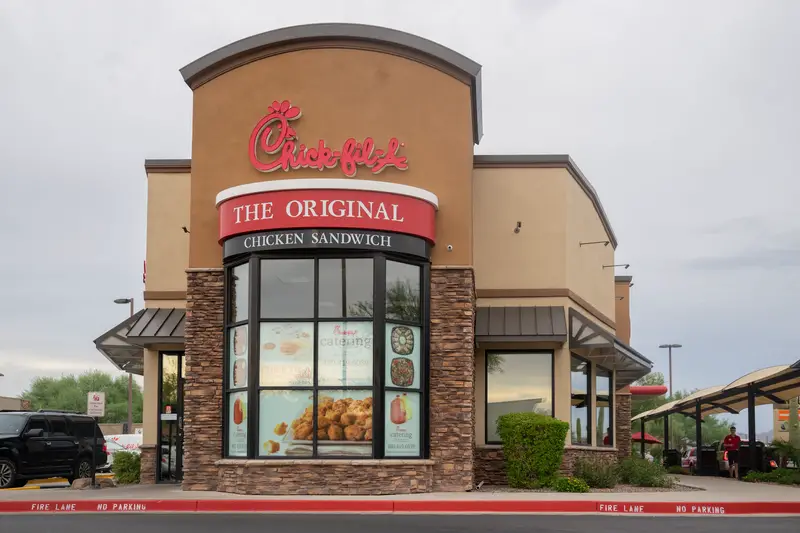
There are bad days, and then there’s biting into a chicken sandwich and realizing something with whiskers and a tail is baked into the bread. That’s what happened to Ellen Manfalouti, a Pennsylvania woman whose lunch break turned into a nightmare that eventually landed in court. Her lawsuit against Chick-fil-A became one of the most talked about fast food horror stories in recent memory, and honestly, once you hear the details, you’ll understand why.
A Regular Lunch Order Gone Very, Very Wrong
It was November 25, 2016. Thanksgiving weekend. Ellen Manfalouti, 46, was at work at an insurance agency in Bucks County, Pennsylvania. Her coworker, Cara Phelan, had picked up lunch from the Chick-fil-A drive-through on the 2400 block of E. Lincoln Highway in Langhorne. Just a regular chicken sandwich order. Nothing fancy. The two women sat down in a conference room to eat.
Manfalouti started eating and almost immediately felt something off. “I felt something funny on the bottom of the bun,” she told The Philadelphia Inquirer. “I turned it over. I said to [my coworker], ‘They burned my roll really bad.'”
It wasn’t a burn.
The Moment Everything Changed
When Manfalouti threw the sandwich down on the table, her coworker Cara Phelan got a closer look. What she saw wasn’t charred bread. “I realized it was a small rodent of some sort,” Phelan said. “I could see the whiskers and the tail.”
A small mouse or rat had been baked directly into the bottom bun of Manfalouti’s Chick-fil-A chicken sandwich. Not sitting on top. Not tucked in a wrapper. Baked into the bread itself. Manfalouti had already bitten into it before she realized what was going on. Let that sink in for a second.
She was treated at a local hospital for extreme nausea after the incident. And she took photographs of the evidence that day, which would later become exhibits in the lawsuit.
The Blame Game Started Immediately
After the incident, Manfalouti and her attorney, William Davis, tried to resolve the situation without going to court. They reached out to the franchise. They tried to settle things privately. But according to Davis, they got stonewalled at every turn.
Here’s where the finger pointing got interesting. According to Davis, the Atlanta-based Chick-fil-A corporate office blamed the local franchise owner. The franchise owner, in turn, blamed the bakery that made the buns. The sandwich got sent off to a lab chosen by the bakery, and that lab confirmed the presence of a rat or mouse baked into the bun. So the lab results backed up Manfalouti’s story completely.
But even with lab confirmation, the bakery’s insurance company denied responsibility. Everyone pointed at someone else, and nobody wanted to pay. Davis said his client had no choice left but to sue.
Nine Months of Getting Nowhere
The incident happened over Thanksgiving weekend 2016, but the lawsuit wasn’t filed until August 2017. That’s nearly nine months. Nine months of trying to get someone, anyone, at the franchise to take this seriously. According to attorney Davis, franchise owner Dave Heffernan repeatedly stonewalled their attempts to address the situation. Heffernan declined to comment publicly on the incident.
Think about that timeline. A customer finds a rodent baked into her food, lab tests confirm it, and the franchise owner just… doesn’t respond meaningfully for nine months. Davis called the whole thing “outrageous,” saying it was unbelievable that a restaurant could serve something like this without anyone noticing what they were doing.
What the Lawsuit Actually Claimed
The lawsuit was filed in Bucks County Court and named two defendants: the Chick-fil-A franchise location and its manager, Dave Heffernan. Manfalouti sought more than $50,000 in damages for both physical and psychological injuries.
The legal claims were built around negligence. Specifically, the lawsuit argued that the restaurant failed to supervise employees who “intentionally and/or knowingly served a sandwich to a customer with a dead rodent baked into the bun.” The suit also claimed the franchise failed to examine food products before serving them, failed to ensure food was free of foreign objects, and failed to maintain a sanitary environment.
Beyond the physical issues (the nausea, the hospitalization), the lawsuit also included a claim for intentional infliction of emotional distress. Davis emphasized that the incident had a lasting psychological impact on his client, who was still struggling to move past both the immediate physical shock and the emotional weight of what happened.
How It All Ended
The case didn’t go to trial. It settled in 2019, roughly two years after the lawsuit was filed and three years after Manfalouti bit into that sandwich. The settlement terms were not publicly disclosed, which is standard for cases like this. Neither side released a statement about the resolution.
So we don’t know exactly how much Manfalouti received, or whether the franchise admitted any fault as part of the agreement. What we do know is that the lawsuit was resolved without a judge or jury having to decide. In most cases, that means both sides found a number they could live with and moved on.
The Evidence That Made This Case Different
Fast food horror stories pop up on social media constantly, and plenty of them turn out to be exaggerated, misidentified, or outright faked. That’s worth acknowledging. But the Manfalouti case had a few things that separated it from your average viral gross-out post.
First, there was an eyewitness. Cara Phelan saw the rodent immediately and gave consistent testimony about what she observed. Second, Manfalouti took photographs of the sandwich on the day of the incident, and those photos were filed as exhibits in the lawsuit. Third, and most importantly, the lab analysis confirmed a rat or mouse was baked into the bun. This wasn’t a “maybe it was a piece of dark lettuce” situation. A laboratory confirmed what the two women saw with their own eyes.
That combination of testimony, photographic evidence, and lab results is what turned a stomach-churning lunch break into a legitimate legal case.
Who Was Actually Responsible?
This is the question that never really got a clean public answer. The rodent was baked into the bun itself, which means it was likely in the bread before it ever arrived at the Chick-fil-A location. That points toward the bakery as the point of contamination. But here’s the thing: the franchise is still the one that served it to a customer. Someone at that restaurant handled that bun, assembled that sandwich, and handed it through a drive-through window without noticing anything wrong.
Davis made that point clearly in his public comments. It doesn’t matter where the rodent came from originally. The restaurant had a responsibility to inspect the food it was serving. The lawsuit argued they failed that basic duty. And whether the rodent got into the bread at the bakery or at the restaurant, the customer sitting in a conference room biting into her lunch shouldn’t have been the one to discover it.
It Became a National Story Almost Overnight
When the lawsuit became public in August 2017, the story spread fast. The AP picked it up and distributed it nationally. CBS, ABC, Newsweek, HuffPost, and local Philadelphia outlets all ran their own versions. For a company that prides itself on customer experience and quality, the coverage was brutal.
Chick-fil-A has claimed since its founding in 1946 to be the home of the original chicken sandwich. That’s their whole identity. So a rodent baked into one of those signature buns became the kind of PR nightmare that no amount of “my pleasure” training can fix. The story was too visceral, too specific, and too well documented to be brushed aside.
What This Tells You About Fast Food in General
Most people know, on some level, that fast food kitchens are not pristine cooking environments. But there’s a big gap between “the floor might be sticky” and “there’s a dead mouse in your bread.” The Manfalouti case is an extreme example, sure. But it highlights something that most customers never think about: you have no idea what happened to your food before it got to you.
The buns didn’t come from a little kitchen in the back of the Langhorne Chick-fil-A. They came from an industrial bakery, shipped to the location, and used in the regular assembly process. The supply chain between the bakery and your sandwich has a lot of steps, and most of us never give it a second thought. We just trust that somebody checked. In this case, it seems like nobody did.
The case settled. Manfalouti presumably got some compensation. The franchise kept operating. And somewhere, in a conference room in Bucks County, a lunch break became the kind of story you never forget. Check the bottom of your bun next time. Or don’t. Some things are better left unexamined.

