

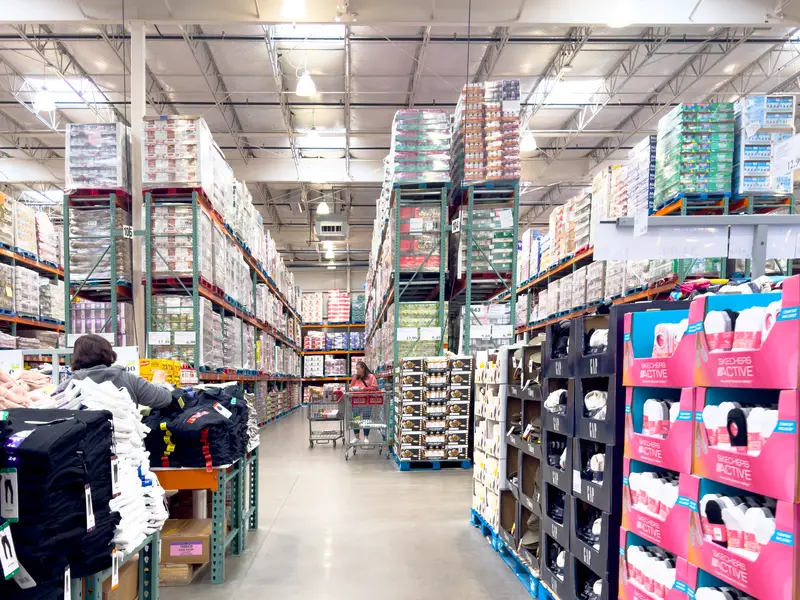
There is a special kind of confidence that washes over you the second you walk into a warehouse club. Everything is huge, everything looks cheap per ounce, and suddenly you are convinced that the smart financial move is a 25-pound bag of something you have never even cooked with. I get it. But here is the honest truth that nobody wants to admit while pushing a cart the size of a golf cart: a lot of bulk buys are quietly draining your wallet, not padding it.
The numbers back this up. The USDA estimates Americans throw out roughly 133 billion pounds and $161 billion worth of food every single year, and the average family of four loses about $1,500 annually to groceries they buy and never eat. A discount you toss in the trash is not a discount. So let’s rank the seven worst offenders, starting with the absolute biggest money pit and working toward the ones that are merely a bad idea.
1. Fresh Berries and Delicate Produce (The Worst Offender)
If you take nothing else from this list, remember this one. That flat of raspberries, the giant bag of spinach, the case of avocados, the bananas that all ripen on the exact same Tuesday afternoon. These are the single biggest waste of money at any warehouse store, full stop.
Part of the problem is that warehouse produce has often already traveled long distances before it ever reaches the bin, which means the shelf-life clock is half spent before you even get it home. Shopping expert Trae Bodge put it bluntly to Fox News: “You’re not going to go through that food fast enough to have it at its freshest, unless you’re having guests.” Money-saving expert Andrea Woroch agrees that berries, avocados, bananas, and spinach rarely survive long enough for a smaller household to get their money’s worth. Unless you are genuinely feeding a crowd this weekend, buy the small clamshell. Want a real hack? Grab frozen fruit and veggies instead. They last for months and work great in smoothies, omelets, and stir-fries.
2. Bread and Bakery Twin-Packs
Bread is the great bulk-buying trap because it feels like such a staple. Of course you eat bread. Everyone eats bread. So why not grab the twin-pack, or the triple-pack of loaves stacked up by the bakery?
Because bread has a famously short shelf life and mold moves fast. Those giant warehouse multi-packs routinely go stale or fuzzy long before a normal family can finish them, and there is nothing sadder than a green slice of what used to be a sandwich. Woroch points out that local grocery stores run rotating bread deals all the time, so you never have to commit to three loaves at once. If you do end up with extra, freezing it in small bags of a few slices works well, and a proper bread box regulates moisture better than just leaving a bag open on the counter. But for most people, the second loaf is just future garbage.
3. Cooking Oils
This one surprises people, because oil feels indestructible. It is just a sealed bottle of liquid sitting in a cabinet, right? What could possibly go wrong? Plenty, actually.
Oils go rancid much faster than you would expect, often within six months to a year, and frequently well before the printed expiration date. Once an oil turns, it picks up a flat, slightly bitter, almost crayon-like taste that quietly ruins whatever you cook with it. Flaxseed oil is the absolute worst offender; once pressed, it can go bad within six weeks at room temperature. And here is the kicker: bulk stores almost never refrigerate the oils they sell, which is exactly the condition that speeds up the decline. Unless you are deep-frying turkeys every weekend, one normal bottle at a time is plenty. A jumbo jug just means the bottom third tastes off by the time you reach it.
4. Coffee
Coffee lovers, brace yourselves, because this one stings. That enormous bag of beans or the warehouse-size tub of grounds looks like a caffeine fan’s dream, but freshness falls off a cliff far sooner than most people realize.
Whole beans only stay genuinely fresh for about a week stored at room temperature, and only around two weeks in the freezer. Ground coffee holds its flavor for roughly three to four months after opening, and it is downhill the whole way. And no, the refrigerator does not save you. Coffee is like a sponge for odors, so it actually absorbs the smell of last night’s leftovers and transfers that funk straight into your morning cup. The best coffee you will ever make comes from smaller amounts bought more often. The giant bag just guarantees the last few weeks taste like cardboard.
5. Nuts
Nuts seem like the perfect bulk snack. They are shelf-stable, they are pricey at small sizes, and the per-pound math at the warehouse looks fantastic. The problem is the very thing that makes them delicious also makes them spoil.
Almonds, walnuts, pecans, and cashews are loaded with natural oils, and those oils turn rancid within a few months at room temperature. A bulk bag tastes amazing for the first couple of weeks, then slowly drifts into bitter, sour, slightly off territory that you might not even notice until you really pay attention. Oxygen is the enemy here, and every time you open and reseal a giant bag, you speed up the process. Airtight containers help, and many nuts actually keep best in the fridge or freezer, but the simplest fix is to just not buy a five-pound bag you cannot finish in a month.
6. Condiments (Especially That Warehouse Mayo)
Now we are getting to the bottles that look completely bulletproof. Ketchup, mustard, mayo, salad dressing. They live in the fridge door, they seem to last forever, and the warehouse three-pack feels like a genuinely savvy buy. It is not.
Once opened and refrigerated, most condiments have a real and surprisingly short shelf life. Per USDA guidance cited by Cheapism, relish lasts about nine months, ketchup roughly six, and mayonnaise just two months after opening. Two months. Now picture Costco selling Heinz ketchup in packs of three 44-ounce bottles. Registered dietitian Cara Harbstreet has noted that most opened condiments only last one to two months in the fridge, and that warehouse-size mayo jar is genuinely designed for restaurants, not for a household of three. Buy the medium bottle, finish it, repeat. You will never notice the difference in price, and you will not have a half-empty gallon of mayo haunting your refrigerator.
7. Ground Spices (Bad, But the Least-Bad on This List)
Spices land at the gentler end of our ranking for one simple reason: they will not spoil and make a mess in your pantry the way berries or bread will. But they are still a quietly terrible bulk buy, because what you are really paying for with a spice is flavor, and flavor has a clock.
The moment a spice is ground, it starts reacting with air and losing potency. That means the spices on the warehouse shelf have already begun fading before you bring them home. Ground spices generally hold their punch for only four to eight months before noticeable flavor loss, so that warehouse vat of paprika is basically flavorless dust by month eight. Want a quick test? Rub a pinch in your palm and smell it. If the aroma is faint, it is done. If you love a spice enough to buy big, buy it whole (whole spices can last two to four years) and grind as you go. Otherwise, small jars bought more often will season your food far better.
So What Should You Actually Buy in Bulk?
Here is the good news, because I do not want you to think the warehouse club is all a trap. There are absolutely items where bulk is the genuinely smart play, and they all share one trait: they last basically forever. White rice stored in a cool, dry, airtight container can keep for 25 to 30 years. Dried pasta is good for up to three years, and canned beans hold for two to five. Those are real, no-regret bulk buys.
On the household side, dishwasher pods and laundry detergent are usually meaningfully cheaper per load at warehouse clubs, often beating grocery prices by 30 percent or more. Just don’t go overboard, since liquid detergent starts to lose potency about six months after opening, so a multi-year supply works against you.
The real lesson is to drop what one budget expert calls the “Costco Mentality,” the dangerous assumption that because a store has the best price on one thing, it has the best price on everything. Keep a simple price list on your phone, buy perishables in amounts your household can actually finish, and save the giant cart for the stuff that will still be good long after the receipt fades. That is how you turn bulk buying from a slow-motion money leak into an actual win.

