

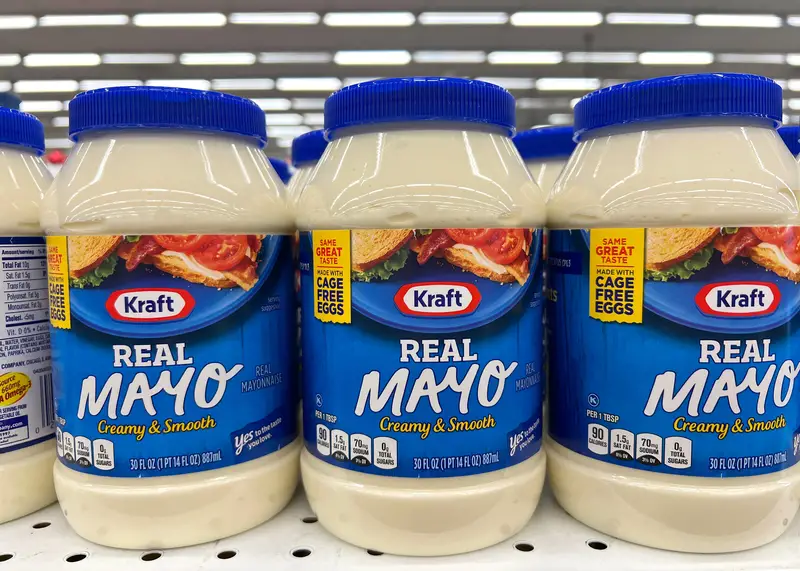
Staring at that sad sandwich wondering why it tastes so bland? The problem might be hiding right in your fridge. While everyone argues about which mayonnaise reigns supreme, food experts have been quietly identifying the brands that consistently disappoint. Recent blind taste tests reveal some shocking truths about popular mayo brands that millions of Americans buy every week.
Kraft mayo tastes suspiciously artificial
That jar advertising “real mayo” on the label should be your first red flag. When a product needs to convince you it’s authentic, something’s probably wrong. Kraft mayo comes out looking unnaturally bright white instead of the soft, creamy off-white color that quality mayonnaise should have. The texture feels oddly airy and whipped, suggesting corners were cut during processing.
The worst part is the complete lack of personality. There’s plenty of fat but almost none of the rich egg taste or tangy acid that makes good mayo special. Food experts consistently rank this brand at the bottom for its mediocre performance across all categories. Even worse, you’re not saving money by choosing this disappointment since Kraft mayo costs about the same as better options.
Whole Foods 365 has a fishy problem
Expecting organic quality from Whole Foods’ store brand? Think again. The 365 Organic mayonnaise has a major flaw that makes it almost unusable for most people. Professional taste testers immediately notice an overwhelming fishy smell and taste that resembles anchovies. This probably comes from the canola oil, which easily picks up off-putting aromas during processing.
The balance between sweet and tangy is completely off too. Taste tests show it’s far too acidic without enough sweetness to balance things out. Multiple testers described it as tasting like fish, which is definitely not what anyone wants in their potato salad. Despite the organic label and reasonable price, this mayo will likely end up making your food taste worse instead of better.
Blue Plate feels broken and greasy
This Southern brand might have regional loyalty, but the product itself doesn’t live up to the hype. Blue Plate mayo has a weird jiggling texture that resembles cottage cheese more than smooth, creamy mayonnaise. Instead of spreading easily, it clumps and separates in ways that suggest the emulsion isn’t holding together properly.
The taste is equally problematic. Testers consistently describe it as greasy and oily rather than bright and balanced. Professional reviewers ranked it lowest for tanginess and second-lowest for sweetness, making it taste flat and boring. When one food expert asked “Is it broken?” after tasting it, that pretty much sums up the Blue Plate experience.
Miracle Whip isn’t actually mayonnaise
Here’s something most people don’t realize: Miracle Whip legally can’t call itself mayonnaise because it doesn’t contain enough oil to meet USDA standards. The ingredient list reads like a chemistry experiment, with high fructose corn syrup as the second ingredient after soybean oil. This makes it taste more like sweet salad dressing than the rich, eggy condiment most people expect.
When compared directly to real mayonnaise, Miracle Whip tastes excessively sweet and artificial. Blind taste tests consistently rank it at the bottom when stacked against actual mayo brands. While some people grew up with it and have nostalgic feelings, using it in place of mayonnaise in recipes will completely change the intended taste of your food.
McCormick tries too hard with lime
McCormick’s attempt to stand out by adding lime juice alongside regular vinegar sounds innovative in theory but fails in practice. The lime doesn’t provide the bright, citrusy punch you’d hope for. Instead, it creates a confused taste that doesn’t quite work with most foods. The texture is another major issue, feeling thick and unnatural to the point of leaving a slick film in your mouth.
The overall effect is heavy and fatty without the refreshing acid balance that good mayo needs. Food critics note that while it looks right visually, the engineered texture feels industrial rather than food-like. The lime addition seems like a gimmick that doesn’t improve the product enough to overcome its other shortcomings.
Mike’s Amazing isn’t that amazing
Despite the confident name promising “amazing” results, this brand delivers disappointingly average performance. The dominant taste comes from neutral oil and plain white vinegar without any complexity or nuance. There’s barely any egg presence, which is supposed to be a key component of quality mayonnaise. The acidic bite is one-dimensional and harsh rather than bright and balanced.
While the texture spreads reasonably well, the overall experience is bland and forgettable. Professional tastings consistently describe it as timid and lacking the rich, tangy complexity that makes mayo worth eating. For a brand trying to position itself as artisanal, the actual product tastes more like a generic store brand without personality.
Spectrum’s olive oil blend backfires
Mixing olive oil with soy oil sounds like it could create interesting depth, but Spectrum proves that good intentions don’t always work out. The olive oil presence is too subtle to add any meaningful character while the overall result lacks the acid needed to balance all that richness. Instead of tasting complex and sophisticated, it comes across as heavy and one-dimensional.
The visual presentation is equally unappealing. Rather than smooth and glossy like quality mayo should be, taste testers notice it forms small clumps when spooned from the jar instead of maintaining a consistent cream texture. While the organic ingredients might appeal to health-conscious shoppers, the poor execution makes it hard to recommend for actual eating enjoyment.
Trader Joe’s tastes weirdly sweet
Trader Joe’s clearly designed their mayo to copy Hellmann’s, right down to nearly identical packaging. But something went wrong in the translation because many people notice an odd sweetness that doesn’t belong. Some taste testers specifically mentioned a brown sugar-like quality that feels completely out of place in mayonnaise.
The combination of different vinegars (distilled, lemon juice, and cider) creates a confusing acid profile rather than a balanced one. Professional food critics found it distractingly unbalanced with too much tang that overwhelms other elements. While some people might enjoy the unique taste, it performs poorly in blind comparisons against more traditional mayo options.
Sir Kensington’s changed for the worse
Once considered a premium option, recent jars of Sir Kensington’s mayonnaise have disappointed long-time fans. Many people suspect the company changed their recipe, though they won’t confirm it officially. What used to be a smooth, well-balanced product now tastes overly eggy and pungent in ways that feel overwhelming rather than rich.
Food experts who recently tested the brand found it significantly less appealing than expected. Blind taste tests revealed an unpleasant intensity that made testers wrinkle their noses rather than reach for more. Whether this represents a permanent change or quality control issues, current jars aren’t living up to the brand’s former reputation or premium price point.
The next time you’re standing in the condiment aisle, remember that price and marketing don’t guarantee quality. These consistently disappointing brands prove that sometimes the most heavily advertised options perform worst when actually tested side-by-side. Your sandwich deserves better than mayo that tastes fishy, artificial, or just plain boring.

