

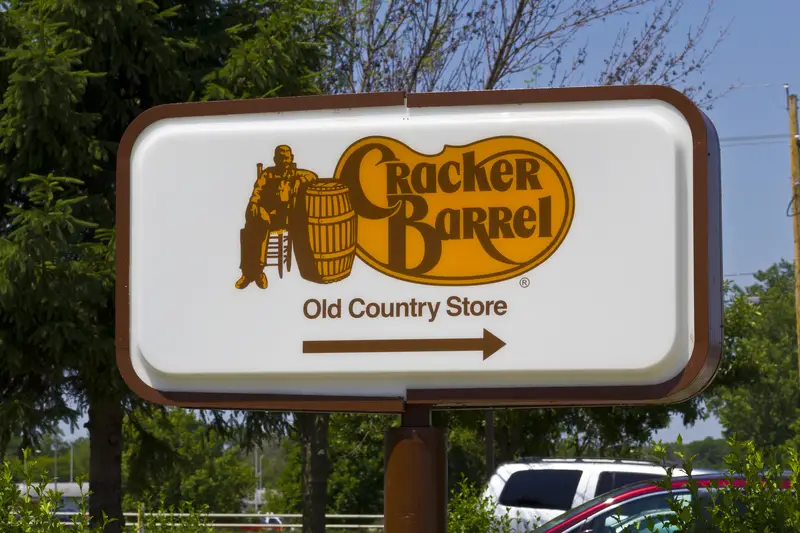
Remember when Cracker Barrel was the go-to stop for comfort food and nostalgia? Those days might be numbered. The beloved restaurant chain is facing some serious challenges that go way beyond typical restaurant struggles. From angry customers abandoning ship to investors pulling their money out, Cracker Barrel is dealing with problems that threaten its very survival.
Prices keep going up while food quality drops
Walking into Cracker Barrel these days means paying a lot more for food that doesn’t taste as good as it used to. The chain has raised menu prices by almost 35% since 2020, with increases happening every single year. That means your favorite chicken pot pie or pancake breakfast now costs significantly more than it did just a few years ago.
The real kicker is that while prices climbed, food quality took a nosedive. Customers complain that everything tastes like it comes straight from a can, with mushy vegetables and corn muffins that never brown properly. Menu overhauls have also shrunk portion sizes, leaving diners feeling like they’re paying more for less food that doesn’t even taste good.
Their main customers are getting older and eating out less
Cracker Barrel built its success on attracting Baby Boomers who loved the nostalgic atmosphere and comfort food. But there’s a problem with banking everything on one generation – they eventually retire and have less money to spend on restaurants. Most Boomers hit retirement by the late 2010s, which means their restaurant budgets got a lot smaller.
The chain never really figured out how to attract younger customers, and they’re not doing much to keep their aging regulars happy either. The menu stays loaded with heavy, carb-filled dishes even though many older diners need healthier options due to medical restrictions. Some longtime customers now avoid the restaurant completely because there’s nothing fresh or healthy available.
The logo change disaster cost them millions
Sometimes a simple change can trigger a massive backlash, and that’s exactly what happened when Cracker Barrel tried to modernize their classic Uncle Herschel logo. The company launched a $700 million rebranding campaign that replaced the beloved character with a plain text design that looked more like a generic app than a homestyle restaurant.
The reaction was swift and brutal. Social media exploded with angry customers, conservative commentators got involved, and even President Trump weighed in demanding they bring back the old logo. Stock prices plummeted by 13%, wiping out about $200 million in company value. Even after they rolled back the change, customer traffic continued falling and the stock price kept dropping.
Bad investments in other restaurant chains backfired
When your main business starts struggling, diversifying into other areas seems smart. Cracker Barrel tried this strategy by investing in different restaurant concepts, but almost every bet went wrong. They started Holler & Dash Biscuit House, bought Maple Street Biscuit Company for $36 million, and dropped $140 million on Punch Bowl Social.
None of these investments paid off. Punch Bowl Social filed for bankruptcy during the pandemic, taking $132.9 million of Cracker Barrel’s money with it. Maple Street Biscuit had to close 14 locations in 2025 after years of poor performance. Even their retail stores, which used to bring in steady money, saw sales drop by double digits.
Investors are losing confidence and pulling out
When a restaurant chain hits rough times, investor support can help them weather the storm. But Cracker Barrel is facing the opposite problem – investors are losing faith and pulling their money out. The company’s stock has lost about 70% of its value since peaking in 2021, signaling that people with money don’t see much hope for recovery.
Making matters worse is a long-running battle with activist investor Sardar Biglari, who has been trying to take control of the company since 2011. His constant criticism and takeover attempts have created ongoing drama that scares away potential new investors. Dividend payments have also become less attractive, giving investors fewer reasons to stick around during tough times.
Marketing efforts completely missed the mark
Good marketing can help restaurants attract customers even during slow periods, but Cracker Barrel’s advertising strategy fell flat when they needed it most. During the crucial summer travel season of 2023, when restaurants typically see increased traffic from vacationers, their marketing messages simply didn’t work.
The company admitted that they spent less money on advertising during periods when they traditionally found it less effective. This backfired spectacularly when summer traffic failed to materialize as expected. Restaurant visits actually dropped 9% between May and June 2023, the opposite of what normally happens during peak travel season.
Competition from other restaurants is getting fiercer
The restaurant industry has become incredibly competitive, with new options popping up constantly and established chains fighting harder for customers. While fast-casual restaurants offered value menus and promotional deals during tough economic times, Cracker Barrel went in the opposite direction with higher prices and fewer deals.
Other chains adapted better to changing customer preferences and economic pressures. Many competitors found ways to offer better value, faster service, or more appealing menu options. Restaurant traffic dropped industry-wide, but some chains managed to maintain or even grow their customer base while Cracker Barrel continued losing ground.
The pandemic hit them harder than most restaurants
COVID-19 was devastating for all restaurants, but Cracker Barrel was particularly vulnerable because they were already struggling before the pandemic hit. Their revenue had plateaued by 2019, and retail sales were flat. When lockdowns forced dining rooms to close, they had very little cushion to absorb the impact.
Unlike restaurants that quickly pivoted to delivery and takeout, Cracker Barrel’s business model depended heavily on the full dining experience, including browsing their retail stores. Revenue tanked and foot traffic disappeared almost entirely. The combination of pre-existing problems and pandemic impacts created a perfect storm that the chain is still struggling to overcome.
Leadership changes haven’t solved the core problems
When businesses struggle, changing leadership is often seen as a solution. Cracker Barrel replaced their CEO in 2023, bringing in Julie Masino to turn things around. They also launched a new loyalty program based on their famous peg game, hoping to bring back regular customers and attract new ones.
Despite these changes, the fundamental problems remain. New leadership and loyalty programs can’t instantly fix years of declining food quality, rising prices, and lost customer trust. Masino acknowledged that turning the company around would take significant time and effort, with no guarantee of success.
Cracker Barrel’s troubles show how quickly a beloved restaurant chain can go from comfort food icon to struggling survivor. The combination of poor business decisions, changing customer preferences, economic pressures, and fierce competition has created a situation that won’t be easy to fix. Whether they can reinvent themselves while keeping what made them special in the first place remains to be seen.

