

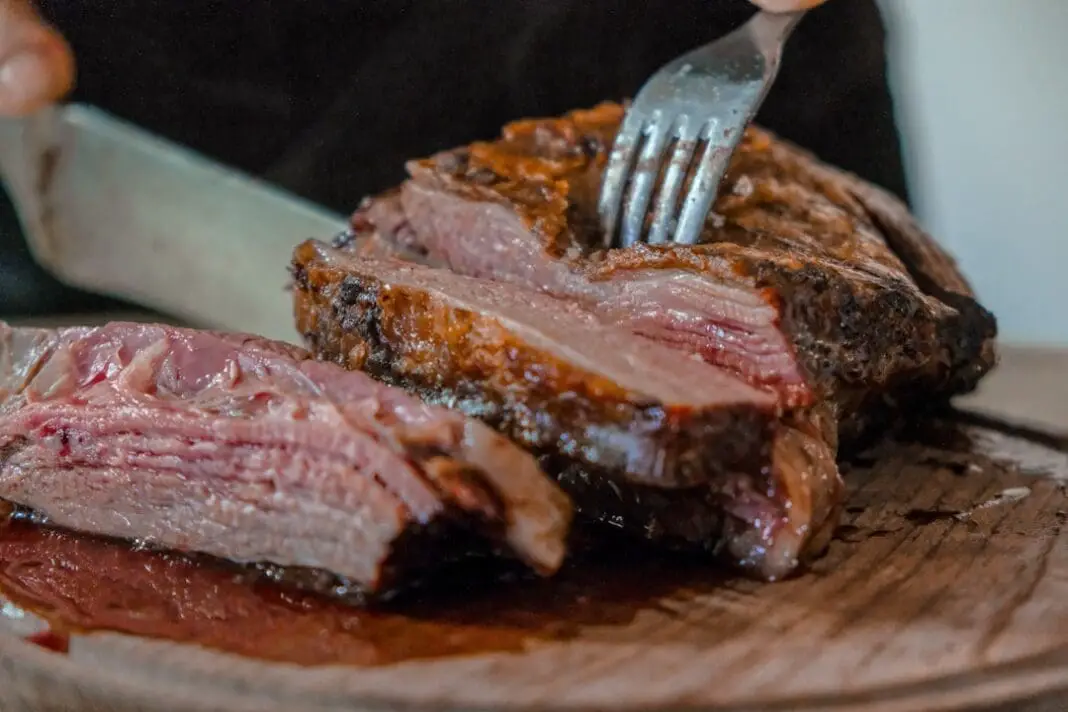
You’ve been lied to about steak. Not by anyone with bad intentions, necessarily — just by decades of misinformation passed down from dads at backyard grills, cooking shows from the ’90s, and that one friend who swears they know everything about meat because they once watched a Gordon Ramsay video. The truth is, a lot of what you think you know about cooking steak is flat-out wrong. And it’s costing you perfectly good dinners.
Let’s go through the biggest offenders one by one. Some of these are going to sting.
Searing Does Not Seal In Juices
This is the granddaddy of all steak myths, and it just won’t die. A German chemist named Justus von Liebig started this rumor back in 1847. Scientists debunked it by the early 1900s. That’s over a hundred years of people ignoring the facts, and somehow your uncle Todd is still out there telling everyone at the cookout that you “gotta sear it to lock in the juices.”
Here’s what actually happens. Meat is roughly 70% water, with most of that moisture trapped inside thousands of thin muscle fibers. When you heat meat, those fibers contract and squeeze water out. Nothing — not searing, not wishing really hard — can stop that process. In fact, searing causes more moisture loss at the surface, not less. The crusty exterior you see after a hard sear? That forms precisely because the surface has dried out from the intense heat.
Alton Brown tested this on camera in 2008. He seared one steak, left another unseared, then cooked both in the oven to the same internal temperature. The unseared steak lost 13% of its weight. The seared one? It lost 19%. Kenji López-Alt ran a similar experiment and found seared-first steaks lost about 1.68% more juices. Cook’s Illustrated repeated the test with eight ribeyes and called the whole concept “nothing but an old wives’ tale.”
Now — should you still sear your steak? Absolutely. Just not for moisture. Sear it for the Maillard reaction, which is the chemical process between amino acids and sugars that creates that brown, deeply flavorful crust. That’s the real reason searing matters. It’s about taste, not juice.
That Red Liquid Is Not Blood
If you’ve ever pushed a rare steak away because the red liquid freaked you out, I have good news: you weren’t looking at blood. Not even a little. All blood is drained from the animal during butchering through a process called exsanguination. By the time that steak hits the shelf at your grocery store, there’s no actual blood left in it.
What you’re seeing is myoglobin mixed with water. Myoglobin is an iron-rich protein found in muscle tissue that stores oxygen. It’s what gives beef its red color in the first place. Beef has a lot more myoglobin than pork or chicken, which is why it looks so much darker and redder.
Here’s a neat detail: when myoglobin is exposed to oxygen, it changes color. In vacuum-sealed packaging where there’s no air, meat can look almost purple. Crack the package open and it blooms to bright red. Cook it, and it shifts from red to pink to gray as the temperature climbs. None of these color changes have anything to do with blood. So stop calling it that. Order the medium-rare in peace.
Bringing Steak to Room Temperature Is a Waste of Time
Every recipe blog in existence tells you to pull your steak out of the fridge 30 to 60 minutes before cooking. Some fancy Michelin-starred chefs swear by it. But the actual science says it’s mostly pointless.
López-Alt tested this directly. After 20 minutes on the counter, the center of his steak had risen by just 1.8°F. After a full two hours sitting out, it was only 13% closer to the target temperature for medium-rare. Two hours of waiting for basically nothing.
Here’s where it gets interesting: that temperature gap between a cold steak and a screaming-hot pan can actually work in your favor. A cold steak gives you more time to build a beautiful sear on the outside before the inside overcooks. A room-temperature steak heats through faster, which means you could end up with a tough, overcooked piece of meat before you get a decent crust. YouTuber Helen Rennie tested this scientifically and confirmed it. Cook’s Illustrated agreed. Chef Ashley Lonsdale from The Takeout admits she pulls her proteins out early out of habit, but she also says going straight from the fridge is “not a deal breaker.”
The Poke Test Is Basically Useless
You know this one. Touch your thumb to your index finger, then poke the fleshy part of your palm. That’s supposedly what rare feels like. Touch your middle finger — medium-rare. Ring finger — medium. And so on. It’s been in cooking magazines and TV shows for years.
It’s also about as reliable as a mood ring. A temperature difference of just five degrees can mean the difference between a perfect medium-rare and an overcooked disappointment, and there is no way your finger can detect that. People’s hands are different sizes. Steaks have different thicknesses. The whole method is guesswork dressed up as skill.
Get a digital instant-read thermometer. Not a cheap dial thermometer either — those can be off by as much as 50°F. A good digital thermometer takes the mystery out of it completely, and they cost like $15. That’s cheaper than ruining a single good ribeye.
You Should Actually Flip Your Steak More Than Once
“Only flip it once!” How many times have you heard that? It sounds authoritative. It sounds like something a pro would say. It’s wrong.
Flipping your steak every 30 seconds or so actually gives you a more evenly cooked result. When you flip frequently, you’re preventing one side from absorbing or losing too much heat at once, keeping the internal temperature more consistent. Multiple flipping can speed up cooking by nearly 30%, and it reduces the risk of burning the exterior before the center is done.
There’s one more benefit most people don’t think about: you won’t get those curled edges that happen when meat fibers contract hard on one side. Your steak stays flat and cooks more uniformly. The only real trade-off? You lose those pretty crosshatch grill marks. If Instagram clout matters more to you than an evenly cooked steak, then sure, flip once. Everyone else, flip away.
Salting Early Won’t Ruin Your Steak — But Salting at the Wrong Time Will
The myth goes like this: don’t salt your steak before cooking because it draws out moisture and makes it dry and tough. It’s half right and completely misleading.
Here’s what actually happens. Salt is a desiccant — it pulls water from the meat. That water mixes with the salt and creates a brine on the surface. If you give it enough time (at least an hour), that brine gets reabsorbed back into the steak, resulting in meat that’s better seasoned all the way through and actually juicier.
The worst possible thing you can do is salt your steak 10 to 15 minutes before cooking. That’s the exact window when pulled-out moisture is still sitting on the surface as a puddle. Throw that wet steak on a hot pan and you’re steaming it instead of searing it. You’ll never get a good crust.
The sweet spot: salt it the night before and leave it uncovered in the fridge. The salt absorbs fully, and the exterior dries out — which sets you up for an incredible sear. Oh, and use kosher salt, not iodized table salt. The big, coarse grains stick to the meat better and won’t leave a metallic taste.
Bone-In Doesn’t Actually Taste Better
This one will start arguments at steakhouses, but it’s true. The idea is that flavor from the bone and marrow seeps into the meat during cooking, making bone-in cuts juicier and more flavorful. Chef Laurent Tourondel, who has spent his career cooking steak at high-end restaurants, puts it bluntly. He’s done blind taste tests: one bone-in, one boneless, cooked the same way. “You tell me the difference,” he says. “There’s no difference.”
The reason is pretty simple. Beef bones are thick and surrounded by dense collagen. During the relatively short cooking time of a steak, almost none of that flavor can penetrate into the meat. That’s why plenty of high-profile steak restaurants feature boneless cuts as their flagship items. You’re paying a premium for bone weight you can’t eat and flavor transfer that doesn’t happen.
You Don’t Have to Buy the Expensive Cut
There’s a persistent idea that filet mignon and ribeye are the only cuts worth buying and everything else is garbage. That’s a myth that benefits exactly one group of people: the ones selling you expensive steaks.
Chef Hosea Rosenberg, owner of Blackbelly, is a fan of the Denver cut — a steak found on the chuck that’s well-marbled, has no connective tissue or fat caps to deal with, and costs about 25% of the price of a premium cut. Grill it, sear it, roast it — it hits medium-rare beautifully. And chef Tourondel isn’t even that impressed by wagyu, calling it too fatty. He says “amazing prime beef” can be a better steak at better value.
Piercing Your Steak With a Fork Won’t Drain It
This is one of those myths that sounds logical enough that nobody questions it. The idea is that if you stab a steak with a fork to flip it, you’ll puncture the muscle fibers and all the juices will run out. So everyone reaches for tongs instead, fumbling around trying to grab a slippery piece of meat off a hot grill.
Cook’s Illustrated actually tested this. They cooked two identical steaks — one flipped with tongs, one pierced with a fork. They weighed both afterward. Same moisture content. The puncture holes are so tiny relative to the size of the steak that they don’t damage enough fibers to matter. Cooking time and temperature are what determine juiciness, not whether you poked it a couple times.
So there it is. Nine pieces of steak “wisdom” that have been steering you wrong, some of them for literal centuries. The good news is that cooking a great steak is actually simpler than all these rules make it seem. Salt it early, get a good sear for flavor, use a thermometer, and stop worrying so much. The steak will thank you.

