

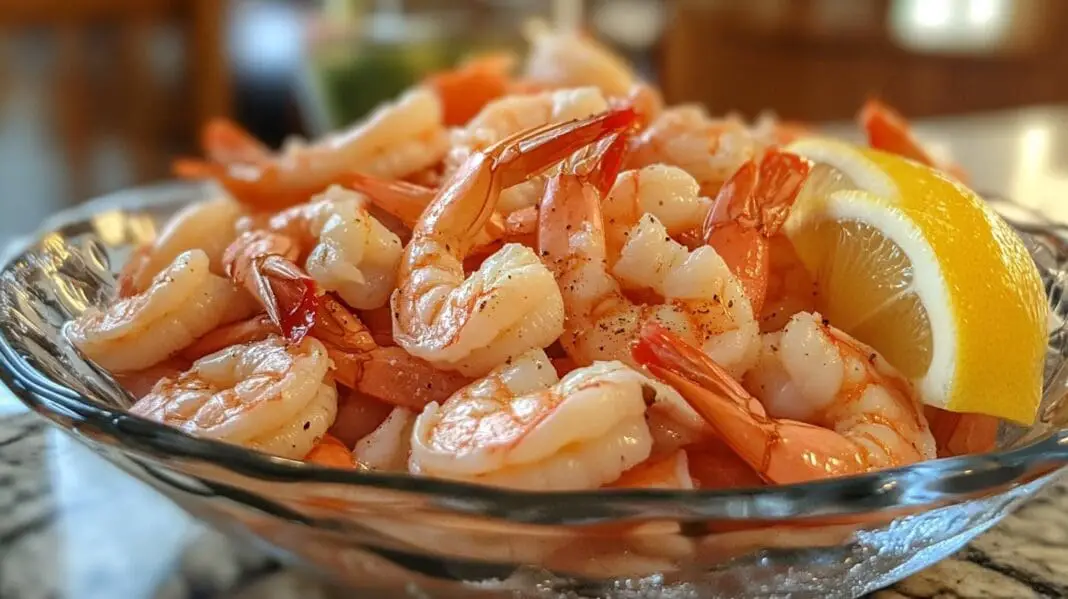
If you got married in 1962, there’s about a 100% chance your guests were greeted by a ring of pink shrimp draped over the edge of a stemmed glass, a pool of red cocktail sauce waiting in the middle. Shrimp cocktail wasn’t just popular at weddings in the early ’60s. It was basically mandatory. Like a white dress or a tiered cake, it was one of those things people expected. And then, slowly, quietly, it disappeared from the reception table altogether.
Most people under 40 have probably never seen shrimp cocktail at a wedding. Maybe they’ve had it at a steakhouse or spotted it on a casino buffet in Vegas, but the idea of it as the opening act to a marriage feels almost quaint now. That’s a shame, because the dish is genuinely good. It’s cold, clean, a little spicy, and dead simple to make. It deserves a comeback, and I’m going to show you exactly how to make the version that would have shown up at your grandparents’ wedding.
How Shrimp Cocktail Ended Up at Every Single Wedding
The story of shrimp cocktail in America goes back further than you’d think. Seafood cocktails were already a thing in the late 1800s, when Gold Rush miners along the California coast ate oysters and clams out of small glasses with vinegar, ketchup, and horseradish. Oysters were the original star, not shrimp. But by the 1920s, Prohibition had shut down the liquor, and all those beautiful cocktail glasses were just sitting around. Someone got smart and started serving shellfish in them instead.
Shrimp took over from oysters for a couple of practical reasons. Oyster beds were getting depleted, and advances in refrigeration meant shrimp could be shipped by truck to places that had never even seen the ocean. By 1948, two guys named Abraham Kaplan and Ernest Schoenbrun borrowed $1,500 from family and launched Sau-Sea brand Shrimp Cocktail, the first mass-produced version. It came in a reusable glass jar and sold for about 50 cents. Suddenly, a restaurant delicacy was something regular people could eat at home on a Tuesday.
Then came Las Vegas. In 1959, Italo Ghelfi at the Golden Gate Casino started selling shrimp cocktail for 50 cents as a marketing promotion. They sold up to 2,000 a day. The price didn’t go up to 99 cents until 1991, by which point they’d moved 25 million servings. Twenty-five million. That one casino helped cement shrimp cocktail as the appetizer of mid-century America.
By the early 1960s, shrimp cocktail had become shorthand for “this is a classy event.” It was elegant but not intimidating. It was cold, so caterers loved it. It could sit out for a while without falling apart. The whole shrimp, with its pretty little red tail, worked as its own handle, which meant guests could eat without silverware. At a 1962 wedding reception, where everything from the Jell-O mold to the sherbet punch was designed to look sophisticated without costing a fortune, shrimp cocktail was the crown jewel of the appetizer spread.
Why It Disappeared From Wedding Receptions
Shrimp cocktail was the most popular appetizer in America from the mid-1960s through the late 1980s, and then it just kind of faded. Part of it was overexposure. When something shows up at every wedding, anniversary, and party for two straight decades, people eventually roll their eyes at it. British food writer Nigel Slater put it perfectly: the dish “has spent most of its life see-sawing from the height of fashion to the laughably passé.”
Wedding food trends also shifted dramatically. By the ’90s and 2000s, couples wanted sit-down dinners, open bars, and signature cocktails. The buffet table with a ring of shrimp on ice started to feel old-fashioned. Other old-school wedding foods went down the same path. Jell-O molds, vol-au-vents, fruit cocktail served in a hollowed-out pineapple, tongue. All gone. Shrimp cocktail at least had the dignity of remaining a steakhouse classic, but at weddings? It was finished.
Why You Should Absolutely Make This at Home
Here’s the thing about shrimp cocktail that people forget: it’s ridiculously easy and it tastes fantastic. The whole recipe is basically “cook shrimp, chill shrimp, make sauce, serve.” There’s almost no way to mess it up if you follow a few basic rules. It takes maybe 20 minutes of active work. You can make it hours ahead. And when you set it out on a table in a nice glass with the shrimp hanging over the rim, people act like you did something difficult.
The key is buying the right shrimp. You want large or jumbo shrimp, shell on. I like 16/20 count (that means 16 to 20 shrimp per pound). Shell-on shrimp cook up juicier and more flavorful than peeled shrimp. You’ll peel them after cooking. Fresh is great if you can find it, but frozen works perfectly. Most shrimp at the grocery store was frozen at some point anyway, so don’t stress about it.
Tips for Perfect Shrimp Every Time
The biggest mistake people make is overcooking the shrimp. Shrimp goes from perfectly tender to rubbery in about 60 seconds. You’re poaching them in seasoned water, not boiling them hard. Bring the water to a boil, drop the shrimp in, then kill the heat and let them sit for 3 to 4 minutes. That’s it. They’ll curl into a C shape when they’re done. If they curl into a tight O, you’ve gone too far.
The ice bath matters. The second the shrimp are pink and curled, drain them and dump them into a big bowl of ice water. This stops the cooking instantly. Let them sit in the ice bath for about 5 minutes, then drain and peel. Leave the tails on. That little red tail is the whole point of the presentation, and it gives your guests something to hold onto while dipping.
For the poaching liquid, don’t just use plain water. Add a quartered lemon, a couple of bay leaves, a tablespoon of Old Bay seasoning, and a generous pinch of salt. This infuses the shrimp with flavor as they cook. Some people use beer or white wine in the poaching liquid, which is also a nice touch.
The Cocktail Sauce Is Where the Personality Lives
You can buy cocktail sauce in a jar, and some of them are decent. But homemade takes about three minutes and it’s noticeably better. The base is simple: ketchup and prepared horseradish. That’s really all you need. From there, you add lemon juice, a dash of Worcestershire sauce, and hot sauce if you like some kick.
The horseradish is where you get to make a choice. Store-bought prepared horseradish varies wildly in strength. If yours has been open in the fridge for a month, it’s probably pretty mild. Fresh jar, strong. I use about 2 tablespoons per cup of ketchup, but taste as you go. You want that sinus-clearing heat that hits you for a second and then backs off. If you want to get closer to what they served at the Golden Gate Casino, add a few shakes of Tabasco and a little extra lemon.
Make the sauce at least 30 minutes before serving so the flavors can meld together in the fridge. It gets better as it sits.
How to Serve It Like It’s 1962
Presentation was everything at a mid-century wedding reception. The classic way to serve shrimp cocktail is in a stemmed glass (a martini glass, a coupe, or even a sundae dish) with the shrimp draped over the rim and the sauce pooled in the bottom. If you don’t have stemmed glasses, a small bowl works fine, but something about the glass makes it feel like an event.
Good Housekeeping’s 1955 cookbook recommended arranging shrimp in a lettuce-lined sherbet glass for formal occasions. For something more casual, they suggested serving the shrimp on a plate with cocktail sauce tucked into a hollowed-out tomato. Both of those still work today.
For a party, you can also do a big platter approach: pile crushed ice on a serving tray, arrange the shrimp in a circle around a bowl of cocktail sauce in the center, and scatter lemon wedges around the edges. It’s a showstopper, it takes two minutes to arrange, and it feeds a crowd.
Variations Worth Trying
The classic recipe is hard to improve on, but a few variations are worth your time. Some people add a spoonful of cream cheese to the cocktail sauce and blend it until smooth for a slightly richer, creamier dip. Others skip the ketchup-based sauce entirely and serve the shrimp with a remoulade or a spicy mayo.
If you want to get a little fancy, toss the cooked and chilled shrimp in a squeeze of fresh lime juice and a pinch of smoked paprika before serving. It doesn’t change the character of the dish, but it adds a subtle layer that makes people pause and say, “Wait, what did you do to these?”
Whatever you do, serve it cold. Room-temperature shrimp cocktail is a crime, and it’s probably part of why the dish fell out of favor. Cold shrimp, cold sauce, cold glass. That’s the way.
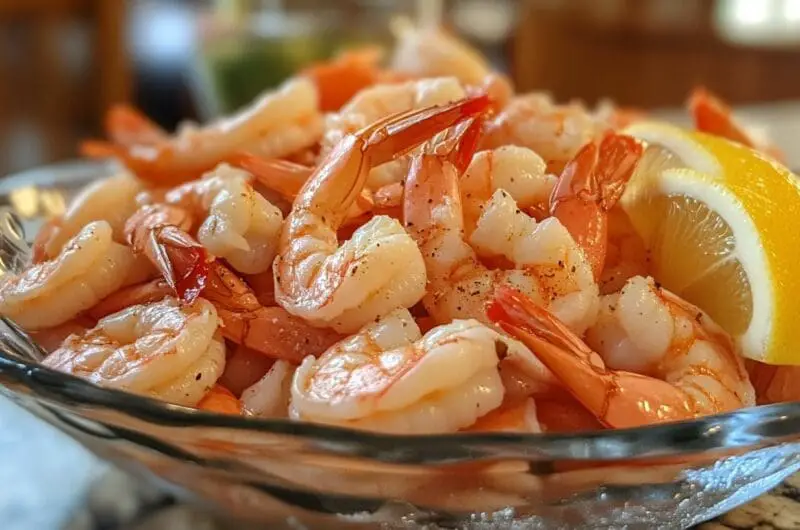
Classic 1960s Shrimp Cocktail
Course: AppetizerCuisine: American6
servings15
minutes5
minutes180
kcalThe exact appetizer that showed up at every wedding reception in 1962, and it still holds up perfectly today.
Ingredients
2 pounds large shell-on shrimp (16/20 count)
1 lemon, quartered (plus extra wedges for serving)
2 bay leaves
1 tablespoon Old Bay seasoning
1 tablespoon kosher salt
1 cup ketchup
2 tablespoons prepared horseradish
1 tablespoon fresh lemon juice
1 teaspoon Worcestershire sauce and a few dashes of hot sauce
Directions
- Fill a large pot with about 3 quarts of water. Add the quartered lemon, bay leaves, Old Bay seasoning, and kosher salt. Bring the water to a rolling boil over high heat. Let it boil for about 2 minutes so the seasonings infuse the water.
- While the water heats, prepare a large bowl of ice water and set it nearby. You want plenty of ice in there because it needs to stay cold enough to shock the shrimp and stop them from overcooking.
- Add the shrimp to the boiling water all at once, then immediately turn off the heat. Let the shrimp sit in the hot water for 3 to 4 minutes, until they are pink and curled into a C shape. Do not walk away from the pot during this step.
- Drain the shrimp and transfer them immediately to the ice bath. Let them chill for 5 minutes until completely cold all the way through. This is what gives you that snappy, firm texture.
- Peel the shrimp, leaving the tails attached. Use a small paring knife to make a shallow cut along the back and remove the vein. Pat the shrimp dry with paper towels and refrigerate on a plate lined with fresh paper towels.
- Make the cocktail sauce by stirring together the ketchup, prepared horseradish, lemon juice, Worcestershire sauce, and hot sauce in a small bowl. Taste and adjust. If you want more heat, add more horseradish a teaspoon at a time. Refrigerate for at least 30 minutes.
- To serve in the classic 1962 style, spoon about 2 tablespoons of cocktail sauce into the bottom of a stemmed glass (a martini glass, coupe, or sundae dish). Drape 5 to 6 shrimp over the rim of the glass with tails pointing outward.
- Garnish each glass with a lemon wedge on the rim. Serve immediately while everything is still very cold. If making ahead, keep the shrimp and sauce separate in the fridge and assemble just before serving.
Notes
- If using frozen shrimp, thaw them completely in the fridge overnight or under cold running water for 15 minutes before cooking. Never thaw shrimp in warm water or the microwave.
- The cocktail sauce can be made up to 3 days ahead and stored in an airtight container in the refrigerator. The flavor actually improves after a day.
- For the best presentation, keep shrimp on ice right up until you plate them. If serving on a platter for a party, set the platter over a larger tray filled with crushed ice to keep everything cold.
Frequently Asked Questions
Q: What size shrimp should I use for shrimp cocktail?
A: Go with large or jumbo shrimp, ideally 16/20 count (meaning 16 to 20 per pound). These are big enough to look impressive draped over a glass and substantial enough to dip without falling apart. Anything smaller than 21/25 count starts to feel a little flimsy for this particular dish.
Q: Can I make shrimp cocktail ahead of time?
A: Yes, and honestly it’s better that way. Cook and chill the shrimp up to 24 hours in advance. Store them on a paper towel-lined plate in the fridge, covered with plastic wrap. Make the cocktail sauce up to 3 days ahead. Just don’t assemble the glasses until right before you serve.
Q: Why was shrimp cocktail so popular at weddings in the 1960s?
A: It was the perfect storm of elegance, affordability, and convenience. Advances in refrigeration made shrimp widely available even in landlocked states. It could be prepared ahead and served cold, which was a huge plus for caterers. And served in a stemmed glass, it looked sophisticated without requiring any real cooking skill at the reception itself.
Q: Is store-bought cocktail sauce okay, or should I make my own?
A: Store-bought is fine in a pinch, but homemade is so quick (literally 3 minutes of stirring) and so much better that there’s really no reason not to make it yourself. You can control the horseradish level, the acidity, and the heat, which makes a big difference when the sauce is the only thing flavoring the shrimp.

