

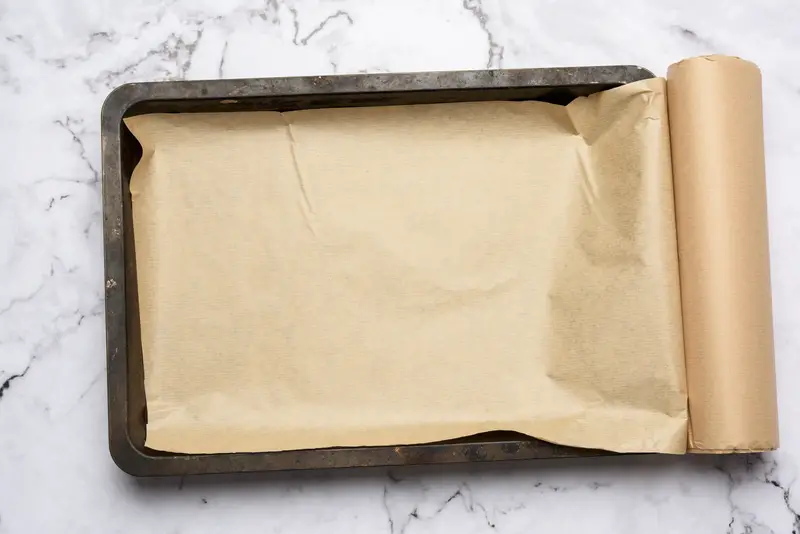
You know that moment when you pull a tray of cookies out of the oven and half of them are stuck to the pan? Or when you’re scraping burnt bits off your baking sheet for the third time this week? Parchment paper seems like such a simple thing to use, but there are actually quite a few ways it can go wrong. Most people think they just need to tear off a sheet and throw it on a pan, but that approach leads to smoking ovens, ruined food, and even kitchen fires. The good news is that once you know what not to do, parchment paper becomes one of the most helpful things in your kitchen.
Using parchment paper at dangerously high temperatures
Most parchment paper burns when things get too hot, and that magic number is usually around 425 to 450 degrees Fahrenheit. If you check the box that your parchment paper came in, it should tell you the maximum temperature it can handle. Some people assume that since it’s made for ovens, it must be fine at any temperature, but that’s not how it works. Paper is still paper, and when you crank the heat up to broil something or roast at 500 degrees, you’re asking for trouble. The edges can catch fire or the whole sheet can start smoking up your kitchen.
When you need to cook something at high heat, skip the parchment paper and use aluminum foil instead. Foil can handle broiling, grilling, and those super high temperatures without any problems. If you’re making pizza at 500 degrees or broiling a steak, just put it straight on the pan or use foil. Save your parchment paper for cookies, roasted vegetables, and anything else you’re cooking below 450 degrees. That way, you get all the benefits without turning your oven into a fire hazard.
Thinking wax paper and parchment paper are the same thing
They look almost identical when you’re staring at them in your drawer, but wax paper and parchment paper are completely different products. Wax paper has a coating of wax on it, which sounds obvious from the name, but that wax melts when it gets hot. If you put wax paper in the oven, you’ll end up with melted wax all over your food and possibly some smoke. It’s not designed for heat at all, so using it for baking is a recipe for disaster. Some people grab whatever’s in the drawer without checking, and that’s when things go sideways.
Wax paper is actually great for cold situations, like wrapping sandwiches or separating burger patties in the freezer. The wax coating makes it moisture-resistant, which is perfect for storage. Parchment paper, on the other hand, has a silicone coating that can handle oven heat without melting or smoking. When you’re getting ready to bake something, take a second to check which paper you grabbed. If you’re not sure, parchment paper usually feels a bit stiffer and has a slightly glossy look to it, while wax paper feels more slippery and waxy to the touch.
Not keeping parchment paper flat on the pan
When you tear off a piece of parchment paper from the roll, it naturally wants to curl back up at the edges. If you just plop it on a baking sheet without securing it, those corners will lift up and your cookies or whatever you’re making might slide around or bake unevenly. Sometimes the curled edges even touch the heating element in your oven, which can cause them to burn or smoke. It seems like a small thing, but those lifted corners can actually mess up your whole batch of food.
The easiest fix is to put a tiny dab of butter or a quick spray of cooking oil on the pan before laying down the parchment paper. That little bit of grease acts like glue and keeps the paper from moving around. Another trick is to crumple up the parchment paper into a ball first, then flatten it back out before using it. This breaks down some of the stiffness and makes it easier to work with. You can also use little dabs of cookie dough or whatever you’re baking at each corner to weigh the paper down.
Putting food on the wrong side of the paper
Most parchment paper has two different sides, even though they might look pretty similar at first glance. One side has the silicone coating that makes it nonstick, and the other side is just regular paper. If you put your food on the wrong side, it might stick when you try to remove it, which defeats the whole purpose of using parchment paper in the first place. The coated side usually looks a bit shinier or feels slightly smoother than the other side, but sometimes it’s hard to tell just by looking.
Here’s an easy test: drop a tiny bit of water on each side of the paper. The side with the silicone coating will make the water bead up and roll around, while the uncoated side will absorb it. That’s the side you want facing up when you’re cooking. Some brands make double-sided parchment paper where both sides are coated, so you don’t have to worry about which way is up. Check the box to see what kind you have, and if it doesn’t say it’s double-sided, assume you need to use the shiny side up.
Using parchment paper when it makes food soggy
Parchment paper is great for a lot of things, but it doesn’t get as hot as a metal pan does. That means when you’re trying to get something really crispy or golden brown, the parchment paper can actually get in the way. Things like pizza dough, pie crusts, and bread often turn out better when they have direct contact with a hot pan. The metal conducts heat better and helps create that crispy bottom that makes baked goods so good. With parchment paper in between, you might end up with a pale, soft bottom instead.
If you’re making something where crispiness matters, consider skipping the parchment paper altogether. Yes, cleanup will be slightly harder, but the results are worth it. For things like homemade pizza or crusty bread, baking directly on a preheated pizza stone or baking sheet gives you that perfect golden crust. You can always use a little oil or flour on the pan to prevent sticking. Save your parchment paper for cookies, cakes, and roasted vegetables where the texture difference won’t matter as much.
Throwing away parchment paper after one use
Most people use parchment paper once and toss it straight in the trash, but you can actually reuse it several times if it’s still in good shape. After baking a batch of cookies, if the parchment paper just has a few crumbs on it and isn’t torn or super greasy, brush it off and use it again. Professional bakers do this all the time to save money and reduce waste. The paper doesn’t lose its nonstick properties after just one use, so you’re basically throwing away something that still works perfectly fine.
You should keep reusing the same piece until it starts to look dark brown, becomes brittle, or gets torn up. Even if the edges are a little singed, the middle part is usually still good to go. The only times you shouldn’t reuse it are when it’s covered in grease or food residue that won’t brush off, or if you used it for raw meat or anything that could cause cross-contamination. For basic baking tasks, one sheet can easily last through three or four batches before you need to swap it out for a fresh one.
Putting parchment paper in appliances it doesn’t belong in
Just because parchment paper works great in the oven doesn’t mean it’s good for every kitchen appliance. Using it in the microwave won’t hurt anything, but it also doesn’t do anything useful since microwaves don’t make food stick to plates anyway. The bigger problem is using regular parchment paper in an air fryer. Air fryers work by circulating hot air really fast, and loose parchment paper can get sucked up into the fan. This can block the airflow, which makes your food cook unevenly, or worse, the paper can get stuck in the heating element and start smoking or burning.
If you really want to use parchment paper in an air fryer, get the perforated kind that’s made specifically for it. The holes let air flow through properly, and they usually come pre-cut to fit standard air fryer baskets. But honestly, most air fryers have nonstick baskets that don’t really need parchment paper at all. For microwaves, just use a paper towel or a microwave-safe cover instead. Save your parchment paper for the oven where it actually makes a difference in how your food turns out and how easy cleanup is.
Wrapping food for the fridge with parchment paper
Some people think parchment paper is good for wrapping leftovers and sticking them in the fridge, but it’s actually a pretty bad choice for that job. Parchment paper absorbs moisture, so if you wrap something like a sandwich or leftover pizza in it and put it in the fridge, the paper will get soggy and might even stick to your food. When you try to unwrap it later, you could end up with bits of paper glued to your meal, which is gross and annoying to deal with.
For short-term fridge storage, wax paper or aluminum foil work much better because they repel moisture instead of soaking it up. Plastic wrap is even better for longer storage since it creates an airtight seal that keeps food fresh. Parchment paper is designed for cooking, not storage, so stick with materials that are meant for wrapping food in cold environments. If you do want to use parchment paper for storage, it works fine for separating items in the freezer, like keeping burger patties from sticking together, as long as you’re not wrapping them directly.
Not cutting parchment paper to fit your pan
When you tear off a piece of parchment paper straight from the roll, it’s usually way bigger than the pan you’re using. If you just throw that oversized piece on your baking sheet, you’ll have paper hanging over the edges and flopping around. Those extra bits can touch the oven walls or heating elements and start to burn, which fills your kitchen with smoke and can even be a fire risk. Plus, when the paper doesn’t fit right, it can bunch up and create uneven surfaces that make your food cook weird.
Taking an extra minute to cut your parchment paper to match the size and shape of your pan makes everything work better. For round cake pans, trace the bottom of the pan on the parchment paper and cut out a circle that fits perfectly flat. For rectangular pans, measure and cut a piece that covers the bottom without extending up the sides too much. This gives you even cooking, prevents burning, and actually wastes less paper since you’re not using more than you need. Properly sized parchment also makes it easier to lift cakes and bars out of the pan when they’re done baking.
Getting the most out of parchment paper is all about knowing when and how to use it properly. Once you avoid these common mistakes, it becomes one of those kitchen tools that actually saves you time and frustration instead of causing more problems. Whether you’re baking cookies, roasting vegetables, or making a quick weeknight dinner, the right parchment paper technique makes cleanup easier and helps your food turn out better. Just remember to check your temperatures, use the right side, and don’t be afraid to reuse it when it’s still in good shape.

