

I spend a stupid amount of time thinking about bacon. Not in some foodie, precious way — more like standing in the grocery store aisle for ten minutes trying to figure out if the $4 pack is garbage or if the $10 pack is a ripoff. Bacon packaging is basically designed to trick you. Little windows that only show the good slices. Words like “hardwood smoked” and “naturally cured” that may or may not mean anything. So I went through every major taste test and ranking published in the last couple years and pieced together a definitive order. Some of these results will genuinely surprise you.
Here’s every major bacon brand ranked from worst to best, based on flavor, texture, value, and how they actually perform in a hot pan.
Jamestown Brand
Dead last, and it’s not even close. Jamestown Brand bacon is the kind of product that makes you question your life choices at the checkout. The packaging features only a tiny window instead of see-through plastic, which should be your first red flag — they don’t want you seeing what’s inside. And for good reason. The slices are ridiculously thin and varying in thickness, smashed together into a gooey slab that’s nearly impossible to peel apart. After you separate the strips and cut away mysterious gray spots (yes, gray spots), you’re left with bacon that somehow manages to be both charred and chewy at the same time. It also contains sodium nitrate and sodium phosphate — two ingredients dietitians consistently flag as problematic. Just skip it.
Sugardale
This one’s confusing because opinions are split. One major test called it the least flavorful brand they tried — too thick to crisp up properly, bland, and chewy in the wrong way. That was using a 40-ounce package at $10. But a different test ranked it highly for its salt-savory balance at $6.99 for 16 ounces. My take? The thick-cut version is the problem. The regular cut performs fine, but if you’re gambling with your bacon money, there are safer bets ahead.
Smithfield
Smithfield processes more pigs than any other company on the planet, which makes their bacon’s mediocrity kind of depressing. The strips are very thin straight out of the package and shrink considerably when cooked, creating what multiple testers described as “chip-like bacon crisps.” That’s fine if you want bacon bits for a salad, but for a Saturday morning plate next to your eggs? Disappointing. You’d think the world’s biggest pork company could do better.
Hormel Black Label
Hormel sells about a dozen bacon varieties — Original, Thick Cut, Cherrywood, Applewood, Maple Black Pepper, Brown Sugar, Jalapeño, and more. The Original Black Label is what most people grab, and it’s fine. Totally fine. It gets the job done with a pleasing taste from natural hardwood smoke. But one blind test ranked it dead last with testers calling it “super not good” and saying it “tastes like fat — greasy, messy, not fun to eat.” The pecanwood thick-cut version lists water as the first ingredient in the cure, which is never a great sign. The Applewood Thick Cut version actually performed much better in a separate test, where kitchen pros praised its distinct layers and balanced flavor. So which Hormel you buy matters a lot.
Oscar Mayer
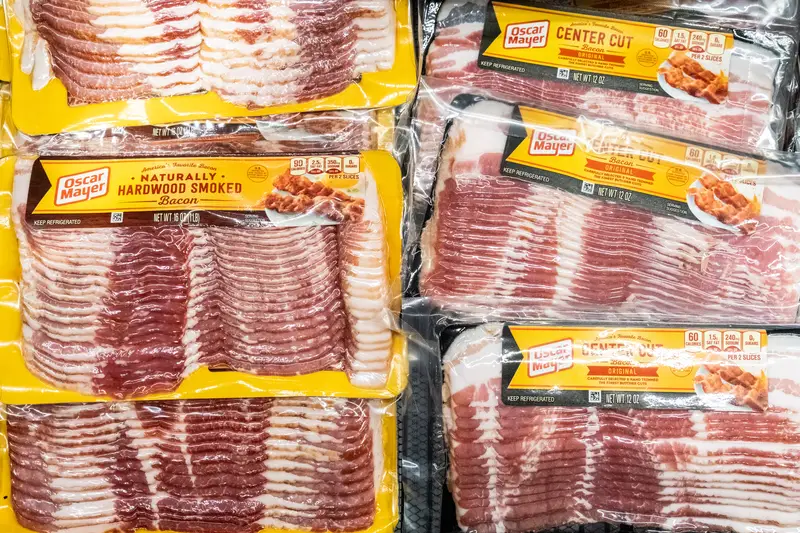
Oscar Mayer dominates the bacon market, and the classic version is consistently described as… fine. Basic. “Ho-hum bacon” that’s perfectly tasty and looks great on a plate. One tester said it’s classic for a reason — buttery, salty, crispy, and chewy. But here’s the thing nobody tells you: the “Naturally Hardwood Smoked Thick Cut” version isn’t actually thick-cut. Multiple testers confirmed it was thinner than standard varieties from other brands, basically disintegrating when baked. It also contains sodium phosphates, sodium ascorbate, and sodium nitrite, which health experts consistently call out. Oscar Mayer is the Honda Civic of bacon — reliable, everywhere, never exciting.
Applegate
Applegate is the brand people reach for when they want to feel better about eating bacon. The Uncured Sunday Bacon is 100% natural, casein and gluten-free, made with humanely raised pork and minimal ingredients. Dietitians like it. The problem is how it actually tastes and cooks. It comes in small 8-ounce packages at $7 (roughly $14 per pound), burns easily in the oven, and falls apart when handled. One blind test group said it “tasted like soap with a chemical flavor and nothing like bacon.” If you’re buying it for ingredient quality, great. If you’re buying it because you want good bacon, maybe keep scrolling.
Great Value (Walmart)
Walmart’s house brand is a weird one. At $4.42 for 12 ounces, it cooks very crispy with a lighter flavor and works great in BLTs or crumbled over dishes. But it’s cheap for a reason — water is one of the first ingredients, and it’s packed with additives like sodium erythorbate and sodium nitrite. It’s perfectly acceptable Tuesday morning bacon when you’re not trying to impress anyone. Just don’t expect magic.
Jimmy Dean
Jimmy Dean’s hickory-smoked bacon is thicker than you’d expect and fattier than some people prefer, but it’s packed with flavor. At 9 grams of fat per two slices (compared to 5 grams for some competitors), it’s not the leanest option. But if you like your bacon full of flavor and don’t mind a little extra grease on the plate, Jimmy Dean consistently delivers. It’s the pickup truck of bacon brands — not fancy, gets the job done, probably what your dad buys.
Wright Brand
Wright has a devoted following, and after looking at the data, I get it. The hickory smoked thick-cut version won the thick-cut category in one major blind test, described as “meaty, smoky, chewy — like a cross between jerky and bacon.” The 24-ounce packages come with resealable packaging that doesn’t leak, which is a small detail that matters more than you’d think when there’s raw pork juice involved. At about $9.98 for 24 ounces at Walmart, it’s a reasonable price per slice. Super fatty in a good way, with huge slices that shrink fast. The fat itself tastes amazing, which is really what separates good bacon from forgettable bacon.
Trader Joe’s
Trader Joe’s bacon showed up strong across multiple tests. The applewood-smoked version is very sweet — one tester detected an almost cinnamon-like flavor and called it the best bacon for Christmas morning. The uncured Black Forest variety features hefty slices dry-rubbed with peppercorns, juniper berries, cardamom, coriander, nutmeg, and sugar. A blind test described it as having an “almost buttery taste” with crispy texture and a nearly perfect salt level. It’s from crate-free pigs during gestation and farrowing, if that matters to you. The only downside is you have to actually go to Trader Joe’s, which on a Saturday morning is its own kind of adventure.
Pederson’s
If you haven’t heard of Pederson’s, you’re not alone — but the people who know it are borderline evangelical about it. The hickory smoked version won “best tasting bacon at the grocery store” in one test, with no added sugar. One tester said it’s “more complex tasting than other brands, packing a rich unique bacon flavor into every slice.” That’s a high bar, and Pederson’s clears it. It’s not the cheapest, but you can find it at Whole Foods and some other natural grocery stores. If you’ve been cycling through the same three brands for years, this is your sign to switch.
Kirkland Signature (Costco)
Consumer Reports named Kirkland Signature the best bacon money can buy, and that tracks. It crisps up perfectly in a pan with an excellent fat-to-meat ratio. The Costco bulk packaging means you’re getting a lot for your money, which is the whole Costco pitch. If you’ve got the freezer space and a membership, this is probably the best everyday bacon available in America right now. No surprises, no gimmicks, just consistently great bacon at a price that makes sense.
Aldi’s Appleton Farms
Here’s the shocker. In a concealed blind taste test where nobody knew which brand was which, every single tester agreed that Aldi’s Appleton Farms was their favorite. Every one. It cooked down significantly but came out crispy, not greasy, and delicious — with the right amount of saltiness and a bit of smokiness. And a pound costs less than $4.50. That’s the kind of result that makes you rethink everything you thought you knew about grocery store bacon. The most expensive option lost. The budget store won. Sometimes the answer is right there in the Aldi aisle, between the random power tools and the discount cheese.
What Actually Matters When Buying Bacon
A few quick things worth knowing. The smoke type matters more than most people realize — applewood and cherrywood tend to produce more consistent flavor than hickory, which can go either way. If your store has a meat counter with uncut slabs, buy your bacon there — it’s almost always better than the packaged stuff. Check if water is listed as one of the first ingredients; that means you’re paying for water weight that’ll just cook off. And if you’re cooking in the oven, 400°F on a wire rack over a foil-lined baking sheet for about 20 minutes is the move. It’s more consistent than a skillet and way less messy. Save the grease in a jar. You’ll thank yourself later.

