

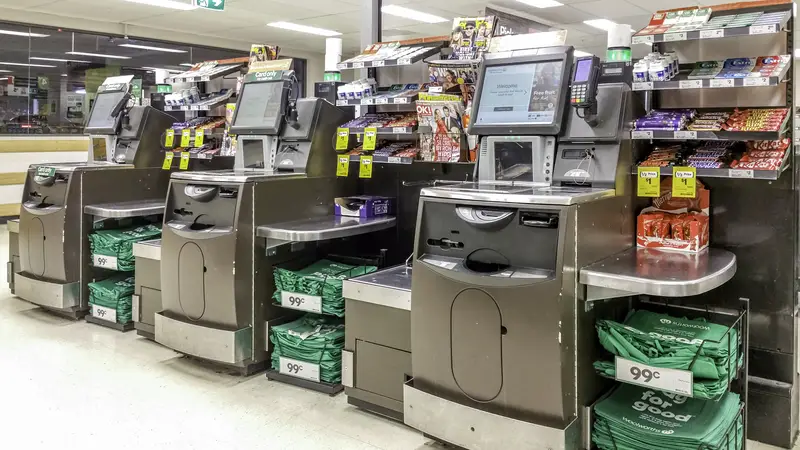
Here’s something most people won’t admit to at a dinner party: more than one in four Americans who use self-checkout have intentionally walked out of a store with something they didn’t scan. Not accidentally. Not because the machine glitched. On purpose.
According to a recent survey of over 2,000 U.S. consumers, 27% of self-checkout users admit to purposefully taking an item without paying for it. That’s up from 15% just two years ago — nearly double. And the people doing it aren’t who you’d expect.
It’s Not Who You Think
There’s a stereotype that shoplifting is something desperate people do out of pure necessity. And sure, that’s part of the story. But the data paints a much weirder picture.
People earning six figures a year? Forty percent of them admit to swiping something at self-checkout. Parents with kids under 18? Forty-four percent. Millennials between 29 and 44 lead the pack at 41%, followed closely by Gen Z adults at 37%. Meanwhile, only 2% of Baby Boomers say they’ve done it. Two percent. Your grandma is apparently the only honest person left in the grocery store.
Men are more than twice as likely as women to steal at self-checkout — 38% versus 16%. Whether that reflects actual behavior or just who’s more willing to admit it in a survey is a fair question. But the gap is hard to ignore.
Why People Say They’re Doing It
When the survey asked people why they stole, the answers were more interesting than a simple “because I could.” Forty-seven percent said the current financial climate has made it hard to afford essentials. Forty-six percent pointed to price increases they attribute to tariffs. And 39% said prices just feel unfair or too high in general.
But here’s the one that really stands out: more than a third — 35% — of people who stole at self-checkout said they see the kiosks as unpaid work, and taking small items feels like compensation. They’re not framing it as theft. In their minds, they’re collecting a wage for doing a job the store used to pay someone else to do.
That rationalization is wild, but it’s not coming out of nowhere. Stores replaced cashiers with machines, asked customers to do the scanning, bagging, and troubleshooting themselves, and then acted surprised when some of those customers started paying themselves a little bonus.
The Psychology of Why We Cheat Machines
There’s actually real research behind why people are more comfortable stealing from a machine than from a person. Criminologist Emmeline Taylor has documented the long list of excuses self-checkout thieves use: they’re hitting back at corporations, they were forced to do unpaid labor, they had problems with the checkout process, or they convince themselves the missed scan was just an accident.
The pattern matches something behavioral economist Dan Ariely has studied for years. When you remove the human element — when there’s no cashier looking you in the eye — it becomes dramatically easier for otherwise honest people to cheat. It’s the same psychological mechanic that lets people pirate movies or cheat on online tests. If you’re not handing the stolen item to a real person, your brain doesn’t fully register it as stealing.
In fact, consumers who cheat the system tend not to see themselves as thieves at all. About 31% of intentional self-checkout shoplifters say they don’t feel any remorse. And Ariely’s research found something interesting: simply asking people to sign a statement saying they’d behave honestly made them cheat less. Just thinking about the concept of honesty was enough. Imagine if self-checkout screens started with “I agree to scan all my items” — it might actually work.
The Accidental Thieves
Intentional theft is only part of the problem. Another 36% of self-checkout users say they’ve accidentally left the store with something they didn’t scan. The item didn’t beep, they didn’t notice, and they walked out. It happens. These machines are glitchy, the bagging area is tiny, and when you’re wrangling a cart full of groceries while your kid is screaming about fruit snacks, it’s easy to miss something.
But here’s the thing: 61% of people who accidentally took something said they kept it the last time it happened. They noticed later, shrugged, and moved on. That gray area between accidental and intentional is a big part of what makes self-checkout theft so hard to measure.
What This Is Actually Costing Stores
The financial damage is staggering. Research from checkout-technology company Grabango found that self-checkout machines have a shrink rate of 3.5% of sales — more than 16 times higher than traditional cashier lanes, which sit at just 0.21%. Nearly 7% of all self-checkout transactions had some amount of what the industry calls “partial shrink” — meaning the customer paid for some things but not everything.
The average value of items stolen in a single self-checkout trip is $60. Across the entire food retail sector, self-checkout machines are estimated to cost stores more than $10 billion in lost revenue every year. Retail shrink overall — including employee theft, process errors, and shoplifting — costs U.S. retailers about $100 billion annually. Self-checkout is eating a larger and larger chunk of that number.
And it’s worth remembering: those losses don’t just vanish. They get baked into the prices everyone else pays. So in a weird, circular way, the people stealing because prices feel too high might be making prices higher for everyone.
Stores Are Fighting Back — Sort Of
Retailers are throwing money at the problem. Harris Teeter has installed smart video cameras above self-checkout stations at some locations that detect when you skip scanning an item and prompt you to try again. Miss a second item, and the machine locks up and calls an employee. According to an NCR Voyix survey, 42% of shoppers have already encountered cameras that detect skipped scans.
Among self-checkout users who’ve stolen, 42% say it’s gotten harder in the past year. The top reasons: more employee monitoring (61%), cameras or AI near the kiosks (49%), and weight sensors becoming more sensitive (42%).
But here’s the catch — even with increased security, 46% of self-checkout shoplifters have been caught at some point, and they keep doing it anyway. Fifty-five percent of people who’ve stolen intentionally say they think they’ll do it again. Among those repeat offenders, 60% say they’re most likely to take essentials like food, water, and health care products.
Some Retailers Are Just Giving Up
Not every retailer is doubling down on self-checkout. Dollar General pulled self-checkout from 12,000 stores last year, pointing directly to shrink as the reason. Target rolled out express self-checkout in early 2024 but limits it to 10 items or fewer. Amazon quietly removed its cashierless “Just Walk Out” technology from most Amazon Fresh stores — the same system that was supposed to be the future of shopping.
A Babson College professor named Peter Cohan put it bluntly: retailers were foolish to expand self-checkout so widely without understanding the hidden costs. Beyond theft, there are technology maintenance expenses, customer frustration with constant glitches (“unexpected item in bagging area” has become a national punchline), and the fact that studies show customers who interact with a real cashier are actually more loyal to the store.
The 10% Who Cause Most of the Damage
Retail loss prevention platform Auror analyzed 2.5 million events across 10,000 grocery stores and found that 39% of all in-store thefts happen at self-checkout. But the really telling stat is this: just 10% of individuals are responsible for over 62% of self-checkout theft losses.
These aren’t organized retail crime rings. They’re what the industry calls “opportunists” — regular people who figured out they could get away with it once, then came back and did it again. And again. And again. The average dollar amount per self-checkout theft incident is $120, which adds up fast when someone is hitting the same store multiple times a month.
Most retailers have adopted a hands-off policy when it comes to confronting suspected thieves. The fear of a violent reaction means employees are generally told to let it go. As one industry executive put it: your safety is more important than a stolen bag of groceries.
Where This Leaves the Rest of Us
Despite all of this, self-checkout isn’t going anywhere. The global market for self-checkout systems is valued at nearly $7 billion and is expected to almost double by 2030. Nearly 40% of grocery store registers in America are already self-checkout kiosks. About 77% of shoppers who prefer them say it’s because they’re faster, and 43% say they like bagging their own stuff.
So we’re stuck in this strange loop. Stores keep installing more self-checkout machines because customers want speed and convenience. Customers keep stealing because the machines make it easy and the prices feel unfair. Stores keep raising prices partly because of all the stealing. And more people steal because prices went up.
Nobody’s winning here. Except maybe the 2% of Boomers who are scanning every single item and feeling great about it.

