

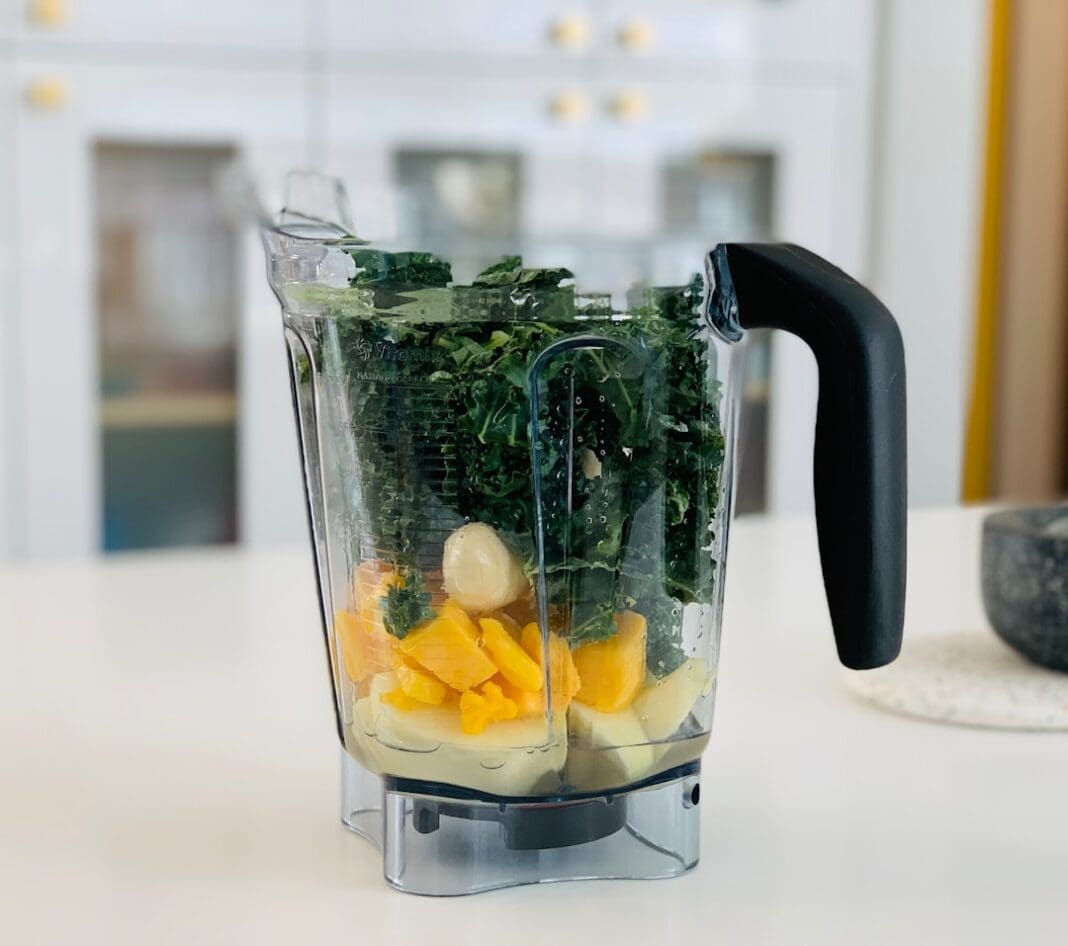
Your blender probably cost you somewhere between fifty and four hundred dollars. And most of us are slowly destroying it — one bad smoothie decision at a time. I’m not talking about forgetting to put the lid on (though we’ve all been there). I’m talking about the stuff we casually toss in without thinking, the ingredients that dull blades, burn out motors, and occasionally redecorate your ceiling with soup.
Some of these will seem obvious once you hear them. Others might genuinely surprise you. Either way, your blender will thank you for reading this.
Hot Liquids — The One That Blows Lids Off (Literally)
This is the big one, and it’s the one people keep learning the hard way. When you pour boiling or near-boiling liquid into a sealed blender and hit the button, the liquid creates steam. That steam has nowhere to go. Pressure builds fast inside that sealed container, and then — pop. The lid launches off, and you’ve got scalding liquid on the ceiling, the walls, the counter, and possibly you.
One home cook described pouring piping-hot butternut squash soup into a standard blender and sealing the lid tight. Within seconds, the pressure blew the lid clean off. Soup hit the ceiling, the walls, and her arm. That’s not a freak accident — it’s physics. Steam expands. A sealed blender is basically a pressure bomb waiting to go off.
If you absolutely must blend something hot, let it cool for at least five to ten minutes first. Fill the blender no more than halfway. Remove the center stopper from the lid so steam can vent, and hold a clean kitchen towel over the opening while you blend. Or just do yourself a favor and buy a $30 immersion blender. Stick it right in the pot. Problem solved forever.
Potatoes Turn Into Wallpaper Paste
Every few months, someone on the internet decides they’re going to make mashed potatoes in their blender because it seems faster and easier. It is faster. The result is also inedible. Potatoes are loaded with starch, and when you blend them at high speed, the blades release way too much of it. What you get isn’t creamy mashed potatoes — it’s a gluey, thick mass that multiple people have compared to wallpaper paste.
The texture is genuinely awful. Sticky, dense, and weirdly elastic. A potato masher takes like three minutes and gives you actual mashed potatoes. A ricer gives you fancy restaurant-style mashed potatoes. A blender gives you something that belongs in a hardware store. Don’t do it.
Coffee Beans Will Wreck Your Blades
Your blender is not a coffee grinder. I know they kind of look like they do the same thing — spin blades really fast to chop stuff up — but a coffee grinder is specifically designed to handle extremely hard, dense beans and produce a consistent grind. A blender is not.
When you throw whole coffee beans into a standard blender, you get an uneven mess — some fine powder, some big chunks, and blades that are noticeably duller afterward. Do it regularly, and you’ll shorten the life of those blades fast. The same goes for cocoa beans and whole nuts. They’re just too hard.
If you’re in a pinch and literally have no other option, pulse small amounts very slowly. But honestly, a decent burr coffee grinder costs twenty-five bucks. Your morning coffee and your blender will both be better for it.
Frozen Foods Can Rip Your Blender Apart
Frozen fruit in smoothies is great — when handled correctly. The problem is when people throw big, rock-hard frozen chunks straight from the freezer into the blender without any liquid and expect magic. What they get instead is a jammed blade, a motor that sounds like it’s dying, and sometimes actual mechanical damage.
The team at one tech review site described trying to blend frozen spinach and having it rip away the rubber grips that rotate the blades. The part had to be completely replaced. That’s not a cheap fix, and it happened from one blending session.
The fix is simple. Let frozen fruit sit out for five or ten minutes, or toss it in a ziplock bag and run it under warm water. Add plenty of liquid before blending. Your smoothie will actually blend smoother, and your blender won’t sound like a garbage disposal eating a spoon.
Ice Without Liquid Is a Motor Killer
A lot of blenders advertise ice-crushing ability, and some of them — the Vitamix, the Blendtec — can actually handle it. But most standard blenders? Not so much. And even the ones that can crush ice need liquid in there to make it work.
Blending ice cubes without any water or juice to cushion them dulls the blades and forces the motor to work way harder than it should. Over time, this leads to overheating and eventual burnout. Use crushed ice if you can, always add liquid, and give the motor breaks between pulses. Your frozen margaritas aren’t worth a $300 replacement blender.
Raw Broccoli Stalks and Fibrous Vegetables
Fibrous vegetables sound like they’d blend fine — they’re not hard like coffee beans, and they’re not hot like soup. But broccoli stalks, kale stems, and similar tough veggies create a specific problem that’s more annoying than dangerous. The fibers wrap around the blades instead of getting chopped. You end up with stringy, uneven results that look like someone put a mop in a blender.
Private chef Rachel Muse has pointed out that even with newer high-speed blenders, high-fiber foods just don’t do well. Raw broccoli stalks turn into strings. Kale stems wrap around the blade assembly. The motor has to work overtime, and the result still isn’t smooth.
If you want these in a smoothie or soup, chop them small, remove the thickest stems, and add plenty of liquid. Or better yet, lightly steam them first to break down some of that fiber before blending.
Dried Fruit and Sun-Dried Tomatoes
Dried fruit is basically leather. Raisins, dried apricots, sun-dried tomatoes — they’re all dehydrated and chewy, and blenders hate them. The tough texture resists the blades, jams the blade assembly, and leaves behind a sticky, gummy residue that’s a nightmare to clean off the blades and the jar walls.
Ali Maffucci, founder of Inspiralized, has specifically warned against blending sun-dried tomatoes unless you have something like a Vitamix. Their leathery texture will jam up a regular blender fast. Her workaround is to soak them in water first to soften them up, which actually works great. Same applies to any dried fruit — a 15-minute soak in warm water before blending makes all the difference.
Dough and Thick Batters
I don’t know who thought making bread dough in a blender was a good idea, but enough people have tried it that experts keep warning against it. Dense, thick mixtures like dough prevent the blades from spinning efficiently. The motor has to fight for every rotation, it overheats quickly, and you could actually burn out the motor entirely. In extreme cases, this has even been linked to small electrical fires.
Even if your blender survives the ordeal, the dough itself will be terrible — tough, poorly mixed, with floury lumps throughout. A stand mixer with a dough hook exists for this exact reason. Even kneading by hand for ten minutes will give you better results than any blender ever could.
Hard Cheeses Like Parmesan
Grating Parmesan is tedious. I get the temptation to just chunk it up and let the blender do the work. But hard cheeses are dense enough to jam blades and wear them down fast. Big pieces of Parmesan or aged cheddar bounce around and strain the motor without ever getting evenly processed. You’ll end up with some powder and some chunks, which isn’t useful for anything.
A food processor handles hard cheese much better — the wider bowl and different blade design actually shred it evenly. Or just use a box grater or microplane like your grandmother did. It takes two minutes and doesn’t risk destroying an expensive appliance.
Garlic, Chilies, and Staining Ingredients
This one isn’t about breaking your blender — it’s about ruining it in a slower, more annoying way. Strong-flavored ingredients like raw garlic and hot chilies can actually penetrate the rubber gasket seal of your blender. That means your next morning smoothie might have a faint garlic or chili flavor. Not ideal.
On top of that, ingredients like tomatoes, turmeric, and beets will permanently stain plastic blender jars. You can blend these things — there’s nothing mechanically wrong with it — but if you care about your blender looking clean, be ready for extra scrubbing or just accept that your blender jar is now permanently orange.
Raw Meat With Bones
Some recipes call for blending chicken or fish to make meatballs, fish cakes, or certain Asian-style preparations. That’s fine — a blender can handle boneless meat, though the texture won’t win any awards (chef Terri Rogers compares it to baby food). The real problem is when bones are involved.
Bones shatter in a blender. They don’t grind down neatly — they break into fragments that are nearly impossible to find and remove once they’re mixed into the food. If you’re blending any kind of meat, double and triple check that every single bone is out first. Missing even a small one creates a serious problem that no amount of straining will fix.
The running theme here is pretty simple: your blender is good at blending soft or liquid things at room temperature. The further you get from that — harder, hotter, drier, denser — the more trouble you’re inviting. Treat your blender like what it is, and it’ll last you years. Treat it like a garbage disposal, and you’ll be shopping for a new one by next month.

