

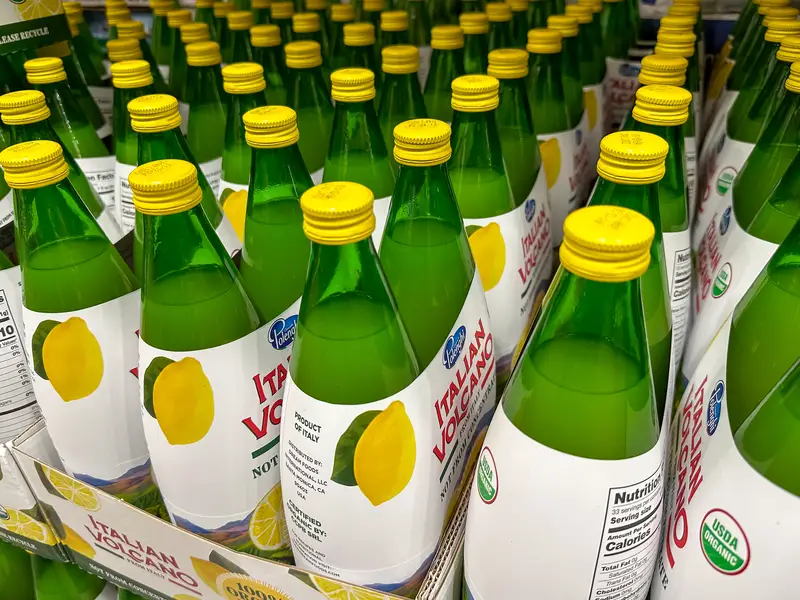
You know the bottle. Little plastic lemon, bright yellow cap, parked in the door of your fridge somewhere behind the ketchup. It has been there for who knows how long, and you keep buying it because it feels like the smart, responsible move. Here is the hard truth. That bottle might be the single biggest waste of space in your kitchen, and I want to walk you through exactly why.
I kept one around for years. Then I actually started paying attention to what I was tasting, ran a little math in my head at the grocery store, and realized I had been paying real money for something that quietly makes my food worse. Once you see it, you cannot unsee it. So let me ruin bottled lemon juice for you the same way someone ruined it for me.
It Tastes Like The Stuff Under Your Sink
The people who bake for a living are not gentle about this. A professional baker who runs the site Sugar Spun Run said concentrated lemon juice “tends to have a flatter taste, and, in my opinion, can sometimes taste a bit like a cleaner.” A cleaner. As in the bottle of spray under your kitchen sink. When a pro who tastes lemon all day says that out loud, you should listen.
There is a simple reason behind it. When you squeeze a real lemon, tiny droplets of oil from the peel mix right into the juice. That oil carries the bright, zippy smell you think of when you picture a fresh lemon. Bottled juice loses almost all of that during processing, so what is left is just flat, one-note sourness. It can hit your tongue, but it never lifts the food. Your lemonade tastes tired. Your salad dressing tastes dull. Your fish gets a sour splash instead of a fresh one.
The Bottle Everyone Owns Is Fake Lemon In A Costume
The bottle most American kitchens have is ReaLemon, the best selling bottled lemon juice in the country. Here is what it actually is. They take lemon juice, remove the water to turn it into a thick syrup that is cheaper to ship, then later add water back in to make it pourable again. Along the way they toss in things like lemon oil, sodium benzoate, and a sulfite preservative to keep it stable on the shelf.
Sit with that lemon oil part for a second, because it is almost funny. The processing strips out the natural lemon aroma, and then the company adds lemon oil back in to try to fake the smell it just destroyed. That is the whole game. You are buying a shelf-stable copy that has been pulled apart and glued back together, then dressed up in a little lemon-shaped costume so it looks like the real thing on the shelf.
The Math Is Almost Insulting
Now the part that actually stings. Fresh lemons go for as low as 64 cents each at major grocery stores, and they regularly drop cheaper than that when they go on sale. One decent lemon gives you two to three tablespoons of juice plus all that zest you are not even using yet. A spritz over fish, a squeeze in your tea, a tablespoon in a dressing, that is one lemon and pocket change.
Meanwhile the bottle costs you a few dollars, and most of what you bought is water with stabilizers in it. You are paying for a worse-tasting product, and you are paying for the privilege of having it sit in your fridge for six months while it slowly gets even flatter. When you break it down per use, fresh juice costs pennies and tastes better. The bottle costs more and delivers less. That is a bad trade in any kitchen.
Even The Best Bottled Brands Are Mediocre
Maybe you are thinking you just need a better brand. I thought that too. A food writer actually tasted eight brands of bottled lemon juice in a blind test, lined up everything from Kroger and Great Value to ReaLemon and Goya, and tried to crown a winner. The verdict? Only three of the eight were even worth buying. Five of them were rated not worth your money at all.
And get this. Even the brands that won still got described as having “a bit of a cleaning fluid kind of smell.” That is the best case. The losers got tagged with words like “battery acid.” So when someone whose entire job is finding the good version of a product tells you the top of the heap still smells like cleaning fluid, that tells you everything. There is no secret premium bottle that fixes the problem. The whole category starts behind the starting line.
Your Mouth Already Knows The Difference
You do not need a trained palate to catch this. In blind taste tests, regular people pick fresh lemon juice over bottled again and again. They cannot always explain why, but they can feel that the fresh stuff has an edge. It is brighter and rounder, and the bottled version tastes a little off in a way that nags at you.
This matters most when the lemon is raw and out front. Think lemonade, a lemon drop martini, a whiskey sour, a fresh squeeze over grilled fish or shucked oysters. There is no heat to hide behind, so the dull bottled flavor is right there in your face. If lemon is the star of what you are making, bottled will let you down every single time. That rule covers way more of your cooking than you probably realize.
The One Time A Bottle Actually Earns Its Spot
I am not a complete fanatic about this, so I will give bottled juice its one fair win. If you are making jam, canning, or cooking down a condiment where the acid level really matters, bottled has a real edge. It hits a strict, predictable acidity, usually around 4.5 percent, every single time. Fresh lemons swing all over the place depending on the lemon, which can mess with how your batch sets up.
There is also the fact that once you cook lemon down into something like a curd or a jam, the difference between fresh and bottled gets a lot harder to taste. The heat flattens both of them out. So for canning and cooked stuff where you need consistency, a bottle makes sense. That is a narrow lane, though. For pretty much everything else you do with lemon, it is the wrong tool.
The Freezing Trick That Kills The Last Excuse
The only real argument left for bottled juice is convenience. You do not always want to cut and squeeze a lemon when you need a tablespoon. Fair. But there is a trick that wipes that excuse off the table. Next time lemons are cheap, buy a big bag, squeeze them all at once, and freeze the juice in ice cube trays in roughly one-tablespoon portions.
Pop the cubes into a freezer bag and you have got fresh-tasting lemon juice ready whenever you want it, for months. Drop a cube in your water, melt one into a pan sauce, toss one in a marinade. It is just as grab-and-go as the bottle, except it actually tastes like a lemon. Once you do this once, the little plastic bottle has nothing left to offer you.
What To Buy Instead
So here is the whole play. Grab a bag of fresh lemons, and stop treating them like they spoil in two days. Stored in a sealed bag in your crisper drawer, lemons stay good for up to a month. Zest them before you juice them, because the zest packs even more of that bright lemon flavor and works great in dressings, marinades, and desserts. You are basically getting two ingredients out of one fruit.
If you absolutely must keep a backup bottle for canning or a lazy night, skip the from-concentrate stuff and look for one that lists 100 percent pure lemon juice as the only ingredient, with no added flavors. Those exist, and they cost a little more, but at least you are not paying for water and a list of stabilizers.
Bottom line, that little yellow bottle has been getting a free ride in your fridge for years. It tastes flat, it costs more per use than the real thing, even the best versions smell faintly like cleaning fluid, and a tray of frozen lemon cubes beats it on every count. Fresh lemons cost pennies and make everything you cook taste better. Next time you are tempted by the bottle, walk past it. It is not worth a single penny.

