

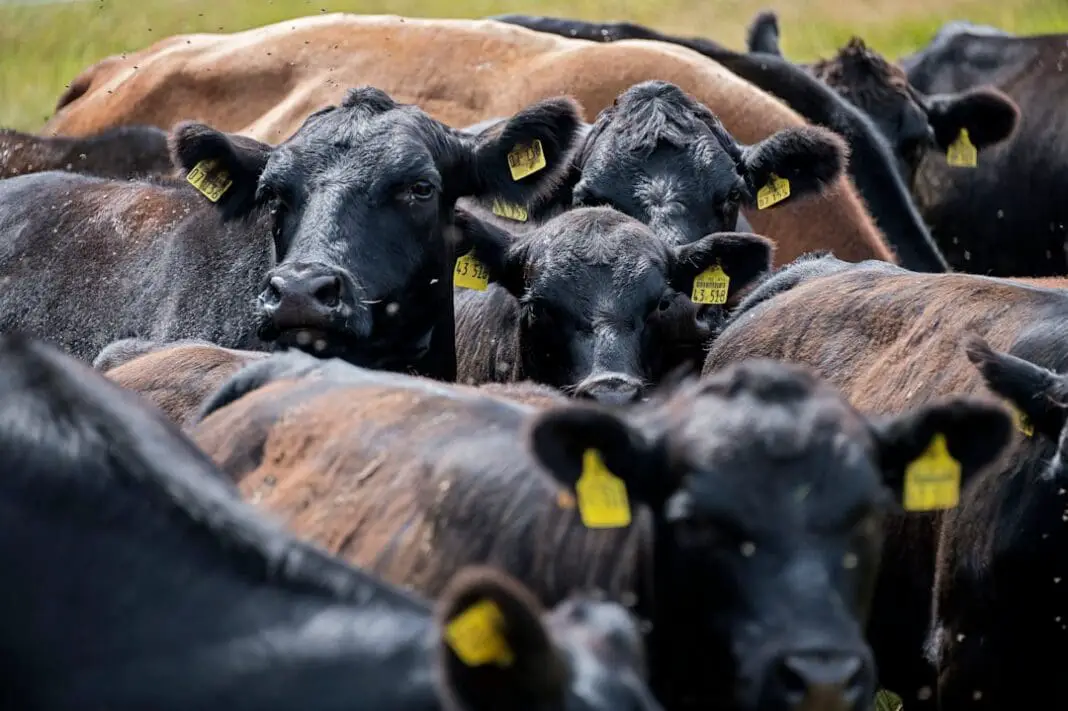
On June 4, 2026, the USDA confirmed something that cattle ranchers have been dreading for over a year. A three-week-old calf in La Pryor, Texas, tested positive for New World screwworm, a parasitic fly whose larvae literally eat living animals from the inside out. It’s the first time this pest has been confirmed in U.S. livestock in decades, and the timing could not be worse.
The U.S. cattle herd is already at its smallest size in 75 years. Ground beef hit $6.89 a pound in May 2026, the highest price the government has ever recorded. And now there’s a flesh-eating fly confirmed on American soil, threatening to make everything worse.
Here’s what’s actually going on, what the government is doing about it, and what this means for your grocery bill.
What Exactly Is the New World Screwworm?
The New World screwworm is a species of fly. Not your regular housefly. This thing lays its eggs in open wounds on warm-blooded animals, and when the larvae hatch, they start eating the living tissue around them. A tiny scrape from an ear tag, a fresh brand mark, even a small cut can turn into a gaping, maggot-filled wound within days. One infected animal can put an entire herd at risk because the adult flies travel up to 12 miles looking for new hosts.
Treatment is possible, but it involves physically removing hundreds of larvae from wounds and thoroughly disinfecting them. It’s slow, expensive, and labor-intensive. And here’s the real problem: after decades of eradication, most American cattle ranchers have never even seen a screwworm case. They don’t have the experience or tools to deal with it.
How Did It Get Here?
The screwworm was officially eradicated from the United States back in 1966 through one of the most creative pest control programs in history (more on that in a minute). For decades, it stayed gone. But starting in 2023, an outbreak began spreading northward through Central America. Panama and Costa Rica detected cases first. Then Nicaragua, Honduras, Guatemala, Belize, and El Salvador. By late 2023, Mexico confirmed cases too.
Experts point to a few reasons the fly managed to spread so far. Sterile-fly programs in Central America may have been disrupted during the COVID-19 pandemic. Increased movement of livestock and people helped carry the pest across borders. And warm weather conditions gave the flies ideal breeding conditions. Between mid-July and mid-August 2025 alone, Mexico reported a 53 percent rise in animal cases.
The U.S. banned livestock imports from Mexico in July 2025 to try to keep the pest out. That ban was already squeezing beef supplies since the U.S. typically imports over a million cattle from Mexico every year. But despite the import freeze, the screwworm made it across the border anyway. The infected calf was found in Zavala County, about 50 miles north of Mexico.
The Government’s Response So Far
Agriculture Secretary Brooke Rollins confirmed the case on Wednesday, June 4. Just one day earlier, on Tuesday, she had denied the pest was found within a mile of the U.S. border. That quick reversal raised some eyebrows, but the USDA moved fast once the confirmation came through.
The agency set up a 20-kilometer (about 12-mile) quarantine zone around the detection site. They implemented movement controls, meaning cattle in that zone can’t be transported without clearance. Surveillance teams are on the ground in Texas, and veterinarians in Arizona and New Mexico have been told to watch for new infections.
But the biggest weapon in this fight isn’t a pesticide. It’s sterile flies.
The Sterile Fly Strategy Is Wild, and It Actually Works
Here’s the thing about female New World screwworm flies: they only mate once in their entire lives. So if they mate with a sterile male, their eggs never hatch. No offspring. Population collapses. This technique, called the Sterile Insect Technique, is how the U.S. eradicated the screwworm in the 1960s. They bred millions of male flies in labs, blasted them with radiation to sterilize them, and then dropped them from planes over infested areas.
The USDA has been doing the same thing in south Texas since February 2026, releasing millions of sterile flies to create a biological wall. Right now, they’re dropping 4 million sterile flies twice a week in the affected area and placing another 4 million in the ground as pupae (which is the stage between larvae and adult) each week.
Currently, the USDA produces about 100 million sterile flies per week at a facility in Panama. But they’re scaling up fast. A new fly-breeding facility in southern Mexico is expected to start operations next month. And the big one: the USDA is spending $750 million to build a massive fly factory at Moore Air Base in Edinburg, Texas, with the capacity to produce up to 300 million sterile flies per week. When all facilities are running, they expect to hit about 500 million sterile flies per week, which is the same volume that eradicated the pest decades ago.
Why This Is a Huge Deal for Beef Prices
Let’s talk money. Beef prices have already climbed 57 percent since 2020 and another 3 percent in the first four months of 2026 alone, according to the Dallas Federal Reserve. The national cattle herd is at a record low, shrunk by years of severe drought and sky-high feed costs that forced ranchers to sell off breeding cows they couldn’t afford to keep.
The cattle industry moves slowly. Even when conditions improve, it takes years to rebuild a herd because you need to breed cows, wait for calves to grow, and then decide which ones to keep for breeding versus sending to market. That’s why beef is still so expensive even though the drought has eased in some areas.
Now add the screwworm on top of that. The USDA estimates a widespread outbreak could cost the Texas economy $1.8 billion in livestock deaths, labor costs, and medication expenses. If more cattle die or if ranchers are forced to restrict movement of their herds, beef production drops even further. That means even higher prices at the grocery store and at restaurants.
Feedlots and meatpackers were already struggling. Some have seen layoffs and closures because there simply aren’t enough cattle to process. The Mexico import ban made things tighter since those imported cattle, which tend to be cheaper and leaner, get mixed with fattier domestic beef to make hamburger. Without them, the supply chain is thinner than it’s been in a generation.
What Ranchers Are Doing Right Now
Even ranchers far from the quarantine zone are taking precautions. Some whose family operations are 200 miles or more from the detection site are already giving their cattle preventive injections to ward off screwworm infestation. They’re being extra careful with routine procedures that create open wounds, like ear tagging and branding, since those wounds are exactly where screwworm flies love to lay eggs.
Zavala County itself has a prominent livestock industry, with an estimated 38,000 cattle as of 2022. Most calves are currently on pasture, meaning they’re not being sold or moved around much. That’s actually a small piece of good news since less movement means less chance of carrying infested animals to new areas. Corbitt Wall, a livestock market analyst, noted that the primary risk right now is to the livestock themselves, not to meatpackers or consumers further down the chain.
How Bad Could This Get?
History offers some uncomfortable context. During the 1930s outbreak, Texas reported 3 million screwworm cases in 1935 alone. The parasite killed an estimated 180,000 head of cattle across 92 counties. Annual damage during that period totaled about $225.7 million in today’s dollars. At the peak, roughly 12 percent of animals were infected, with a mortality rate between 12.4 and 19.4 percent.
The 1970s outbreak was also severe. In surveyed areas of Texas, the infestation rate reached 20.6 percent in cattle and 9 percent in sheep and goats. That outbreak cost the Texas economy an estimated $375 million in non-inflation-adjusted dollars.
Agriculture Secretary Rollins said there’s no reason to believe this single case will result in the pest becoming established in the U.S. again. But nobody is taking chances. Texas Governor Greg Abbott had already declared a disaster back in January 2026, before the calf even tested positive. The industry knew this was coming.
What About the Beef You’re Buying?
The USDA and the CDC have both stated clearly that the screwworm does not infest meat or other food sources. Your steak is fine. Your ground beef is fine. The parasite affects living animals, not processed meat on a grocery store shelf. The U.S. Meat Export Federation also said it doesn’t expect any disruptions to beef exports, though they’re watching for any trading partner reactions that could interrupt international beef trade.
Shares of Tyson Foods and JBS rose in premarket trading the day after the announcement, after dropping the day before on initial reports. The market seems to be treating this as a supply squeeze (less cattle equals higher prices for the meat that does get processed), which is good for meatpackers’ margins even if it’s bad for your wallet.
So the beef in your fridge is safe to eat. But getting it there is about to get more expensive, and that’s the real story. The U.S. cattle industry was already stretched to breaking before this parasite showed up. Now it’s facing a threat that, if not contained quickly, could set things back even further. The sterile fly operation is the best shot at stopping this before it spirals. Let’s hope those 500 million flies a week are enough.

