

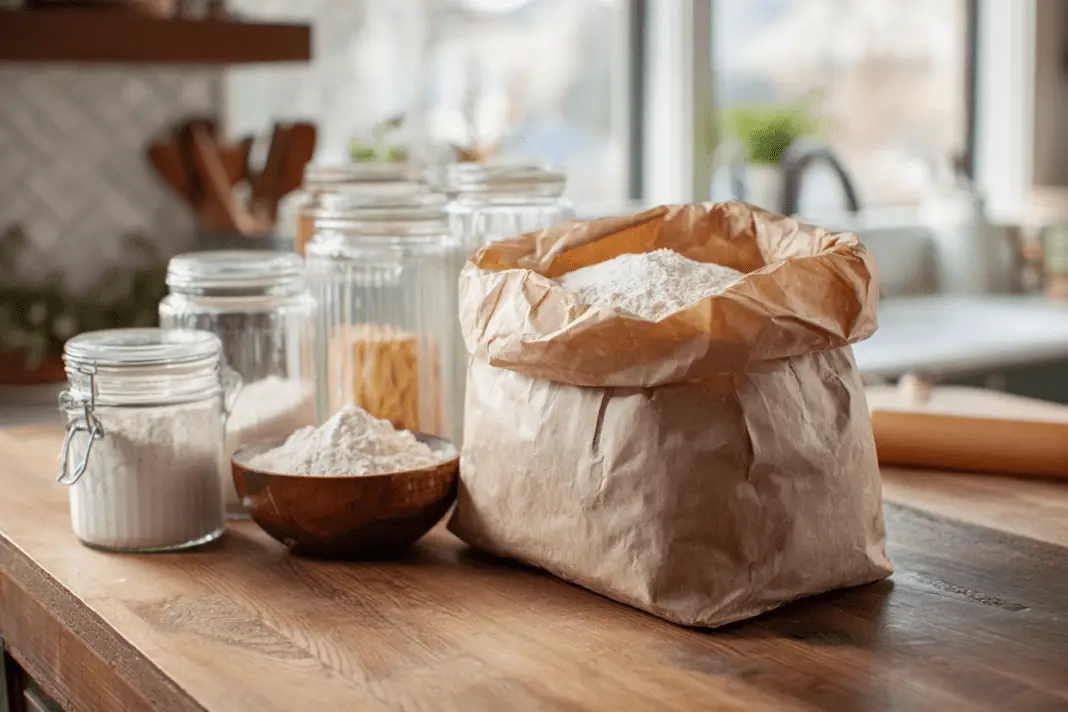
I used to leave flour in the bag it came in. Just fold the top over, maybe clip it with a chip clip, shove it in the back of the pantry. That’s what my mom did. That’s what everybody does, right? Turns out, that’s basically the worst thing you can do if you want your flour to actually work when you need it. And nobody talks about this — not on the bag, not at the store, nowhere. So let’s fix that.
The Paper Bag Is the Problem
Here’s something most people never think about: those paper bags flour comes in are designed to be breathable. That’s on purpose. During milling, flour retains a tiny bit of moisture, and the paper lets that moisture slowly evaporate. That’s great for the milling company — not so great for you at home. Once that bag is sitting in your kitchen, that same breathability becomes a liability. The paper does almost nothing to block outside moisture, heat, odors, or bugs. It’s basically a welcome mat for everything that makes flour go bad.
Think about where most people keep flour. In a cabinet above the stove, maybe. Or in a pantry that gets warm in the summer. Heat and moisture are flour’s two biggest enemies, and a paper bag protects against neither. The moment you bring flour home from the grocery store, it’s slowly degrading — unless you do something about it.
What Actually Happens When Flour Goes Bad
Flour doesn’t mold like bread or turn green like cheese (usually). It goes rancid. The oils in the flour — yes, flour has oils — start to oxidize when they’re exposed to air, light, and heat. When that happens, the flour develops a smell that’s hard to describe but unmistakable once you notice it. People compare it to Play-Doh, waxy crayons, rubber, or something vaguely sour. If you’ve ever baked something that tasted a little off and couldn’t figure out why, your flour might have been the culprit.
Rancid flour doesn’t just taste bad. It performs badly too. Bread won’t rise the way it should. Crust comes out pale and weak. Cakes taste bitter. And the thing is, a lot of people blame themselves — they think they messed up the recipe or their oven is weird. Nope. It’s the flour. Fresh flour should smell like almost nothing. If yours has any noticeable odor at all, it’s time to toss it.
The Airtight Container Rule
The single most important thing you can do is get your flour out of that paper bag and into an airtight container the day you bring it home. Glass jar, plastic container with a snapping lid, even a heavy-duty Ziploc bag — all of these are better than paper. The key word is airtight. You need to cut off flour’s exposure to oxygen, moisture, and whatever else is floating around your kitchen.
Plastic containers are probably the most practical option for most people. They’re cheap, stackable, and won’t shatter if you drop them. A 5-liter plastic container holds about 4.5 pounds of flour comfortably. Glass jars look nice on the counter but they’re heavy and breakable, and they let in light unless you keep them in a cabinet. Either way, the lid needs to close completely — no gaps, no loose fits.
If you’re using Ziploc bags, squeeze out as much air as possible before sealing. Double-bagging isn’t a bad idea either, especially if the bags are thin. Vacuum-sealed bags are even better if you have a sealer.
White Flour vs. Whole Wheat: They’re Not the Same
This is where a lot of people get tripped up. White flour — your standard all-purpose, bread flour, cake flour — uses only the endosperm of the wheat kernel. There’s very little oil in it, which means it’s fairly stable. Stored in an airtight container in a cool, dark spot, white flour will last six to eight months easily. Some sources say up to a year in the fridge.
Whole wheat flour is a completely different animal. It uses the entire wheat kernel — bran, germ, and all. The germ contains fat, and fat goes rancid when it meets oxygen. That clock starts ticking the moment the grain is milled. Stored in your pantry, whole wheat flour is only good for about three months. In the fridge, you get maybe six months. The freezer is the best bet for whole wheat — it can last up to a year there.
The same goes for other whole grain flours like rye, spelt, and oat flour. And nut flours — almond flour, coconut flour — are even more fragile because the nuts themselves are loaded with oils. As one baking expert put it, a whole nut is nature’s perfect storage system. The more you process it — shelling, chopping, grinding — the more you strip away its natural protection and speed up its decline.
When the Freezer Makes Sense
If you don’t bake all that often, or if you bought a big bag of flour on sale and can’t use it all quickly, the freezer is your friend. White flour stored in a sealed container or vacuum-sealed bag at 0°F can last for years — some sources say two years or more. Whole wheat flour will last about a year frozen. That’s a massive improvement over three months in the pantry.
One trick: if you have a large bag of white flour, split it up. Keep a smaller amount in the pantry for everyday use and stash the rest in the freezer. That way you’re not opening and closing a big container constantly, which lets in fresh air each time.
Now, there’s a debate about whether you need to bring frozen flour to room temperature before baking with it. For white flour, most bakers say the chill won’t matter — once it’s mixed with other ingredients, it evens out fast. But for whole wheat flour and yeast breads, letting it warm up a bit is a smart move. Cold flour can slow down yeast activity and affect how much your dough rises.
The Bug Situation Nobody Wants to Talk About
Let’s address the gross part. Flour bugs — weevils, pantry moths, whatever you want to call them — are a real thing. They lay eggs in grain products, and those eggs can hatch right there in your flour bag. If you’ve ever opened a bag of flour and seen tiny dark specks moving around, congratulations, you’ve met them.
Storing flour in an airtight container keeps pests from getting in. But here’s a pro move: when you first bring flour home, stick it in the freezer for four days. That kills any existing eggs or larvae that might already be in the flour from the mill or the store. After four days, transfer it to your airtight container and store it wherever you want. Problem solved before it starts.
Another old-school trick: drop a bay leaf into your flour container. Weevils apparently hate the smell. Some people use whole cloves too. It won’t flavor your flour, but it gives bugs another reason to stay away.
Big Bag Storage for Bulk Buyers
If you buy flour in large quantities — 25 or 50 pound bags from Costco or a restaurant supply store — you need a different approach. The Missouri Extension office recommends putting the entire bag inside a large container with a tight-fitting lid, like a clean food-grade bucket. Important: don’t dump the flour directly into the bucket. Containers that aren’t specifically food-grade could leach chemicals into your flour. Keep the flour in its bag, put the bag in the bucket, and seal it up.
Food-grade 5-gallon buckets are popular for this — you can fit about 25 pounds of flour in one. Keep the bucket off the floor, in a cool spot, away from light. Each time you open it, grab enough flour to last you a few weeks and transfer it to a smaller kitchen container. This way you’re not exposing the whole stash to air every time you bake.
Mylar Bags for Serious Long-Term Storage
For people who want flour to last years — preppers, bulk buyers, anyone who just likes being prepared — mylar bags with oxygen absorbers are the gold standard. Mylar bags are made from laminated food-grade plastic and aluminum. They block light completely and, when sealed properly with an oxygen absorber inside, create an environment where bugs can’t hatch, mold can’t grow, and oxidation basically stops.
A 5-gallon mylar bag can hold a serious amount of flour and takes up less space than a bucket. The catch is that you have to seal them properly — a bad seal or a forgotten oxygen absorber defeats the entire purpose. Done right though, white flour stored this way can last over a decade.
Don’t Mix Old Flour With New Flour
This one seems obvious but people do it all the time. You’ve got half a container of flour left, you buy a new bag, and you dump the new flour right on top of the old. Bad idea. The older flour at the bottom could already be turning, and now it’s contaminating the fresh stuff. Use up the old batch first, then clean the container and start fresh. Writing the purchase date on your container with a piece of tape is a small habit that saves you from guessing later.
The Smell Test Is Your Best Friend
Flour doesn’t come with a dramatic expiration. It fades. The best way to check if your flour is still good is to smell it. Open the container, stick your nose in there, and take a sniff. Fresh flour smells like almost nothing — maybe a faint, clean wheat smell. If it smells sour, musty, like Play-Doh, or like crayons, it’s done. Don’t try to bake with it. Your cookies will taste like regret.
Flour is cheap. A bad batch of brownies wastes more money in butter, eggs, and chocolate than the flour itself costs. When in doubt, throw it out and start fresh. And this time, store it right.

