

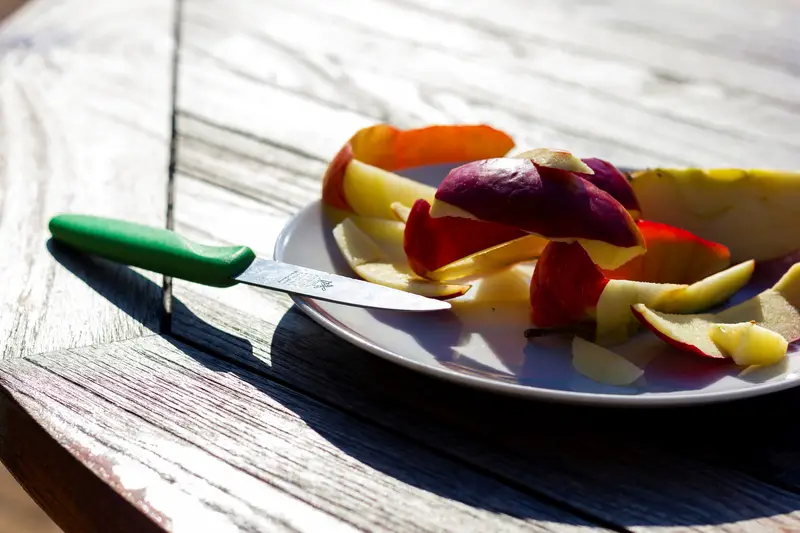
I watched my wife peel an entire bag of Honeycrisps last fall while making a pie, and the pile of discarded skins sitting on the counter physically hurt me. Not because I’m dramatic (okay, maybe a little), but because I’d just spent a week reading about what’s actually in those peels. Turns out, the skin of the apple is where most of the good stuff lives. The flesh? It’s fine. But the peel is doing the heavy lifting, and most of us just scrape it into the garbage disposal without thinking twice.
Here’s the thing — Americans eat roughly 16 pounds of fresh apples per person every year. And between homemade pies, applesauce, baby food, and people who just don’t like the texture, a staggering amount of peel ends up in the trash. Millions of pounds of apple peels are generated as waste in states like New York alone from applesauce and canned apple production. That’s not just food waste. That’s a mountain of nutrition going straight to the landfill.
The Peel Has Almost All the Antioxidant Power
Here’s a number that stopped me cold: the total antioxidant activity of a whole apple (with peel) is equivalent to about 1,500 mg of vitamin C. But the actual vitamin C content? Only about 5.7 mg per 100 grams. That means the antioxidant power is coming from dozens of other compounds — and most of them are concentrated in the skin, not the flesh. Vitamin C contributes less than 0.4% of the apple’s total antioxidant activity. The rest comes from polyphenols, flavonoids, and other plant compounds you’ve probably never heard of but your body desperately wants.
Apples contain over 60 different phenolic compounds, and the peel has a higher concentration of polyphenols than the flesh or the core. When researchers tested how well apple peels could prevent LDL oxidation (which is the kind of cholesterol damage that leads to heart problems), peels inhibited it by 34%. The flesh alone? Only 21%. If you’re peeling your apple, you’re literally throwing away the part that does the most work.
You’re Losing a Shocking Amount of Vitamins
Peeling an apple doesn’t just shave off a thin layer of skin. It strips away a disproportionate chunk of the fruit’s nutrition. A raw apple with the skin contains up to 332% more vitamin K, 142% more vitamin A, and 115% more vitamin C than a peeled one. You also lose about 20% of the calcium and 19% of the potassium.
Peel the skin and you’ll eliminate most of the apple’s vitamin E and vitamin K, plus all of its folate. That’s not a minor nutritional hit — that’s gutting the fruit. A medium apple with peel gives you around 8.4 mg of vitamin C and 98 IU of vitamin A. Strip the peel off and those numbers drop to 6.4 mg and 61 IU respectively. And about a third of the apple’s total fiber disappears with the skin, too.
Quercetin: The Compound You Need to Know About
Quercetin is a flavonoid found predominantly in apple peel, not the flesh. And it does a lot more than you’d expect from a compound most people can’t pronounce. Research has linked quercetin to improved lung function and a reduced risk of asthma. It also shows protective effects against brain tissue damage in people with Alzheimer’s disease and other neurodegenerative disorders.
One study found that quercetin in men with stage 1 hypertension was able to reduce blood pressure independent of other factors. That’s not “alongside medication” or “combined with exercise.” That’s quercetin doing its own thing. The anthocyanins and quercetin in apple peel together have been shown to have blood pressure-reducing effects, which matters when heart disease is still the number one killer in America.
Your Arteries Actually Respond Within Hours
This one surprised me. In a study comparing apples eaten with their peel versus the same apples with peels removed, researchers measured flavonoid levels in the bloodstream over three hours. The unpeeled apple group saw flavonoid levels shoot up — and their artery function improved measurably compared to the peeled group. The researchers concluded that the lower risk of cardiovascular disease associated with apple consumption is most likely due to the high concentration of flavonoids in the skin.
Even more interesting: eating an apple with some extra peel produced a blood pressure effect similar to eating three-quarters of a cup of cooked spinach. Both improved artery function and lowered blood pressure almost immediately. A separate study tracking thousands of older women found that eating as little as a quarter of a large apple per day was associated with longer survival. Even a fraction of an apple daily was linked to 24% lower odds of severe major artery calcification.
Cancer Cells Don’t Like Apple Peels Either
Triterpenoids are compounds found in apple skin that have shown the ability to destroy cancer cells — specifically those associated with colon, breast, and liver cancers. Apple peels have also been found to greatly inhibit the growth of liver and colon cancer cells in lab settings. Eating an apple with the peel on gives you 50% more phytonutrients than a peeled apple, and many of those phytonutrients have anti-inflammatory and anti-cancer properties.
There’s also ursolic acid, which is found in the peel and has anti-obesity properties. It’s thought to promote muscle mass while simultaneously burning stored fat for energy. That’s a compound doing two jobs at once — building and burning — and you’re tossing it in the compost bin.
Your Gut Bacteria Want That Peel
Apple peels contain about 4.4 grams of fiber per medium apple, including both soluble and insoluble types. The soluble fiber — specifically pectin — gets broken down by the bacteria in your gut and transformed into short-chain fatty acids like acetate, propionate, and butyrate. These aren’t just random chemicals. They’ve been shown to have real effects on gut health, inflammation, and even mood regulation.
The insoluble fiber does the mechanical work — adding bulk to your stool, drawing water in to keep things moving, and helping food pass through your digestive tract more quickly. That combination of soluble and insoluble fiber in one food source is exactly what your digestive system is designed to process. Apple peels also help regulate blood sugar, slow nutrient absorption, and lower cholesterol. For a piece of fruit skin, that’s a pretty loaded resume.
What About Pesticides?
This is the counterargument everyone reaches for — “but pesticides!” — and it’s not unfounded. Conventionally grown apples can have trace amounts of pesticides on the skin. But here’s what the research actually says: after pesticide application, residue on the fruit’s skin decreases by about 70% within three days, and it’s nearly gone after seven. Washing your apples thoroughly helps too. Buying organic or locally grown apples reduces exposure even further. The nutrition you gain from eating the peel far outweighs the trace amounts of residue that remain after a good wash.
If You Must Peel, Don’t Waste Them
Sometimes peeling is unavoidable. You’re making applesauce. You’re baking a tart. Your kid refuses to eat anything with a visible peel (relatable). In those cases, there are genuinely useful things you can do with those scraps instead of trashing them.
Steep apple peels in boiling water with a cinnamon stick and honey to make a simple tea — use red apple peels and you’ll get a pink-hued cup that looks way fancier than the effort involved. Toss peels in warm spices and crisp them in the oven for a snack. Chop them finely and stir them into pancake batter, waffle mix, or oatmeal. Freeze them in a resealable bag and throw a handful into your morning smoothie for extra fiber and sweetness.
You can also simmer peels and cores in water for about 30 minutes, then use the liquid as an apple stock for cocktails, glazes, or homemade cider doughnuts. Boil the peels with water and brown sugar to make a fresh apple syrup for pancakes. Or dry them out and grind them in a spice grinder to make apple powder you can add to basically anything.
Here’s a weird one: boiling apple peels in aluminum cookware for 15-20 minutes actually removes stains from the pot. The natural acid in the skin does the scrubbing for you, and your kitchen smells like fall while it happens.
Composting Beats the Landfill Every Time
If you really can’t use the peels for eating or cooking, composting is still better than the garbage. When apple peels decompose in a landfill, they produce methane — a greenhouse gas that’s far more potent than carbon dioxide. Composting those same peels turns them into nutrient-rich soil loaded with nitrogen, calcium, and potassium. If you’re into vermicomposting, red wiggler worms love apple peels and convert them into a rich, usable byproduct that works as natural fertilizer.
The research on apple peel supplementation is still growing. One human study showed that eating apples with the skin on produced a measurable increase in arterial function both immediately and after four weeks of daily intake. Animal studies have shown dose-dependent reductions in weight gain and fat tissue. Scientists are even looking at processed apple peels as a potential functional food ingredient, since they retain their beneficial compounds even after drying and processing.
So the next time you pick up an apple, just eat the whole thing. Wash it, bite into it, and eat the peel. It’s simpler than any of this, really. The best part of the apple has been there the whole time — we’ve just been throwing it away.

