

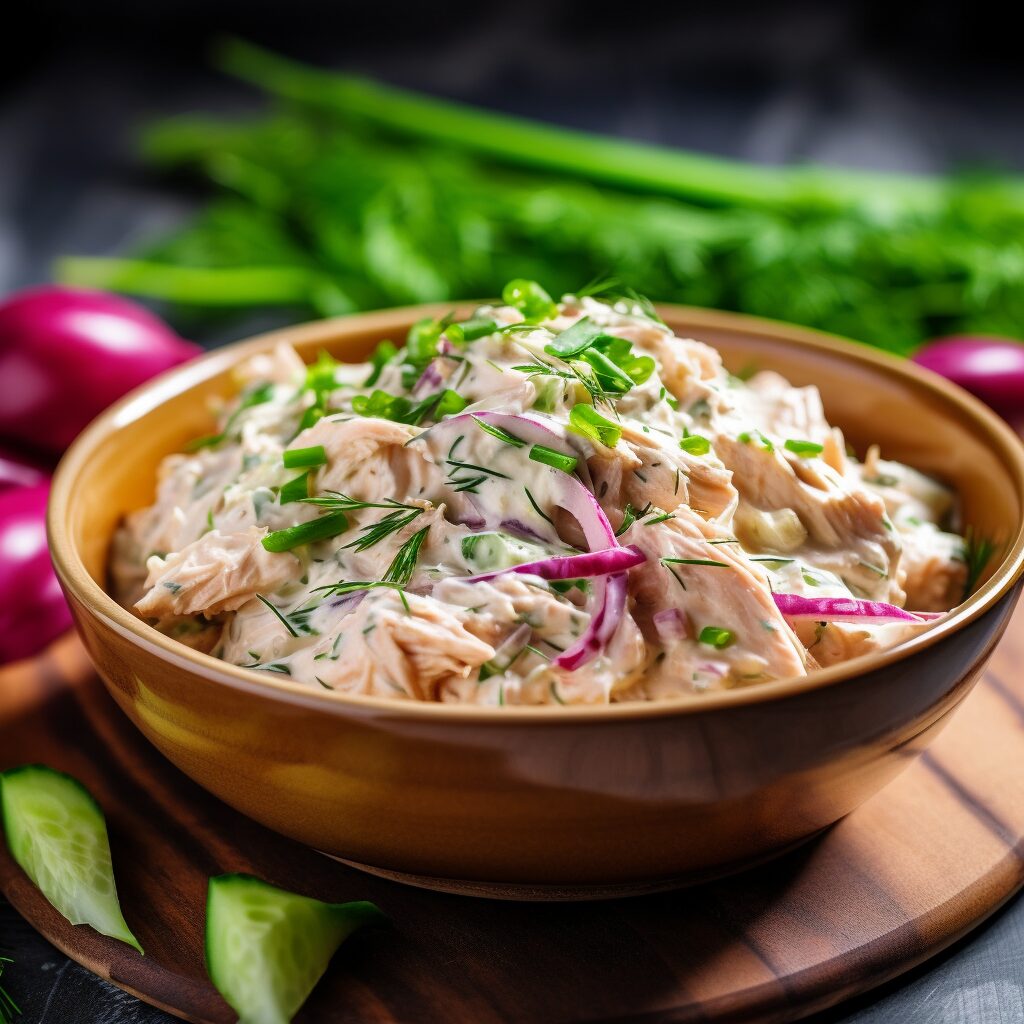
Making chicken salad from scratch seems like one of those things that should be complicated, but it’s actually one of the easiest lunches anyone can master. Most people think great chicken salad requires fancy ingredients or special techniques, when really it just needs a handful of basic items most kitchens already have. This classic recipe proves that simple ingredients can create something absolutely delicious in just 15 minutes.
Why rotisserie chicken makes everything easier
That store-bought rotisserie chicken sitting in every grocery store deli section is basically a shortcut to homemade chicken salad perfection. Instead of spending time cooking and cooling chicken breasts, rotisserie chicken comes pre-seasoned and ready to shred. The seasoning blend already adds depth that plain boiled chicken lacks, and the mix of white and dark meat creates better texture than using just breasts.
One whole rotisserie chicken typically yields enough meat for multiple batches of chicken salad, making it cost-effective too. The slightly crispy skin can be removed easily, and the meat shreds perfectly with just a fork. Classic recipes often call for this convenient option because it saves both time and cleanup while delivering consistently good results every single time.
The mayonnaise trick that prevents soggy sandwiches
Nobody wants a soggy sandwich, but regular mayonnaise can make chicken salad watery after sitting for a few hours. The secret lies in using just enough mayo to bind everything together without drowning the other ingredients. Start with about half a cup of mayonnaise for two cups of chicken, then add more gradually if needed. Light mayo works perfectly fine and actually lets the other ingredients shine through better.
Adding a tablespoon of lemon juice brightens the whole mixture and helps prevent the mayo from separating. Some people swear by mixing half mayo with half Greek yogurt for extra protein and tanginess. The key is tasting as you go and stopping before it becomes a mayo soup. Traditional methods emphasize that the dressing should coat the ingredients, not overwhelm them completely.
Celery adds the perfect crunch factor
Fresh celery brings that satisfying crunch that makes chicken salad interesting with every bite. The key is chopping it into small, uniform pieces so nobody gets surprised by a huge chunk that’s hard to chew. About one rib of celery per two cups of chicken creates the right balance. Make sure to wash the celery thoroughly and remove any tough strings that might get stuck in teeth.
Some people prefer to use the inner celery stalks because they’re more tender and less stringy than the outer ones. The celery leaves can actually be chopped up and added too for extra herb-like flavor. If celery isn’t available, finely diced water chestnuts or even crisp apple pieces can provide similar texture contrast while adding their own unique twist to the basic recipe.
Green onions beat regular onions every time
Regular yellow or white onions can be harsh and overwhelming in chicken salad, but green onions provide mild onion flavor without the bite. They add a fresh, bright taste that complements rather than competes with the chicken. Use both the white and green parts for different flavor notes – the white parts are slightly sharper while the green tops are milder and more herb-like.
One green onion, thinly sliced, is usually perfect for a standard batch of chicken salad. If green onions aren’t available, finely minced chives work well as a substitute. Red onion can work too, but use it sparingly and dice it very finely to avoid overpowering pieces. Modern recipes often favor these milder onion options because they blend better with the overall flavor profile.
Dijon mustard makes all the difference
A single teaspoon of Dijon mustard transforms basic chicken salad into something with real depth and character. The mustard adds tanginess and helps emulsify the dressing so it sticks better to the chicken. Dijon works better than yellow mustard because it’s smoother and less acidic, blending seamlessly into the mixture without creating obvious mustard chunks or overwhelming mustard flavor.
The mustard also acts as a natural preservative, helping the chicken salad stay fresh longer in the refrigerator. Some recipes call for whole grain mustard, which adds texture along with flavor, but Dijon remains the most versatile choice. Start with just a teaspoon and taste before adding more – it’s easy to add mustard but impossible to take it out once it’s mixed in.
Seasoned salt works better than regular salt
Regular table salt just adds saltiness, but seasoned salt brings garlic powder, onion powder, and other spices that enhance the overall flavor complexity. A quarter teaspoon is usually enough to start with, then taste and adjust from there. Different brands of seasoned salt have varying levels of intensity, so it’s important to start conservatively and build up to the right level.
If seasoned salt isn’t available, mixing regular salt with garlic powder and onion powder creates a similar effect. Black pepper should be freshly ground when possible for the best flavor impact. Some people like to add a pinch of paprika or even everything bagel seasoning for extra dimension. The goal is enhancing the chicken and other ingredients rather than masking their natural taste.
Optional add-ins that actually work
While classic chicken salad is perfect as-is, certain add-ins can customize it without ruining the basic formula. Chopped apples add sweetness and crunch, while red grapes bring bursts of juiciness. Toasted almonds, pecans, or walnuts provide richness and texture contrast. Hard-boiled eggs, chopped into small pieces, make the salad more filling and add protein.
Fresh herbs like dill, parsley, or chives brighten the whole mixture without overwhelming it. Dried cranberries or cherries add chewy sweetness that pairs well with nuts. The key is adding just one or two extras rather than turning it into a kitchen sink situation. Each addition should enhance the basic chicken salad rather than competing for attention with every other ingredient.
Best ways to serve chicken salad
Classic chicken salad sandwiches work best on lightly toasted bread that won’t get soggy immediately. Croissants, bagels, and sourdough bread all hold up well under the creamy mixture. For lower-carb options, lettuce wraps using butter lettuce or iceberg provide crisp containers that let the chicken salad shine. Stuffing it into halved avocados creates an Instagram-worthy lunch that’s also nutritious.
Serving chicken salad over mixed greens turns it into a proper salad meal, especially when topped with cherry tomatoes and cucumber slices. It also works well as a dip with crackers or pita chips for parties. Some people love it stuffed into hollowed-out tomatoes for an elegant lunch presentation. The versatility means one batch can become several different meals throughout the week.
Storage tips that keep it fresh
Homemade chicken salad stays fresh in the refrigerator for up to five days when stored in an airtight container. The key is keeping it cold and not letting it sit out at room temperature for more than two hours. If planning to pack it for lunch, use an insulated lunch box with ice packs to maintain proper temperature until eating time.
Never freeze prepared chicken salad because the mayonnaise will separate and create a watery mess when thawed. However, cooked chicken can be frozen separately and thawed when ready to make fresh chicken salad. Always stir the mixture before serving if it’s been sitting for a while, as the ingredients can separate slightly. Making it the night before actually improves the flavor as everything has time to meld together properly.
This simple chicken salad recipe proves that the best comfort foods don’t need complicated techniques or exotic ingredients. With just a few basic items and fifteen minutes, anyone can create something delicious enough for lunch all week long. The beauty lies in its adaptability and the way it transforms simple ingredients into something satisfying and completely homemade.
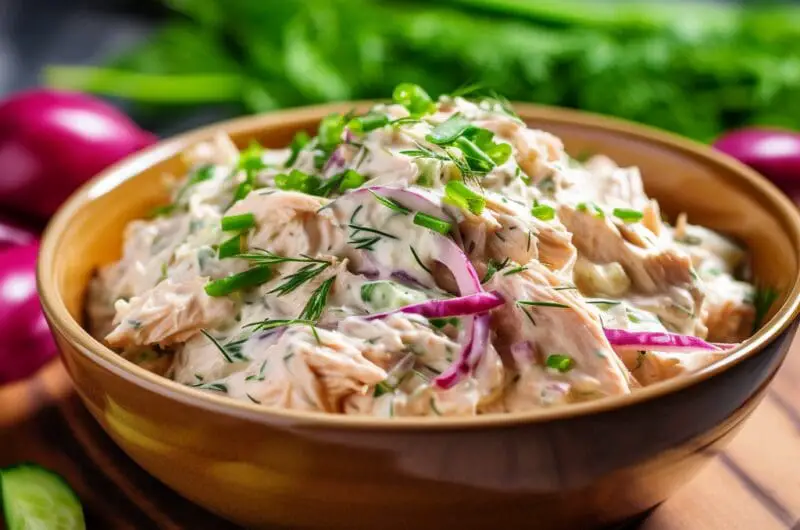
Classic 15-Minute Chicken Salad
Course: LunchCuisine: American6
servings15
minutes206
kcalThis incredibly simple chicken salad recipe takes just 15 minutes to make with basic ingredients you probably already have in your kitchen.
Ingredients
2 cups cooked chopped chicken (rotisserie chicken works perfectly)
½ cup mayonnaise
1 rib celery, diced small
1 green onion, thinly sliced
1 teaspoon Dijon mustard
¼ teaspoon seasoned salt (more to taste)
⅛ teaspoon black pepper (or to taste)
1 teaspoon chopped fresh dill (or ¼ teaspoon dried dill, optional)
Directions
- Remove the skin from rotisserie chicken and shred or chop the meat into bite-sized pieces. Place the chicken in a large mixing bowl and set aside while preparing the other ingredients.
- Wash and dice the celery into small, uniform pieces, removing any tough strings. Slice the green onion thinly, using both white and green parts for maximum flavor.
- In a separate small bowl, mix together the mayonnaise, Dijon mustard, seasoned salt, and black pepper. Taste the dressing and adjust seasoning as needed before combining with chicken.
- Add the diced celery and sliced green onion to the bowl with the chicken. Pour the mayonnaise mixture over everything and gently fold together until all ingredients are evenly coated.
- If using fresh dill, fold it in gently at the end to preserve its bright flavor. Taste the final mixture and adjust salt, pepper, or additional mayonnaise as needed for your preference.
- Serve immediately on bread, crackers, or over greens, or refrigerate for up to 5 days in an airtight container. The flavors actually improve after sitting for a few hours as everything melds together.
Notes
- Rotisserie chicken from the grocery store deli section works perfectly and saves time, but any leftover cooked chicken can be substituted
- Start with less mayonnaise and add more gradually to avoid making the salad too wet or soggy
- Optional add-ins include chopped apples, grapes, toasted nuts, or hard-boiled eggs – add just one or two extras to keep the classic flavor profile
Frequently asked questions
Q: Can I use canned chicken instead of rotisserie chicken?
A: Yes, canned chicken works fine for chicken salad. Drain it thoroughly and gently fold it into the other ingredients last to prevent it from breaking apart too much. The texture will be slightly different than rotisserie chicken, but the flavor will still be delicious.
Q: How long does homemade chicken salad last in the refrigerator?
A: Properly stored chicken salad will stay fresh for up to 5 days in an airtight container in the refrigerator. Always keep it chilled and don’t leave it at room temperature for more than 2 hours to ensure food safety.
Q: Can I make chicken salad ahead of time for meal prep?
A: Absolutely! Chicken salad actually tastes better after the ingredients have time to meld together overnight. Make it the evening before and it will be perfect for lunches throughout the week. Just give it a quick stir before serving.
Q: What’s the best bread to use for chicken salad sandwiches?
A: Lightly toasted bread works best to prevent sogginess. Sourdough, whole wheat, croissants, and bagels all hold up well. The key is having some structure to the bread so it doesn’t fall apart when the creamy chicken salad is added.

