

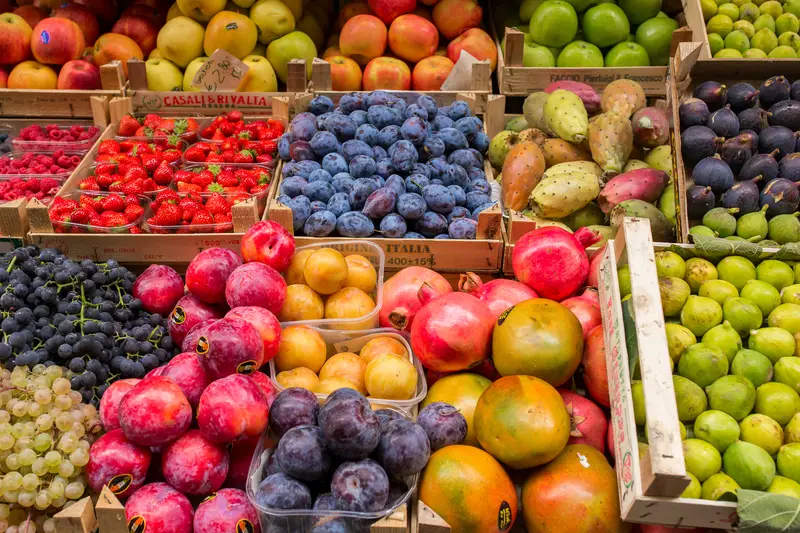
You’re standing in the produce aisle, feeling good about yourself. You grabbed a mango instead of a candy bar at checkout. Healthy choice, right? Well, sort of. That single mango you just tossed in your cart contains around 46 grams of sugar. A regular Hershey’s milk chocolate bar? Just 25 grams. You literally doubled your sugar intake by choosing the “healthy” option.
Before you swear off fruit forever and start telling people mangoes are basically Skittles, there’s a lot more going on here than raw sugar numbers. But the numbers themselves are real, and they’re worth knowing — especially if you’re watching your blood sugar, trying to lose weight, or just someone who eats three mangoes in a sitting because they taste like tropical candy (guilty).
Mango Is the Biggest Offender, and It’s Not Even Close
Let’s put 46 grams of sugar in context. That’s more than what’s in a 12-ounce can of Pepsi. It’s almost double a Hershey’s chocolate bar. It’s the sugar equivalent of roughly 50 pieces of candy corn, according to a registered dietitian at the Cleveland Clinic. One fruit. One sitting. Fifty candy corns worth of sugar sliding down your throat while you think you’re making a virtuous decision.
A large apple has about 25 grams of sugar. A banana sits around 14 or 15 grams. A medium pear clocks in at 17 grams. The mango beats all of them by a wide margin. As the fruit ripens, enzymes convert its starch into fructose, glucose, and sucrose — the trifecta of sweet-tasting compounds. It’s basically nature’s way of making the fruit irresistible so animals will eat it and spread the seeds. Mission accomplished, nature. We’re all eating them.
Grapes Are the Sneaky Second Place Finisher
Mangoes get the headline, but grapes deserve the side-eye. One cup of grapes has about 23 grams of sugar — nearly identical to a standard Snickers bar. And here’s the kicker that nobody talks about: grapes have a glycemic index of around 60, while milk chocolate sits at about 45 according to Harvard Health. That means grapes spike your blood sugar faster than chocolate does.
Think about how you eat grapes, too. Nobody eats exactly one cup. You put a bowl on the coffee table, turn on Netflix, and suddenly half the bag is gone. A 2023 CDC survey found that typical American fruit servings are two to three times larger than recommended. So that “cup” of grapes easily becomes two or three cups, meaning you could be consuming 40 to 60 grams of sugar from what feels like a light snack. That’s Snickers-and-a-half territory.
Dried Fruit Is Where Things Get Really Out of Hand
If fresh fruit can rival candy bars in sugar, dried fruit blows right past them. Take raisins — just a quarter cup packs over 26 grams of sugar. That’s nearly four times the sugar per ounce compared to fresh grapes, according to USDA data. And a quarter cup of raisins is nothing. That’s a sad little handful.
Dates are even more extreme. One hundred grams of dates contain 63 grams of sugar. That’s like eating two and a half Hershey’s bars in sugar content alone. The drying process removes water but keeps all the sugar, so you end up with a concentrated sugar bomb that’s easy to overeat because the volume is so small. A nutritionist quoted by NPR specifically warned people with diabetes to consume dried fruit with caution. “Caution” is doing a lot of heavy lifting in that sentence — “sparingly” might be more honest.
Why Sugar in Fruit Isn’t the Same as Sugar in a Snickers
Okay, so here’s where things get more nuanced. Chemically, the sugar molecules in a mango and the sugar molecules in a candy bar are the same stuff. Fructose is fructose. But your body doesn’t process a mango the way it processes a Snickers, and the reason is mostly one word: fiber.
Fiber — especially soluble fiber — slows down how quickly sugar gets absorbed into your bloodstream. A medium apple has about 19 grams of sugar but also 4 grams of fiber, plus vitamin C, potassium, and various plant compounds. The fiber forces your digestive system to work slower, preventing the sharp spike-and-crash cycle you get from candy. A chocolate bar has zero fiber. The sugar hits your bloodstream like a freight train, gives you that brief high, then drops you on your face.
Mangoes are 83% water. They’ve got antioxidants, vitamins, potassium, and niacin. They contain polyphenols, which are plant compounds that act as antioxidants. A Hershey’s bar is mostly sugar, fat, and simple carbs. The sugar content comparison is technically accurate but wildly misleading if you stop there.
Most Americans Aren’t Eating Enough Fruit to Begin With
Here’s an irony that gets lost in all the sugar-shaming: 76% of Americans don’t eat the minimum recommended amount of fruit, according to a 2015 CDC report. The USDA recommends about 2 cups per day. Most people aren’t getting even 1.5 cups. Beth Czerwony, a registered dietitian at the Cleveland Clinic, put it bluntly — she doesn’t want anyone to fear the sugar in fruit, because the body handles natural sugars differently than the sugar in cookies and cake.
Maxine Siegel, who heads Consumer Reports’ food lab, echoed the same thing — most of us need more whole fruit, not less. A 2016 study found that people who ate diets rich in flavonoids (compounds found in fruit) were more likely to maintain their weight as they aged. The fruits that seemed to help most were apples, berries, and pears.
Juice and Smoothies Are the Real Trap
If you want to worry about fruit sugar, worry about juice. When you juice a fruit, you strip out nearly all the fiber — the one thing that makes fruit sugar behave differently from candy sugar in your body. What’s left is basically sugar water with some vitamins. A cup of apple slices has about 50 calories and 11 grams of sugar. A cup of apple juice has roughly double both of those numbers.
Smoothies are tricky too. A homemade smoothie with a banana, a cup of grapes, a mango, and some orange juice could easily top 80 grams of sugar. That’s two cans of Coke. Except you feel great about yourself because it came in a glass with a paper straw and had a spinach leaf floating in it. One nutritionist recommends making smoothies at home and throwing in vegetables to offset the sugar load.
The Low-Sugar Fruit Swaps That Actually Work
Not all fruit is created equal when it comes to sugar. If you’re actively trying to limit sugar — whether for diabetes, weight loss, or just general health — some fruits are drastically better choices than others.
Raspberries have just 5 grams of sugar per cup and pack 8 grams of fiber. That’s more fiber than a serving of brown rice. Strawberries come in at 7 grams of sugar per cup. Blackberries land in a similar range. A 2023 Harvard study confirmed that berries contain roughly a third of the sugar you’d find in the same amount of grapes.
Avocados — yes, they’re a fruit — have just 1.33 grams of sugar in the whole thing. Guavas sit at about 5 grams each with 3 grams of fiber. Half a small papaya has only 6 grams of sugar. These are the fruits that don’t even register on the sugar-worry scale.
The Smart Way to Eat High-Sugar Fruits
Nobody’s saying you should never eat a mango again. That would be insane — they’re delicious. But there are some simple ways to eat high-sugar fruits without sending your blood sugar on a roller coaster.
First, pair them with protein or fat. Eating mango slices with a handful of almonds or some cottage cheese slows down sugar absorption. The fat and protein act as a buffer. Second, watch your portions. Experts suggest enjoying a couple of mango slices rather than demolishing the whole fruit in one sitting. Third, freeze grapes instead of eating them fresh from the bag. When they’re frozen, you eat them more slowly and you’re less likely to mindlessly plow through a pound of them.
A Mayo Clinic physician noted in a 2025 interview that grapes are “not a free food for anyone watching sugar.” That phrase — “not a free food” — is worth remembering. Fruit is healthy. Fruit is good for you. But it’s not calorie-free or sugar-free, and treating it like you can eat unlimited amounts is how people accidentally consume more sugar than they would’ve gotten from the candy bar they were trying to avoid.
The American Heart Association’s recent guidelines made it clear: fruit sugar counts toward your daily limit. That doesn’t mean fruit is bad. It means paying attention matters — even when the sugar comes wrapped in something that grew on a tree.

