

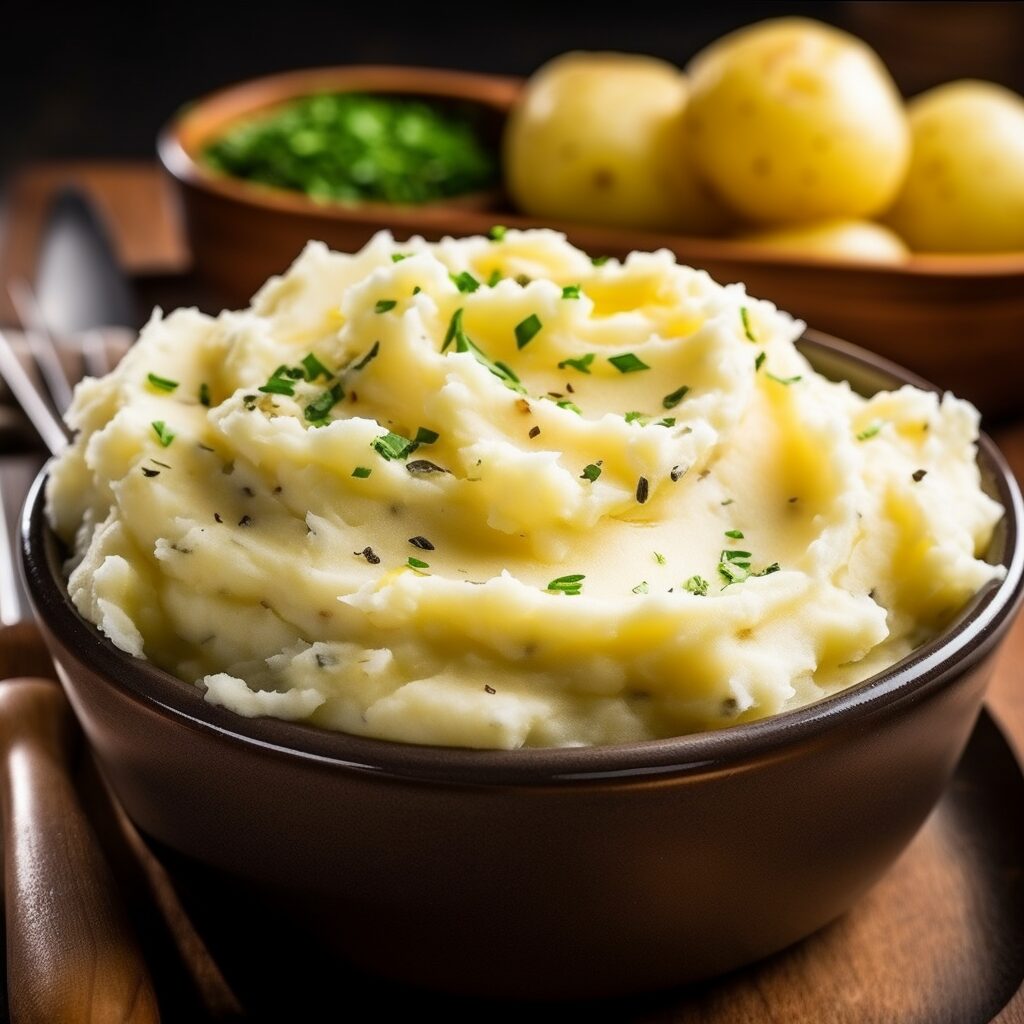
I have a confession. For most of my adult life, I made mashed potatoes the same way: boil potatoes in water, drain, add butter, add milk, mash, season, serve. It was fine. Nobody complained. But nobody asked for the recipe either.
Then I tried the method that’s been blowing up online — the one where you simmer your potatoes in chicken broth instead of water and finish them with a cream cheese and butter mixture — and I genuinely cannot go back. These are the mashed potatoes people ask about. The ones that make Thanksgiving guests go quiet for a second after the first bite. The kind where someone says “okay, what did you do differently?” before they’ve even finished chewing.
Here’s why this works, how to do it right, and everything I’ve learned after making it more times than I’d like to admit.
Why Broth Instead of Water Makes All the Difference
Think about it this way. When you boil potatoes in plain water, they absorb that water. Just bland, flavorless water soaking into every cell of the potato. You’re literally waterlogging the main ingredient before you even start building flavor. As comedian Jourdyn Parks — whose TikTok hack sparked a lot of this conversation — put it perfectly: “I just can’t figure out why you’d choose to when stock and broth are options.”
She credits her grandmother for teaching her the tip, and grandmothers are right about most things in the kitchen. When you cook potatoes in chicken broth, they absorb all that savory, salty, rich liquid instead. The flavor builds from the inside out, not just from whatever you stir in at the end. Side-by-side, broth-boiled potatoes have a richer, more rounded flavor and even a noticeably creamier texture compared to water-boiled ones. It’s not subtle.
The Potato Blend That Actually Matters
This is where a lot of people get tripped up. You’ll see recipes calling for just Russets or just Yukon Golds, but the viral version that’s gotten the most attention uses a 50/50 blend of both. There’s a real reason for this, and it’s not just fussiness.
Russets are high-starch potatoes. They break down easily, absorb dairy like a sponge, and give you that fluffy, light texture. But on their own, they can taste a little one-dimensional. Yukon Golds are lower in starch and naturally buttery with a creamier, denser body. Mix the two and you get the best of both — fluffy but not gummy, creamy but not heavy, with a more complex potato flavor than either one alone.
Cut them into roughly 1-inch chunks before boiling. Uniform pieces cook evenly, which means no half-mushy, half-crunchy situation when it’s time to mash.
The Secret Ingredient Everyone Keeps Talking About
Cream cheese. A full 8-ounce block of it. I know it sounds like a lot. It is a lot. But this is the ingredient that turns good mashed potatoes into the ones people remember.
Martha Stewart uses a full block of cream cheese in her mom’s recipe, and she’s been making them this way for decades. The cream cheese adds a velvety richness and a very subtle tanginess that rounds out the whole dish. You don’t taste it and think “oh, cream cheese.” You just taste potatoes that are somehow better than any you’ve had before.
Make sure it’s softened before you add it. Leave it on the counter for at least 30 minutes — cold cream cheese won’t incorporate smoothly and you’ll end up with lumps that aren’t the charming kind. Standard Philadelphia brand works great. You can use whipped cream cheese, but measure it by weight, not volume. Whipped has air beaten in, so a cup of whipped is actually less cream cheese than a cup of the regular stuff.
The Pan-Dry Step You’re Probably Skipping
After you drain your potatoes, put them right back in the hot, empty pot. Let them sit there over low heat for a minute or two. You’ll actually see the steam rising off them. This is called pan-drying, and it’s the step that separates good mashed potatoes from soggy ones.
Excess moisture is the enemy of creamy mashed potatoes. I know that sounds backward — wouldn’t more liquid make them creamier? No. Extra water makes them gluey and thin. You want the creaminess to come from butter and cream and cream cheese, not from leftover cooking liquid sitting in the potato. Pan-drying for just 60 to 90 seconds lets that surface moisture evaporate and intensifies the potato flavor.
Warm Your Dairy — This Is Non-Negotiable
Cold butter and cold cream going into hot potatoes is a recipe for a lumpy, uneven mess. While your potatoes are boiling, warm your heavy cream and butter together in a small saucepan over low heat until the butter is melted and the mixture is steaming. Toss in the softened cream cheese and stir until it’s all one smooth, rich liquid.
When you pour this warm mixture into the pan-dried, still-hot potatoes, everything melts together seamlessly. The potatoes absorb the warm fat and dairy much more evenly, and you get that silky consistency without having to over-mash or over-stir — which is how potatoes turn into wallpaper paste.
How to Mash Without Messing It Up
Use a potato ricer if you have one. It pushes each piece of potato through tiny holes, giving you an incredibly smooth, lump-free result with almost no effort. No ricer? A regular potato masher works fine. What you don’t want to use is a hand mixer or a food processor. Overworking potatoes activates the starch and turns them from creamy to gluey in about ten seconds flat.
Mash or rice the potatoes first, then fold in the warm dairy mixture. Stir gently with a wooden spoon or rubber spatula until just combined. If they’re thicker than you want, add a splash more warm cream until you hit your preferred consistency. Season with salt and white pepper — white pepper because it blends in visually and has a slightly different, more rounded heat than black pepper.
Making Them Ahead of Time (The Restaurant Trick)
If you’re cooking for Thanksgiving or Christmas or any big meal where you’re juggling six things at once, here’s the good news: these mashed potatoes hold and reheat beautifully. You can make them up to two days ahead and store them in an airtight container in the fridge.
To reheat, transfer them to an oven-safe dish, dot the top with a few extra pats of butter, cover with foil, and bake at 350°F for 20 to 30 minutes until heated through. You can also microwave them in a pinch — just stir in a splash of cream or broth as you go to bring back the silky texture. The cream cheese and butter base means these stay creamy even after a couple days in the fridge, unlike plain butter-and-milk versions that stiffen up and turn sad overnight.
Variations Worth Trying
Once you’ve nailed the base recipe, you can spin it a hundred different ways. Roasted garlic is the most popular add-in — cut the top off a whole head of garlic, drizzle with olive oil, wrap in foil, and roast at 400°F for 40 minutes. Squeeze the soft cloves right into the potatoes. The roasted garlic version has been trending on its own, and it adds a nutty sweetness that’s hard to beat.
Other options: fold in shredded sharp cheddar and crumbled bacon for loaded mashed potatoes. Stir in chopped fresh chives or a mix of rosemary and thyme. Try browning your butter before adding it — just cook it in a saucepan until the milk solids turn golden and it smells like toasted nuts. That extra step adds about three minutes and a whole lot of depth. You could also swap the regular cream cheese for a flavored variety — garlic and herb or chive and onion — to add another layer without any extra work.
Common Mistakes That Ruin Mashed Potatoes
I’ve made every one of these, so I’m not judging. Just saving you the trouble.
Overboiling. Once a knife slides easily into a potato chunk, they’re done. Every extra minute in the pot means more water absorbed and a gummier final product. Skipping the pan-dry. I covered this above but it bears repeating — 90 seconds of letting steam escape makes a real difference. Using cold dairy. Already discussed, but seriously, warm it. Over-mashing. Stop sooner than you think you should. A few small lumps are fine and actually better than overworked paste. Under-seasoning. Potatoes need more salt than you’d expect. Taste and adjust after everything is mixed in. You can always add more — you can’t take it back.
Look, mashed potatoes shouldn’t be complicated. They’re a comfort food, not a science project. But small changes — broth instead of water, cream cheese stirred in, warming your dairy, drying the pot — add up to something that tastes dramatically different from the version most of us grew up on. Give this a shot once and you won’t want to make them any other way.
Frequently Asked Questions
Q: Can I use vegetable broth instead of chicken broth?
A: Absolutely. Vegetable broth works just as well for infusing flavor into the potatoes while they cook. Beef broth is another option, though it will add a darker, meatier flavor that might compete with lighter main dishes. Chicken broth is the most versatile, but use whatever fits your meal — or your dietary preferences.
Q: Can I use all Russets or all Yukon Golds instead of blending them?
A: You can. All Russets will give you a fluffier, lighter result that absorbs dairy really well. All Yukon Golds will be denser and naturally creamier with a more buttery flavor. The 50/50 blend gives you the best balance of both, but neither option on its own is a bad choice — it just depends on what texture you prefer.
Q: What if I can’t find cream cheese at the store?
A: Neufchatel cheese is the closest substitute — it’s a little lower in fat but works in a pinch. Creamy goat cheese is another swap that changes the flavor slightly but is delicious if you enjoy goat cheese. You could also use mascarpone for a milder, richer result. In a real emergency, an extra few tablespoons of butter and a dollop of sour cream will get you in the same neighborhood.
Q: How far ahead can I make these?
A: Up to two days in advance is the sweet spot. Store them in an airtight container in the fridge and reheat in a 350°F oven covered with foil for 20 to 30 minutes, or use the microwave in shorter bursts. Add a splash of cream or broth while reheating to bring back the smooth, creamy consistency. Leftover mashed potatoes keep well in the fridge for 3 to 4 days total.
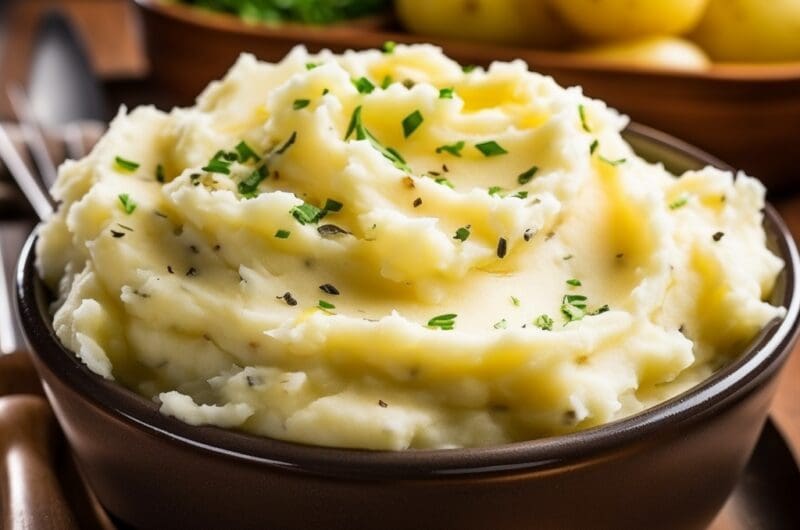
Broth-Boiled Cream Cheese Mashed Potatoes
Course: Side DishCuisine: American10
servings15
minutes25
minutes340
kcalImpossibly creamy mashed potatoes made by simmering in chicken broth and finishing with cream cheese, butter, and warm cream for the richest, most flavorful version you’ve ever tasted.
Ingredients
2.5 lbs Russet potatoes, peeled and cut into 1-inch chunks
2.5 lbs Yukon Gold potatoes, peeled and cut into 1-inch chunks
6 cups chicken broth (enough to cover potatoes by about 1 inch)
8 oz cream cheese, softened (such as Philadelphia)
1 stick (8 tbsp) unsalted butter, cut into pieces
3/4 cup heavy cream
1.5 tsp salt, plus more to taste
1/2 tsp white pepper
2 tbsp chopped fresh chives, for garnish (optional)
Directions
- Peel all the potatoes and cut them into roughly 1-inch chunks, keeping the pieces as uniform as possible so they cook evenly. Place them in a large pot and pour in enough chicken broth to cover the potatoes by about 1 inch. If you run short on broth, top off with water.
- Bring the broth to a boil over high heat, then reduce to a steady simmer. Cook for 20 to 25 minutes, or until a knife slides easily into the center of a potato chunk with no resistance. Do not overboil — check early and often starting at 18 minutes.
- While the potatoes simmer, combine the butter and heavy cream in a small saucepan over low heat. Stir occasionally until the butter is fully melted and the mixture is steaming. Add the softened cream cheese and whisk until smooth and fully incorporated. Keep warm on the lowest heat setting.
- Drain the potatoes thoroughly in a colander. Return them immediately to the same hot, empty pot. Place the pot back over low heat for 60 to 90 seconds, shaking the pot gently a few times, to let the excess moisture steam off. You’ll see the steam rising — that’s exactly what you want.
- Remove the pot from heat. If using a potato ricer, press the potatoes through the ricer back into the pot in batches. If using a masher, mash the potatoes until mostly smooth with just a few small lumps remaining. Do not use a hand mixer or food processor.
- Pour the warm cream cheese and butter mixture over the mashed potatoes. Fold it in gently with a rubber spatula or wooden spoon until everything is just combined and the potatoes look smooth and creamy. Avoid stirring too aggressively — over-mixing will make them gummy.
- Add the salt and white pepper, then taste and adjust seasoning as needed. If the potatoes are thicker than you prefer, stir in a splash more warm cream a tablespoon at a time until you reach your desired consistency.
- Transfer to a warm serving bowl and top with a pat of butter and chopped chives if desired. Serve immediately, or cover and keep warm in a 200°F oven for up to 30 minutes until ready to plate.
Notes
- To make ahead, prepare through step 7, then transfer to an airtight container and refrigerate for up to 2 days. Reheat covered in a 350°F oven for 20-30 minutes, adding a splash of cream or broth to restore creaminess.
- For a roasted garlic version, roast a whole head of garlic at 400°F for 40 minutes (drizzled with oil and wrapped in foil), then squeeze the soft cloves into the warm cream mixture before adding to the potatoes.
- Neufchatel cheese or creamy goat cheese can be substituted for cream cheese in a pinch — Neufchatel is slightly lower in fat, while goat cheese will add a tangier flavor.

