

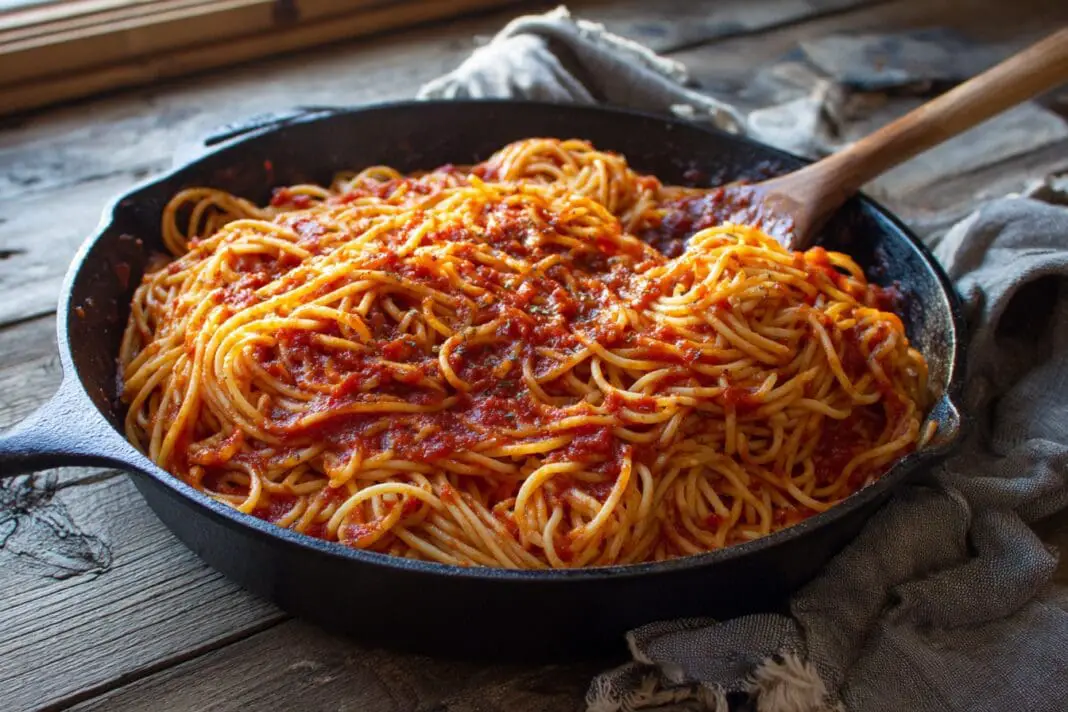
Most people have been cooking spaghetti the same way for years: boil water, add salt, dump in the noodles, and drain. It works, but what if there was a better method hiding in plain sight? After testing every technique out there, from cold starts to oil-spiked water, one surprising approach stands out. Cooking pasta directly in the sauce changes everything about your weeknight dinner.
Why boiling pasta in water might be outdated
Think about the last time you made spaghetti. You probably filled a big pot with water, waited forever for it to boil, cooked the noodles, then drained them before adding sauce. This method has been passed down for generations. Your grandma did it this way, and her grandma probably did too. But just because something is traditional doesn’t mean it’s the best approach. There’s a whole other way to cook pasta that most home cooks have never tried.
A food writer with nearly 30 years of experience tested every possible spaghetti cooking method. She tried salted water, unsalted water, water with olive oil, less water than usual, and even the cold start method. All of these worked fine and produced decent pasta. But then she found something that worked much better than all of them combined. The results were so good that she rarely uses any other technique anymore.
Cooking spaghetti directly in sauce is a game changer
Here’s the trick that changes everything: instead of cooking your pasta in water, you cook it directly in the sauce. Yes, you read that right. You add your dry spaghetti straight into your marinara, tomato sauce, or whatever sauce you’re using. The noodles absorb all that good stuff as they cook. Every single strand gets infused with deep, rich taste from the inside out. It’s not just a coating on the outside anymore.
This method might sound weird if you’ve never heard of it before. But it makes total sense when you think about it. When pasta cooks, it releases starch into whatever liquid surrounds it. Usually that starch goes down the drain with your pasta water. But when you cook in sauce, that starch makes the sauce extra creamy and thick. You end up with a more cohesive dish where everything just works together perfectly.
The exact ratios you need for this method
Getting the liquid amounts right is key to making this work. For every pound of pasta, use about 3 to 4 cups of sauce and 3 to 4 cups of liquid. That liquid can be chicken broth, vegetable broth, or just plain water. Broth adds more taste, but water works too if that’s what you have. The combination of sauce and liquid gives the pasta enough room to cook while still absorbing all that good stuff.
Start by combining your sauce and broth or water in a large saucepan or deep skillet. Set it over medium-high heat and bring it to a high simmer. Then add your dry pasta and stir it around to make sure everything is coated. Keep stirring frequently as it cooks. You might need to add more liquid if things get too thick before the pasta is done. The whole process takes a few extra minutes compared to regular boiling, but the results are worth it.
This works with every pasta shape you own
Maybe you’re thinking this only works with spaghetti, but that’s not true at all. This technique works with pretty much every pasta shape you can think of. Long thin strands work great, obviously. But so do wide ribbons like fettuccine or pappardelle. Twisted shapes like rotini absorb sauce beautifully. Tubes like penne or rigatoni get sauce inside and out. Even fun shapes like bowties and wagon wheels turn out amazing.
The method also works perfectly for soup pastas. Think about how good those little pasta shapes taste in soup because they cook right in the broth. It’s the same idea here, just with thicker sauce. You can use this technique for any conceivable pasta shape in your pantry. Once you try it with a few different types, you’ll understand why it works so well. The pasta becomes part of the sauce instead of just sitting underneath it.
Why starchy pasta water matters so much
Have you ever wondered why restaurant pasta always seems better than what you make at home? One big reason is the pasta water. When pasta cooks, it releases starches into the water. That cloudy, murky water might look like something you’d throw away. But it’s actually liquid gold for making sauces stick to noodles. Restaurants know this secret, and now you do too.
Restaurant kitchens often use the same pot of water to cook multiple batches of pasta throughout the night. This creates super concentrated starch water that makes their sauces cling perfectly to each noodle. That’s why the sauce doesn’t puddle at the bottom of your plate at a nice Italian restaurant. When you cook pasta in sauce at home, you get a similar effect. All that starchy goodness stays in the dish instead of going down the drain.
Using less water is another helpful trick
If cooking directly in sauce seems too different for you, there’s another trick worth trying. Most pasta boxes tell you to use four to six quarts of water per pound of noodles. But using only two quarts of water creates much starchier pasta water. The less water you use, the more concentrated the starch becomes. This means you have better pasta water for finishing your sauce, even with traditional cooking methods.
This approach also has some practical benefits. Less water means it boils faster, so you save time. You use less water overall, which is nice. The main thing to watch out for is that pasta might stick together more easily with less water. Just stir frequently to keep the noodles moving and prevent clumping. Also use less salt since you have less water to season. It’s a simple adjustment that makes a noticeable difference.
How to use pasta water when you do boil traditionally
Even if you stick with traditional boiling, you should never drain all your pasta water. Before you dump the noodles into a colander, scoop out at least a cup of that cloudy water. Use a heatproof mug or measuring cup so you don’t burn yourself. That water is your secret weapon for making any sauce better. It helps thin out sauce that’s too thick and makes everything come together nicely.
Another option is to skip the colander completely and use tongs to transfer your pasta directly from the pot to the sauce. The noodles will carry some starchy water with them. This works great for finishing pasta in a skillet with sauce. Classic Italian dishes like Cacio e Pepe and Spaghetti alla Carbonara rely on this technique. They create creamy sauces with just a few ingredients and no cream at all.
The right pan makes a big difference
When cooking pasta in sauce, you need to think about what pan you’re using. A regular tall stockpot might not be the best choice. Long spaghetti noodles need room to spread out and get covered by the sauce and liquid. A wide skillet or large sauté pan works much better for this method. The pasta can lay flat and cook more evenly when it has space.
Cast iron skillets work really well for this cooking method. They hold heat evenly and can go from stovetop to table if you want to serve family-style. A large stainless steel pan or even a Dutch oven can also work great. The key is having enough surface area for the liquid to cover your pasta. Shorter pasta shapes can work in smaller pans, but spaghetti really benefits from that extra width.
You can see the difference before you taste it
One of the coolest things about this method is that you can tell the pasta is different just by looking at it. Noodles cooked in sauce come out vibrant in color. They look like they belong with the sauce because they literally cooked together. Compare that to plain boiled noodles with sauce poured over the top. The difference is obvious before you even take a bite.
The whole dish looks more cohesive when you use this technique. There’s no puddle of sauce at the bottom and dry pasta on top. Everything is coated evenly and looks like it came from a nice restaurant. Your family might wonder what you did differently. The presentation alone makes this method worth trying, but the taste is what will really convince you to switch for good.
Cooking spaghetti in sauce might feel strange the first time you try it. But once you taste the difference, you’ll understand why so many people have switched to this method. The pasta comes out more tender, more colorful, and packed with so much more taste than regular boiled noodles. Plus, you only have one pan to clean when you’re done. Give it a shot on your next pasta night and see for yourself.
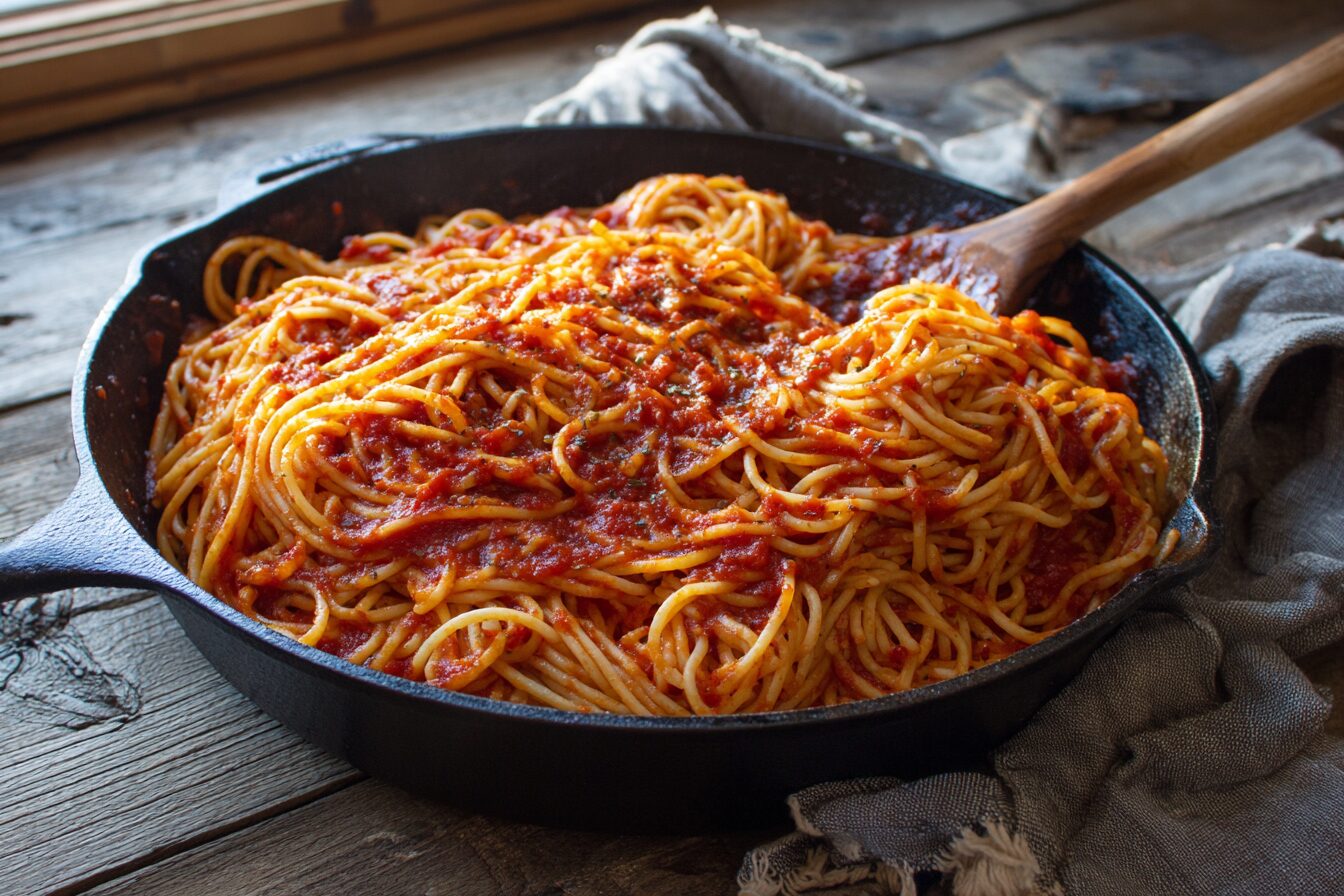
One-Pan Spaghetti Cooked in Marinara Sauce
Course: DinnerCuisine: Italian4
servings5
minutes25
minutes420
kcalThis genius method cooks spaghetti directly in the sauce for the most flavorful pasta you’ve ever made at home.
Ingredients
1 pound spaghetti
3 cups marinara sauce (jarred or homemade)
3 cups chicken broth or water
2 tablespoons olive oil
4 cloves garlic, minced
1 teaspoon Italian seasoning
Salt and pepper to taste
Fresh basil for garnish (optional)
Grated Parmesan cheese for serving
Directions
- Heat the olive oil in a large, deep skillet or wide pan over medium heat. Add the minced garlic and cook for about 30 seconds until fragrant, stirring constantly so it doesn’t burn. The garlic should smell amazing but not turn brown.
- Pour in the marinara sauce and chicken broth or water, then stir everything together until well combined. Add the Italian seasoning and give it another good stir. Bring the mixture to a high simmer over medium-high heat.
- Add the dry spaghetti to the pan, pushing it down gently into the liquid so it’s mostly submerged. You may need to break the spaghetti in half if your pan isn’t wide enough. Make sure all the noodles are touching the sauce mixture.
- Reduce the heat to medium and let the pasta cook, stirring frequently every 2-3 minutes to prevent sticking. Use tongs to turn and separate the noodles as they soften. This stirring is important to ensure even cooking throughout.
- Continue cooking for about 18-22 minutes total, checking the pasta for doneness starting at 15 minutes. If the sauce gets too thick before the pasta is cooked through, add more broth or water, about half a cup at a time. The pasta should be al dente with a thick, clingy sauce.
- Taste the sauce and season with salt and pepper as needed. Remember that the Parmesan cheese you’ll add at the end is salty, so don’t go overboard. Adjust the seasoning gradually until it tastes right to you.
- Remove the pan from heat once the pasta is perfectly cooked and the sauce has thickened nicely. The sauce should coat every strand of spaghetti without being watery or dry. Let it rest for just a minute before serving.
- Serve immediately in shallow bowls or plates, topped with freshly grated Parmesan cheese and torn basil leaves if desired. The pasta tastes best when eaten right away while the sauce is still glossy and the cheese is melting into the noodles.
Notes
- Use a wide skillet or sauté pan rather than a tall stockpot so the spaghetti can spread out and cook evenly in the sauce.
- Chicken broth adds more depth than water, but water works fine if you want to keep this vegetarian or don’t have broth on hand.
- This method takes a few extra minutes compared to regular boiling, so plan for about 20-25 minutes of cooking time after the sauce simmers.
- You can add cooked meatballs, sausage, or vegetables to the sauce before adding the pasta for a heartier meal.
Frequently Asked Questions
Q: Can I use jarred pasta sauce for this method?
A: Absolutely. Jarred marinara sauce works perfectly for cooking pasta directly in the sauce. Brands like Rao’s, Classico, or even store brands all work great. Just make sure to add enough liquid so the pasta has room to cook properly.
Q: Will the pasta get mushy if I cook it in sauce?
A: No, the pasta will still be al dente if you watch it carefully. Start checking for doneness a few minutes before you think it’s ready. The pasta might take slightly longer than package directions since sauce is thicker than water, but it won’t turn mushy.
Q: Can I make this ahead of time and reheat it?
A: This dish is best served immediately, but you can reheat leftovers. Add a splash of water or broth when reheating to loosen the sauce. The pasta may absorb more liquid as it sits, so it might need extra moisture when you warm it up.
Q: Does this work with cream-based sauces like Alfredo?
A: Yes, but you’ll need to be more careful with cream-based sauces since they can break or separate if cooked too long. Add extra broth to thin it out and keep the heat at medium or lower. Stir frequently to keep everything smooth.

