

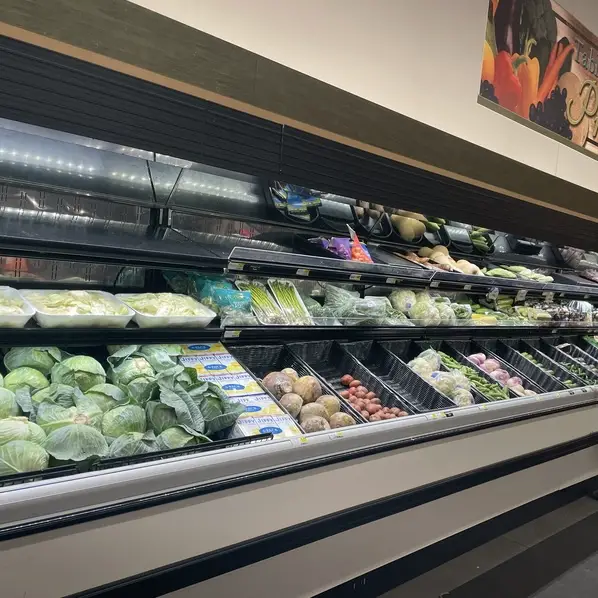
Here’s a thing that will quietly ruin your week: You get home from the grocery store, unpack your bags, and two days later your strawberries are mush, your avocados never ripened right, and the lettuce has brown slime on it. You didn’t do anything wrong. You just bought produce from the wrong store.
Not all grocery stores treat their produce sections equally. Some chains invest heavily in sourcing from local farms, rotating stock daily, and keeping strict quality standards. Others? They basically treat the produce aisle like an afterthought — a sad corner of wilting greens and rock-hard tomatoes that exist mostly so the store can technically say they sell fresh food. The difference between the best and worst is genuinely shocking, and it can change the way you eat if you start paying attention.
Let’s rank them, starting from the stores you should avoid and working up to the ones that are actually worth your time and money.
Walmart
Nobody should be surprised by this one, but it still needs to be said clearly: Walmart is consistently rated the worst major grocery chain for fresh produce in America. It’s not even close. In a Facebook survey asking shoppers about their worst produce experiences, Walmart was “by far the most talked about” store, with hundreds of people expressing frustration. One shopper said the produce is “especially bad if delivered.” Another simply said it’s “hands down the worst.”
A Consumer Reports survey backed this up, ranking Walmart as the worst place in America to buy groceries overall, with the lowest marks on service, cleanliness, and quality of perishables. A separate 2025 study looking at 3,000 grocery stores found that 22 of the 50 worst-rated stores in the country were Walmart locations. Yes, their prices are low. But customers report items being sold basically at their expiration date. You’re saving a dollar on strawberries that’ll be in the trash by Thursday.
Target
Target gets a pass on a lot of things because people love the brand. The aesthetic. The little Starbucks inside. But their produce section is genuinely one of the worst out there. According to one ranking of produce selection across 23 chains, the recommendation was blunt: you should never buy fresh produce at Target.
The produce section at most Targets is tiny — sandwiched between meat, cheese, and juice. What they do carry tends to be pre-packaged bags of salad and pre-cut fruit, not the kind of thing that screams “fresh from the farm.” Reddit users have complained that the prices are ridiculously high for what you get, and the selection is sparse — just basics like apples, bananas, and bags of kale. Want anything remotely interesting? You’re out of luck. Target might not get dragged as hard as Walmart, but for produce specifically, it’s just as bad, maybe worse when you factor in the price.
Stop & Shop
If you live in the Northeast, you know Stop & Shop. And if you’ve bought produce there, you’ve probably been disappointed. The chain regularly appears on worst-of lists for produce, and the criticism is consistent: the selection is limited, the organic options are fewer than competing stores, and a lot of the produce comes pre-packaged, which doesn’t exactly inspire confidence about freshness.
Their prices don’t beat competitors, either, so there’s no “at least it’s cheap” argument to fall back on. Cleanliness issues have also been flagged. For shoppers in the Northeast who are already less satisfied with their supermarket options than the rest of the country (according to the American Consumer Satisfaction Index), Stop & Shop isn’t helping.
Food Lion
With over 1,000 locations across the Southeast and mid-Atlantic, Food Lion is everywhere. But being everywhere doesn’t mean being good. The chain has limited produce variety compared to other retailers and has dealt with criticism for its business practices, customer service, and cleanliness going back decades — all the way to a 1992 ABC exposé that put the company under a harsh national spotlight. If you’re in a market served by Food Lion and you care about the quality of your fruits and vegetables, it’s worth driving a few extra minutes to somewhere else.
Costco
Costco is the wildcard on this list. People either love buying produce there or they’ve completely given up on it. The bulk quantities are the main issue — you’re buying enough blueberries for a family of eight, and if you’re a household of two, half of it rots before you get to it. Multiple Reddit users have said they stopped buying produce at Costco years ago because it spoils within one to two days of purchase. One shopper wrote that their local Costco has “the worst produce,” though they admitted it’s way cheaper than local grocery stores. Others completely disagreed and said they love Costco for produce. So this one depends heavily on your specific location and how fast your household eats through food.
Trader Joe’s
Here’s where things get interesting. Trader Joe’s is America’s favorite supermarket overall, according to the American Consumer Satisfaction Index. And a 2025 study found that 33 of the 50 best-rated stores in the country are Trader Joe’s locations. But — and this is a big but — their produce section is a known weak spot. In a Reddit thread titled “TJ Produce Going Downhill,” a shopper said everything they buy is bruised, wilted, and goes bad in two to three days. The avocados are either rock hard or overly ripe with no in-between. Most commenters agreed, with one writing “TJ’s produce has always been bad” and that they completely skip that section.
The consensus from loyal Trader Joe’s shoppers is clear: go there for frozen food, snacks, and specialty items. Go somewhere else for your vegetables. It’s still a great store. Just not for this.
Wegmans
Wegmans has a cult following in the Northeast and mid-Atlantic, and for good reason. The company works with over 400 family farms and prides itself on getting produce onto store shelves the same day it’s harvested. That’s a massive deal when you’re talking about freshness. Their philosophy centers on local sourcing — less travel time for the food means better taste and quality. That said, their customer satisfaction score dropped 6% in the latest index, the steepest decline of any chain tracked. Something’s slipping, and it’s worth watching whether that affects the produce department going forward.
H-E-B
If you don’t live in Texas, you might not know about H-E-B. But Texans will fight you over this store. Founded in 1905, H-E-B now has 325 locations and consistently ranks in the Top 15 of best grocery store surveys. Customers rate it highly for produce variety, prices, and cleanliness. The chain sources from local farmers and offers both individual per-pound options and pre-wrapped store brand products. Their satisfaction score also went up 1% in the latest index — one of the few chains moving in the right direction.
Whole Foods
The “Whole Paycheck” jokes write themselves, and yes, Whole Foods is expensive. But when it comes to the actual produce you’re buying, it’s hard to argue with the quality. Consumer Reports gives Whole Foods commendable scores for both quality and variety. The produce section can feel like it takes up half the store — walls of fresh, organic fruits and vegetables that look like they were styled for a magazine. You’re paying a premium, no question. But if produce quality is your top priority and your budget can handle it, Whole Foods consistently delivers.
Sprouts Farmers Market
Sprouts is the store that actually feels like a farmers market. Founded in 2002, it now has nearly 400 locations across 23 states, and its 30,000-square-foot stores are filled with fresh produce in a way that other chains simply aren’t. While most grocery stores dedicate a corner to fruits and vegetables, Sprouts makes it the centerpiece. They carry organic items free of pesticides and GMOs, and the variety goes way beyond the usual suspects — cotton candy grapes, yellow dragonfruit, maradol papaya, Chinese eggplant. They source from farmers throughout the country, helping keep local operations in business while still offering reasonable prices. If you have a Sprouts near you and you haven’t been shopping there for produce, you’re missing out.
Central Market
Central Market — an upscale chain owned by H-E-B, primarily in Texas — sits at the very top. It ranked first in a ranking of produce selection across 23 popular grocery chains and came in second place overall in a separate study of 3,000 individual stores. People call it a “foodie wonderland,” and it’s been earning that reputation since the mid-1990s. A Supermarket News review from over three decades ago noted its incredible variety, citing 10 types of potatoes and bananas sold at different stages of ripeness. The store also hosts cooking classes and events, which is a nice bonus. Prices aren’t as extreme as places like Erewhon, either. If you’re in Texas and serious about your produce, Central Market is the best place in the country to shop.
Where You Shop Matters More Than You Think
The gap between the best and worst grocery stores for produce is enormous. At one end, you’ve got stores testing the sugar levels in their grapes and inspecting every delivery. At the other end, you’ve got fruit that’s practically composting on the shelf. Location matters too — Denver has six of the worst 50 grocery stores in the country, and Jersey City, NJ rated worst for both food quality and prices. If your produce keeps going bad before you can eat it, maybe it’s not your fault. Maybe it’s time to switch stores.

