

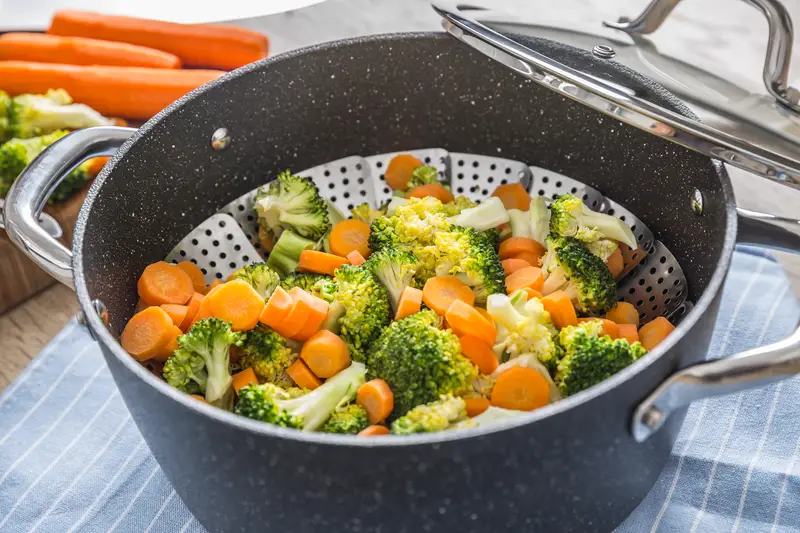
Steaming vegetables feels like the responsible adult thing to do. You buy the little metal basket, you boil some water, you toss in whatever green thing you grabbed at the store, and you pat yourself on the back for not deep-frying something. I get it. I’ve been there. But here’s the thing — steaming isn’t always the nutritional slam dunk we’ve been told it is. And for one vegetable in particular, it might actually be working against you.
Let’s talk about broccoli. Specifically, let’s talk about why steaming broccoli — the thing basically every health-conscious American does three nights a week — might not be doing what you think it’s doing.
Wait, Isn’t Steaming Broccoli Supposed to Be Good?
Yeah, that’s what most of us learned. Steaming is the “gentle” cooking method, the one that preserves nutrients better than boiling or frying. And honestly, that’s partially true — for some vegetables. But broccoli is a special case because of what makes it valuable in the first place.
Broccoli’s claim to fame is a compound called sulforaphane. It’s what researchers get excited about when they study broccoli’s ability to stimulate the body’s detoxifying enzymes. In plain English: sulforaphane is the reason broccoli shows up on every “cancer-fighting foods” list you’ve ever seen. The problem? Heat significantly decreases your dose of sulforaphane. And steaming is heat.
But it gets worse. Broccoli also contains glucosinolates — another group of compounds linked to cancer prevention — along with folate, potassium, and a range of vitamins. Steaming chips away at all of them. So that perfectly steamed broccoli on your plate? It’s still broccoli, and it’s still not bad for you. But you’re leaving a lot on the table.
What the Science Actually Says
Now here’s where things get interesting and a little contradictory, because science is messy like that.
A peer-reviewed study out of Zhejiang University compared five different cooking methods for broccoli: boiling, microwaving, stir-frying, stir-frying then boiling, and steaming. The researchers found that steaming actually preserved glucosinolates and chlorophyll better than the other methods. Steaming even increased total glucosinolates in some cases, possibly because the heat inactivated myrosinase (an enzyme that breaks glucosinolates down) while also breaking open plant cells.
So what gives? How can steaming both destroy and preserve broccoli’s good stuff?
The answer is that it depends on what you’re measuring. The Zhejiang study compared steaming against other cooking methods that use direct contact with water or high-heat oil — and against those methods, steaming wins. But when you compare steamed broccoli to raw broccoli, you’re still losing sulforaphane and other heat-sensitive nutrients. Steaming is the least bad way to cook broccoli. That’s different from saying it’s the best way to eat it.
Raw Broccoli Isn’t as Weird as You Think
Before you dismiss this with “I’m not eating raw broccoli like some kind of rabbit,” hear me out. You’ve probably already eaten raw broccoli more times than you realize. Every veggie tray at every Super Bowl party, office potluck, and family reunion has raw broccoli florets sitting next to that little pool of ranch dressing. And you ate them. And they were fine.
Raw broccoli works great chopped up small in salads, thrown into slaws, or even blended into smoothies if you’re feeling ambitious. The texture is crunchier and the flavor is a little more bitter than cooked, but a good dressing or dip handles that in about two seconds. The point is, if you’re eating broccoli specifically for the health benefits — and let’s be honest, nobody’s eating it because they crave it like pizza — then going raw gives you the most bang for your buck.
Other Vegetables You Should Think Twice About Steaming
Broccoli isn’t alone here. Several of its close relatives have the same problem.
Cauliflower belongs to the same Brassica family as broccoli, and it loses nutrient potential when heated the same way. Kale — everyone’s favorite superfood from about 2014 — contains cancer-fighting isothiocyanates that get destroyed by cooking, steaming included. Kale also packs iron, fiber, vitamins A, B, and K, antioxidants, and calcium, all in a low-calorie package. That’s why the green juice crowd drinks it raw instead of cooking it down.
Brussels sprouts lose folate, potassium, and vitamins through steaming heat. And here’s a fun one: carrots. You’d think steaming would help carrots because heat breaks down cell walls and releases carotenoids (which your body converts to vitamin A). But more recent research suggests steaming actually decreases carotenoid levels. So if you’re eating carrots for the vitamin A, raw might be the move.
Bell peppers round out the list. They lose nutrients with any heat method, not just steaming. If you want the most out of your peppers, slice them up and eat them cold.
The Mushroom Question
While we’re talking about steaming, mushrooms deserve their own conversation because the rules are completely different. Mushrooms are 80 to 90 percent water, which makes cooking them tricky no matter what method you use.
Steaming mushrooms actually has some real benefits. They retain more texture and don’t shrink up the way they do when roasted. If you’ve ever pulled roasted mushrooms out of the oven and found them wrinkly and dry, steaming prevents that. Steamed mushrooms come out plump, juicy, and moist, with their earthy flavor intact.
But most chefs will tell you the better move is to dry-sauté them. Put mushrooms in a hot, dry pan — no oil, no butter, no salt — in a single layer. Let them release their moisture and let that moisture evaporate completely. Then add your fat and seasoning at the end. The result is deeply browned, concentrated mushroom flavor that steaming simply cannot deliver. The key is never overcrowding the pan. If mushrooms overlap, they trap moisture, create steam, and you’re right back to soggy territory.
Why Browning Beats Steaming for Flavor
This brings up a bigger point that goes beyond any single vegetable. Steaming, by definition, is wet heat. And wet heat prevents browning. Browning — the Maillard reaction, if you want to get technical — is where flavor lives. It’s the difference between a boiled potato and a roasted one. A steamed carrot and a caramelized one. Night and day.
Professional chefs know that the number one reason vegetables turn out bland isn’t the wrong temperature. It’s a moisture problem. When vegetables overlap on a sheet pan or crowd a skillet, they release water that has nowhere to go. That water becomes steam, and that steam prevents browning. The fix isn’t turning up the heat — it’s giving your vegetables space and keeping surfaces dry.
One Food Network writer grew up eating vegetables lightly sautéed with a touch of oil and just a thin layer of water, finished with smashed garlic and salt. The whole process takes 10 minutes, and the result is vegetables that are vibrant in color, still slightly crisp, and actually taste like something you want to eat. Her argument — and it’s a good one — is that the best cooking method is the one that makes you actually eat your vegetables. A perfectly nutrient-dense serving of steamed broccoli does you no good sitting untouched on the plate because it tastes like wet cardboard.
Some Vegetables Actually Benefit From Cooking
Before you swear off cooking vegetables entirely, know that some actually get better with heat. Registered dietitian Sharon Palmer points out that mushrooms, asparagus, and cabbage supply more antioxidant compounds when cooked compared to raw. Roasting in particular enhances the availability of nutrients in carotenoid-rich foods, which are important for eye health. Think sweet potatoes, carrots (when roasted rather than steamed), and other root vegetables.
Asparagus is a great example of a vegetable that actually increases in nutrient density when steamed. So the rule isn’t “never cook your vegetables.” The rule is “know your vegetable and pick the right method.”
The Freshness Factor Nobody Talks About
Here’s something worth knowing: vegetable nutrition content starts declining the moment the vegetable is harvested. By the time broccoli has traveled from a farm in California to a grocery store in Ohio, sat on the shelf for a few days, then sat in your fridge for another few days, it’s already lost some of its nutritional value. Adding heat on top of that time-based loss compounds the problem.
This is why buying local and eating vegetables quickly matters more than most people realize. If you’re going to steam your broccoli — and honestly, sometimes you just want warm broccoli and that’s fine — at least make sure it’s fresh. Don’t buy it on Monday and steam it on Friday. The longer it sits, the less you’re getting out of it, no matter how you cook it.
So What Should You Actually Do?
If maximum nutrition is your goal, eat broccoli raw. Chop it into a salad, dip it in hummus, toss it into a grain bowl. If you can’t stand raw broccoli, steaming is still better than boiling or frying — but know that you’re trading some nutritional value for convenience and texture.
If flavor is your goal, skip the steamer entirely. Roast it at high heat with olive oil and garlic until the edges char. Sauté it in a hot pan. Toss it on a grill. You’ll eat more of it, enjoy it more, and that counts for something.
The steamer basket had a good run. It’s not evil. But for broccoli — America’s most commonly steamed vegetable — it’s time to rethink the routine. Your broccoli deserves better than a steam bath. And frankly, so do you.

