

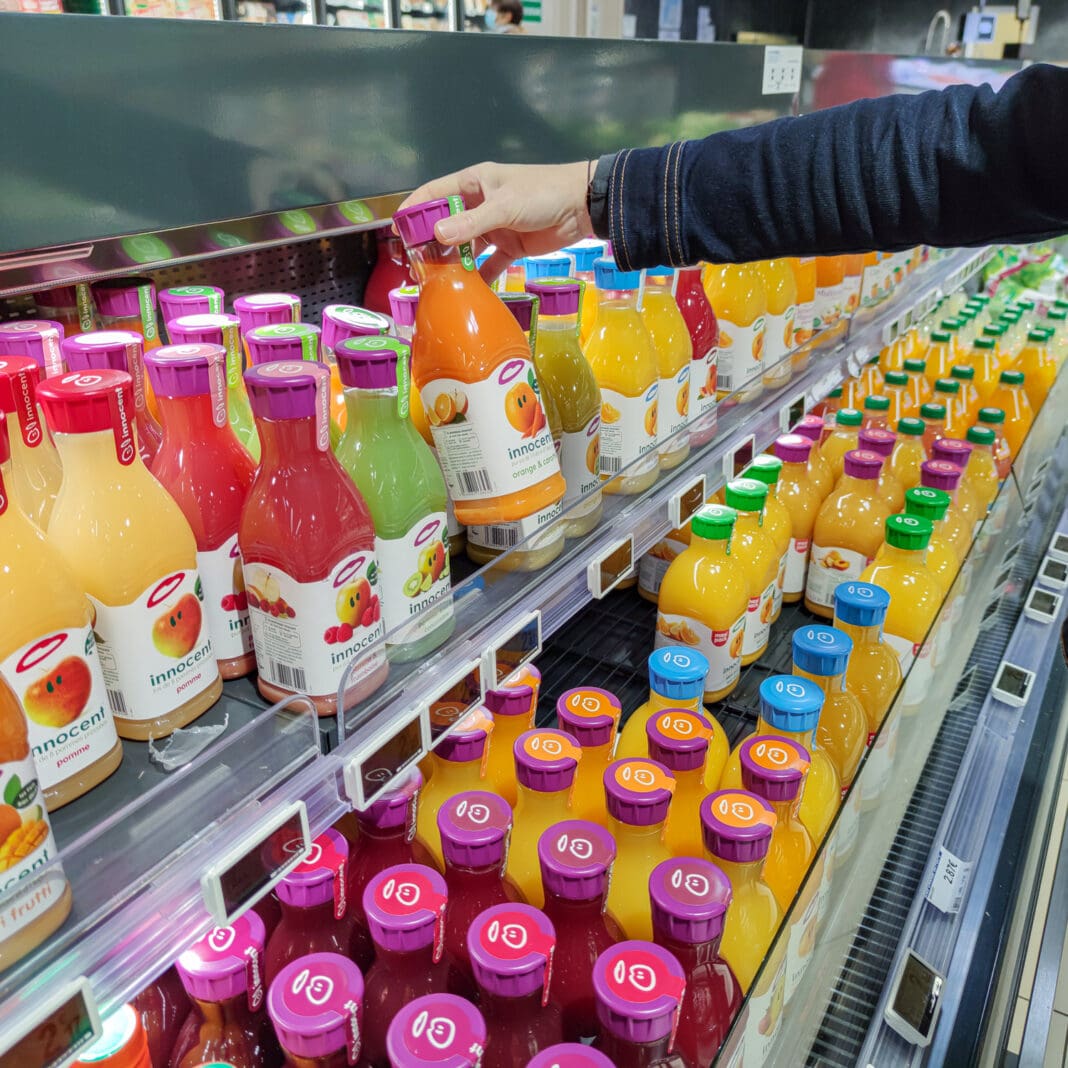
That morning glass of orange juice might seem like the perfect way to start the day, but some brands are hiding more than just vitamin C behind their colorful labels. Many store-bought orange juices contain artificial sweeteners, high fructose corn syrup, and mysterious “flavor packs” that make them closer to orange-flavored sugar water than actual fruit juice. Not all orange juice is created equal, and some popular brands consistently disappoint with watery textures, metallic aftertastes, and ingredient lists that read like chemistry experiments.
SunnyD has almost no real orange juice
Walking down the juice aisle, that bright orange SunnyD bottle might catch the eye, but calling this drink orange juice is like calling a candy bar a health food. SunnyD contains less than 5% real fruit juice, with the rest being water, high fructose corn syrup, and artificial colors. The second ingredient listed on the label is corn syrup, which explains why it tastes more like flat orange soda than anything resembling actual fruit.
The drink has more in common with sports drinks than orange juice, with a thin, watery texture that lacks any of the natural thickness you’d expect from real oranges. Many taste testers describe it as having an overwhelming artificial sweetness that completely masks any hint of citrus. For parents looking to give their kids something nutritious, this product delivers nothing but empty calories and artificial additives that could be found in any gas station energy drink.
Simply Light tastes more like stevia than oranges
The concept behind Simply Light sounds appealing – all the orange juice taste with half the sugar and calories. Unfortunately, the execution falls flat because the stevia leaf extract used as a sugar substitute completely overwhelms any natural orange notes. The artificial sweetener creates a cloying aftertaste that lingers long after each sip, making it difficult to finish even a small glass.
What makes this particularly disappointing is the watery texture that eliminates the satisfying mouthfeel people expect from orange juice. Taste testers report that the stevia completely eclipses any real orange notes, creating a drink that tastes more like artificially sweetened water than fruit juice. The thin consistency makes it feel like diluted regular orange juice rather than a carefully crafted lower-calorie alternative.
Uncle Matt’s costs ten dollars but tastes cheap
At nearly $10 per bottle, Uncle Matt’s orange juice carries premium pricing that suggests superior quality, but the actual drinking experience tells a different story. The juice has an oddly sweet character that resembles clementine juice more than traditional orange juice, with a suspicious concentrate-like aftertaste despite its organic labeling. This creates confusion for consumers who expect the high price to deliver exceptional freshness and natural orange character.
The most frustrating aspect is how professional testers consistently note its similarity to cheap, from-concentrate varieties that cost a fraction of the price. The juice lacks the robust, refreshing quality expected from premium orange juice, instead delivering a thin mouthfeel and artificial sweetness that doesn’t justify the premium price point. Spending twice as much as other brands only to get concentrate-quality results makes this an especially poor value.
Florida’s Natural has a weird smoky aftertaste
Despite the name suggesting pure Florida oranges, Florida’s Natural sources fruit from both Florida and Mexico, which might explain its inconsistent character. The most noticeable issue is an unusual smoky undertone that appears nowhere else in the orange juice category. This mysterious smokiness combines with a metallic bitterness that makes the juice difficult to enjoy, especially for people expecting the clean, bright taste of fresh oranges.
Even though it’s labeled as not-from-concentrate, taste testers consistently report the same metallic bitterness typically associated with concentrate-based juices. The smoky character persists through multiple sips, creating an off-putting drinking experience that doesn’t improve with time. The misleading name implies single-source Florida fruit, but the actual sourcing from multiple countries may contribute to the inconsistent and unpleasant taste profile.
Minute Maid Original is basically orange-flavored soda
Minute Maid Original markets itself as real orange juice, but the ingredient list tells a different story with added sugars and concentrate processing that strips away natural fruit character. The high sugar content puts it on par with regular soda in terms of its impact on blood sugar levels, making it a poor choice for anyone trying to make healthier breakfast decisions. The sweetness level overwhelms any natural citrus notes, creating a candy-like drinking experience.
The concentrate processing removes most of the beneficial compounds found in fresh oranges, leaving behind mostly sugar, water, and artificial orange essence. Health experts note that the sugar content rivals many soft drinks, making this more of a breakfast dessert than a nutritious beverage. The artificial orange character lacks the complexity and freshness of real fruit juice, instead delivering a one-dimensional sweetness that becomes cloying after just a few sips.
Store brands often taste like plastic containers
Many grocery store private label orange juices, including Stop & Shop and Great Value varieties, share a common problem of tasting like their packaging. The concentrate processing combined with extended storage creates a stale, plasticky character that coats the mouth unpleasantly. These juices often pour thick and look promising, but the first sip reveals an artificial sweetness mixed with chemical undertones that suggest long-term storage in less-than-ideal conditions.
The concentrate process strips away natural fruit character, leaving manufacturers to add back “flavor packs” that attempt to recreate orange taste but fall short of the real thing. Professional taste testers frequently describe these juices as having a stale quality, as if they’ve been sitting in containers for months while mixing with whatever plastic compounds line the packaging. The resulting drinking experience is far from refreshing, instead leaving an unpleasant aftertaste that lingers long after finishing the glass.
Tropicana Trop50 uses artificial sweeteners poorly
Trop50 promises the same great Tropicana taste with 50% less sugar, but achieves this through artificial sweeteners that fundamentally change the drinking experience. The artificial sweeteners create an unnatural aftertaste that doesn’t blend well with the natural orange character, resulting in a confusing mix of real fruit notes followed by chemical sweetness. This creates a disjointed drinking experience where each sip delivers conflicting signals to the palate.
The artificial sweeteners can also disrupt normal appetite regulation, potentially leading to increased cravings for sweet foods throughout the day. Research suggests that artificial sweeteners may interfere with gut bacteria and metabolism, making this “healthier” option potentially worse than regular orange juice. Instead of delivering a clean, refreshing orange juice experience with fewer calories, Trop50 creates a compromise that satisfies neither the desire for natural fruit juice nor effective calorie reduction.
Natalie’s costs nine dollars for watery disappointment
At $9 per bottle, Natalie’s positions itself as a premium, artisanal orange juice option, but the actual product delivers a confusing mix of tangerine and orange notes that doesn’t taste like traditional orange juice. The unusual citrus blend creates an unfamiliar drinking experience that may appeal to some, but generally disappoints consumers expecting classic orange juice character. The high price point raises expectations that the unique taste profile simply doesn’t meet.
Despite having the right texture, taste testers consistently describe the actual orange notes as watery and unappetizing, lacking the vibrant citrus punch expected from premium juice. The tangerine-like character might work in a specialty fruit blend, but when marketed as orange juice, it creates confusion and disappointment. Spending nearly $10 for a bottle only to discover it doesn’t taste like the orange juice most people expect makes this a particularly frustrating purchase.
Generic frozen concentrates taste like orange water
Frozen orange juice concentrate might seem like a convenient and economical option, but the preparation process rarely delivers satisfying results. Most people add too much water, creating a thin, weak beverage that tastes more like orange-tinted water than actual fruit juice. Even when mixed according to package directions, the concentrate processing has already removed most of the natural fruit character, leaving behind artificial orange essence and added sugars.
The heating and concentrating process destroys many of the natural compounds that give fresh orange juice its appealing character and mouthfeel. Multiple taste tests show that even properly mixed frozen concentrate lacks the satisfying thickness and natural sweetness of better orange juice options. The resulting beverage often has a stale, pithy quality that becomes more noticeable with each sip, making it difficult to finish an entire glass without adding extra ingredients to improve the experience.
Shopping for orange juice doesn’t have to be a gamble if you know which brands consistently disappoint. The worst options share common problems like artificial sweeteners, concentrate processing, plastic-like aftertastes, and pricing that doesn’t match quality. Reading ingredient labels and avoiding products with high fructose corn syrup, artificial colors, and mysterious “natural flavors” will help steer you toward better choices that actually taste like oranges.

