

Every family has that one relative who insists on cooking things a certain way. Maybe it’s the aunt who boils green beans for an hour or the dad who refuses to buy anything but Heinz ketchup. A recent survey found that only 33% of Gen Z consider themselves skilled cooks, and part of the confusion comes from watching older generations do things that just don’t make sense anymore. Here are nine kitchen habits boomers still swear by that leave everyone else scratching their heads.
Meat has to be the star of every meal
Walk into most boomer households around dinnertime and there’s almost always a big piece of meat front and center on the plate. Chicken, pork chops, steak, meatloaf — it doesn’t matter what day it is. The idea of a dinner without animal protein as the main event just doesn’t compute for a lot of folks from that generation. Meanwhile, younger cooks are perfectly happy making a big bowl of pasta, a stir-fry loaded with veggies, or even just a really good grain bowl for dinner. None of those need meat to feel like a real meal.
This habit makes more sense when looking at history. America’s love of meat at every meal was already going strong by the mid-1800s. Eating it daily was a sign of doing well financially. That attitude carried right through the 1900s. By the late ’90s, the famous “Beef. It’s what’s for dinner” campaign hit TV screens everywhere. Boomers grew up during the peak of all that messaging. Meat wasn’t just food — it was a statement. And for many, it still is, even if the rest of the world has moved on a bit.
Brand loyalty that borders on devotion
Ever tried suggesting a store-brand peanut butter to a boomer? Good luck with that. Many older cooks have a deeply personal attachment to specific name brands. The Jif stays Jif. The Hellmann’s stays Hellmann’s. It doesn’t matter if the generic version is made in the same factory and costs two dollars less. The familiar label wins every single time. Younger shoppers tend to compare ingredients, read reviews, and pick whatever seems like the best deal. Logos don’t hold the same kind of power.
So why the intense brand loyalty? Boomers grew up when there were only a handful of TV channels. Ads played constantly, and those same brands showed up in every commercial break. Over time, those products became more than just groceries — they became familiar, trusted, almost like old friends. Products like Costco’s Kirkland Signature are often made by the exact same companies behind the name brands, just in simpler packaging. But nostalgia is a powerful thing. For many boomers, switching to a generic brand feels like a betrayal, even when the product inside is identical.
The kitchen junk drawer full of gadgets
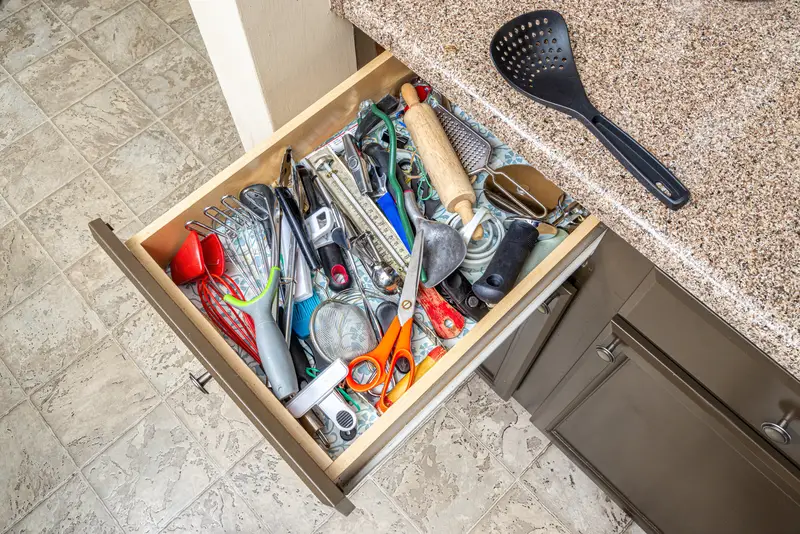
Open up a boomer’s kitchen drawers and prepare to find a museum of gadgets. Electric egg beaters, avocado slicers, corn cob holders, melon ballers, and that one bread machine from 1994 that hasn’t been used since. Every single item was purchased with good intentions. Most of them now live in a permanent state of retirement, buried under other forgotten tools. But suggest getting rid of any of them? That’s not going to happen. Each gadget has a story, and apparently each story is worth the drawer space.
Younger cooks tend to go the opposite direction. A good knife, a cutting board, one solid pan, and maybe a food processor can handle most jobs. The minimalist approach means less clutter, less cleaning, and faster prep time. Boomers, though, came of age during a time when infomercials and home shopping channels were booming. Every week brought a new must-have kitchen invention. The habit of collecting stuck. And honestly, there’s something kind of charming about finding a working waffle iron from 1987 buried behind a set of fondue forks nobody remembers buying.
Seasoning that stops at salt and pepper
Here’s one that really gets younger cooks worked up. Plenty of boomers consider salt and pepper to be the only seasoning a meal needs. Maybe a sprinkle of garlic powder on a good day. But cumin? Smoked paprika? Turmeric? Those might as well be foreign artifacts sitting untouched in the back of the spice cabinet. A conservative dash of black pepper and a shake of salt is the standard, and that’s that. It’s not that boomers dislike bold food — it’s more that they were never really introduced to it.
That lack of seasoning has roots in timing. Boomers grew up before cuisines like Indian, Thai, and Mexican became mainstream in American kitchens. The food they ate was built around convenience foods that prioritized shelf life over bold taste. Canned vegetables, boxed dinners, and frozen meals didn’t exactly come loaded with spice. Over time, their palates adjusted to simpler, milder food. Even KFC uses nearly a dozen spices in its fried chicken recipe, which probably makes it one of the most heavily seasoned things some boomers eat on a regular basis.
Vegetables cooked until they surrender
If a vegetable still has any crunch left, a boomer will tell you it’s not done yet. Green beans, carrots, broccoli, Brussels sprouts — everything gets boiled or steamed until it’s soft enough to eat without teeth. The idea of a crisp-tender roasted carrot or a quick sautéed zucchini just doesn’t register. Even Gordon Ramsay has called overcooked Brussels sprouts the worst thing imaginable, and yet many boomer kitchens treat that description as a recipe rather than a warning.
This goes beyond just vegetables, too. Overcooking is a boomer default across the board, including meat. Boomers came of age when food safety standards weren’t as developed as they are now. Foodborne illness from undercooked food was a real and common threat. Health officials at the time recommended cooking everything thoroughly as a precaution. The food industry has improved dramatically since then, but old habits stick. Plus, boomers ate a lot of canned vegetables growing up. Those were already soft from the canning process, so mushy veggies became the norm rather than the exception.
Casseroles made from whatever is around
The boomer casserole is truly one of a kind. There’s no recipe, no plan, and sometimes no logic. Leftovers from two different dinners? In the dish. Half a can of cream of mushroom soup? In the dish. Random bits of cheese and some frozen peas? Absolutely in the dish. Everything gets mixed together, topped with more cheese, and baked until it’s golden brown on top. The result is sometimes amazing and sometimes deeply confusing. Either way, it’s showing up at the dinner table, and everyone’s expected to eat it.
Boomers perfected the art of the mystery casserole for good reason. They were raised by parents who lived through the Great Depression. Wasting food was practically a sin. At the same time, canned and convenience foods were having their big moment. Some of those canned food labels even printed casserole recipes right on them. So boomers learned to make a full meal out of scraps, cans, and creativity. It’s actually kind of impressive when it works. But when the combination is off — like that one story of a mom putting maple syrup, leftover Chinese food, and lima beans into the same pot — things can get weird fast.
Oil gets poured like it’s free
Watch a boomer cook and count how much oil goes into the pan. It’s almost always more than necessary. Sautéing onions? A generous glug. Roasting potatoes? Another generous glug. Frying an egg? The pan might as well be a swimming pool. For younger cooks who measure things out with tablespoons, this free-pouring approach is kind of wild to witness. It’s not that oil is bad — it’s just that many boomer cooks treat the bottle like a fire hose.
Nutritionist Dr. Cara Thompson has pointed out that excess oil can actually cover up the natural taste of food, which is something younger cooks are more aware of. Boomers, though, learned to cook during a time when butter and oil were considered essential to making anything taste good. Cream-based sauces were standard, and richness was the goal. The idea of using just a light drizzle or swapping in something lighter, like a yogurt-based sauce, simply wasn’t part of the playbook. It’s a habit built over decades, and it’s not going anywhere soon.
Measuring is optional at best
Ask a boomer how much flour goes in the recipe and the answer is usually something like “enough” or “just until it looks right.” Measuring cups exist in most boomer kitchens, but they function more as decorations than tools. The eyeball method is the preferred technique for just about everything. A handful of this, a pinch of that, and somehow the dish turns out the same way every time. Or at least close enough. It’s an approach that mystifies younger cooks who follow recipes down to the gram.
This no-measuring habit comes from decades of repetition. When someone has been making the same dishes for 30 or 40 years, they don’t need a recipe card anymore. The problem is when they try to pass those recipes down. “Add some butter” doesn’t mean the same thing to everyone. Younger cooks rely on kitchen scales, measuring cups, and even apps to get portions right. Meanwhile, boomers are over here making perfect biscuits with a coffee mug as their only measuring device. It works for them, but recreating their results can be almost impossible.
Canned everything still fills the pantry
Pop open a boomer’s pantry and the canned goods section looks like a small grocery aisle. Canned green beans, canned corn, canned tomato sauce, canned soup — the collection never seems to end. And these aren’t just emergency backup supplies. These cans get used regularly, sometimes as the main ingredient in a meal. Cream of mushroom soup alone probably fuels half of all boomer recipes. Younger cooks, on the other hand, tend to reach for fresh or frozen options first.
The love of canned food goes back to when boomers were growing up in the ’50s, ’60s, and ’70s. That was the golden age of convenience food. Canned goods were cheap, lasted forever, and made cooking fast and easy. They were a kitchen revolution at the time. Brands like Campbell’s and Del Monte were household staples. While younger generations have shifted toward fresh produce and frozen vegetables for taste and nutrition, many boomers still see their trusty cans as perfectly good ingredients. And honestly, for a quick weeknight dinner, they’re not entirely wrong.
At the end of the day, every generation cooks based on what they grew up with. Boomers learned from a time when convenience was king, meat was everything, and brand names meant quality. Some of those habits might seem odd now, but they came from real experiences and real history. The smartest move is probably to take the best of what boomers taught us — like making a full meal from almost nothing — and mix it with newer ideas about seasoning, ingredients, and technique. That’s how good home cooking keeps getting better, one generation at a time.

