

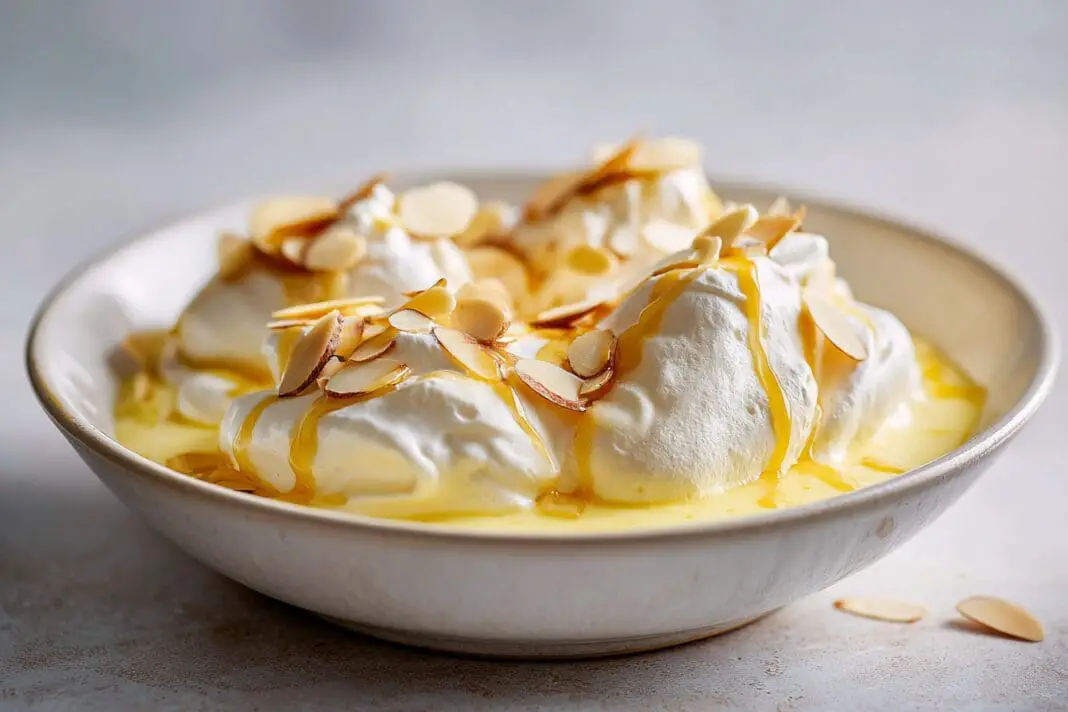
Ever wonder what dessert could make the legendary Julia Child cry tears of joy? The floating island, or île flottante, was one of her all-time favorites. This classic French dessert features light, airy meringue floating in a pool of rich custard, topped with caramel and almonds. While it might sound fancy, you only need a few basic ingredients and some patience to create this stunning dessert at home. The real magic happens when you see those fluffy meringue islands nestled in smooth vanilla custard, ready to impress anyone at your dinner table.
What makes floating island so special
The floating island isn’t just another dessert from Julia Child’s cookbook collection. It’s a showstopper that combines two very different textures in one bowl. You’ve got the cool, silky crème anglaise (a thin custard) on the bottom, and then these pillowy meringue puffs sitting right on top. The contrast between the smooth custard and the airy meringue is what makes this dessert unforgettable. When you take a bite, you get both textures at once, and it’s pretty amazing.
Julia Child called it “a dramatic use for crème anglaise” in her cookbook “Julia’s Kitchen Wisdom.” She wasn’t kidding about the drama. When you bring this dessert to the table, people stop and stare. It looks like something from a fancy French restaurant, but you made it in your own kitchen. The best part is that you can make the custard a day ahead, so you’re not rushing around when guests arrive.
The simple ingredients you already have
Here’s the good news about floating islands: you probably have most of the ingredients sitting in your fridge right now. You need eggs, milk, sugar, salt, and vanilla extract. That’s it for the basics. If you want to get fancy, grab some sliced almonds and make some caramel sauce for the top. But even without the extras, this dessert tastes incredible. The ingredient list might be short, but the technique is where things get interesting.
Don’t let the French name scare you off. This isn’t about having expensive ingredients shipped from Paris. Regular whole milk from your grocery store works perfectly fine. Same with the eggs and sugar. The vanilla extract adds that classic sweet scent, but you don’t need the fancy Madagascar beans unless you really want to splurge. Some recipes suggest adding a touch of lemon zest to the custard, which gives it a nice bright note without overpowering everything else.
Making the custard base takes patience
The crème anglaise is the foundation of your floating island, and it requires your full attention. You start by heating milk with vanilla in a saucepan until it’s just about to boil, then you pull it off the heat. In a separate bowl, whisk together egg yolks and sugar until they’re pale and thick. Then comes the tricky part: you need to temper the eggs by slowly adding the hot milk while whisking constantly. This prevents the eggs from scrambling.
Once everything is combined, you put the mixture back on the stove over low heat and stir constantly with a wooden spoon. You’re looking for it to thicken just enough to coat the back of your spoon. This usually takes about 10 minutes, but don’t rush it. If your heat is too high or you stop stirring, you’ll end up with sweet scrambled eggs instead of smooth custard. When it’s ready, strain it through a fine-mesh sieve and let it chill completely in the fridge.
Getting the meringue just right
The meringue islands are what give this dessert its name and its wow factor. Start with room temperature egg whites because they whip up much better than cold ones. Add a pinch of salt and start beating them with an electric mixer. When they get foamy, gradually add sugar while continuing to beat. You want stiff, glossy peaks that hold their shape when you lift the beaters. This is where arm strength comes in handy if you’re using a hand mixer.
Julia Child’s original recipe calls for baking the meringue in a buttered mold set in a water bath, which creates a more structured island. Other versions have you poaching spoonfuls of meringue in simmering milk, which is faster but gives you a softer result. Either way works great. If you’re poaching, gently lower spoonfuls of meringue into barely simmering milk and cook for about 3 minutes per side. They should puff up and firm slightly but stay tender inside.
Assembly is easier than you think
Once your custard is cold and your meringues are cooked and cooled, it’s time to put everything together. Pour the chilled crème anglaise into a wide, shallow serving bowl or individual dishes. If you used a mold for your meringue, carefully unmold it right into the center of the custard. If you made smaller poached meringues, arrange them on top of the custard like little clouds floating on a vanilla sea.
This is when you can add your finishing touches. Drizzle warm caramel sauce over the meringues and sprinkle toasted sliced almonds on top. Some people add fresh berries or a dusting of powdered sugar. The dessert should be served cold or at room temperature, never hot. You can assemble it up to an hour before serving, but don’t let it sit too long or the meringues will start to weep and lose their shape.
Why this dessert made Julia cry
There’s a famous clip from Julia Child’s show “Baking with Julia” where pastry chef Nancy Silverton makes a brioche version of this dessert. After taking one bite, Julia actually tears up and says it’s the best dessert she’s ever eaten. That’s high praise from someone who spent her entire life eating incredible food. Nancy later admitted she was terrified when she first saw those tears, thinking the dessert was too hot and had burned Julia’s mouth!
What made that version so special was the combination of a buttery brioche crust with crème fraiche custard, poached fruit, whipped cream, and sabayon. It was a more elaborate take on the classic floating island, but the basic idea remained the same. Light, airy elements floating in or on top of rich, creamy custard. The textural contrast and the balance of sweet and creamy is what makes people fall in love with this dessert every single time.
Common mistakes and how to avoid them
The biggest mistake people make with floating islands is cooking the custard too fast. If you crank up the heat because you’re in a hurry, you’ll scramble those eggs and have to start over. Keep your burner on low and be patient. Another common problem is overbeating the meringue. Once you have stiff peaks, stop mixing. If you keep going, the meringue gets dry and grainy instead of smooth and glossy.
When poaching meringues, make sure your milk is barely simmering, not boiling. If the liquid is too hot, the outside of your meringue will cook too fast while the inside stays raw. Also, don’t crowd the pan. Give each meringue some space to expand. If you’re baking the meringue in a mold, make sure your water bath comes about halfway up the sides of the mold. This gentle, even heat is what gives you that perfect texture.
Different versions from around the world
While France gets all the credit for floating islands, lots of other countries have their own versions of this dessert. Hungary calls it madártej and serves it without any fancy toppings, just the meringue and custard. Germany has schnee-eier, Romania has lapte de pasăre, and Portugal makes farófias. In many of these versions, the custard gets a splash of lemon juice or zest, and sometimes a light dusting of cinnamon goes on top before serving.
The French actually debate whether île flottante and œufs à la neige are the same thing or two different desserts. Some say île flottante always uses baked meringue while œufs à la neige uses poached meringue. Others insist they’re just different names for the same dessert. Julia Child herself gave recipes for both versions in “Mastering the Art of French Cooking,” describing île flottante as either a caramel almond soufflé or even a whipped cream-covered layer cake surrounded by custard.
Ways to customize your floating island
Once you master the basic recipe, you can play around with different variations. Try flavoring your custard with coffee, chocolate, or even a splash of rum or Grand Marnier. Fruit sauces made from fresh strawberries, raspberries, or apricots work beautifully instead of traditional vanilla custard. You can also add citrus zest to the custard while it’s cooking for a bright, fresh taste that cuts through the richness.
For the meringues, some people add a tiny bit of almond extract along with the vanilla for extra depth. You can also fold in finely chopped nuts or a bit of cocoa powder before baking or poaching. The caramel topping is traditional, but you could also use hot fudge, fruit coulis, or even a sprinkle of crushed cookies. Just remember that the beauty of this dessert is in its simplicity, so don’t go overboard with add-ons.
Making Julia Child’s favorite floating island dessert at home is easier than you might think. Sure, it takes some time and attention, especially when you’re making the custard and meringue. But the ingredients are simple, the techniques are straightforward once you get the hang of them, and the results are absolutely stunning. Whether you’re making it for a special dinner party or just because you want to try something new, this vintage French classic is guaranteed to impress. Plus, you get to tell everyone you made Julia Child’s favorite dessert, which automatically makes you look like a rock star in the kitchen.
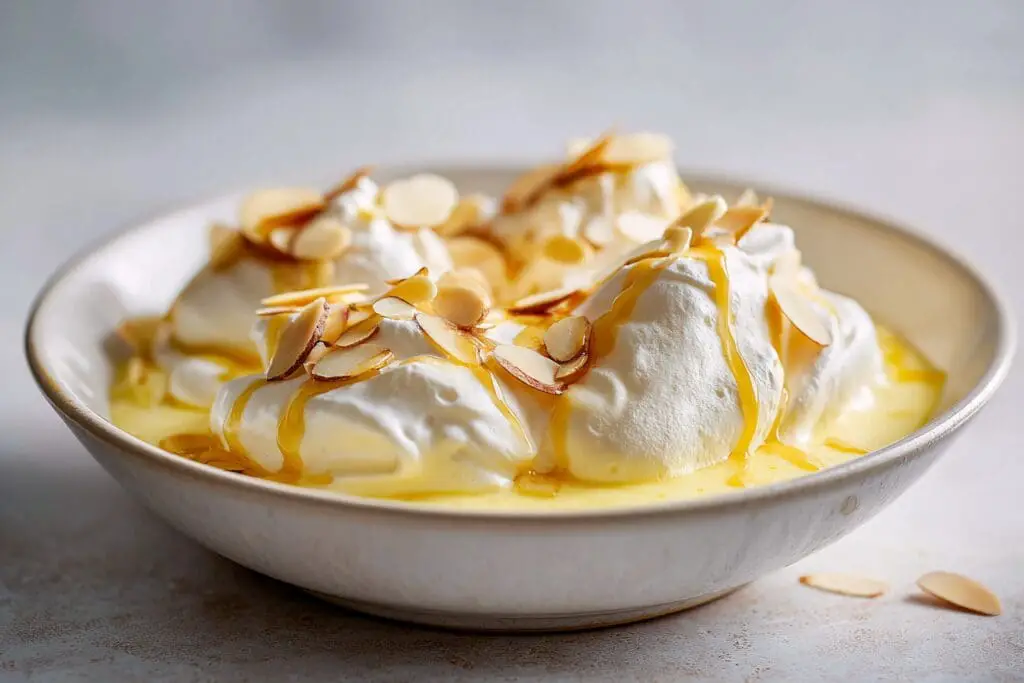
Classic Floating Island (Île Flottante)
Course: DessertCuisine: French6
servings30
minutes20
minutes285
kcalThis stunning French dessert features pillowy meringue floating in silky vanilla custard, topped with caramel and toasted almonds for an impressive finish.
Ingredients
2 cups whole milk
1 vanilla bean, split lengthwise (or 2 teaspoons vanilla extract)
4 large eggs, separated
3/4 cup granulated sugar, divided
1/4 teaspoon salt
1 tablespoon cornstarch
1/2 cup sliced almonds, toasted
1/2 cup caramel sauce (store-bought or homemade)
Additional milk for poaching (about 4 cups)
Directions
- Make the crème anglaise by heating 2 cups of milk with the vanilla bean (or extract) in a medium saucepan over medium heat until it just begins to steam. Remove from heat. In a separate bowl, whisk together 4 egg yolks, 1/2 cup sugar, and cornstarch until pale and thick. Very slowly pour the hot milk into the egg mixture while whisking constantly to temper the eggs.
- Pour the custard mixture back into the saucepan and cook over low heat, stirring constantly with a wooden spoon, until it thickens enough to coat the back of the spoon, about 10-12 minutes. The temperature should reach about 170°F but not boil. Strain the custard through a fine-mesh sieve into a clean bowl, cover with plastic wrap pressed directly on the surface, and refrigerate for at least 2 hours or overnight.
- Prepare the meringue islands by bringing 4 cups of milk to a gentle simmer in a large, wide skillet or sauté pan. In a clean, dry mixing bowl, beat the 4 egg whites with salt using an electric mixer on medium speed until foamy. Gradually add the remaining 1/4 cup sugar while continuing to beat, increasing speed to high until stiff, glossy peaks form. This should take about 4-5 minutes.
- Using two large spoons, shape the meringue into egg-shaped ovals (quenelles) and gently lower them into the barely simmering milk. Don’t crowd the pan; work in batches if needed. Poach for about 3 minutes, then carefully flip each meringue and poach for another 3 minutes on the other side. The meringues should puff up slightly and feel just firm to the touch.
- Use a slotted spoon to carefully transfer the poached meringues to a clean kitchen towel or paper towels to drain. Let them cool to room temperature. You should have about 6-8 meringue islands depending on how large you made them.
- To assemble, pour the chilled crème anglaise into a large, shallow serving bowl or divide it among individual dessert bowls. Gently place the cooled meringue islands on top of the custard, arranging them attractively.
- Warm the caramel sauce slightly if needed so it’s pourable but not hot. Drizzle the caramel sauce over the meringues in a decorative pattern. Sprinkle the toasted sliced almonds over the top for crunch and visual appeal.
- Serve immediately or refrigerate for up to 1 hour before serving. The dessert should be served cold or at room temperature. Don’t assemble too far in advance or the meringues will start to weep and lose their shape.
Notes
- For best results, make the crème anglaise a day ahead so it has plenty of time to chill completely. This also breaks up the work and makes the recipe less overwhelming.
- Room temperature egg whites whip up much better than cold ones. Separate your eggs and let the whites sit out for about 30 minutes before beating.
- If you don’t want to poach the meringues, you can bake them instead. Butter a soufflé dish or ring mold, fill with meringue, and bake in a water bath at 350°F for about 20 minutes until set.
- You can flavor the custard with coffee, chocolate, or citrus zest instead of vanilla for a different twist on the classic recipe.
- The poaching milk can be saved and used for other recipes like rice pudding or hot chocolate, though it will be slightly sweetened from the meringues.
Frequently asked questions about floating islands
Q: Can I make floating islands ahead of time?
A: You can definitely make the custard 1-2 days ahead and keep it covered in the fridge. The meringues are best made the day you plan to serve them, but you can make them a few hours ahead and keep them at room temperature. Just don’t assemble the dessert more than an hour before serving or the meringues will start to dissolve into the custard.
Q: What’s the difference between île flottante and œufs à la neige?
A: This is a hotly debated topic among French cooking enthusiasts. Some say île flottante uses baked meringue in a mold while œufs à la neige uses small poached meringues. Others argue they’re just different names for the same dessert. Julia Child included both versions in her cookbooks, so either method is correct.
Q: My custard turned into scrambled eggs. What did I do wrong?
A: This happens when the heat is too high or you don’t stir constantly. The custard should never boil, and you need to keep stirring the entire time it’s on the heat. Make sure to temper your eggs properly by adding the hot milk very slowly at first. If it does scramble, you’ll need to start over with fresh ingredients.
Q: Can I use store-bought custard or pudding to save time?
A: While homemade crème anglaise tastes better, you can use high-quality vanilla custard from the store in a pinch. Another shortcut is to use melted premium vanilla ice cream as your custard base, which is a trick some professional chefs use. Just make sure whatever you use is properly chilled before assembling the dessert.

