

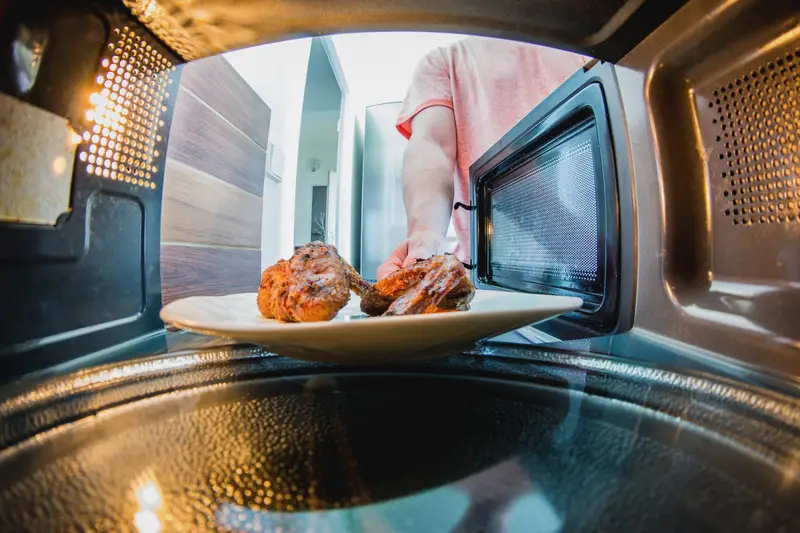
Look, we’ve all been there. You’ve got leftover chicken sitting in the fridge, and honestly, the microwave seems like the easiest option to heat it up fast. But here’s the thing—reheating chicken in the microwave isn’t as simple as pressing a button and waiting. I mean, if you don’t do it right, you’re basically inviting food poisoning to dinner.
Why microwaving chicken can actually make you sick
The problem with microwaves is pretty straightforward. They don’t heat food evenly. According to the FDA, microwaves can’t really penetrate thick layers of food properly, which means you end up with hot spots and cold spots. And those cold spots? That’s where bacteria like salmonella can survive and multiply. Not good.
After trying to reheat chicken multiple times myself, I’ve noticed that the outside gets super hot while the inside stays lukewarm. That uneven heating is the real issue here. The outer layers cook first from the microwave energy, and then heat is supposed to conduct inward. But it doesn’t always work that way. Basically, you’re left with chicken that seems hot but isn’t fully heated through.
The moisture trick that changes everything
If you’re going to use the microwave anyway, you need to add moisture. This is so important. Place your chicken on a microwave-safe plate and add a tablespoon or two of water, broth, or even just a splash of whatever liquid you have. Then cover it with a vented lid or damp paper towel. The steam created helps the chicken reheat more evenly instead of drying out.
I’ve found that covering the chicken makes a huge difference in texture too. Without the cover, you get those weird rubbery edges that nobody wants to eat. The moisture keeps everything from getting too tough. And that’s pretty much the secret to making microwave reheating actually work.
Cut it smaller than you think
Here’s what nobody talks about enough. The size of your chicken pieces matters way more than you’d expect. If you’re reheating a whole chicken breast, the microwave is going to struggle with it. Those thick pieces just don’t heat evenly. But if you cut that same breast into smaller, more uniform pieces? Totally different result.
Smaller pieces mean the microwave can actually penetrate all the way through. You won’t have that problem where the outside is burning hot but the center is still cold. Does anyone actually prefer reheating giant pieces of chicken? I mean, it never works out well.
Temperature checks aren’t optional
Every time I’ve reheated chicken, I use a meat thermometer now. It’s not just being overly cautious—it’s the only way to know for sure that your chicken is safe to eat. The internal temperature needs to hit 165 degrees Fahrenheit in multiple spots. Not just one spot. Multiple.
And don’t check it immediately after microwaving. Let the chicken rest for about 30 seconds first. The temperature will continue to rise slightly as heat distributes. Then stick your thermometer into the thickest parts and make sure they’re all at least 165 degrees. If they’re not, pop it back in for another 30 seconds and check again.
Power level adjustments actually help
Most people just hit the reheat button or use full power. That’s kind of the problem though. Full power blasts the outside while leaving the inside cold. If your microwave has power settings, drop it down to 70% or even 50%. Yes, it’ll take longer. But the chicken will heat more gradually and evenly.
The last time I ordered rotisserie chicken and had leftovers, I reheated it at 50% power for about three minutes instead of full power for one minute. Way better results. The meat stayed tender and actually heated all the way through instead of getting those weird hot and cold patches.
Arrange pieces in a circle, not piled up
This seems like such a small thing, but it matters. When you’re reheating multiple pieces of chicken, don’t just pile them in the center of the plate. Arrange them in a circle around the outer edge with the thicker parts facing outward. Leave the center empty.
Microwaves heat from the outside in, so putting food around the edges gives more even exposure to the microwave energy. I honestly didn’t believe this would make much difference until I tried it. But it does work better than stacking everything in the middle.
When you should skip the microwave entirely
Let’s be real for a second. Sometimes the microwave just isn’t the right choice. If you’ve got bone-in chicken pieces or something really thick like a whole chicken thigh, the oven or stovetop is going to give you way better results. The microwave struggles with uneven shapes and thick cuts no matter what tricks you use.
Stovetop reheating with a little liquid in a covered pan works really well. So does the oven at 350 degrees for about 15-20 minutes. Yeah, it takes longer. But you don’t have to worry as much about cold spots where bacteria can survive. And the texture is just better. The chicken doesn’t get that weird rubbery thing going on.
The stirring and flipping rule
If you’re microwaving shredded chicken or smaller pieces, stop halfway through and stir everything around. For larger pieces, flip them over. This redistributes the heat and helps everything warm up more evenly. I know it’s annoying to stop and open the microwave when you just want your food ready, but it’s totally worth it.
Most people don’t do this step. They just set the timer and walk away. But that’s how you end up with some pieces that are scalding hot and others that are barely warm. Just take the extra 10 seconds to stir or flip. Your chicken will heat better and you’re less likely to get sick from it.
Storage matters before you even reheat
Here’s something I should’ve mentioned earlier. How you store your chicken before reheating it matters just as much as how you reheat it. If your chicken has been sitting in the fridge for more than three or four days, don’t risk it. Even perfect reheating can’t fix chicken that’s already starting to go bad.
Store your leftover chicken in shallow, airtight containers so it cools quickly in the fridge. This prevents bacteria from growing in the first place. And when you’re ready to reheat, take it out of the fridge and let it sit at room temperature for about 5-10 minutes first. This helps it reheat more evenly because you’re not starting from ice-cold temperature. Though honestly, some food safety experts say to reheat straight from the fridge, so there’s sort of conflicting advice on that one. At least make sure it’s stored properly to begin with.
Bottom line? Microwaving chicken doesn’t have to be risky if you do it right. Add moisture, cut it smaller, use lower power, check the temperature, and don’t pile it all in the center. It’s not rocket science, but it does require paying attention. Your stomach will thank you.

