

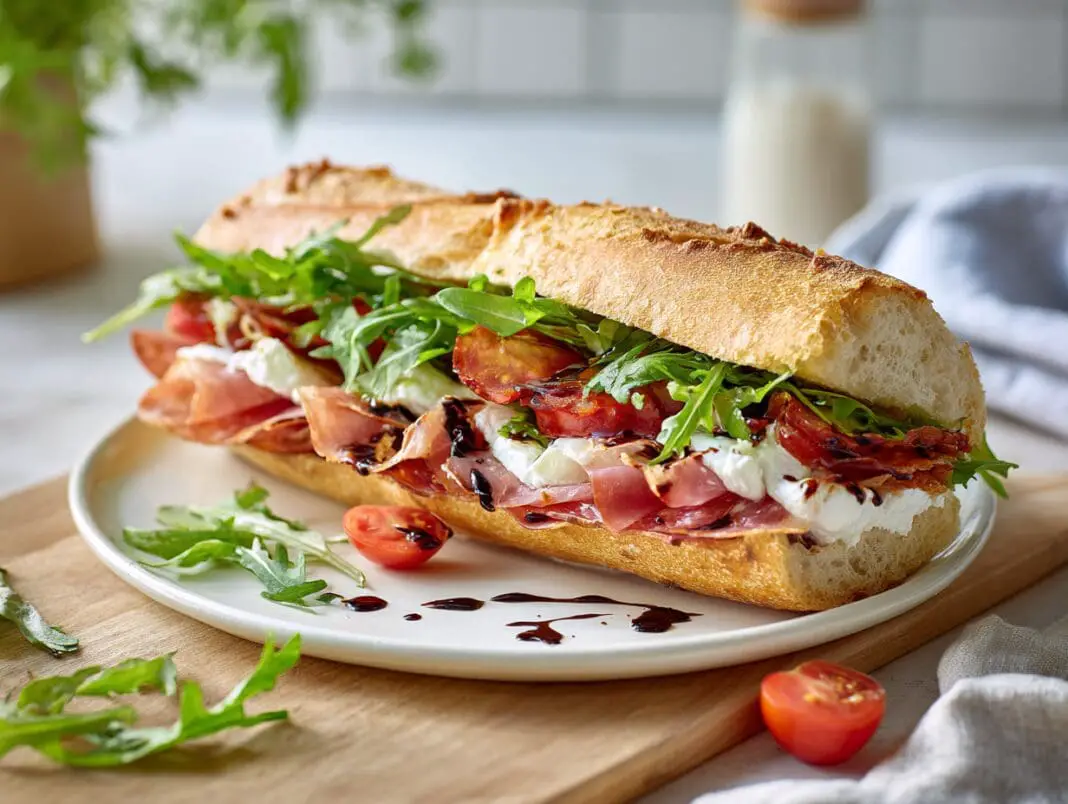
On July 15, 2025, somewhere over the eastern United States at 35,000 feet, a sandwich was served aboard Air Force One that had no business being as simple as it was. Three Italian cured meats, a smear of pesto, a ball of burrata, and a baguette. That’s basically it. Margo Martin, a communications advisor to President Trump, shared the lunch menu on her Instagram Story, and food writers lost their minds. Not because it was fancy — because it wasn’t. It was a really good Italian sandwich, the kind you’d build at home on a Saturday if you had twenty minutes and a decent deli counter nearby.
The sandwich is called the Italian Trio, and its name comes from the three meats layered inside: prosciutto, salami, and soppressata. Pair those with burrata cheese, pesto, blistered tomatoes, arugula, and a drizzle of balsamic glaze, all packed into a crusty French baguette, and you’ve got something that works just as well in your kitchen as it does in a presidential galley. I’ve been making versions of this since the story broke, tweaking it here and there, and I want to walk you through exactly how to nail it at home — plus a few things I’ve learned along the way about what makes this particular combination click.
Why These Three Meats Matter
You could throw any three Italian deli meats on bread and call it a trio, but there’s a reason this specific combination works. Each meat brings something different. Prosciutto is salt-cured from the hind leg of a pig, never cooked, and sliced so thin it practically dissolves on your tongue. It’s delicate, silky, and mildly salty. True Prosciutto di Parma is aged for at least 12 months, sometimes up to 36. That long aging process breaks down the proteins and creates a buttery texture you can’t replicate with any other meat.
Salami, on the other hand, is ground pork mixed with fat, salt, and spices, stuffed into casings and fermented. The fermentation gives it that familiar tangy bite and firm chew. It’s the workhorse of the sandwich — the meat that gives you something to sink your teeth into.
Then there’s soppressata, which is technically a type of salami but different enough to deserve its own spotlight. It uses a coarser grind of pork, so when you slice it you see visible chunks of meat and fat. It’s pressed flat during curing — the name literally translates to “to press” in Italian — which gives it that distinctive oblong shape instead of the perfect circle you get with regular salami. The flavor is bolder and more peppery, often made with black peppercorns and sometimes red pepper flakes. It matches beautifully with the juicy sweetness of blistered tomatoes.
Together, you get soft and silky (prosciutto), firm and tangy (salami), and bold and rustic (soppressata). Three textures, three flavor profiles, one sandwich. It’s not accidental — it’s smart.
The Burrata Situation
Let’s talk about burrata, because this is where people get tripped up. Burrata looks like a ball of fresh mozzarella from the outside, but when you cut it open, the inside is filled with soft, creamy stracciatella — shreds of mozzarella suspended in cream. It’s rich, luscious, and a little messy. That messiness is the point. When you tear it open and spread it on the baguette, it creates this creamy base layer that the meats and arugula sit on top of.
Most larger grocery stores — Whole Foods, Trader Joe’s, and even many Kroger and Publix locations — carry burrata now, usually in the specialty cheese section near the fresh mozzarella. It typically comes packed in water or whey in a small plastic container. It does cost more than regular mozzarella, usually around $6-$9 for an 8-ounce ball. If that’s not in the budget, or your store just doesn’t carry it, fresh mozzarella is a perfectly good substitute. You won’t get that creamy interior burst, but you’ll still get a mild, milky cheese that lets the meats and pesto do their thing. Just slice it instead of tearing it.
How To Blister Tomatoes Without Overthinking It
Blistered tomatoes sound restaurant-fancy, but they’re about four minutes of actual work. Grab a pint of cherry or grape tomatoes — whatever looks good at the store. Heat a tablespoon of olive oil in a skillet over medium-high heat until it just starts to shimmer. Toss the tomatoes in, sprinkle with a pinch of salt, and leave them alone. Don’t stir them constantly. Let them sit and get charred on one side, then give them a shake or a flip. You want the skins blistered and starting to split, with some of the juices leaking out, but you don’t want them turning to mush. Two to four minutes total.
The key mistake people make is crowding the pan. If you pile too many tomatoes in at once, they steam instead of blister. Use a wide skillet and give them room. A 10- or 12-inch pan for a pint of tomatoes is about right. Once they’re done, slide them onto a plate and let them cool for a minute before adding them to your sandwich. You don’t want to melt the burrata prematurely with screaming hot tomatoes — although honestly, slightly warm tomatoes against cool, creamy cheese isn’t the worst thing that could happen.
Picking the Right Bread
The Air Force One version uses a French baguette, which is a slightly unexpected choice for an Italian sandwich. Traditional Italian subs usually go with ciabatta or focaccia. But a baguette actually makes a lot of sense here. The thin, crackly crust gives you a satisfying crunch, and the interior is airy enough that it doesn’t overwhelm the fillings. A thick, doughy roll would compete with the burrata and meats. You want the bread to be a vehicle, not the main event.
Buy the best baguette you can find. The bakery section of your grocery store is fine — just make sure it actually has a crisp crust when you squeeze it. If it feels soft and squishy all around, skip it. A good baguette should crackle slightly when you press it. If you want to refresh a baguette that’s been sitting out for a few hours, run it under the faucet for two seconds, then pop it in a 375°F oven for five minutes. It’ll crisp right back up.
Italian subs have been an American staple since at least 1899, when an Italian immigrant baker named Giovanni Amato started making them in Portland, Maine for road construction workers who needed a quick, filling lunch. Whether you call it a sub, hoagie, grinder, or hero depends on where you grew up. But the principle is the same: good bread, good meat, good toppings, don’t mess it up.
Building the Sandwich
Order of operations matters here. Start by splitting the baguette lengthwise, but don’t cut all the way through — leave a hinge. Spread pesto on the bottom half. I use about two tablespoons per sandwich. Store-bought pesto from a jar works great; Rao’s, DeLallo, and Kirkland (Costco) all make good ones. If it’s been in the fridge and is a little stiff, let it come to room temperature for a few minutes so it spreads easily.
Next, tear your burrata and spread it over the pesto. Then layer the meats. I like to fold each slice loosely rather than laying them flat — you get better texture and more air pockets, which makes every bite a little different. Go prosciutto first, then salami, then soppressata. Add the blistered tomatoes, pressing them gently so they nestle into the meat. Top with a handful of fresh arugula, then finish with a drizzle of balsamic glaze. Not balsamic vinegar — balsamic glaze, which is thicker, sweeter, and won’t make your bread soggy.
Close the sandwich gently and press it down just enough to hold together. Cut it in half or into sections, depending on how long your baguette is.
A Few Things I’d Do Differently Than Air Force One
Look, the Air Force One kitchen is impressive — two full galleys that can serve up to 100 meals at a time, professional-grade appliances, and trained military chefs who prep and vacuum-seal everything at Joint Base Andrews in Maryland before it ever gets on the plane. But I think there are a couple of small upgrades that make this sandwich even better at home, where you’re not trying to feed a press corps at 35,000 feet.
First, I’d toast the baguette cut-side down in a dry skillet for about 90 seconds before building. It creates a barrier that keeps the pesto and burrata from making the bread soggy, and adds another layer of crunch. Second, I’d add a very light drizzle of good extra-virgin olive oil and a crack of black pepper over the arugula before closing. It seasons the greens and ties the whole thing together. Third — and this is optional — a few thin slices of pepperoncini tucked in with the arugula add a bright, vinegary heat that cuts through all that rich meat and cheese beautifully.
Common Mistakes To Avoid
The biggest one: buying pre-sliced deli meat from those sealed plastic packages instead of getting it sliced fresh at the counter. The difference in flavor and texture is enormous, especially with prosciutto. Pre-packaged prosciutto is often too thick and rubbery. Ask the deli counter to slice it paper-thin. You should be able to almost see through it.
Second mistake: skipping the balsamic glaze or substituting regular balsamic vinegar. They’re different products. The glaze is reduced and syrupy. The vinegar is thin and acidic. Vinegar will run everywhere and soak into the bread. Glaze clings to the arugula and tomatoes. You can find it in the vinegar aisle at most grocery stores — DeLallo and Colavita both make good ones for around $5.
Third: don’t overdress this sandwich. It’s tempting to pile everything on, but restraint is what makes it work. Two or three slices of each meat per sandwich, not a quarter pound of each. A handful of arugula, not a salad’s worth. One ball of burrata split between two sandwiches. Let each ingredient have its say.
Frequently Asked Questions
Q: Can I make this sandwich ahead of time?
A: You can prep the components — blister the tomatoes, slice the meats, wash the arugula — but I wouldn’t assemble it more than about 30 minutes before eating. The baguette will get soggy from the burrata and tomato juices if it sits too long. If you’re packing it for lunch, keep the wet ingredients separate and build it when you’re ready to eat.
Q: What can I use instead of soppressata if my store doesn’t carry it?
A: Capicola (also called capocollo or gabagool, depending on who you ask) is a great substitute. It’s a cured pork cold cut made from the neck or shoulder, with a slightly spicy, smoky flavor. Hot capicola would add a nice kick. You could also use a hard Genoa salami, though you’d lose some of the textural contrast that soppressata provides.
Q: Is there a vegetarian version of this sandwich?
A: You could skip the meats entirely and lean into the burrata, pesto, blistered tomatoes, and arugula — that’s honestly a fantastic sandwich on its own. Add roasted red peppers, marinated artichoke hearts, or grilled zucchini to fill it out. You’ll lose the salty, savory depth of the cured meats, but the burrata and pesto carry a lot of weight.
Q: What wine or drink goes well with this sandwich?
A: A crisp, dry white wine like Pinot Grigio or Vermentino is a natural pairing. If you prefer red, a light Chianti works without overpowering the delicate prosciutto. For non-wine drinkers, a cold sparkling water with lemon or a citrusy IPA both pair nicely with the salty meats and creamy cheese.
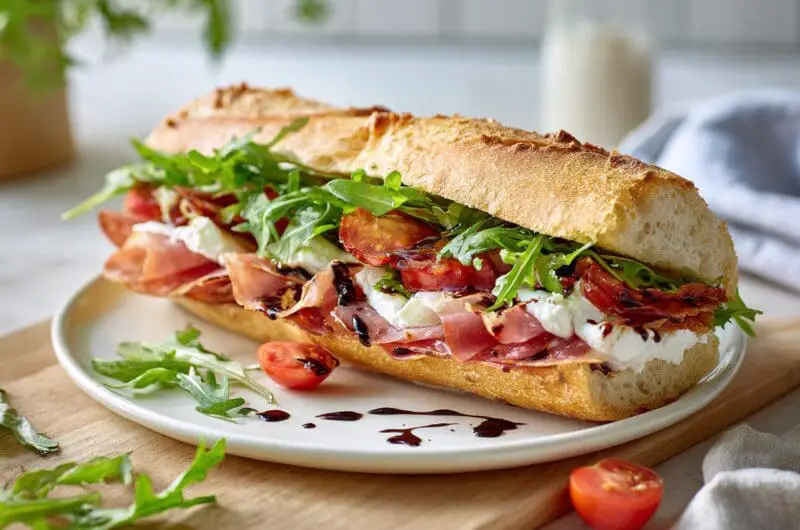
Italian Trio Sandwich (Air Force One Style)
Course: LunchCuisine: Italian2
sandwiches10
minutes5
minutes580
kcalThis Italian Trio sandwich packs prosciutto, salami, soppressata, burrata, pesto, and blistered tomatoes into a crusty baguette — the same combination served aboard Air Force One.
Ingredients
1 French baguette (about 24 inches long)
4 thin slices prosciutto (about 2 ounces)
6 slices Genoa salami (about 2 ounces)
6 slices soppressata (about 2 ounces)
1 ball burrata cheese (8 ounces), or fresh mozzarella
1 pint cherry or grape tomatoes
2 tablespoons basil pesto
2 handfuls fresh arugula
1 tablespoon balsamic glaze, plus 1 tablespoon olive oil, salt and black pepper
Directions
- Heat 1 tablespoon of olive oil in a 10- or 12-inch skillet over medium-high heat until it shimmers. Add the cherry tomatoes in a single layer and sprinkle with a pinch of salt. Let them cook undisturbed for about 2 minutes until charred on one side, then shake the pan and cook another 1-2 minutes until the skins blister and begin to split. Transfer to a plate and let cool slightly.
- Cut the baguette in half crosswise to create two sandwich-length pieces. Split each piece lengthwise, leaving a hinge along one side so the bread opens like a book. If you want extra crunch, place the baguette halves cut-side down in a dry skillet over medium heat for about 90 seconds until lightly toasted.
- Spread about 1 tablespoon of pesto on the bottom half of each baguette piece. Make sure it reaches the edges so every bite has some pesto flavor. Store-bought pesto works perfectly here — just let it come to room temperature so it spreads easily.
- Tear the burrata ball in half and spread one half on the bottom of each sandwich, directly over the pesto. Use the back of a spoon or your fingers to gently spread the creamy interior across the bread. Don’t worry about being neat — the messiness is part of the appeal.
- Layer the prosciutto slices on top of the burrata, folding them loosely so they create ruffles and air pockets rather than lying flat. Follow with the salami slices and then the soppressata, distributing evenly between the two sandwiches.
- Arrange the blistered tomatoes over the meats, pressing them gently so they nestle into the layers. Some of the tomatoes will have burst open and released their juices — that’s what you want. Those juices soak into the meat and add a sweet, concentrated flavor.
- Top each sandwich with a handful of fresh arugula. Drizzle the balsamic glaze over the arugula in a thin zigzag pattern. If you like, add a light drizzle of extra-virgin olive oil and a crack of black pepper over the greens as well.
- Close the sandwiches and press down gently but firmly to compress everything together. Cut each sandwich in half on a slight diagonal. Serve immediately while the baguette is still crusty and the burrata is cool and creamy.
Notes
- If you can’t find soppressata, hot capicola is the best substitute. It gives you a similar peppery kick and holds up well against the other meats.
- Use balsamic glaze, not balsamic vinegar. The glaze is thicker and sweeter and won’t soak into the bread. DeLallo and Colavita both make good store-bought options.
- Don’t assemble more than 30 minutes before eating. The burrata and tomato juices will make the baguette soggy if it sits too long. Prep the components ahead and build right before serving.

