

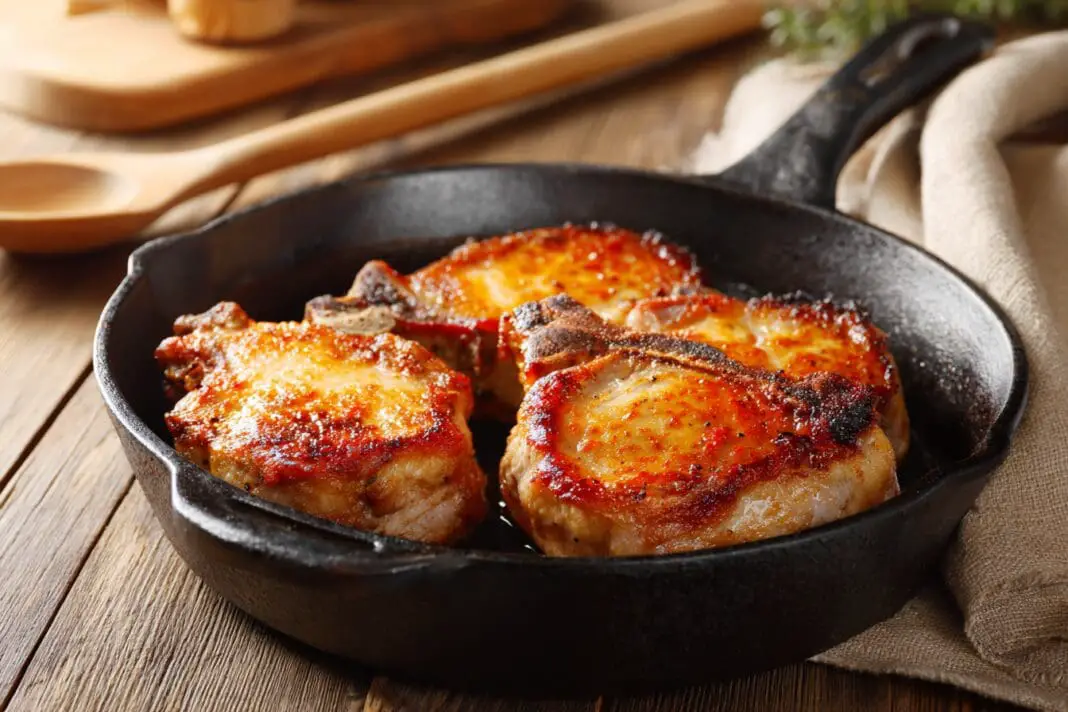
Pork chops have a reputation for being dry and tough, but there’s one simple ingredient that changes everything. Adding flour to your pork chops before cooking creates a tender, juicy result that’s almost impossible to mess up. This technique works by sealing in moisture and creating a beautiful golden crust that keeps the meat from drying out. It’s the same trick professional cooks use, but you don’t need any fancy equipment or skills to make it work in your own kitchen.
Why flour makes all the difference
When you coat pork chops in flour before cooking, you’re doing more than just adding a coating. The flour absorbs surface moisture from the meat, which helps it develop that perfect sear when it hits the hot pan. This sear locks in all the juices inside the pork chop, preventing them from escaping during cooking. Without this flour coating, moisture evaporates quickly, leaving you with dry, tough meat that nobody wants to eat. The flour also creates tiny pockets that trap steam between the coating and the meat, essentially helping the pork chop steam itself while it cooks.
The science behind this is pretty straightforward. Flour contains starches that gelatinize when heated with moisture, forming a protective barrier around the meat. This barrier browns beautifully in hot oil, developing complex toasted notes that make your pork chops taste restaurant-quality. Even just one tablespoon of flour mixed with your seasonings makes a noticeable difference. The coating doesn’t need to be thick or heavy, just a light dusting is enough to transform your pork chops from ordinary to outstanding.
Picking the right pork chops matters
Not all pork chops are created equal, and thickness makes a huge difference in how they turn out. Look for chops that are at least one inch thick, whether boneless or bone-in. Thin chops cook too quickly and dry out before the flour coating can do its job. Bone-in chops tend to stay slightly juicier because the bone helps regulate temperature and adds a bit more taste, but boneless works perfectly fine too. At the grocery store, don’t be afraid to ask the butcher to cut chops to your preferred thickness if the pre-packaged ones look too thin.
The color of the meat tells you about freshness. Fresh pork chops should be pinkish-red, not gray or brown. Check the sell-by date and choose packages that feel cold to the touch. If your chops have a thick fat cap on one edge, that’s actually good because you can render it down in the pan for extra richness. Room temperature matters too – taking your chops out of the fridge about thirty minutes before cooking helps them cook more evenly throughout. Cold meat straight from the refrigerator tends to cook unevenly, with the outside overdone before the inside reaches the right temperature.
Mixing flour with the right seasonings
Plain flour works, but mixing it with seasonings takes your pork chops to another level. A simple blend of garlic powder, onion powder, paprika, and black pepper transforms that flour coating into something special. The paprika adds a beautiful reddish-brown color to the crust, while garlic and onion powder bring savory depth. Some people like adding a pinch of cayenne for heat or dried thyme for an herby note. The key is mixing these spices thoroughly with the flour before coating your meat so every bite gets consistent seasoning.
You can customize the spice blend based on what you have in your pantry. Smoked paprika adds a subtle smoky taste that pairs wonderfully with pork. A teaspoon of chili powder brings earthy warmth without too much spice. Italian seasoning works if you’re planning to serve the chops with pasta or tomato-based sides. Just remember that the flour coating is thin, so you want bold seasonings that won’t get lost. Mix everything in a shallow bowl or plate so you have plenty of room to coat the pork chops on both sides without making a mess.
The coating technique that actually works
Before you coat your pork chops in flour, pat them completely dry with paper towels. This step seems small but makes a big difference. Wet meat won’t hold onto the flour mixture properly, and you’ll end up with a gummy coating instead of a crispy crust. Once they’re dry, season both sides with salt and let them sit for a few minutes. The salt draws out a tiny bit of moisture, which then dissolves the salt and carries it into the meat for better seasoning throughout. After salting, pat them dry one more time.
Now press each pork chop into your flour mixture, making sure to coat both sides evenly. Press gently but firmly so the flour adheres well. Shake off any excess flour – you want a light, even coating, not clumps. Some people like to let the coated chops sit for five minutes before cooking, which helps the flour stick even better and creates a more cohesive crust. If you’re cooking multiple chops, coat them all before you start cooking so you’re not rushing at the stove. Having everything ready means you can focus on getting that perfect golden-brown sear.
Getting your pan hot enough
Temperature control separates good pork chops from great ones. Heat your skillet over medium-high heat with a tablespoon of oil until it’s really hot and shimmery. The oil should shimmer and move easily around the pan when you tilt it. If the pan isn’t hot enough, the flour coating will absorb oil and turn soggy instead of crisping up. Test the temperature by flicking a tiny pinch of flour into the oil – it should sizzle immediately. Avocado oil works great because it has a high smoke point, but vegetable oil or canola oil work fine too.
Once your pan is properly heated, add the pork chops carefully to avoid splashing hot oil. Don’t move them around or flip them too soon. Let them cook undisturbed for two to three minutes until they develop a deep golden-brown crust on the bottom. You’ll know they’re ready to flip when they release easily from the pan. If they stick, they need another minute. After flipping, here’s where the magic happens: reduce the heat to low and cover the skillet with a lid. This creates a gentle steaming environment that cooks the chops through without drying them out.
The cover and steam method
Covering the pan after you flip the pork chops is a game-changer that most home cooks don’t know about. When you trap the heat and moisture under a lid, you create a mini-oven effect right on your stovetop. The chops continue cooking from the heat below while also steaming from the trapped moisture above. This dual cooking method ensures the inside gets fully cooked without the outside becoming tough or overdone. It’s basically the same principle as braising but much faster and simpler.
Keep the heat on low and let the chops cook for six to twelve minutes depending on thickness. A one-inch chop usually needs about eight minutes total. Don’t lift the lid constantly to check them or you’ll release all that trapped steam. Instead, check them once after about five minutes by inserting an instant-read thermometer into the thickest part. You’re aiming for an internal temperature of 145°F. Modern food safety guidelines say pork is safe at this temperature, and it keeps the meat slightly pink and incredibly juicy instead of gray and dry. Once they hit 145°F, take them off the heat immediately.
Resting makes a bigger difference than you think
After cooking, resist the urge to cut into your pork chops right away. Transfer them to a clean plate and cover loosely with aluminum foil for five minutes. During cooking, heat forces the juices toward the center of the meat. If you cut immediately, all those juices run out onto the plate instead of staying in the meat where they belong. Resting gives the juices time to redistribute evenly throughout the chop, making every bite moist and tender. This short wait is the difference between pretty good pork chops and absolutely perfect ones.
While your chops rest, you can make a quick pan sauce if you want to get fancy. The browned bits stuck to the bottom of your pan are packed with concentrated pork and spice taste. Add some chicken broth, a splash of apple cider vinegar, and a teaspoon of honey to the hot pan. Scrape up those browned bits with a wooden spoon as the liquid simmers and reduces by half. Swirl in a tablespoon of butter at the end for richness and gloss. Pour this sauce over your rested pork chops or serve it on the side for dipping.
Common mistakes that ruin pork chops
The biggest mistake is cooking pork chops to 160°F or higher because that’s what older guidelines recommended. Modern pork is much safer than it used to be, and cooking it past 145°F just dries it out unnecessarily. Another common error is using too much flour, which creates a thick, doughy coating instead of a delicate crust. You want just enough flour to create a light layer, not a breading. Crowding the pan also causes problems because it drops the temperature and makes the chops steam instead of sear. Cook them in batches if needed, giving each chop plenty of space.
Flipping the chops multiple times is another mistake that prevents proper browning. Flip them once and only once. Moving them around constantly means they never develop that beautiful golden crust. Using low-quality oil with a low smoke point can make your kitchen smoky and give the meat an off taste. Stick with oils that can handle high heat like avocado, vegetable, or canola. Finally, forgetting to bring the meat to room temperature before cooking leads to uneven results with a cold center and overcooked edges. These small adjustments make a huge difference in the final result.
What to serve alongside your perfect chops
Pork chops pair beautifully with simple sides that don’t compete with the meat. Mashed potatoes are classic for a reason – they’re creamy, comforting, and perfect for soaking up any pan sauce. Roasted vegetables like asparagus, green beans, or Brussels sprouts add color and nutrition without much effort. Just toss them with olive oil, salt, and pepper, then roast at 425°F while your chops cook. Coleslaw adds a nice crunch and acidity that cuts through the richness of the pork. Make it from scratch or grab a bag of pre-shredded cabbage and toss it with your favorite dressing.
For something different, try serving your pork chops over rice or with crusty bread to soak up the sauce. Sautéed cabbage with garlic makes a quick, tasty side that’s ready in minutes. Apple sauce is traditional with pork for good reason – the sweetness and acidity complement the savory meat perfectly. A simple green salad keeps things light and fresh. The beauty of perfectly cooked pork chops is that they’re so good on their own, you don’t need fancy sides. Keep it simple and let the meat be the star of the plate.
Cooking perfect pork chops isn’t complicated once you know the trick. A light coating of seasoned flour, proper heat management, and a few minutes of patience give you restaurant-quality results at home. The next time you’re standing in front of a package of pork chops wondering if they’ll turn out dry and disappointing, remember that one tablespoon of flour makes all the difference. Give this method a try and you’ll never go back to plain, unseared pork chops again.

Perfect Skillet Pork Chops with Flour Coating
Course: DinnerCuisine: American4
servings30
minutes15
minutes369
kcalThese incredibly juicy pork chops get their tender texture from a simple flour coating that locks in moisture and creates a beautiful golden crust.
Ingredients
4 boneless pork chops, about 6 ounces each and 1-inch thick
Salt, to taste (about 1/4 teaspoon per chop)
1 tablespoon all-purpose flour
1 teaspoon chili powder
1 teaspoon garlic powder
1 teaspoon onion powder
1/2 teaspoon smoked paprika
1/2 teaspoon ground black pepper
1 tablespoon avocado oil or vegetable oil
1 cup low-sodium chicken stock (for optional pan sauce)
1 tablespoon apple cider vinegar (for optional pan sauce)
2 teaspoons honey (for optional pan sauce)
1 tablespoon butter (for optional pan sauce)
Directions
- Remove the pork chops from the refrigerator and place them on a plate. Season both sides of each chop generously with salt, using about 1/4 teaspoon per chop. Let the salted chops sit at room temperature for 30 minutes, which allows them to cook more evenly and helps the salt penetrate the meat for better seasoning throughout.
- While the pork chops come to room temperature, prepare your spice mixture. In a shallow bowl or plate, combine the flour, chili powder, garlic powder, onion powder, smoked paprika, and black pepper. Mix everything together thoroughly with a fork until the spices are evenly distributed throughout the flour. This ensures every part of the coating will be well-seasoned.
- After the 30-minute rest, pat both sides of each pork chop completely dry using paper towels. This step is essential for achieving a crispy crust. Press each chop firmly into the flour mixture on both sides, making sure to coat evenly. Shake off any excess flour so you have a light, even coating rather than thick clumps.
- Heat the oil in a large skillet that has a lid over medium-high heat. Wait until the oil is very hot and shimmery before adding the pork chops. Carefully place the chops in the pan without crowding them, and cook without moving them for 2 to 3 minutes until they develop a deep golden-brown crust on the bottom.
- Flip the pork chops so the seared side is facing up. If your chops have a thick fat cap on the edge, use tongs to hold them upright for about 30 seconds so the fat renders and browns nicely. Immediately reduce the heat to low and cover the skillet with a lid to trap the heat and moisture inside.
- Cook the covered chops for 6 to 12 minutes depending on their thickness, checking for doneness starting at the 5-minute mark. Insert an instant-read thermometer into the thickest part of each chop, and remove them when they reach an internal temperature of 145°F. If your chops vary in thickness, remove the thinner ones first and let the thicker ones cook a bit longer.
- Transfer the cooked pork chops to a clean plate and cover them loosely with aluminum foil. Let them rest for 5 minutes, which allows the juices to redistribute throughout the meat for maximum tenderness and moisture in every bite.
- If making the optional pan sauce, increase the heat under the skillet to medium-high and add the chicken stock, apple cider vinegar, and honey. Bring to a simmer, scraping up all the browned bits from the bottom of the pan with a wooden spoon. Let the sauce reduce by about half, then slide the pan off the heat and swirl in the butter until it melts. Return the rested pork chops to the pan, spooning the sauce over them, or slice the chops and toss them in the sauce before serving.
Notes
- For thicker chops (over 1 inch), you may need to add a minute or two of cooking time under the lid. Always rely on your thermometer rather than timing alone.
- Bone-in pork chops work great with this method too, though they’ll need an extra minute or two of covered cooking time.
- If you don’t have all the spices listed, you can use your favorite store-bought seasoning blend mixed with the flour instead.
- For a gluten-free version, substitute cornstarch for the flour. It creates a slightly different texture but still works well.
- Leftover cooked pork chops can be stored in an airtight container in the refrigerator for up to 3 days. Reheat gently to avoid drying them out.
Frequently asked questions
Q: Can I use this flour method with thin pork chops?
A: You can, but thin chops cook so quickly that they’re more prone to drying out even with the flour coating. If you only have thin chops, reduce the cooking time significantly and watch them carefully. They may only need 2-3 minutes per side total.
Q: What if I don’t have a lid for my skillet?
A: You can use a large piece of aluminum foil to cover the pan instead. Just crimp it around the edges to trap the steam inside. A baking sheet placed over the top also works in a pinch.
Q: Can I prepare the flour coating ahead of time?
A: Absolutely. Mix your seasoned flour and store it in an airtight container for up to a month. This makes weeknight cooking even faster since your coating is ready to go whenever you need it.
Q: Why did my flour coating turn out gummy instead of crispy?
A: This usually happens when the pork chops weren’t dried properly before coating, or when the pan wasn’t hot enough before adding the meat. Make sure to thoroughly pat the chops dry and wait for the oil to shimmer before cooking.

