

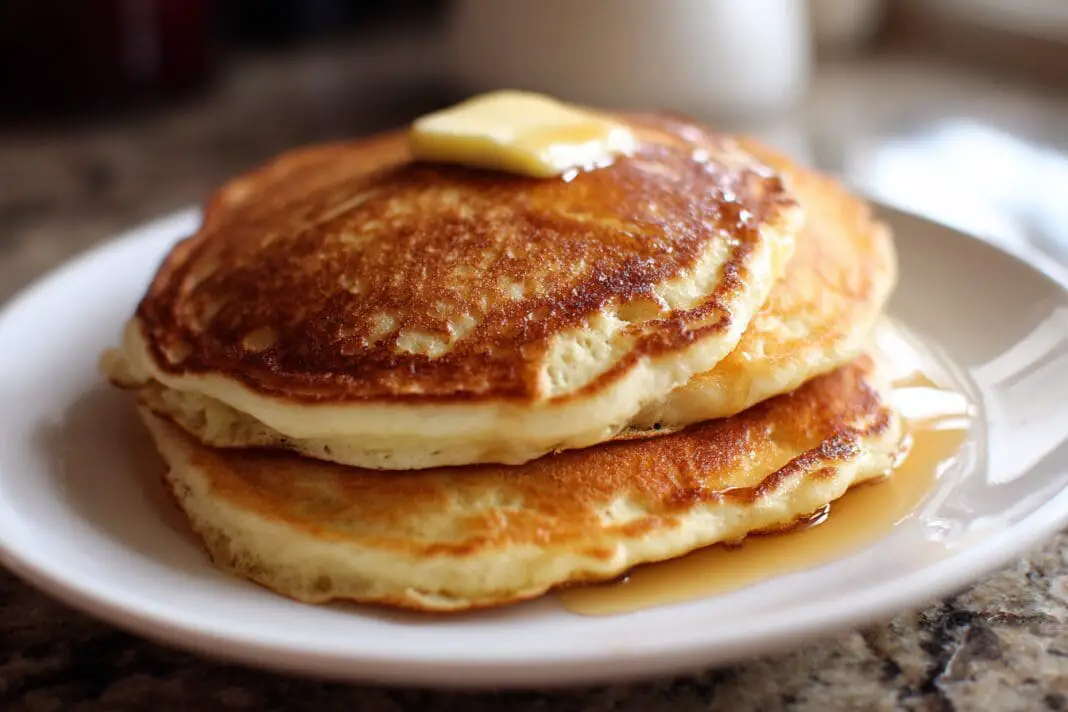
That Saturday morning when you’re standing at the stove, spatula in hand, nervously checking and flipping your pancakes over and over because you’re not sure if they’re done? That’s exactly what’s ruining them. Most people think the more they flip, the better their pancakes will turn out. The opposite is actually true. Flipping pancakes more than once destroys their texture, makes them dry, and turns what should be a fluffy breakfast into a flat disappointment. One confident flip is all it takes, but getting there means understanding what’s actually happening in that pan.
Steam escapes every time you flip
When pancake batter hits a hot pan, something important starts happening immediately. The heat causes moisture in the batter to turn into steam, and that steam is what keeps the inside of your pancake soft and tender. Each time you lift that spatula and flip the pancake over, some of that precious steam escapes into the air instead of staying trapped inside where it belongs. Think of it like opening the oven door while baking cookies. All that carefully built-up heat rushes out, and your food suffers for it.
The first flip is necessary and planned for in the cooking process. The second, third, or fourth flip? Those are just letting more and more moisture escape until you end up with a pancake that’s dense and dry instead of light and airy. Professional cooks know this, which is why they flip exactly once and walk away. The pancake needs that steam to stay trapped inside, creating those air pockets that make breakfast worth waking up for. Once you understand this basic principle, your whole approach to pancake making changes.
Multiple flips deflate the batter
Pancake batter rises because of baking powder or baking soda. These leavening agents create tiny bubbles throughout the batter, and when heat hits them, those bubbles expand and set in place. That’s what gives pancakes their signature fluffy texture. But here’s the thing about those bubbles: they’re delicate. When you flip a pancake the first time, most of those bubbles are still forming and expanding. They can handle one flip because they’re getting ready to set permanently on the second side.
Every additional flip after that first one collapses those carefully formed air pockets. The batter hasn’t fully set yet, so flipping repeatedly just squashes all that rise back down. It’s like trying to re-inflate a balloon that’s already been popped. The structure is damaged, and no amount of additional cooking will bring back that height. This is why some pancakes come out thick and fluffy while others end up flat as cardboard, even when using the exact same batter. The difference isn’t in the recipe but in the handling.
The golden-brown crust gets ruined
That beautiful golden color on a perfect pancake isn’t just for show. It comes from something called the Maillard reaction, which is a fancy way of describing what happens when proteins and sugars react to heat. This reaction creates hundreds of different compounds that give pancakes their rich, slightly sweet, toasted taste. But the Maillard reaction needs time and consistent heat to work properly. When you flip a pancake once, each side gets its full time in contact with the hot pan to develop that color and those complex cooked notes.
Flip it multiple times, and neither side gets enough uninterrupted contact with the heat. You end up with pale, patchy spots instead of an even golden surface. Some parts might even burn while others stay undercooked because the temperature never stabilizes. Each time you remove the pancake from the pan and put it back down, it loses heat and has to start the browning process all over again. That’s why restaurant pancakes often look so much better than homemade ones. Professional cooks pour the batter, wait for the signal, flip once, and serve.
Wait for the bubbles before flipping
So when exactly should you flip? The answer is written right on the surface of the pancake itself. After pouring the batter into the pan, just leave it alone. Resist the urge to peek underneath or test the edges. Within a minute or two, small bubbles will start forming on top of the batter. At first, there will only be a few, and they’ll still be popping and disappearing. That’s not the signal yet. Keep waiting until you see bubbles forming all across the surface, and some of them start to stay open instead of closing back up.
When the edges look set and bubbles have formed across most of the top, that’s your moment. Slide your spatula underneath, and in one smooth motion, flip the pancake over. The bottom should be golden brown, and the top will still look a bit wet and uncooked. That’s perfect. Now leave it alone for another one to two minutes. Don’t press down on it with the spatula. Don’t peek at the bottom. Just let it finish cooking. Those bubbles were telling you that the first side was done and the inside was cooked enough to handle being flipped.
Medium heat prevents premature flipping
One reason people flip pancakes multiple times is because they’ve cooked them over heat that’s too high. When the pan is too hot, the bottom burns quickly while the middle stays raw. This makes you think you need to keep flipping to somehow even things out. The real solution is using medium heat from the start. If you’re using a stovetop, medium heat is usually around the middle setting on your dial. For an electric griddle, that’s somewhere around 350 degrees Fahrenheit.
Medium heat gives the pancake time to cook through properly. The outside browns at the same rate that the inside cooks, so by the time you see those bubbles forming, the whole pancake is almost done. After flipping once, just another minute or two finishes it perfectly. High heat creates a burnt exterior and gummy interior, leading to panic flipping. Low heat takes forever and can make pancakes tough and dry because they’re on the heat too long. Getting the temperature right from the beginning eliminates the temptation to flip multiple times because everything cooks evenly.
Over-flipping makes pancakes tough
Pancakes should be tender enough to cut with the side of a fork. When they come out tough and rubbery, flipping too much is often the culprit. Each time you flip, you’re essentially cooking the outside longer while the inside tries to catch up. This extended cooking time on the exterior causes the proteins in the flour to form more gluten, and more gluten means a tougher, chewier texture. It’s the same principle behind why kneading bread dough makes it elastic and chewy, which is great for bread but terrible for pancakes.
Pancake batter should be mixed gently and cooked quickly to minimize gluten development. One flip maintains that tender texture. Multiple flips keep working those proteins, making them tighter and tougher with each turn. Even worse, if you’re pressing down on the pancake with your spatula while flipping, you’re squeezing out moisture and compacting everything into a dense, hockey-puck-like disc. The best pancakes are handled minimally. Pour, wait, flip, wait, serve. That’s it. Anything more is just working against yourself.
The pancake structure breaks apart
Ever had a pancake fall apart on you mid-flip? That usually happens because it’s been flipped too early or too many times. When you flip a pancake at the right moment, the bottom has set enough to hold together, but the top is still slightly liquid. That liquid top then hits the pan and finishes cooking, creating a solid structure throughout. But if you flip before the bottom has properly set, or if you keep flipping after both sides have started to cook, the structure becomes weak and unstable.
Think of it like building with blocks. If the foundation isn’t solid before you add the next layer, everything topples. Each flip before the pancake is ready damages the protein structure that’s trying to form. Multiple flips mean the pancake never gets a chance to fully set on either side. You end up with a broken, torn mess that looks more like scrambled pancakes than a proper round. Using a good wide spatula helps, but even the best tools can’t save a pancake that’s been flipped too often. Let each side cook completely, and your pancakes will hold together beautifully.
Patience creates better pancakes
Making perfect pancakes is less about technique and more about restraint. The hardest part isn’t flipping them correctly but leaving them alone while they cook. When you’re standing there with your spatula, watching that batter spread out in the pan, the urge to do something is almost overwhelming. Check the bottom. Adjust the position. Flip it early just to see. All of these impulses lead to worse pancakes. The best thing you can do is pour the batter and then step back.
Set a timer if you need to. Walk away and pour yourself some coffee. Trust that the pancake knows what it’s doing. When those bubbles appear and the edges firm up, that’s when you act. One smooth flip, then another minute or two, and breakfast is ready. Pancakes are forgiving of many mistakes, but constant interference isn’t one of them. The cooks who make the best pancakes are the ones who resist the urge to keep messing with them. Pour, wait, flip once, wait again, serve. That’s the entire process.
Practice makes the single flip automatic
The first few times you commit to flipping just once, it feels wrong. You’ll second-guess yourself constantly. Is the bottom burning? Is the middle cooked? Should I check? Ignore all of that. Make a batch of pancakes where you flip each one only once, no matter what. Even if you think you flipped too early or too late, stick with it. What you’ll find is that most of them turn out perfectly fine, and even the ones that don’t are still better than over-flipped pancakes.
After making pancakes this way a few times, you’ll start to recognize exactly when to flip without thinking about it. Your eyes will automatically spot the bubble pattern that means it’s time. Your hand will know how the spatula should slide under a ready pancake. The one-flip method becomes second nature, and your pancakes get consistently better. It’s similar to learning to ride a bike. At first, you overthink every movement, but eventually, your body just knows what to do. Pancakes are the same way. Trust the process, keep practicing, and soon you’ll wonder why you ever flipped more than once.
Next time you make pancakes, challenge yourself to flip each one exactly once. Watch for the bubbles, wait for the edges to look set, then commit to that single flip. The difference in texture, rise, and appearance will be immediately obvious. Your pancakes will be fluffier, more evenly cooked, and far more satisfying. It only takes one batch to prove that less really is more when it comes to flipping pancakes.
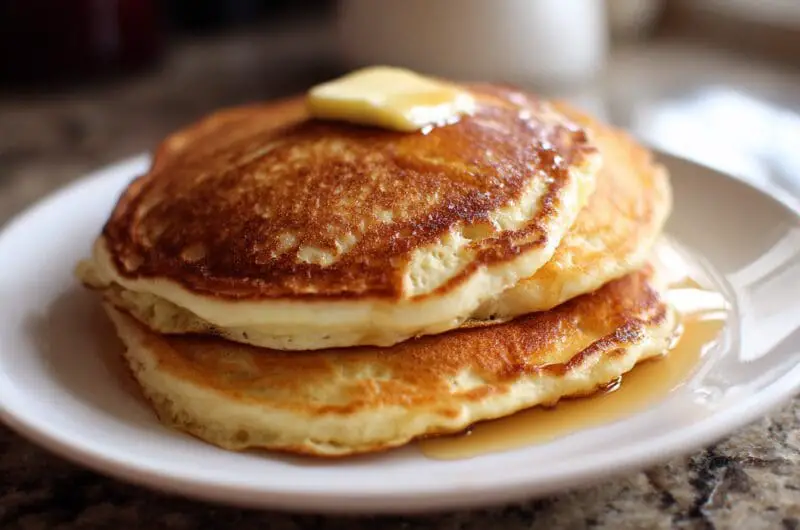
Perfect One-Flip Pancakes
Course: BreakfastCuisine: American10
servings5
minutes10
minutes120
kcalThese classic pancakes are fluffy, golden, and incredibly easy when you master the art of flipping just once.
Ingredients
1 ½ cups all-purpose flour
3 ½ teaspoons aluminum-free baking powder
½ teaspoon salt
1 tablespoon granulated sugar
1 ¼ cups whole milk
1 large egg
3 tablespoons unsalted butter, melted
Additional butter or oil for the pan
Directions
- Whisk together the flour, baking powder, salt, and sugar in a large bowl until well combined. Make a well in the center of the dry ingredients. This helps when mixing the wet ingredients in later and prevents lumps.
- Pour the milk, egg, and melted butter into the well you created in the dry ingredients. Use a whisk or large spoon to gently stir everything together until just combined. The batter should have small lumps, which is completely normal and actually preferred. Let the batter rest for 1-2 minutes while your pan heats up.
- Heat a non-stick griddle or large skillet over medium heat for at least 3 minutes. Add a small amount of butter or oil and spread it around evenly. If using an electric griddle, set it to 350 degrees Fahrenheit. Test if the pan is ready by flicking a few drops of water on it; they should sizzle and evaporate immediately.
- Pour ¼ cup of batter onto the hot pan for each pancake, spacing them a few inches apart. Do not spread the batter or touch it once poured. Let the pancakes cook undisturbed until you see bubbles forming across the entire surface and the edges look dry and set, which takes about 2 minutes.
- Slide a wide spatula under each pancake and flip it over in one smooth, confident motion. This is the only flip you’ll do. The top side should be golden brown with an even color.
- Let the pancakes cook for another 1-2 minutes on the second side without touching or pressing them. The second side usually cooks faster than the first. When done, the pancakes should spring back lightly when touched.
- Remove the finished pancakes from the pan and place them on a plate. If making multiple batches, keep finished pancakes warm in a 200-degree oven on a baking sheet. Repeat with remaining batter, adding more butter or oil to the pan as needed between batches.
- Serve immediately with butter, maple syrup, fresh fruit, or your favorite toppings. The pancakes should be fluffy throughout with a tender crumb and golden-brown exterior on both sides.
Notes
- Use aluminum-free baking powder to avoid any metallic taste in your pancakes. The brand matters less than making sure it says aluminum-free on the label.
- Don’t skip the resting period for the batter. That 1-2 minutes allows the flour to fully hydrate and results in more tender pancakes.
- If your first pancake doesn’t turn out perfect, that’s normal. The first one helps you gauge if your pan temperature is right. Adjust heat as needed for the remaining pancakes.
- For whole wheat pancakes, substitute half the all-purpose flour with whole wheat flour and add an extra ½ teaspoon of baking powder plus 1 tablespoon of milk.
- Add-ins like blueberries, chocolate chips, or chopped nuts should be sprinkled on top of the batter after pouring it in the pan, not mixed into the batter itself.
Frequently asked questions
Q: What if I flip my pancake and the middle is still raw?
A: If the middle is raw after flipping, your heat was too high or you flipped too early. The bottom burned before the inside could cook. Lower your heat to medium and wait for bubbles to form across the entire surface before flipping next time. The second side will finish cooking the middle through.
Q: Can I flip pancakes more than once if they’re really thick?
A: No, even thick pancakes should only be flipped once. If your pancakes are so thick they’re not cooking through, the issue is either your heat is too high or you’re pouring too much batter. Use ¼ cup of batter per pancake and cook over medium heat for best results.
Q: Why do restaurant pancakes always look better than mine?
A: Restaurant cooks make hundreds of pancakes and know exactly when to flip without thinking about it. They also use consistent medium heat and never flip more than once. Their experience allows them to recognize the visual cues instantly, but anyone can learn this with practice.
Q: How do I know if my pan is hot enough before pouring batter?
A: Flick a few drops of water onto the pan. If they sizzle and evaporate immediately, the pan is ready. If they just sit there, the pan needs more time to heat. If they evaporate instantly without sizzling, your pan is too hot and you should lower the heat slightly.

