
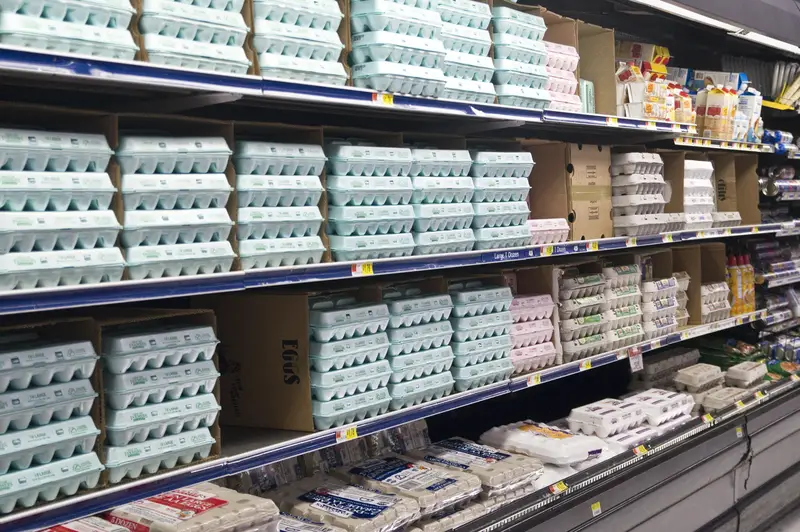
Have you ever stood in the egg aisle, staring at a wall of cartons, and genuinely wondered if any of it actually matters? Cage-free, free-range, pasture-raised, organic, Grade A — it reads like a vocabulary test nobody studied for. And honestly, most of us just grab whatever’s cheapest or whatever isn’t sold out. But some of these brands have real problems behind the label. Others are doing things right. The difference between the best and worst is bigger than you’d think.
The Store Brands Problem
Let’s start with the eggs most people actually buy: the generic store brands. Kirkland Signature, Great Value, Trader Joe’s, 365 by Whole Foods — they’re everywhere, and they’re usually cheaper. But cheaper comes with a catch, and it’s not just about taste. The biggest issue across almost all of these private-label brands is transparency. Or, more accurately, the total lack of it.
The Cornucopia Institute, which acts as an organic watchdog and maintains an egg scorecard for consumers, couldn’t even properly rank several store brands because there just wasn’t enough information available. Great Value got the lowest possible score — one egg out of five, with zero total points. Kirkland Signature managed two eggs, but the site noted the score wasn’t super reliable because of how little the company shares about its sourcing and practices. Trader Joe’s? Same story. One egg, lowest tier.
And taste-wise, the reviews are rough. Great Value eggs on Walmart’s own website are flooded with complaints. One reviewer described the yolks as “watery” and the whites as “very strange after cooking,” concluding the eggs were only fit for feeding to animals. That’s… not a ringing endorsement. Kirkland Signature fares slightly better — people on Reddit tend to call them “fine,” which is basically the participation trophy of food reviews. You also need a Costco membership to buy them, so there’s that added cost sitting in the background.
Eggland’s Complicated Best
Eggland’s Best is one of those brands that sounds like it should be great. The name literally has “best” in it. And on paper, the nutritional profile is genuinely impressive — seven times the vitamin E of generic eggs, nearly three times more omega-3 fatty acids, and 25% less saturated fat, according to a study published in Poultry Science. The company also boasts some of the strictest quality control standards in the industry.
So what’s the problem? A few things. Reddit users consistently complain about the taste. One person said they couldn’t even finish a carton. Another called the eggs “freaky,” which is a word I never expected to see applied to eggs but here we are. The lower fat content might explain the flavor issue — fat is what makes food taste good, and stripping it out tends to have consequences. But the bigger concern is what’s behind the brand. Eggland’s Best eggs are partly produced by Hillandale Farms, and that name carries some serious baggage.
Hillandale was the subject of a 2015 Humane Society exposé that revealed chickens crammed into filthy cages alongside dead, rotting birds. The company was also connected to massive salmonella recalls in 2010, and its then-head, Jack DeCoster, admitted to multiple counts of animal cruelty that same year. Oh, and in 2020, New York state sued Hillandale for price gouging during the pandemic. They settled by donating 1.2 million eggs to food banks. So when you pick up a carton of Eggland’s Best, you might be supporting a supply chain with a genuinely ugly history. That nutritional boost starts to feel less exciting in context.
Another Brand to Skip
Speaking of supply chains with issues, Lathem Family Farms is another name worth knowing — mostly so you can avoid it. Their eggs show up at Trader Joe’s, Royal, and Harveys, which means you might be grabbing them without even realizing it. Back in 2016, the company’s owner publicly protested cage-free initiatives, calling the humane standards “chaotic and impossible” even though farms were given over a decade to comply.
Then came the FDA. A 2023 inspection revealed that Lathem Family Farms had a resident strain of Salmonella Enteritidis in its poultry houses and processing facility. No procedures were in place to control salmonella outbreaks. Inspectors found stray cats and foxes living among the chickens. The cages hadn’t been properly cleaned, and there was manure buildup. Flies and rodents were found in the chicken feed. These are the kinds of details that make you want to triple-check every carton label going forward.
And here’s the thing about those FDA warning letters: they don’t come out of nowhere. Companies are given time to fix problems before a formal citation is issued. So what you’re reading in that letter represents conditions the company already had a chance to address and didn’t. Marketside Eggs, another Walmart exclusive, shares a similar problem — there’s essentially no transparency. The brand doesn’t even have its own website. Customers report flimsy packaging, broken eggs, and some of the lowest ratings of any egg brand online. When you can’t find basic information about where your food comes from, that’s usually not a good sign.
The Ones Worth Buying
Alright, enough doom. Let’s talk about who’s actually doing a decent job. Vital Farms is probably the most accessible “good” egg brand in the country. You can find them at most major grocery stores and on Amazon, where they sit at 4.8 out of 5 stars with nearly 14,200 ratings. The company sells pasture-raised and organic pasture-raised eggs, and each hen gets 108 square feet of roaming space. They’re also a certified B Corporation, meaning they’ve proven a commitment to using profits for social and environmental good.
One thing I particularly like: Vital Farms lets you track your eggs from the carton back to the specific farm where they were laid. You can actually look at the farm. That level of transparency is basically the opposite of what we see from Great Value or Marketside. The company also focuses on what it calls “restorative” eggs — laid on farms that practice regenerative agriculture with rotating cover crops. Even the packaging is made partly from those crop fibers. A reviewer on Amazon pushed back on people who complained about varying egg sizes, writing: “c’mon people… do you think the farmer gets to fire chickens that don’t make perfect eggs?” Fair point.
Pete & Gerry’s is another strong pick. They source from over 200 family farms across the U.S., all certified humane and USDA Organic. They’ve been a B Corporation since 2013, and their non-GMO feed policy is a nice touch. The only real knock on them is the plastic packaging — some customers have reported broken eggs in transit. But overall, the brand’s reputation for transparency and animal welfare is solid, and the eggs taste great according to most reviews.
Small Farms, Big Difference
If you really want to feel good about your eggs, the smaller operations are where it’s at. Eight Mile Creek Farm in New York scores an almost perfect 1,795 out of 1,800 on the Cornucopia Institute’s scorecard. That’s essentially a flawless record. Their chickens live in small flocks with indoor and outdoor access, no beak trimming, and — this part got me — fewer than 2% of the flock dies prematurely. The hens live out their full natural lives. It’s a family farm that also produces organic vegetables, pork, chicken, and beef. You’d buy through a CSA share subscription, so it’s not the same as grabbing a carton at Target.
Happy Hens, based in California, operates on a similarly small scale, selling in stores across Orange County and San Diego. The flocks live in mobile coops that get moved every few days so the birds always have fresh pasture. They’re protected by dogs and a donkey, which is genuinely charming. Yelp reviewers are borderline obsessed: “Once you have Happy Hens, you never go back.” That’s a level of loyalty most national brands would kill for.
Then there’s Farmers Hen House, which sources from over 100 mostly Amish and Mennonite family farms within a 6-mile radius. On Target’s website, 92% of reviews are five stars. Customers love the taste, the freshness, and the biodegradable packaging. The brand’s approach — keeping small-scale farming sustainable by contracting with dozens of local families — feels like what the egg industry should look like everywhere. OrgaNick Pastures out of Wisconsin is another standout, available at Sprouts with a 4.5-star rating and solid Cornucopia scores.
What Actually Matters
The biggest takeaway from all of this? Transparency is the single most reliable indicator of egg quality. Brands that share detailed information about their farms, their hens’ living conditions, and their sourcing practices tend to also be the ones producing better-tasting eggs with fewer safety scandals. The brands that hide behind vague labels and private-label anonymity are usually hiding something else too.
That doesn’t mean you need to spend $9 on a dozen eggs every week. Sauder’s, for example, is widely available at stores like Sam’s Club with a 4.7-star rating. They barcode each egg so you can trace it back to the farm on their website. They’ve been around since the 1930s. Are they as pristine as Eight Mile Creek Farm? No. But as a trade-off for accessibility and price, they’re a legitimately good choice. Organic Valley is another solid middle-ground option — all organic, good reviews on Amazon, and usually easier to find than the boutique brands.
So next time you’re staring at that wall of cartons, you don’t need to memorize a spreadsheet. Just remember the short version: if a brand won’t tell you where its eggs come from or how its chickens live, that silence is the answer. And if a brand hands you a farm address, a barcode tracker, and a B Corp certification? That’s the carton worth grabbing.

