

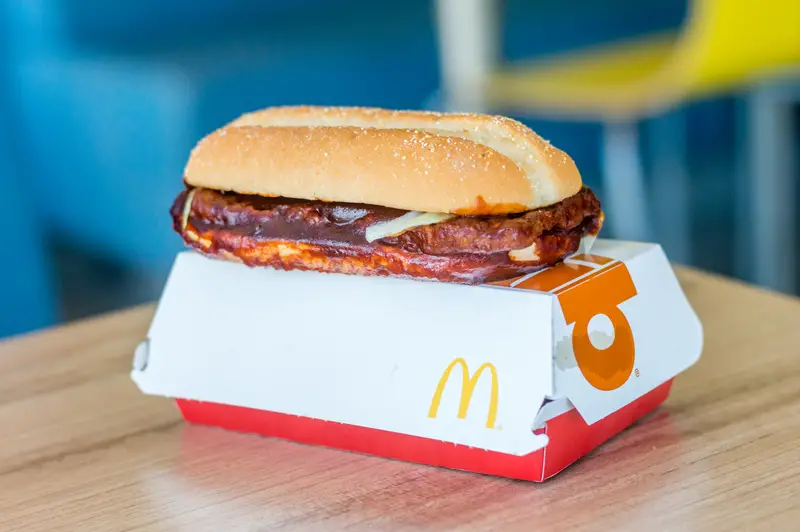
The McRib shows up at McDonald’s once or twice a year, and suddenly everyone’s either rushing to get one or wondering what the big deal is. This pressed pork sandwich has fans who wait all year for its return, but there’s a lot more to this menu item than meets the eye. The truth is, McDonald’s keeps things pretty quiet about what actually goes into making a McRib, and once you start asking questions, things get interesting. From the way the meat is made to why it keeps disappearing and reappearing, this sandwich has more secrets than you’d think.
The meat doesn’t come from ribs at all
When someone orders a McRib, they’re not getting actual rib meat. The sandwich is made from something called restructured pork, which means small pieces of pork are pressed together into that familiar shape with the fake bone marks. Think of it like how chicken nuggets are made, but with pork instead. The patty gets its rib-like appearance from a mold that stamps those lines into the meat, making it look like it came from actual ribs when it definitely didn’t.
According to the official ingredients list, the McRib pork patty contains pork, water, salt, dextrose, and rosemary extract. That’s actually a pretty short list compared to what most people expect from fast food. The meat itself isn’t the mystery some folks think it is, but the way it’s processed and shaped definitely makes it different from a traditional pork sandwich. It’s restructured meat that gets stamped into shape and frozen before making its way to restaurants across the country.
The barbecue sauce does most of the work
Walk into any McDonald’s during McRib season and that sweet, tangy smell fills the whole restaurant. That’s because the barbecue sauce is really what makes the sandwich taste like anything at all. The pork patty on its own is pretty bland, which makes sense when the ingredient list is just five basic items. Without that thick layer of sauce covering every inch of the patty, the McRib would be a completely different experience, and probably not one people would line up for.
People who tried the McRib decades ago often say it tasted better back then, but recent reviews tell a different story. One person described the meat as having no taste at all, with the BBQ sauce being the only thing worth mentioning. The sauce is sweet, smoky, and thick enough to stick to the bun and your fingers. It’s doing all the heavy lifting while the pork just sits there providing texture. That’s probably why McDonald’s loads it on so thick – without it, people would notice how plain the actual meat tastes.
It’s one of the saltiest things on the menu
Anyone watching their salt intake should know the McRib isn’t going easy on them. Between the pork patty, the sauce, the pickles, and the onions, this sandwich packs a serious sodium punch. The salt helps preserve the meat and makes everything taste more intense, which is standard practice for processed foods. But the McRib takes it to another level, making it stand out even among other fast food options that aren’t exactly known for being low in sodium.
There’s a practical reason for all that salt beyond just making things taste good. The McRib ranks as one of McDonald’s saltiest offerings, and that’s saying something considering the competition. The salt helps the restructured meat stick together better and extends shelf life during freezing and shipping. It also makes people thirsty, which means they’re more likely to order a drink. The combination of salt in the meat, salt in the sauce, and salt from the pickles adds up fast, which is why one sandwich can contain a hefty portion of the recommended daily sodium limit.
The shape is completely fake and molded
Those bone marks on the McRib patty aren’t there by accident or because the meat came from actual ribs. A machine stamps those lines into the pressed pork to give the appearance of a rack of ribs, even though the meat came from a completely different part of the pig. It’s basically food theater – making something look like what it’s named after, even when it’s nothing like the real thing. The whole presentation is designed to make people think of barbecue ribs without actually providing any.
The molding process happens at a factory long before the patties reach any McDonald’s restaurant. Workers at restaurants just heat up pre-formed, frozen patties that already have those fake bone marks pressed into them. Some people find this off-putting once they learn about it, while others don’t really care as long as it tastes decent. The sandwich doesn’t try to hide its processed nature – one look at that perfectly symmetrical patty with its evenly spaced lines makes it pretty obvious this wasn’t cut from an actual slab of ribs. It’s more honest than you’d think, as long as people are actually looking.
The limited availability is a marketing strategy
Ever wonder why the McRib isn’t available year-round if people like it so much? It’s not because of limited pork supply or seasonal ingredients. McDonald’s intentionally keeps the McRib as a limited-time item to create urgency and excitement. When something is always available, people take it for granted. When it shows up for just a few weeks and then disappears, suddenly everyone wants one before it’s gone. This scarcity approach has turned a simple pork sandwich into a cultural event that gets people talking every single time it returns.
The strategy works because it taps into fear of missing out. Social media lights up with McRib announcements, people post photos of their sandwiches, and news outlets write articles about its return. The sandwich becomes an event rather than just another menu item. McDonald’s doesn’t need to spend much on advertising when customers create their own buzz. Some locations bring it back multiple times a year, while others only see it once, making the availability even more unpredictable. This keeps people checking back and creates more visits to McDonald’s than a permanent menu item ever would.
The bun is sweeter than regular burger buns
The McRib doesn’t come on a regular hamburger bun like Big Macs or Quarter Pounders. Instead, it uses what McDonald’s calls a homestyle roll that’s longer and softer, with a slightly sweet taste. This bun is specifically designed to soak up all that barbecue sauce without falling apart in your hands. The extra sweetness also complements the tangy sauce and makes the whole sandwich taste more like dessert than a savory meal. It’s noticeably different from the sesame seed buns used for burgers, and that’s completely intentional.
The homestyle roll contains enriched wheat flour along with several other ingredients that give it that particular texture and sweetness. It’s closer to a hot dog bun than a burger bun, which makes sense given the shape of the McRib patty. The soft, pillowy texture means the bun compresses when someone takes a bite, creating a dense mouthful rather than the firmer structure of a regular burger. Some people love this quality, while others find it too mushy. Either way, the bun is engineered specifically for this sandwich and wouldn’t work well with a regular beef patty.
People either love it or absolutely hate it
There’s really no middle ground when it comes to the McRib. Some people mark their calendars for its return and order multiple sandwiches at once to freeze at home. Others tried it once, didn’t understand the appeal, and never went back. The sandwich has achieved cult status among its fans, who defend it passionately online and in person. Meanwhile, critics can’t understand why anyone would get excited about processed pork covered in sauce. This divide creates endless debates and keeps the McRib in the conversation year after year.
The strong reactions make sense when considering what the McRib actually is. It’s not trying to be gourmet or healthy or even particularly authentic. The iconic McRib is one of those items that inspires extreme opinions precisely because it’s so different from regular food. People who grew up eating it have nostalgia working in its favor, remembering times when it tasted better or when getting one felt special. New customers trying it for the first time based on hype often feel disappointed, expecting something more impressive than what they get. The sandwich works best for people who know exactly what they’re getting and want it anyway.
The pickles and onions aren’t optional for a reason
Every McRib comes with pickles and chopped onions unless someone specifically asks for them to be removed. These toppings aren’t just thrown on for decoration – they serve an important purpose in balancing out the sweetness of the sauce and the fattiness of the pork. The vinegary bite of the pickles cuts through all that sugar and provides a sharp contrast that makes each bite more interesting. The raw onions add crunch and a bit of spice that the soft bun and tender meat completely lack on their own.
Without the pickles and onions, the McRib would be a one-note experience of sweet barbecue sauce and soft textures. The toppings create layers of taste and sensation that keep the sandwich from becoming boring halfway through. They also add a fresh element to an otherwise completely processed meal. Some people order their McRib without these toppings, but they’re missing out on what makes the sandwich work as a complete package. The combination isn’t random – it’s the classic American barbecue approach of balancing sweet, salty, tangy, and sharp into one handheld meal. McDonald’s didn’t invent this combination, but they use it effectively to make their pressed pork sandwich more interesting than it would otherwise be.
The truth isn’t as mysterious as people think
Despite all the jokes about mystery meat and secret ingredients, the McRib is actually pretty straightforward. The ingredients are listed publicly, and there’s nothing particularly shocking or disgusting in there – just processed pork made the same way many other convenience foods are made. The mystery comes more from people not understanding food processing than from McDonald’s hiding anything sinister. Once someone learns what restructured meat is and how it’s made, the McRib becomes a lot less mysterious and a lot more ordinary.
The real question isn’t what’s in the McRib, but why McDonald’s benefits from people thinking it’s somehow secretive or unusual. The unexpected truth is that there isn’t much truth to uncover – it’s pressed pork with sauce on a sweet bun. That’s not exciting or scandalous, which is probably why the company doesn’t spend much time explaining it. The mystery marketing works better than transparency would. People talking about what might be in the sandwich generates more interest than a detailed breakdown of a fairly simple processed food product. The McRib succeeds because of what people imagine it might be, not because of what it actually is.
The McRib keeps coming back because enough people buy it when it’s available, not because it’s the best sandwich McDonald’s makes. Understanding what actually goes into it doesn’t have to ruin the experience for fans, but it does take away some of the mystique. Whether someone orders one next time it shows up depends on what matters more – the taste and nostalgia, or knowing exactly how processed and engineered the whole thing really is.

