

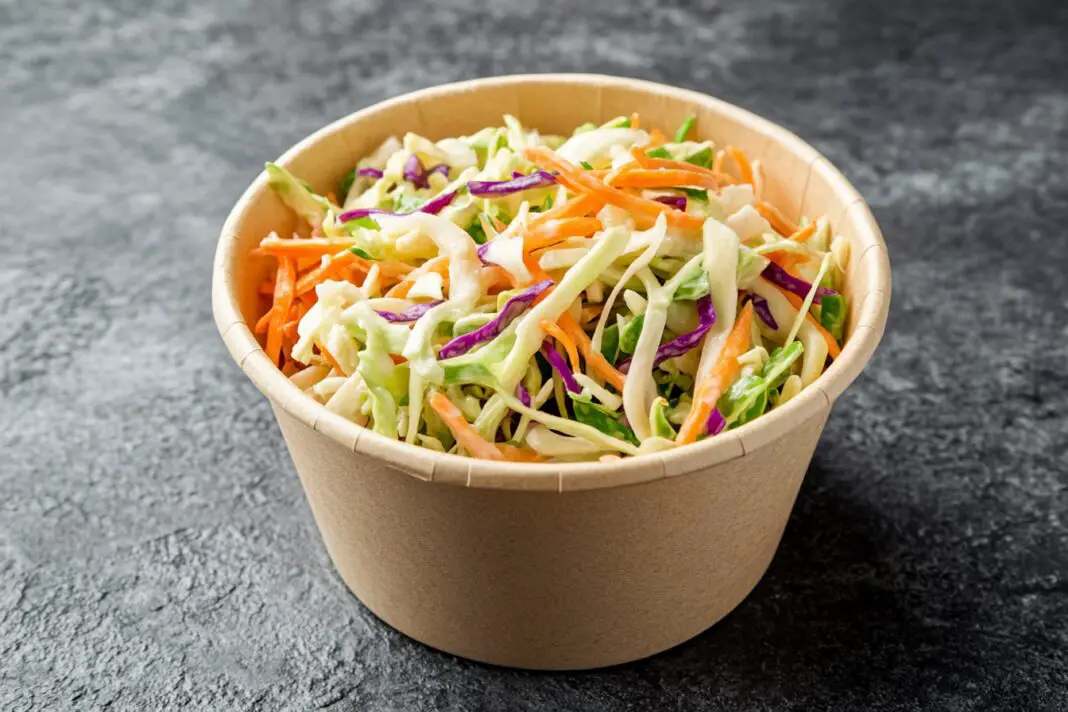
There’s a decent chance you’ve ordered the coleslaw at KFC a hundred times without once thinking about what’s actually in that little cup. It’s the default. You get your chicken, somebody at the counter asks slaw or mashed potatoes, and you shrug and say slaw. I did the same thing for years. Then I actually paid attention to what I was getting, and now I skip it every single time. It’s not the worst thing you’ll ever eat, but once you know a few things about it, you stop reaching for it. Here’s the full story.
It’s Basically Dessert In Disguise
The first problem is simple. KFC slaw is sweet, and it’s sweet on purpose. That signature flavor comes from a heavily sweetened mayo dressing, and it turns a bowl of shredded cabbage into something closer to candy. Home and commercial recipes routinely pack in two to four tablespoons of sugar per batch, which is why it barely tastes like a vegetable at all.
Here’s the part that got me. A plain vinegar slaw runs about 63 calories a serving with only 3 grams of sugar. The creamy mayo version most chains serve pushes past 150 calories with a lot more sugar and fat riding along. Switching from creamy to vinegar can nearly halve the calories. You’re paying for a cup of cabbage and getting a cup of frosting. If I want something sweet with my chicken, I’d rather just order the sweet thing and skip pretending the slaw is the responsible choice.
It Comes Straight Out Of A Bag
People picture some employee shredding fresh heads of cabbage in the back. That’s not how it works. Restaurant slaw is sourced from big industrial supply chains, and after some trouble years back, KFC locations in the Ohio Valley switched over to buying pre-chopped, pre-washed cabbage that shows up ready to dump into a mixing bin.
I don’t hate convenience, but it changes how you should think about the product. You’re not getting a fresh, hand-cut side. You’re getting a mass-produced base that traveled through a warehouse, sat in a truck, and got dressed by whoever was working the prep station that morning. When you know the cabbage rode in on a pallet, that little cup loses whatever homemade charm you imagined it had.
This Slaw Has An Actual Track Record
Here’s where KFC slaw earns its reputation. In one investigation, all 11 people who got sick had eaten coleslaw bought between July 5 and July 27 from four Tristate KFC restaurants. The slaw was linked to E. coli, the chain tossed its slaw at those locations, and it started retraining staff. One regular said he stopped in a few times a week for a wing dinner and a double order of slaw before it caught up with him.
What makes this one stick out is that it wasn’t a one-off. KFC coleslaw had already been tied to a similar problem in Indianapolis back in May 1998. Same dish, same issue, two different times. The attorney on the case put it bluntly, saying it’s extremely unusual to see the same thing happen twice. That’s the kind of resume that makes me quietly point at the mashed potatoes instead.
Nobody Can Tell You How Long It’s Been Sitting There
Cold sides like slaw are supposed to stay under 40 degrees. Once they drift up into the range between 40 and 140, that’s the stretch the USDA calls the danger zone, and cold food isn’t supposed to hang out there for more than two hours. In a busy drive-thru with a bin of slaw pulled out during a lunch rush, two hours goes by fast.
And restaurants don’t always keep track. A 2026 Iowa inspection flagged a place for keeping several items too long, including coleslaw held past the seven-day limit. Another spot got cited for house-made slaw sauce kept beyond that window too. Cabbage and mayo don’t announce when they’ve turned, so you have no way of knowing whether the scoop in your cup was made this morning or four days ago. That guessing game alone is enough for me to pass.
The Grocery Store Tub Is No Upgrade
Maybe you’re thinking you’ll just grab a container from the deli case instead. Slow down. Store-bought slaw is often the same story with a different label. One popular deli slaw sold at Walmart and Food Lion lists high fructose corn syrup and Yellow No. 5 food dye on the ingredients, and it packs 230 calories and 480 milligrams of sodium into a third-of-a-cup serving. That’s cheap filler doing the heavy lifting where fresh ingredients should be.
The tubs have their own rocky history too. Near the end of 2019, Dole pulled more than 10,000 pounds of its Marketside Tri-Color and President’s Choice Colorful coleslaw over salmonella concerns after random testing turned it up. Those products had shipped to Alaska, California, Idaho, Montana, Nevada, Oregon, and Washington. In 2025, Bonduelle also recalled a slaw sauce over a listeria scare. The refrigerated case is not automatically the safe bet you assumed it was.
So What Should You Do Instead
None of this means coleslaw is cursed. It means the version handed to you at a chain window is rarely worth the space in your bag. It’s a sugar-heavy scoop of bagged cabbage that costs you a couple bucks, tastes like sweetened mayo, and comes with a reputation you’d never guess from the cheerful little cup.
If you actually love slaw, the fix is boring but real. Make it at home. A head of cabbage runs about a dollar, you control how much sugar goes in, and you know exactly how long it’s been in your fridge instead of trusting it was stored properly by a stranger during a rush. A quick vinegar-based version comes together in ten minutes and tastes brighter than anything scooped from a bin.
Next time you’re at the counter and someone asks slaw or potatoes, just remember what you’re really being offered. It’s cheap cabbage, a lot of sugar, a base that came out of a bag, and a side dish with a longer story than you bargained for. Order the biscuit. Order the corn. Order the mashed potatoes. Save your slaw craving for a batch you make yourself, where you’re the one who knows what went in it and how fresh it is. That little cup is one of the few things at the chicken counter that’s genuinely not worth your money.

