

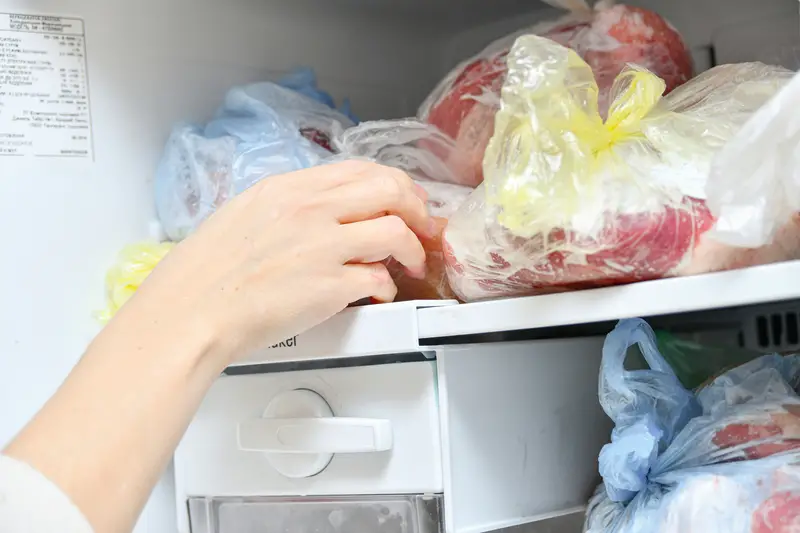
Most people treat the freezer like a time capsule. Toss something in there and it stays good forever, right? Not exactly. The truth is, frozen food can go bad, lose its taste, or even become unsafe to eat after a while. A lot of us have mystery containers and frost-covered bags hiding in the back that probably should have been thrown out months ago. Here’s what actually needs to go.
Anything that’s been in there too long
A lot of people assume the freezer works like some kind of permanent pause button. It doesn’t. Frozen food slowly loses quality over time, even when stored correctly. That chicken breast from a year ago? It might technically be safe to eat, but it’s not going to taste like much. Same goes for that bag of shrimp from who-knows-when. The freezer slows things down, but it doesn’t stop the clock completely. After a certain point, things just aren’t worth eating anymore.
According to the USDA, raw meat like beef, pork, and chicken can last up to a year in the freezer. Processed meats like lunch meat or cured sausage? Only about two months. Leftovers and prepared foods like soups and casseroles top out at around three months. If something in the freezer came with packaging, check the expiration date printed on it. If it was fresh when it went in, think about how long ago that actually was. Chances are, a few things have overstayed their welcome.
Unlabeled containers and mystery bags
We’ve all done it. Something goes into a container or a zip-lock bag with full confidence that we’ll absolutely remember what it is. Fast forward three months and it’s a frozen brown lump with zero clues attached. Is it chili? Pasta sauce? Gravy? Who knows. When something in the freezer isn’t labeled, there’s no way to tell what it is or how long it’s been sitting there. That makes it basically impossible to know if it’s still good.
The fix going forward is simple. Label everything before it goes into the freezer. A roll of blue painter’s tape and a marker are all it takes. Write down what it is and the date it went in. It takes about ten seconds and saves a lot of guessing later. But for now, if there’s something sitting in there with no label and no memory attached, it’s time to toss it. No amount of squinting at a frozen block is going to give a reliable answer.
Freezer-burned food is not worth saving
Those dry, leathery patches on meat or the layer of ice crystals coating frozen fruit? That’s freezer burn. It happens when air gets to the surface of food. The food dries out and develops a weird, off-putting taste. It’s one of those things where technically it won’t make anyone sick, but the quality drops so much that there’s really no point in keeping it around. No amount of seasoning or sauce is going to fix a badly freezer-burned chicken thigh.
If only a small section is affected, it’s possible to cut off the damaged part and use the rest. But if the whole piece of meat looks like it spent a winter on Mars, just throw it out. Going forward, the best way to prevent freezer burn is to make sure everything is wrapped tightly or sealed in airtight bags with as little air inside as possible. Double-wrapping helps too. Food stored in proper containers lasts much longer and stays in much better shape than food tossed in loosely.
Food that was thawed and then refrozen
This one catches a lot of people off guard. If something was frozen, got thawed out — even partially — and then went back in the freezer, it might not be safe anymore. The only way to be sure is if the food stayed at 40 degrees or under the entire time it was thawed. And honestly, most people have no way to guarantee that. Power outages, leaving something on the counter too long, or pulling a big bag out to grab a portion and then refreezing the rest — all of these create risk.
Even when refreezing doesn’t cause a safety issue, the quality takes a big hit. The food’s structure breaks down more each time it thaws and refreezes, which leads to mushy, watery results. A smart move is to freeze things in small portions from the start. That way, only the amount needed gets thawed at a time. No one has to defrost a whole pound of bacon just to peel off two slices for a Saturday morning breakfast.
Ice cubes that smell weird
It sounds a little strange, but ice can actually go bad. Well, not bad exactly — but ice picks up smells and tastes from other items in the freezer. Ever dropped a few cubes into a glass of water and noticed it tasted like frozen pizza or leftover fish? That’s because ice absorbs odors from anything nearby that isn’t sealed properly. It’s surprisingly common and surprisingly gross. Nobody wants their glass of water tasting like last Tuesday’s leftovers.
The fix is easy. Dump out the old ice, wash the tray or ice bin with warm soapy water, and make a fresh batch. While at it, check the freezer for anything that’s not sealed tightly. That’s probably the source of the smell. It’s also worth knowing that the fridge and freezer share air circulation, so something unsealed in the fridge can affect the ice in the freezer too. A quick wipe-down of the freezer walls with white vinegar can help knock out any lingering odors.
Stale coffee beans hiding in the back
A lot of people keep coffee beans in the freezer to make them last longer. And while that can work for a little while, beans don’t stay fresh in there forever. If the bag has been open or sitting around for months, those beans are most likely stale. Here’s a quick test: open the bag and take a sniff. If there’s barely any coffee smell coming off them, they’re done. Any coffee brewed from those beans is going to taste flat and lifeless.
Morning coffee is one of those things that matters too much to cut corners on. A stale, bland cup is worse than no cup at all — okay, maybe not, but it’s still pretty disappointing. If the beans have lost their punch, do everyone a favor and throw them out and start fresh. Going forward, try to only freeze beans in small, sealed portions to keep them as fresh as possible for as long as possible. It makes a real difference in the morning cup.
The last sad bits of ice cream
Who hasn’t opened a carton of ice cream only to find a thin, icy layer of something that barely resembles what was originally in there? Those last scummy bits at the bottom of a pint or quart are not going to satisfy anyone. They usually have a weird icy crust on top, and whatever’s underneath has lost most of its original appeal. Yet somehow that carton stays in the freezer, taking up space for weeks because throwing it out feels wasteful.
Here’s the thing — that nearly empty carton is hogging space that could be used for something actually worth eating. If there’s only a spoonful or two left, it’s not worth keeping. Throw it away and buy a new one when the craving hits. The fresh carton is always going to be the better choice. Nobody ever looked at a freezer-crusted scraping of Rocky Road and thought, “Yes, this is exactly what I wanted.” Let it go.
Cooked leftovers past their prime
Freezing leftovers is a great habit. It saves money and makes weeknight dinners easier. But frozen leftovers don’t last as long as most people think. That container of soup from three months ago? It’s right at the edge. That casserole from six months ago? Way past it. The USDA says frozen leftovers are best used within three to four months. After that, quality drops fast. And if those leftovers sat on the counter for more than two hours before going into the freezer, they might not have been safe to begin with.
The same rules apply to cooked meat. A leftover steak dinner or a batch of pulled pork is only good in the fridge for about three to four days. If it goes into the freezer right away, there’s a bit more time, but not unlimited time. Use airtight containers, label everything with a date, and try to eat frozen leftovers sooner rather than later. It’s easy to keep pushing them further back in the freezer, but eventually they need to come out — and by then, the trash is the only real destination.
Food that’s just never going to get eaten
Beyond all the specific rules about expiration and freezer burn, there’s one more category that deserves attention: the stuff that was frozen purely out of guilt. Maybe it was the rest of a bag of frozen vegetables that seemed like a waste to throw out. Maybe it was a meal prep experiment that didn’t turn out great but felt wrong to dump. Whatever it is, it’s been sitting there untouched for months because nobody actually wants to eat it. Sound familiar?
Keeping food in the freezer just because throwing it away feels bad doesn’t actually help anyone. It takes up space, makes it harder to find things that will actually get used, and eventually it passes the point of being good anyway. Be honest: is that bag of edamame from eight months ago ever going to make it into a meal? If the answer is no, it’s okay to let it go. Give everything in the freezer a one-week deadline. If it doesn’t get used by then, it’s time to say goodbye.
A clean freezer makes everything easier. Meals come together faster, nothing gets lost in the back, and there are no unpleasant surprises. The best time to do a full freezer clean-out is on trash day, so the discarded food doesn’t sit around the kitchen. Label things, freeze in small portions, and check in every few months. A little effort now saves a lot of head-scratching and questionable sniff tests later.

