

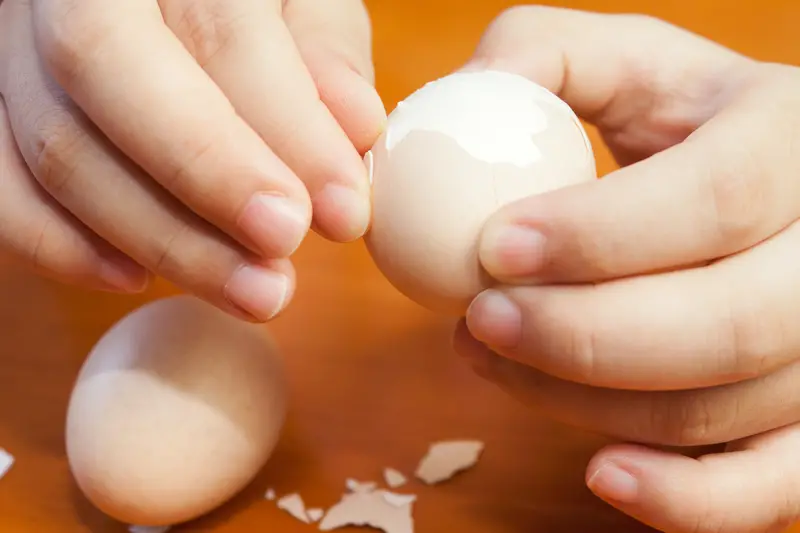
I ruined a lot of hard-boiled eggs before I found this trick. Like, a lot. I’d boil them, cool them, tap them on the counter, and then proceed to peel off chunks of egg white along with the shell until I was left with something that looked like the surface of the moon. Pockmarked. Sad. Definitely not going on a deviled egg platter.
I tried the ice bath. I tried older eggs. I tried starting in cold water, starting in boiling water, steaming them, adding vinegar. Some of it helped a little. None of it was consistent. Then I came across a trick so simple I almost didn’t believe it — adding a tablespoon of oil to the boiling water. That’s it. One tablespoon of olive oil (or whatever oil you have) in the pot, and the shells practically fall off. I’ve been doing it for months now, and I haven’t mangled an egg since.
Why Oil Actually Works
Here’s the thing most people don’t realize: eggshells are porous. They’re covered in thousands of tiny holes — about one-thousandth of an inch apart — that allow air and moisture to pass through. That’s the same reason eggs go stale over time. Air seeps in, moisture seeps out, and the egg slowly dries up inside its own shell. But those same pores are exactly what make the oil trick work. When you add oil to the boiling water, it seeps into the shell through those tiny pores and creates a thin barrier between the shell membrane and the egg white. That barrier is what lets the shell slide off cleanly instead of tearing the white apart.
It sounds almost too easy, and honestly, that’s what made me skeptical at first. But the science checks out. The shell is semipermeable. The oil gets in. The egg peels clean. I’ve used olive oil, canola oil, and plain vegetable oil — they all work the same. Use whatever’s sitting on your counter.
The Full Method, Step by Step
This isn’t complicated, but the details matter. Start with a pot large enough to hold your eggs in a single layer — don’t stack them. Fill it with enough water to cover the eggs by about an inch, then add one tablespoon of oil. Bring the water and oil to a gentle boil. You’ll see the oil shimmering on the surface, breaking into little droplets. That’s fine. It doesn’t need to be emulsified or mixed in — just present in the water.
Once the water is at a gentle boil, lower your eggs in one at a time using a spoon. Don’t drop them. A cracked shell before cooking means waterlogged whites and a sad, rubbery result. Keep the water at a steady boil — not a rolling, aggressive boil, just a consistent bubbling. Set your timer: 13 minutes for fully hard-boiled eggs with a dry, crumbly yolk. 10 minutes for medium, where the yolk is set but still slightly creamy in the very center. 6 minutes if you want a soft, jammy yolk — though soft-boiled eggs are more delicate to peel no matter what method you use.
When the timer goes off, move the eggs immediately into an ice bath. And I mean a real ice bath — a big bowl with way more ice than you think you need, because those hot eggs will melt through a few cubes in seconds. Let them sit for at least five minutes. The rapid cooling contracts the egg inside the shell, which gives you even more separation between the white and the membrane. Then peel. You’ll be amazed.
Do You Still Need Old Eggs?
This is the part that surprised me most. Everyone says to use older eggs for boiling — eggs that have been in your fridge for a week or two. And there’s real science behind that advice. As eggs age, they lose moisture through those porous shells, the egg shrinks slightly inside, and the pH rises. That higher pH weakens the bond between the shell membrane and the white, which is why older eggs have always been easier to peel.
But with the oil method? It doesn’t seem to matter much. I’ve boiled eggs I bought that same morning and peeled them without a problem. The oil does the heavy lifting. That said, if your eggs are really old — like standing straight up in a glass of water old — the yolk may have sunk to one side, which makes them look lopsided when you cut them in half. Not ideal for deviled eggs. So fresh or a-few-days-old eggs are actually your best bet with this method, which is the opposite of the usual advice.
The Baking Soda Backup
If you want to stack the deck even further, add half a teaspoon of baking soda to the boiling water along with the oil. The baking soda raises the alkalinity of the water, which loosens the egg whites from the shell membrane even more. It won’t change the taste of your eggs — not even a little. I’ve done side-by-side tests with and without the baking soda, and both versions taste identical. But the ones with baking soda do peel just a touch more smoothly, especially if I’m doing a full dozen.
Is it strictly necessary? No. The oil alone gets you 90% of the way there. But if you’re making deviled eggs for a party and you need every single one to look perfect, throw in the baking soda. It’s cheap insurance.
Other Peeling Tricks That Actually Help
Even with the oil method, your peeling technique matters. Start from the air pocket — that’s the wider, flatter end of the egg. There’s a small air cell there, and it gives you a natural entry point where you’re less likely to tear into the white. Peel under cold running water if you can. The water gets under the membrane and helps lift the shell away in bigger pieces instead of tiny, frustrating fragments.
There’s also the container-shaking method that went viral on TikTok. You put your boiled egg in a plastic container with some cold water, seal it, and shake vigorously for about 10 seconds. The shell cracks all over and peels off in one or two big pieces. It actually works, but only for hard-boiled eggs — a soft-boiled egg would get destroyed. And use a plastic container, not glass. Glass is too hard and will dent the egg. An old plastic deli container or a leftover feta tub works great.
How to Know If Your Eggs Are Still Good
Before you boil anything, make sure your eggs are actually worth eating. The float test is the fastest way to check. Fill a glass with water and gently drop an egg in. If it sinks and lies flat on the bottom, it’s very fresh — just a few days old. If one end tips upward at an angle, it’s about one to two weeks old. If the egg stands straight up on its end, it’s around two months old. And if it floats? Toss it. A floating egg has so much air inside that there’s a real risk of bacteria, including Salmonella.
One thing to know: submerging an egg in water washes off the natural protective coating on the shell, called the bloom. Once that’s gone, the egg needs to be refrigerated even if it wasn’t before. So only test eggs you’re planning to use soon. If you just want to check without water, hold the egg near your ear and give it a gentle shake. If you hear sloshing inside, it’s gone bad.
A Note on Those Confusing Date Labels
Every state has different rules about what goes on egg cartons. One carton says “Best By,” another says “Use By,” another says “Sell By.” It’s confusing, and it leads people to throw out perfectly good eggs. According to the USDA, eggs can be safely eaten for three to five weeks from the day you put them in your refrigerator at home. That “Sell By” date is for the store, not for you. If you want to get really precise, look for the Julian date stamped on the carton — it’s a three-digit number from 001 to 365 that tells you the exact day of the year the eggs were packed. January 1st is 001, December 31st is 365. It’s a much better indicator of freshness than the sell-by date.
What Not to Do
A few common mistakes to avoid. Don’t pierce your eggshells before boiling. Some people poke a hole with a thumbtack thinking it helps with peeling, but the American Egg Board specifically warns against this — a non-sterile needle can push bacteria into the egg, and the tiny cracks create entry points for more bacteria after cooking. Don’t microwave eggs in their shells, either. The steam builds up faster than it can escape and the egg will explode. And don’t store your eggs in the refrigerator door — that’s the warmest, most temperature-volatile spot. Keep them on an inside shelf, in their original carton.
The oil trick isn’t flashy. It’s not going to trend on TikTok. But it works every single time, and that’s what I care about. Give it one try and you’ll never go back to fighting with eggshells again.
Perfect Easy-Peel Hard-Boiled Eggs (Oil Trick Method)
Course: BreakfastCuisine: American6
eggs5
minutes13
minutes70
kcalThe easiest hard-boiled eggs you’ll ever peel — one tablespoon of oil in the water changes everything.
Ingredients
6 large eggs, straight from the refrigerator
1 tablespoon olive oil (or canola, vegetable, or any cooking oil)
½ teaspoon baking soda (optional)
Enough water to cover eggs by 1 inch
Ice for ice bath
Directions
- Choose a pot large enough to hold all your eggs in a single layer without stacking. Fill it with enough cold water to cover the eggs by about one inch. Add one tablespoon of oil and the optional half teaspoon of baking soda to the water.
- Place the pot over medium-high heat and bring the water and oil to a gentle boil. You’ll see the oil breaking into small droplets on the surface — that’s normal and expected. Wait until you have a steady, consistent bubbling before adding eggs.
- Using a slotted spoon, carefully lower the cold eggs into the boiling water one at a time. Don’t drop them in — a cracked shell will let water seep in and ruin the texture. Reduce heat slightly if the boil becomes too aggressive.
- Set a timer for 13 minutes for fully hard-boiled eggs, 10 minutes for medium-boiled, or 6 minutes for soft-boiled with a runny yolk. Keep the water at a steady, gentle boil the entire time.
- While the eggs cook, prepare your ice bath. Fill a large bowl with plenty of ice and cold water — use more ice than you think you need, because the hot eggs will melt it fast. You want the water to stay very cold.
- When the timer goes off, use a slotted spoon to transfer the eggs immediately into the ice bath. Let them sit for at least 5 minutes to stop the cooking completely and help the egg contract away from the shell.
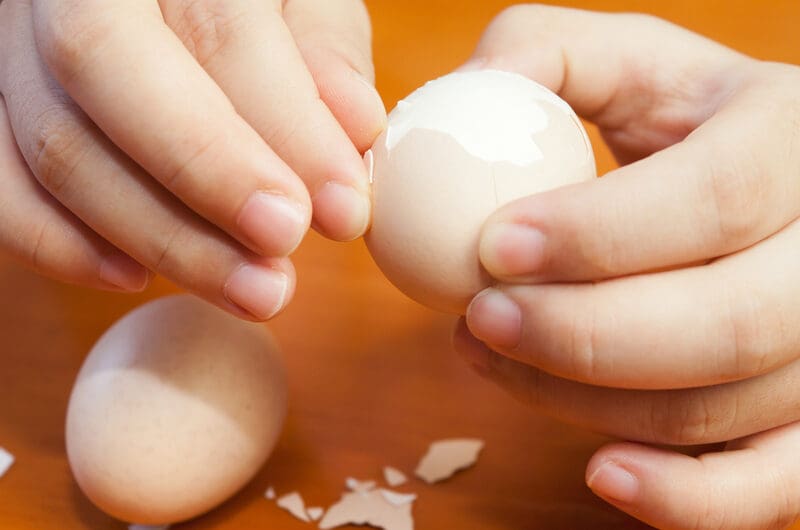
- To peel, gently tap the wider end of the egg on a hard surface to crack the air pocket first. Then roll the egg lightly to crack the shell all around. Peel under cool running water for the smoothest results — the water helps lift the membrane away from the white.
- Serve immediately, or store peeled or unpeeled eggs in the refrigerator for up to one week. Unpeeled boiled eggs keep slightly longer since the shell offers some protection from drying out.
Notes
- The oil will not affect the taste of your eggs at all. It only interacts with the shell and membrane during cooking.
- Fresh or older eggs both work well with this method, but very old eggs may have off-center yolks — not ideal for deviled eggs.
- For a full dozen, keep the same amount of oil (1 tablespoon) but use a larger pot so eggs still sit in a single layer.
Frequently Asked Questions
Q: Does the type of oil matter for this trick?
A: Not at all. Olive oil, canola oil, vegetable oil, avocado oil — they all work identically. The oil just needs to be present in the water to seep through the porous shell. Use whatever you already have in your kitchen. The oil doesn’t flavor the egg in any way because it only interacts with the shell and membrane, not the egg white or yolk inside.
Q: Can I use this method for soft-boiled or jammy eggs?
A: You can, but soft-boiled eggs are naturally more fragile and trickier to peel regardless of your method. Reduce the boiling time to about 6 minutes for a runny yolk. Be extra gentle during peeling — the container-shaking trick won’t work here because the soft interior can’t handle the force. Peel slowly under running water for the best results.
Q: Should I start with cold water or boiling water?
A: This recipe calls for lowering eggs into already-boiling water. Starting with boiling water gives you more precise timing because every batch begins at the same temperature. If you start with cold water and heat everything together, your cook time becomes unpredictable depending on your stove, your pot, and how much water you used. Boiling water gives you consistent results every time.
Q: How long do hard-boiled eggs last in the refrigerator?
A: Peeled hard-boiled eggs will keep in the refrigerator for about five days. Unpeeled eggs last up to a week because the shell acts as a protective barrier against drying out and absorbing odors. Store them in a sealed container either way. According to USDA guidelines, raw eggs in the shell can be safely consumed for three to five weeks from the day you bring them home.

