
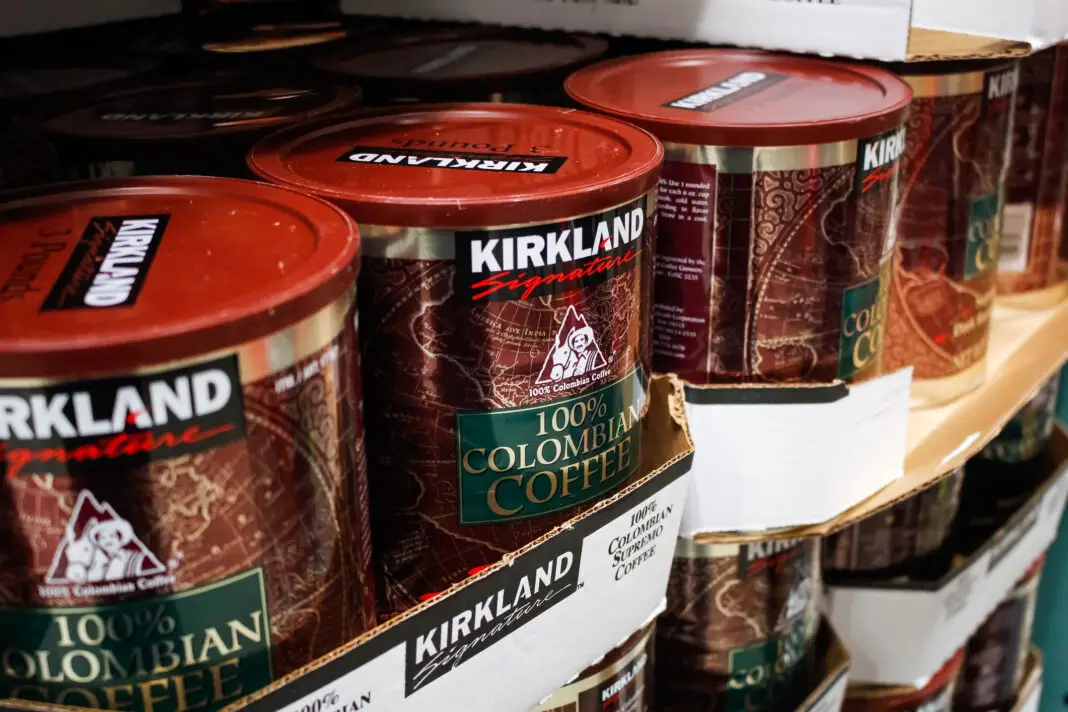
You’re standing in Costco, staring at a shelf with two options: the name brand you grew up with, or the Kirkland Signature version sitting right next to it for a few bucks less. You grab the Kirkland one because, well, it’s Costco and everything there feels like a deal. But have you ever stopped to wonder who actually makes that stuff? Because here’s the thing — there’s a very good chance the same company made both products. And Costco would really prefer you didn’t know that.
How Kirkland Became Bigger Than Nike
Kirkland Signature pulled in $58 billion in sales during Costco’s latest fiscal year. To put that in perspective, that’s bigger than Hershey, Campbell Soup, and Kellogg. It’s bigger than Nike. It’s bigger than Coca-Cola. A store brand. Let that sink in for a second.
But Kirkland didn’t always exist. Before 1995, Costco had about 30 different private-label brand names scattered across its warehouses — forgettable names like Simply Soda, Chelsea toilet paper, and Ballantrae wine. Then Costco cofounder Jim Sinegal read a 1991 Forbes article about how profit margins for big consumer brands were climbing while private-label products were gaining steam. He underlined key passages, circulated the article to his top people, and decided Costco needed one brand name to rule them all.
He named it after Kirkland, Washington — the Seattle suburb where Costco’s headquarters sat at the time. Costco later moved to Issaquah, but as Sinegal put it, nobody could spell Issaquah. Fair point. The first Kirkland products were vitamins. Now there are roughly 550 different items under the label, and the brand accounts for about a quarter of everything Costco sells.
The State Secret of Who Makes What
Costco treats the identities of its Kirkland manufacturers like classified information. And the manufacturers themselves have every reason to keep quiet. Think about it — if you’re Duracell, do you really want people knowing your batteries are being sold under a different name for 30% less? That kind of news doesn’t exactly help your pricing power.
But the truth leaks out anyway. Sometimes a CEO lets something slip in an interview. Sometimes a recall forces a company to reveal its supply chain. And sometimes the manufacturer’s logo is literally printed right on the Kirkland packaging, hiding in plain sight.
Here’s what we actually know about who’s behind the curtain.
Duracell Makes the Batteries (And Costco’s CEO Admitted It)
This one’s confirmed straight from the top. Costco CEO Craig Jelinek told Atlanta station WSB-TV in 2016 that Duracell manufactures Kirkland Signature batteries. You’re getting the same Duracell guts with a different wrapper. A 48-pack of Kirkland AA batteries costs around $13.99 to $15.99 at Costco. The Duracell-branded 40-pack sitting a few feet away? Around $20.99. That’s 25% to 35% cheaper per battery for what is, by admission, the same product.
Huggies Parent Company Was Behind the Diapers — Until Recently
For years, Kimberly-Clark — the same company that makes Huggies — produced Kirkland Signature diapers. Costco executives confirmed this publicly. But here’s where it gets interesting: as of March 2025, Costco switched manufacturers to First Quality, which makes Cuties brand diapers. Costco CFO Gary Millerchip said on an earnings call that the new version has a longer and thicker absorbent layer, a softer outer cover, and twice the stretch in the waistband. They also managed to increase the value by 11%, making the new Kirkland diapers 22% to 30% cheaper than name brands.
This is a perfect example of how Costco operates. When they think they can do better — either on quality or price — they’ll switch things up. Brand loyalty to a manufacturer means nothing if the product isn’t living up to the Kirkland promise.
The Ones Hiding in Plain Sight
Some Kirkland products don’t even try to hide their origins. Ocean Spray’s name is printed right on the Kirkland cranberry juice label. Jelly Belly’s logo is on the jelly beans packaging. Reynolds Wrap makes the aluminum foil. Chinet produces those iconic red cups — 240 of them for $13. The Kirkland balsamic vinegar comes from Acetum, a company based in Modena, Italy, which is basically the only place on Earth you should be getting balsamic vinegar from.
And that wedge of Kirkland Parmigiano Reggiano? It literally says the name Zanetti S.p.A. on it — a long-established Italian producer that makes the real deal. If you’ve been paying $18 to $22 per pound for good parmesan at other stores, Costco has the same stuff for less.
The Coffee and Booze Situation
Starbucks reportedly makes some Kirkland coffee. Green Mountain Coffee Roasters signed a deal with Costco back in 2012 to produce Kirkland Signature K-Cups in Pacific Bold, Medium Roast, and Breakfast Blend. So if you’re brewing Kirkland pods in your Keurig every morning, you’re drinking coffee from one of the biggest names in the business.
The alcohol aisle is just as interesting. Kirkland Signature beer is brewed by Gordon Biersch for the West Coast and Matt Brewing (based in Utica, New York) for the East Coast. The Kirkland Scotch comes from Alexander Murray & Co., a California-based distillery that’s won awards for its whisky. A 12-year-old Scotch for $25 is the kind of thing that makes whisky snobs lose their minds — in a good way. Alexander Murray’s CEO told Market Watch that neither Costco nor Total Wine want the distillery name identified on the bottles they supply. It’s just policy.
And that rumor about Kirkland vodka being Grey Goose in a different bottle? That one’s been debunked — it’s unfounded.
Recalls and Lawsuits: When the Curtain Gets Pulled Back
Sometimes we only learn who makes Kirkland products because something goes wrong. A 2020 salmonella scare revealed that Mumbai-based Kader Exports was the supplier behind Kirkland Signature cooked shrimp. The FDA notice showed Kader also supplied shrimp to brands like Aqua Star Reserve, CenSea, and Unistar. One company, multiple labels — same product.
Townsend Farms was revealed as the source behind Kirkland’s Three Berry Blend during a 2019 recall. And a 2017 class action lawsuit exposed that Trident Seafoods makes Kirkland Signature Wild Alaskan Fish Oil. The lawsuit claimed the supplement didn’t contain the omega-3s stated on the label, but it was later dismissed. Still, the manufacturer connection was out of the bag.
Why Costco Does This — And Why It Works
Costco has a simple rule: a Kirkland product only hits shelves if it can offer at least 20% more value than the name brand equivalent. That’s not some vague marketing promise — it’s an internal standard that drives everything.
Here’s how the process typically works. Costco approaches a leading brand and says, “We want to sell your product.” If that brand won’t sell to them, or if Costco thinks the price is too high, they’ll create a Kirkland version that matches the quality at a lower price point. CFO Richard Galanti has said Costco hasn’t lost any supplier relationships by launching competing Kirkland products — but those brands aren’t exactly thrilled about it either.
Take Hormel as an example. When Costco couldn’t find a precooked bacon of sufficient quality anywhere on the market, they went to their existing bacon supplier, Hormel, and asked them to create one. The result is a co-branded product — Kirkland Signature bacon made by Hormel — that’s about 20% cheaper than competing brands.
The Top Sellers Might Surprise You
According to the 2023 book The Joy of Costco, the top-selling Kirkland products in 2022 tell you a lot about what Costco members actually care about. Toilet paper came in first at $1.4 billion in sales. Paper towels were second at $1.2 billion. And bottled water was third at $730 million. Not exactly glamorous — but that’s kind of the point. Kirkland dominates in the boring, everyday stuff that people buy over and over again.
Meanwhile, Costco keeps only about 3,800 total items on its shelves at any given time. Your average grocery store stocks around 30,000. That limited selection is intentional — for most products, you’re choosing between the national brand and the Kirkland version. Two options. That’s it. And when the Kirkland version is made by the same company as the national brand, the choice is pretty obvious.
Even the Dog Eats Well
Costco’s own FAQ section confirms that all Kirkland dry pet foods are made by Diamond Pet Foods across five US plants. Diamond also produces other well-known store brand pet foods. The math works out in Costco’s favor too — Diamond-branded dog food at pet stores runs $1.10 to $1.20 per pound, while Kirkland dog food is about $0.80 to $0.90 per pound. Same manufacturer, same FDA-compliant facilities, noticeably cheaper.
The whole Kirkland operation is a masterclass in how retail actually works when you strip away the branding. You’re not paying for the logo. You’re not paying for the Super Bowl commercial. You’re paying for the thing inside the package — and in a lot of cases, it’s identical to what costs 20% to 35% more with a different name stamped on the front. Costco figured that out 30 years ago, and it’s now a $58 billion secret that isn’t really a secret at all.

