

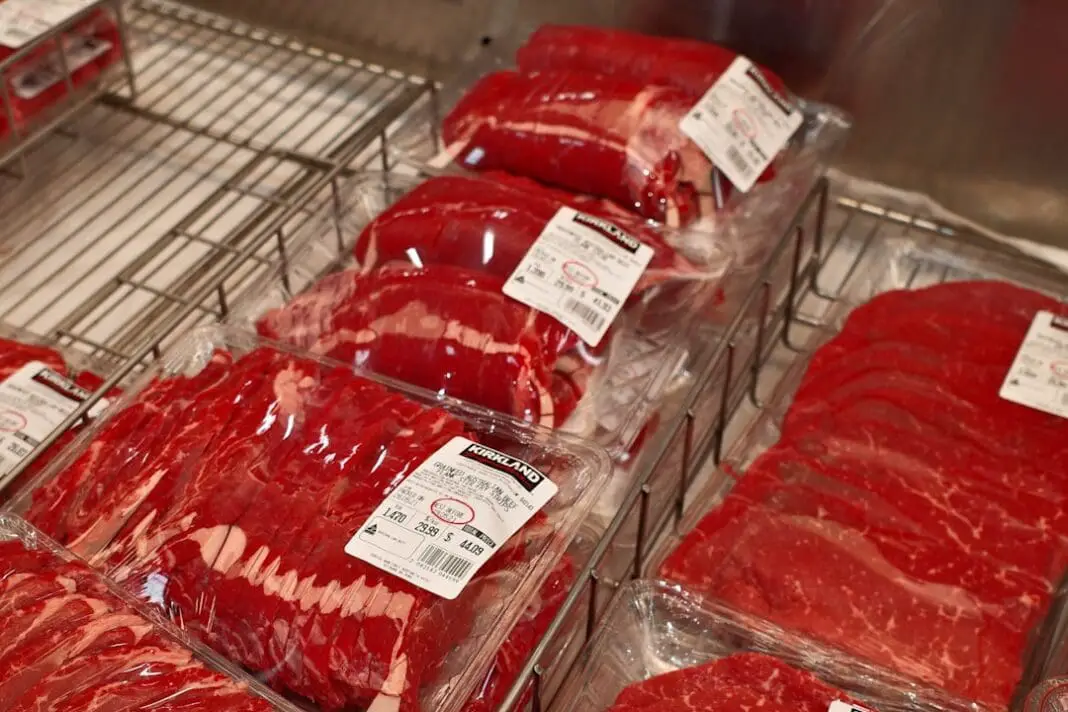
Steak is expensive. That’s not news to anyone who’s stood in front of the meat case at any grocery store in the last couple of years, doing the mental math on whether tonight is really a steak night or more of a chicken thigh situation. But here’s the thing — a lot of people shopping at Costco are spending way more on steak than they need to, even at Costco’s already-competitive prices. The trick isn’t a coupon or a special sale. It’s about buying the right cut in the right format and being willing to spend ten minutes with a knife at your kitchen counter.
Stop Buying Pre-Cut Steaks
This is the core idea, and once you hear it, you’ll wonder why you didn’t think of it yourself: buy the whole roast or primal cut instead of the individually portioned steaks sitting next to it in the cooler. That’s it. That’s the hack. Costco sells vacuum-sealed whole beef loins, whole tenderloins, and full ribeye roasts right alongside the pre-sliced stuff. The per-pound pricing on those large-format cuts can be up to six dollars less than the same meat that’s already been sliced into steaks for you. You’re paying a serious premium for the convenience of someone else running a knife through your beef.
Think about that for a second. On a 15-pound roast, six dollars per pound adds up to $90 in savings. Even on the lower end — say $2 to $3 per pound savings — you’re pocketing $30 to $45. That’s real money for basically the same meat, same grade, same quality.
The Whole Beef Loin Is The Easiest Place To Start
Anthony Bartleson, a butcher with 20 years of experience who goes by “Meat Dad” on Instagram, has been telling people about this for a while. His recommendation for beginners? The whole beef loin. At Costco, a 15.5-pound whole beef loin runs about $9.99 per pound. The pre-cut New York steaks right next to it? $11.99 per pound. Both are USDA Choice grade. Same cow, same quality tier, different price because one has been sliced up for you.
The whole loins are vacuum-sealed and sitting right there in the refrigerated section. You don’t need to ask a butcher to pull one from the back. The smallest ones weigh around 15 pounds, so yes, the upfront cost is higher — around $155 — but you’re getting a pile of New York strip steaks out of it. Roughly 15 of them, give or take, depending on how thick you like yours.
Beef Tenderloin Gets You Filet Mignon For Way Less
If you want to go a step fancier, the beef tenderloin is where things get interesting. This is the cut that filet mignon comes from — that buttery, melt-in-your-mouth steak that restaurants charge $55 or more for a single serving. Costco sells whole beef tenderloins in two versions: peeled and unpeeled. The unpeeled one costs less because you’ll need to trim off the silver skin yourself — a tough, chewy membrane that wraps around the outside of the muscle.
It sounds intimidating, but it’s honestly not bad. The surface of the tenderloin can be wet and slippery, so dab it dry with paper towels before you start. Then take a small, sharp knife, slip the blade under the silver skin at a slight upward angle, and peel it away. Leave a bit of fat for flavor, remove the rest. The tenderloin is shaped like a long tube — thicker on one end, thinner on the other. The thick center is your prime filet mignon territory. Slice against the grain at about 2 inches thick. Even the thinner end pieces make great smaller steaks. You should end up with around 15 pieces total from one tenderloin.
The Ribeye Math Is Even More Dramatic
According to current Costco pricing, ribeye steaks cost $15.99 per pound when they’re already cut for you. Whole ribeye cuts? Considerably less. One breakdown put the premium at $9.20 per pound extra just to have Costco do the slicing. That’s not a small markup. When you factor in the grade — prime grade ribeye steaks versus prime grade whole ribeye — you’re paying for both the quality of the beef and the labor. Skip the labor part, and you keep that money in your pocket.
If you buy a whole ribeye roast and slice your own steaks, you’re getting close to restaurant-quality prime rib in your own kitchen. A dozen steaks from a single primal cut is realistic. That’s a month or two of steak dinners from one purchase.
You Don’t Need Fancy Equipment
People hear “home butchery” and picture a professional setup with specialized tools and a stainless steel table. Nah. You need a sharp knife, a decent cutting board, and some paper towels. That’s basically it. A 10- to 12-inch butcher knife or a breaking knife like the Mercer BPX Cimeter will handle most of the work. If you’re dealing with bone-in cuts, a boning knife helps for more delicate cuts around the bone. But for boneless roasts — which is what most of Costco’s large-format options are — one good knife does the job.
One genuinely useful tip that people who’ve tried this recommend: freeze the vacuum-sealed primal cut for about an hour before slicing. It firms up the meat just enough to make cleaner, more uniform cuts. The meat isn’t frozen solid, just cold and stiff. It makes a noticeable difference, especially if you’re new to this.
How To Store All That Meat
Buying 15 pounds of beef means you’re not eating it all this week. Freezing is the whole second half of this strategy. Wrap each steak individually in plastic wrap, as tight as you can get it, then drop them into resealable freezer bags to prevent freezer burn. If you have a vacuum sealer like a FoodSaver, even better — vacuum-sealed steaks last longer and taste fresher when you thaw them.
A properly wrapped steak will stay fresh in the freezer for three to four months at peak quality, and should still be perfectly fine for up to a year. When you’re ready to cook, pull a steak out of the freezer, remove the wrapping, set it on a plate in the fridge, and give it about 24 hours to thaw. If you’re defrosting a bigger roast portion, plan for up to four days. Don’t rush it with the microwave — that’s how you end up with gray, rubbery edges on an otherwise beautiful piece of beef.
A Bonus You Might Not Have Considered: Food Safety
Here’s something a lot of people don’t know. Many of the pre-cut steaks at Costco — and other warehouse stores — are blade tenderized. That means they’ve been pierced with small needles or blades to break down the muscle fibers and make the meat more tender. The problem? That process can push bacteria from the surface of the meat into the interior. If you like your steak rare or medium-rare, that’s a real concern, because the inside of the steak might not reach a temperature high enough to kill those bacteria.
When you buy a whole loin or primal cut and slice it yourself, you’re working with meat that hasn’t been mechanically tenderized. The interior hasn’t been punctured. So if you’re the kind of person who orders their steak with a cool red center, cutting your own is actually the safer option.
Know When Prime Is Actually Worth The Upgrade
Costco is one of the few places where regular people can actually buy USDA Prime beef without going to a specialty butcher or ordering online. Prime is the highest grade — it means better marbling, more tenderness, more flavor. Costco typically carries Prime, Choice, and sometimes Select across their steak lineup. But is it always worth paying the premium for Prime?
Not necessarily. A taste test comparing Choice and Prime versions of three Costco cuts — ribeye, sirloin, and New York strip — found that the Prime upgrade only clearly justified itself on the New York strip. The Prime ribeye was good but basically indistinguishable from its Choice counterpart, making the extra spend kind of pointless. For sirloin, the price difference is only about $2 per pound ($9.99 versus $11.99), so it’s a smaller gamble either way. But that New York strip? At $11.99 per pound for Choice versus $19.99 for Prime — an $8 per pound gap — the Prime version was noticeably better in both taste and texture. So if you’re going to splurge on Prime, make it count on the right cut.
The Sirloin Cap Trick For Barbecues
One more option worth knowing about: the top sirloin cap, which runs about $35 to $40 for a big slab at Costco. Some people identify this cut as picanha, one of the most popular cuts in South American grilling. Buy the whole piece, slice it into individual steaks at home, toss them in a freezer bag with your favorite marinade, and you’ve got an absurdly cheap steak dinner for a crowd. Serving steak at a backyard barbecue for $40 total? Nobody would ever guess you didn’t spend a fortune.
Don’t Sleep On The Costco Meat Counter Staff
One more thing people forget: the folks working the Costco meat department will actually help you. If you don’t see a cut or size that works for what you need, ask. They’ll package a fresh cut for you personally. This is a free service that most shoppers never take advantage of because they assume the plastic-wrapped trays in the cooler are their only options. They’re not.
Between buying whole cuts, choosing your grades wisely, and actually talking to the people behind the counter, there’s a lot of money being left on the table — or more accurately, in Costco’s register. A little effort goes a long way when you’re talking about $3 to $6 per pound in savings on something you’re going to buy anyway.

