

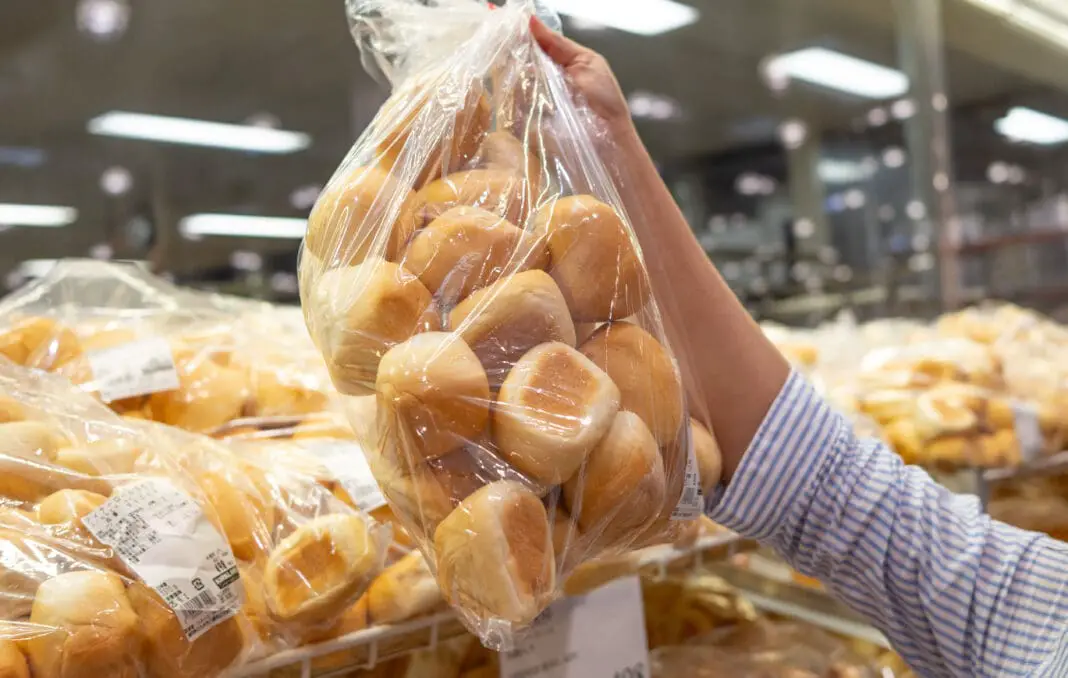
There’s a specific kind of confidence that comes with walking out of Costco. You pushed that oversized cart through the concrete jungle, you loaded up on bulk everything, and you feel like a financial genius. Chicken? Cheap. Paper towels? Stocked for the apocalypse. But that double pack of sandwich bread riding shotgun next to your rotisserie chicken? That might actually be one of the worst purchases in your cart.
I know. It feels wrong. Costco is supposed to be the place where buying more means spending less. And for a lot of things, that’s absolutely true. But bread is a weird exception — one that trips up even the most experienced Costco shoppers. The math doesn’t work the way you’d expect, the portions are almost impossible to finish, and some of the brands on those shelves are genuinely not worth your money. Let’s break it down.
The Price Per Ounce Problem
Consumer savings expert Andrea Woroch has been telling people for years to skip name brand bread at Costco, and the numbers back her up. Take Bimbo plain white bread at Costco — it costs $6.21 for two 24-ounce loaves. That works out to $3.10 per loaf, or about $0.12 per ounce. Sounds reasonable until you walk into a Kroger and grab their store-brand white sandwich bread: a 20-ounce loaf for $1.99, which comes to $0.09 per ounce. That three-cent difference per ounce adds up to Costco bread being roughly 25% more expensive.
And it gets worse with premium brands. Dave’s Killer Bread — the one with the guitar-playing ex-con on the label — costs $11.93 for a two-pack of 27-ounce loaves at Costco. That’s $5.96 per loaf. The same 27-ounce loaf at Walmart? $3.80. You’re paying 36.2% more per loaf at Costco. For the same exact bread. The bulk pricing model just doesn’t translate well to something that goes stale in a week.
Dave’s Killer Bread White Bread Done Right
Dave’s Killer Bread has a cult following, but not every product under that label deserves it. The White Bread Done Right variety, which Costco sells, sits at a mediocre 3.6 stars out of 5 on the brand’s own website. That’s a bad sign when even the company’s loyal fans aren’t thrilled.
The ingredients list looks impressive on paper — organic wheat flour, whole wheat flour, plus organic spelt, barley, rye, millet, quinoa, and potato flours. But the reality doesn’t match the label. Customers have complained about unreliable flavors and textures, with many pointing to a noticeable decline in quality over recent months. One Reddit user summed it up by calling the bread flat-out overrated. When you’re already overpaying at Costco compared to Walmart, getting a worse product experience is a double loss.
Dave’s Killer Bread Good Seed Has a Sugar Problem
Here’s something that might surprise you about Dave’s Killer Bread: the Good Seed variety packs 6 grams of sugar into every single slice. There are 4 grams in a teaspoon, so that’s one and a half teaspoons of sugar per slice. Make yourself a sandwich and you’ve eaten three teaspoons of sugar just from the bread — roughly half of what health guidelines say you should ideally have in an entire day.
The 21 Grains variety, also at Costco, has 5 grams of sugar per slice. Most bread contains some sugar, sure. But check your bread at home — you’ll probably find 1 to 2 grams per slice. Dave’s has three to six times that amount. And despite the whole-grain-and-seeds marketing, the third ingredient in Good Seed is plain white flour. The whole wheat flour they use is missing the nutrient-rich germ, so it’s not actually 100% whole grain. This is textbook healthwashing — putting healthy-sounding words on the package while sneaking in stuff you wouldn’t expect.
Canyon Bakehouse Multigrain Bread
If you’re gluten-free and shopping the bread section at Costco, Canyon Bakehouse Multigrain Bread might catch your eye. It’s made with tapioca, brown rice, and whole grain sorghum flours, plus millet, quinoa, teff, and buckwheat flour. It also uses eggs and xanthan gum for binding. Sounds like it should be decent, right?
Customers disagree. The consistent complaints are that it’s not worth the high price, the nutritional profile is disappointing for something with that many specialty ingredients, and the flavor is lackluster — some people describe it as artificial tasting. One Reddit user said it was “as dry as the Sahara desert.” Others described it as heavy. And the slices are tiny, making it a poor choice for things like French toast. If you need gluten-free bread, you likely have better options at a regular grocery store where you’re not committing to a bulk purchase of something you might not enjoy.
The Two-Loaf Waste Problem
Here’s the thing about bread that makes it a terrible bulk buy: it expires fast. Soft packaged bread lasts five to seven days in the pantry. Costco sells its sandwich bread in packs of two, and those loaves tend to be larger than what you’d get at a regular grocery store. Unless you’re feeding a big family that eats sandwiches every single day, you’re probably not going to finish both loaves before they start going south.
This isn’t just theoretical. People regularly post Costco bread in Buy Nothing Facebook groups because they can’t get through it before it expires. When your “savings” end up getting donated to strangers or thrown in the trash, they’re not savings at all.
Yes, you can freeze bread — the USDA says it’ll keep for up to three months in the freezer. And that’s a legitimate option. But let’s be honest about how many of us actually do that versus letting the second loaf sit on the counter until it grows a science experiment.
Most Costco Bread Is More Processed Than You Think
Dr. John La Puma, a nutritionist and author of ChefMD’s Big Book of Culinary Medicine, has a pretty blunt take: skip the bread aisle at Costco altogether. His reasoning is that most of the bread products Costco sells are low in fiber, high in calories, and heavily processed with little dietary benefit. The whole grain options are the exception, not the rule.
Certified nutritionist Karin Adoni Ben-David echoed this in a TikTok that went viral, calling certain Costco sandwich breads “so packed with preservatives” and “so engineered.” Her advice: read the nutrition labels and make sure you can actually pronounce everything on the ingredients list. Bread doesn’t need to be complicated. Flour, water, salt, yeast. If the ingredients list reads like a chemistry textbook, you might want to put it back.
The Mold Issue Nobody Warned You About
Costco’s bakery section has its own set of problems. A Reddit post about Costco bagels molding just days after purchase racked up over 500 upvotes and hundreds of comments from shoppers with the same experience. One customer said the bagels molded even though they lived in a desert with minimal humidity and stored them in a plastic bag.
The silver lining, according to some commenters, is that fast molding means fewer preservatives. “This is how you know you have good bread,” one person wrote. “Not trash bread that magically stays mold free for 6 weeks.” Fair point. But it means you need a game plan. Slice bagels before freezing so they can go straight into the toaster. Don’t leave bread on the counter — go straight to the fridge or freezer. Some people swear by bread boxes for extending freshness a few extra days.
What You Should Buy Instead
Not everything in Costco’s bread world is a miss. The bakery section — the one where they actually bake things in-house — has some genuine winners. The Rustic Italian Loaf topped a family taste test as the best Costco bakery bread, with a thin crust, a soft and moist interior, and a subtle sweet aftertaste. The family ate it plain without any toppings, which says a lot.
The Cranberry Walnut Round at $7.99 was another standout. One family was so impressed they planned to buy four or five at a time and freeze them. It was moist, chewy, and flavorful enough to eat on its own — though it was also great toasted with peanut butter the next morning.
Sacramento Baking Company Sliced Sourdough also gets high marks, with an ingredient list that’s basically just unbleached flour, sourdough starter, salt, water, and one preservative. That’s it. If you want sliced bread from Costco that isn’t overpriced, over-sugared, or over-processed, that’s your move.
The Real Move Is Comparing Prices
One of the biggest mistakes Costco shoppers make is assuming everything there is automatically cheaper. It’s not. Grocery store bread varies by location, but it’s common to find single loaves for $2.50 or less — sometimes as low as $1.49. That’s often a better deal than splitting a two-pack at Costco once you factor in the waste.
If you’re already making a trip to another grocery store for produce or dairy, take thirty seconds to check the bread prices there. You might be surprised. And if your household doesn’t burn through two full loaves in a week, you’re better off buying one loaf at a time from your regular store. It’s fresher, it’s cheaper per ounce in many cases, and nothing ends up in the trash or on a Buy Nothing group.
Costco is great at a lot of things. Bread just isn’t one of them.

