

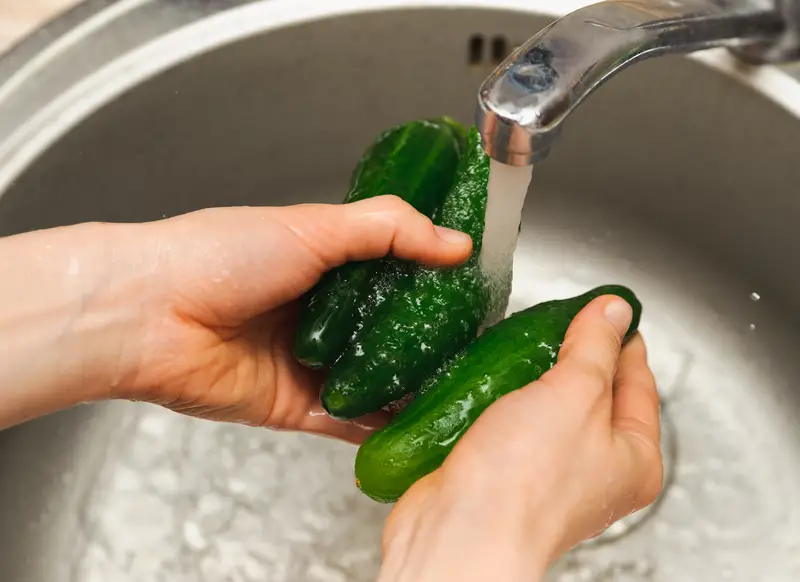
Most of us don’t think twice about washing cucumbers. You grab one from the fridge, give it a quick rinse under the tap, and start slicing. But there’s actually a pretty big mistake that a lot of people make with cucumbers, and honestly, it’s something I didn’t realize until recently. The timing of when you wash them matters way more than you’d think.
Don’t wash them too early
Here’s the thing: washing cucumbers too far in advance is basically asking for trouble. And that’s because of moisture. When you wash a cucumber and then stick it back in the fridge, that lingering water creates the perfect environment for mold to grow. I mean, mold spores are floating around everywhere anyway, just waiting for the right conditions. They need food and moisture to thrive, and a freshly washed cucumber sitting in your crisper drawer gives them exactly that.
The last time I washed a bunch of cucumbers on Sunday for the week, they were covered in fuzzy spots by Wednesday. Total disaster. So now I only wash them right before I’m ready to use them, whether that’s for a salad or just slicing them up for a snack.
Drying them properly is super important
After you rinse your cucumber, you can’t just leave it wet. That moisture needs to go. A paper towel works great for this – just pat the cucumber down until it’s completely dry. But if you’re using a kitchen towel instead, make sure it’s actually clean. Using a dirty towel is pretty much the same as not washing the cucumber at all, since you’re just transferring bacteria right back onto it.
And cross-contamination is no joke. Honestly, there are so many ways bacteria can end up on your food without you even realizing it. A damp cucumber is sort of like an invitation for all kinds of gross stuff to grow.
Running water isn’t always enough
Most people just rinse their cucumbers under the tap for a few seconds and call it good. But that’s not really sufficient if you want to remove dirt and pesticides. You should hold the cucumber under running water for at least a full minute, rubbing the surface with your hands as you go. This helps get rid of visible dirt and some of the residue that accumulates on the skin.
I’ve noticed that conventionally grown cucumbers often have this waxy coating on them. It’s there to help them stay fresh longer, but it also traps pesticides and dirt. Does anyone actually like that waxy feeling? Anyway, if you want to really clean them properly, you need more than just a quick rinse.
Use a vegetable brush for better results
A soft-bristled vegetable brush makes a huge difference. After trying these brushes on cucumbers, I can’t go back to just using my hands. The brush gets into all the little grooves and removes way more dirt than you’d expect. Pay extra attention to the ends of the cucumber – that’s where dirt tends to accumulate the most.
But here’s the thing: if you really hate that waxy coating, you can always just peel the cucumber. You’ll lose some fiber and nutrients that are in the skin, though. At least you won’t have to deal with the weird texture.
The baking soda method works wonders
If you’ve got some extra time and want to deep clean your cucumbers, try soaking them in a baking soda solution. Fill a bowl with water and add about a teaspoon of baking soda for every cup of water. Let the cucumber sit in there for 10 to 15 minutes. Baking soda has been shown to break down pesticide residue better than water alone, which is pretty impressive when you think about it.
After the soak, rinse the cucumber thoroughly under running water to wash away the baking soda and any loosened dirt. I mean, you don’t want to eat baking soda with your salad. Then dry it completely with a paper towel before you use it or store it.
White vinegar kills bacteria effectively
Another option for cleaning cucumbers is using a vinegar solution. Mix 1 cup of water with half a cup of distilled white vinegar in a bowl, then dunk your cucumber in it. White vinegar has antibacterial properties, so it can reduce the bacteria on the surface of the cucumber. This is especially helpful if you’re concerned about germs.
The vinegar smell goes away once you rinse the cucumber afterward. Some people worry about that, but it’s basically gone as soon as you wash it off with regular water. The antibacterial benefits are totally worth it.
Store them correctly to prevent spoilage
Storage matters just as much as washing. When you’re at the grocery store, pick cucumbers that don’t have any visible damage or soft spots. Those are already starting to go bad, and they won’t last long once you get them home. And when you do bring them home, keep them in the refrigerator at 41°F or less. But don’t set your fridge temperature too low, or you’ll end up freezing the cucumbers, which damages them and makes them spoil faster.
Keep them dry in storage too. Adding moisture to fresh vegetables increases the possibility of mold formation significantly. It’s the same principle as washing them too early – moisture creates problems.
Why the waxy coating exists
That waxy coating I mentioned earlier isn’t just there to annoy you. It actually serves a purpose. The wax helps cucumbers retain moisture and stay fresh during shipping and storage. Without it, they’d shrivel up and become unusable pretty quickly. But the downside is that the wax traps pesticides and dirt on the surface, which is why scrubbing is so important.
You can remove the wax by scrubbing with a brush, or you can peel the cucumber entirely. Though peeling means you’re losing out on some nutrients. Kind of a trade-off either way.
Washing keeps your food safe
At the end of it all, washing cucumbers properly is about keeping yourself safe from foodborne illness. Fresh produce can carry all sorts of bacteria and germs, especially if it’s been handled by multiple people or exposed to contaminated water during growing. A thorough wash removes most of these risks. And drying them afterward prevents new bacteria from growing in that moist environment.
So yeah, it’s worth taking an extra minute to wash your cucumbers the right way. Wait until right before you use them, scrub them with a brush, dry them completely, and you’re good to go. Your cucumbers will stay fresh longer and you won’t have to worry about getting sick from contaminated produce.

